Battery Cages for Chickens: A Comprehensive Guide to the System, Welfare, and Alternatives
The term "battery cage" is one of the most discussed and debated concepts in modern animal agriculture. For decades, this housing system has been the cornerstone of commercial egg production worldwide, praised for its efficiency and economic output. Yet, it has also become a lightning rod for animal welfare concerns, ethical debates, and regulatory changes. This article provides a detailed, expertlevel examination of chicken battery cages. We will explore their design and function, analyze the multifaceted arguments surrounding animal welfare and economics, review the current global regulatory landscape, and investigate the practical alternatives shaping the future of egg production. Whether you are a farmer, a policymaker, an industry stakeholder, or an informed consumer seeking clarity, this guide offers a balanced and indepth perspective.
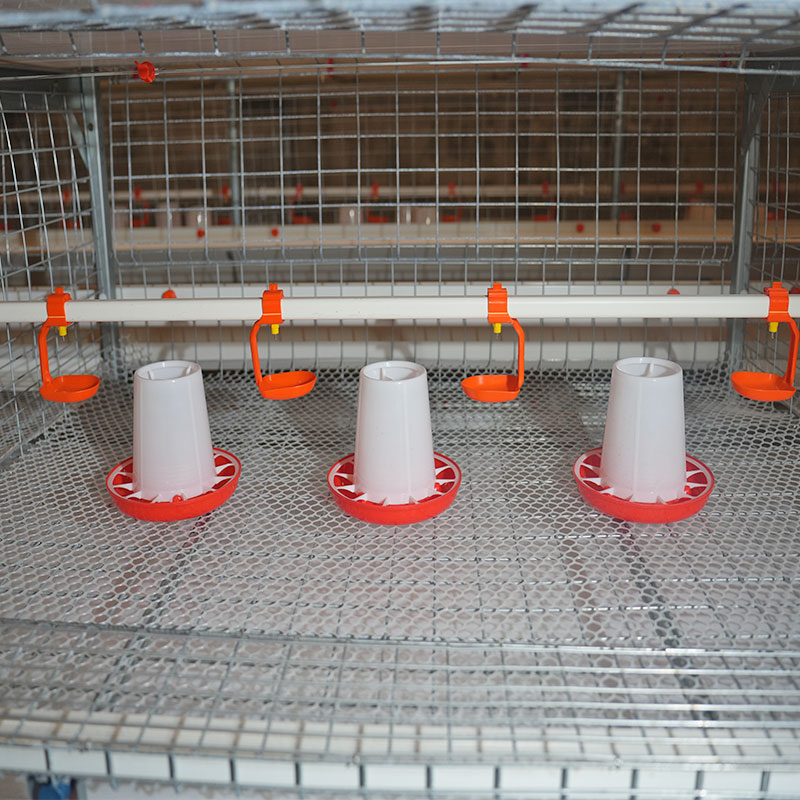
A battery cage is a housing system used primarily for egglaying hens (layers). The name derives from the arrangement of identical cages connected in long rows, resembling battery cells. A single conventional battery cage is a wire enclosure that typically houses multiple hens.
Key Design Characteristics:
Wire Construction: The floors, walls, and ceilings are made of thin wire mesh. This allows manure to drop through to a collection pit or belt below (a manure belt system), keeping the birds separate from their waste.
High Density: Cages are designed to maximize space efficiency. In traditional systems, each hen was historically provided with space less than the size of a standard sheet of paper (often below 550 cm² or 85 in² per bird).
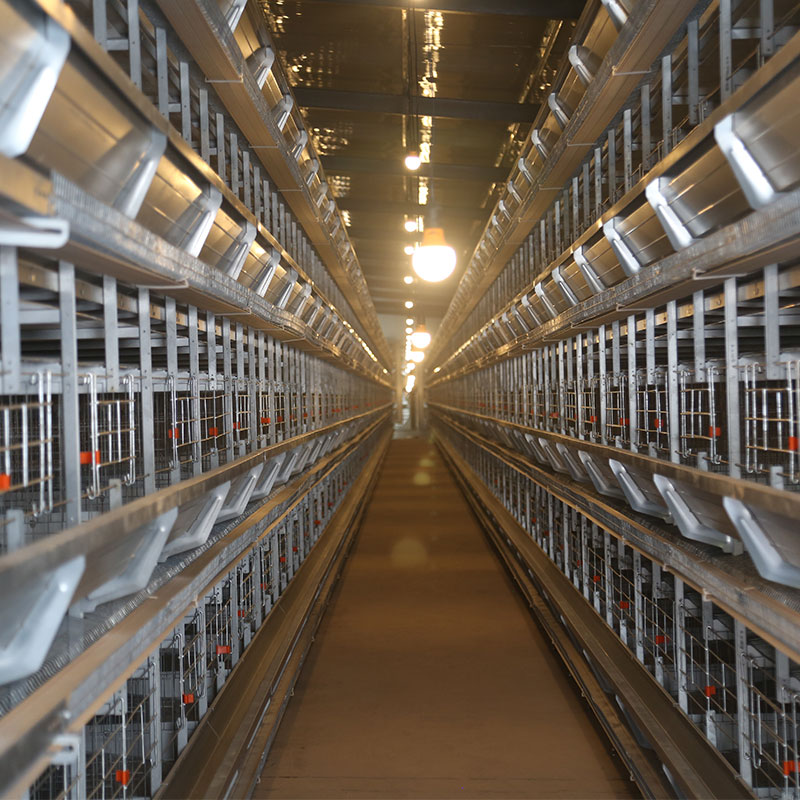
Automation Integration: Rows of cages are integrated with automated systems for feeding (via troughs running along the front), watering (with nipple drinkers), and egg collection (where eggs roll forward onto a conveyor belt).
Stacked Tiers: Cages are often arranged in multiple tiers (e.g., 38 levels) within a shed to maximize bird capacity per square foot of building.
The primary stated objectives of this system are to increase production efficiency by reducing feed waste, minimizing disease transmission from manure, simplifying flock management, lowering labor costs, and facilitating automated egg collection.
The controversy around battery cages centers on a fundamental conflict between two priorities: animal welfare concerns and economic/production efficiency.
Proponents argue that wellmanaged cage systems offer significant advantages:
1. Disease Control: Separating birds from their feces reduces exposure to intestinal parasites and bacterial diseases like Salmonella and E. coli, potentially lowering the need for antibiotics.
2. Feed Efficiency: Restricted movement means hens expend less energy on activity, converting more feed into egg mass.
3. Reduced Injury & Cannibalism: Caging prevents aggressive behaviors like feather pecking and cannibalism that can occur in large flocks.
4. Lower Mortality: Controlled environments can lead to lower hen mortality rates compared to some freerange systems where predation or weather exposure is a risk.
5. Consistent Egg Quality & Safety: Eggs roll away quickly, staying cleaner and reducing shell contamination risk. Automated collection minimizes handling damage.
6. Affordability: The high efficiency translates into lower production costs per egg, making protein accessible to more consumers.
Critics—including animal welfare scientists, veterinarians, and advocacy groups—contend that the system imposes severe behavioral and physiological restrictions:
1. Extreme Behavioral Deprivation: Hens are prevented from performing nearly all their natural behaviors as identified by ethologists:
No Perching: Lack of perches can lead to poor bone strength.
No Dust Bathing: Essential for feather maintenance and parasite control.
No Nesting: The inability to seek seclusion for laying causes severe frustration.
Severely Restricted Movement/Foraging: Cannot walk freely, stretch wings fully, or scratch at the ground.
2. Physical Health Consequences:
Osteoporosis & Bone Fragility: Lack of exercise leads to weak bones prone to fractures during depopulation (removal at end of lay).
Foot Problems: Constant standing on wire mesh can cause foot lesions and deformities.
Feather Loss: Abrasion against cage wires leads to poor plumage condition.
3. Psychological Stress: Crowding combined with an inability to express innate behaviors results in chronic stress indicators.
Driven by public concern and scientific evidence on welfare deficits in conventional cages (often called "barren" battery cages), legislation has evolved significantly.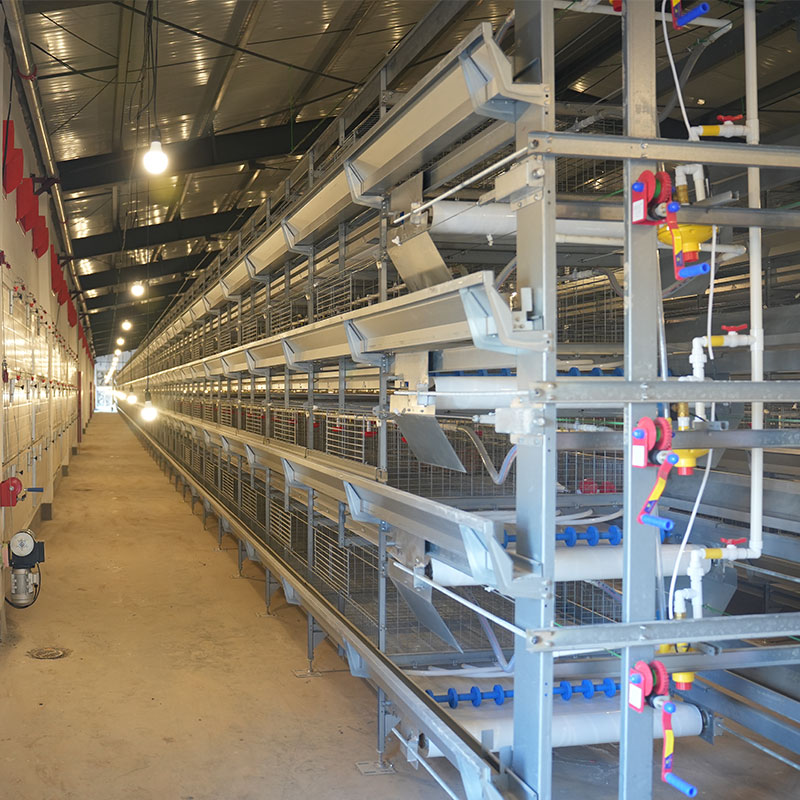
A landmark move was the EU's 1999 directive phasing out conventional battery cages by January 1st,2012. It mandated that all laying hens must be housed in systems meeting specific welfare standards.
This legislation did not ban all cages but led to widespread adoption of "enriched colony systems." These are modified cages that must provide:
At least 750 cm² (~116 in²) of usable space per hen (more than conventional).
A nest box area for egglaying privacy.
Perching space (~15 cm per hen).
A scratching area/litter mat for dustbathing behavior.
While these provide clear welfare improvements over barren cages, critics argue they still restrict major behaviors like full wingflapping or sustained walking,and many welfare organizations advocate for cagefree systems entirely.
The U.S.has no federal ban on conventional battery cages. However,marketdriven change is powerful. Major food corporations,retailers,and restaurants have committed to sourcing only cagefree eggs by specified future dates,driving rapid conversion within the industry. Several U.S.states have passed laws banning confinement systems including conventional cages.
| System Type | Space per Hen (Typical) | Key Features | Primary Welfare Improvements | Primary Criticisms |
| : | : | : | : | : |
| Conventional Battery Cage | <550 cm² (<85 in²) | Wire mesh; automated feed/water/egg collection; high density; manure belts below | Disease separation; low mortality from aggression/ predation; clean eggs | Severe behavioral deprivation; bone weakness; no nesting/perching/dustbathing |
| Enriched/Furnished Cage| ~750900+ cm² (~116140+ in²) | Includes nest box,perch,scratch area; more vertical space | Allows expression of key nesting,perching,scratching behaviors; stronger bones | Still restricts locomotion/full behavioral repertoire |
| CageFree Aviary/Barn| Varies; floorbased| Hens roam inside barn;multiple tiers with perches,nests,& litter areas| Freedom of movement;full expression of natural behaviors;stronger bones| Higher risk offeather pecking/cannibalism;& disease if not managed expertly |
| FreeRange / PastureBased| Varies + outdoor access| Cagefree system with required outdoor access/pasture time.| All benefitsof cagefree + sunlight,foraging on vegetation/insects.| Highest exposureto predators& weather variables;higher land/labor costs |
As demand shifts away from caged eggs, producers are adopting alternative systems:
1.CageFree Barn/Aviary Systems: Hens live freely inside large barns equipped with litter floors,perches at multiple levels,& communal nest boxes. Modern aviaries use complex vertical structures encouraging useof all three dimensions.
2.FreeRange Systems: Must meet cagefree standards AND provide meaningful& regular outdoor access. Specific requirementsfor outdoor space quality& duration varyby certification program(e.g., RSPCA Assured,Certified Humane).
3.Organic Systems: Often combine freerange accesswith organic feed(no synthetic pesticides/herbicides/GMOs)& restrictionson antibiotic use.
Each alternative presents its own setof management challenges requiring higher skill levelsin stockmanship,& generally incurs higher production costs reflectedin retail prices.
The trajectoryfor chicken housingis clear:a global moveawayfrom conventional battery cagestoward enriched coloniesor—increasingly—toward various forms offcagefree production. This shiftis drivenby intertwining forcesof evolving scienceon animal sentience& welfare,& changing consumer ethics,& corporate responsibility policies,& governmental regulation.
For farmers,this transitionrequires significant capital investment& retrainingin new management practices. For consumers,it offersa choiceatthe pointof purchasebut also demands greater understandingthatall productionsystems involve tradeoffsbetween welfare priorities& sustainability metricslike resource use& carbon footprint.
Ultimately,the questionis no longer simply“battery cageor not?”but rather:“What combinationof housingdesign,& enrichments,& nutrition,& health management,& skilled stockmanshipcan deliver both goodwelfare outcomesand sustainablefood production?”Answeringthatquestionisthe ongoing challengefor today’s egg industry.
Here are answers to some ofthe most commonly asked questionsbasedon Google's “People Also Ask” data:
A:The term“battery”refersto aseriesor arrayof identical unitsconnected together—like artillery batteriesor electric batteries—describingthe long rowsof uniform wire enclosureslinkedin ashed.
A:The legality depends entirelyon location.Conventional(“barren”) battery cagesare bannedinthe European Union,the UK,Australia,and severalU.S.states(including California,Massachusetts,Washington).They remain legalin many other regionsgloballythough market pressuresare reducingtheir use.
A:An enriched(or furnished)cageis alarger wired enclosurethatmust provide specific“furnishings”:a nest box,a perch,a scratching/litter area,and more minimum spaceper henthan aconventional cage.It representsamiddle groundbetween oldstyle batteriesand cagefree systemsfrom awelfare perspective.
A:Basedon decadesof animalwelfare scienceconsensus,laying hens inconventional battery cagessufferfrom significant behavioral deprivationandan inabilityto perform most natural instinctive behaviorsleadingto physical ailmentslike bone fragilityand psychological stress.This conclusionhas beenthe primary driverbehind legislative bansand market shifts.
A:“Cagefree”meanshensare not keptin anycagesand can roaminside abarn.“Freerange”addsthe requirementfor accessto outdoors/pasture.Both representmajorwelfare improvementsover cagedsystems.Freerangeprovides additional behavioral opportunitiesbut requires excellentmanagementto mitigate riskslike predators.Both labelsdonot guaranteespaciousor idyllic conditionswithout strong certification audits.
A:Nutritionally,thereis little consistent evidencethatcaging itself significantly alters thenutrient profile(macronutrients,vitamins)ofthe final egg.Safety profilesmay differ:somerisks(e.g., fecal contamination)maybe lowerincagedsystems while others(e.g., certain parasites)maybe higherinfreerangesystems.The majordifferencesare ethicalandenvironmentalratherthan nutritional.
A:Laying hens,in any commercial system(conventional,cagefree),have been selectively bredfor extremely high eggproduction.They typically begin layingat~1620 weeksold.Their productive“lay cycle”lastsabout1214 monthsafter which their rateof lay declines.Atthis point(~7280 weeksold),the entire flockis typically depopulatedandreplacedby young pullets.This lifespanis standardacrosshighintensityegg farming regardlessof housingtype outside specialty heritagebreed operations.
A:The industry undergoesatransitionperiodrequiring substantial capital investment.Farmerseither retrofit existing barnswith enriched colonycagessystemsor buildnew infrastructurefor aviary/barn(cagefree)systems.Supply chainsadjust,and thereisoften atemporary impactonegg pricesas costsincrease.Consumer educationbecomescritical tounderstandlabel changes.Countrieslike thoseinthe EUhave successfully completedthis phased transitionover several years
1. Drinking system include the water pipes, water pressure adjuster, drinking nipples, Waterline front-end device, dosing system etc, choose them according to customer's needs.
2. High-quality water drinking pipes, pressure regulating valves and water drinking nipples can effectively prevent the water leakage. Drinking system adopt the closed piping system, which can minimize the water pollution.
3. 360-degree drinking nipples provide adequate drinking water for poultry at all stages.
4. The automatic drinking water system mainly adopts the steel ball drinking nipple. lt uses imported high-grad stainless steel, POM resin, and APS engineering material, which is wearing resistant, and the durability can be used for long time.



1. Automatic feeding machine can be chosen between gantry and ladder feeding machine. Gantry type feeding machine is a relatively economical and practical machine with simple operation, remote control walking character, easy to manage.
2. Mechanical transmission device running smoothly, low noise, long service life.
3. With the use of automatic control, the feeding system can adjust the amount of material.
4. Feeding with arched structure, high carrying capacity, not easily deformed.
5. Saving man power, saving feed, greatly improving the efficiency of Large-scale farming.
6. The walking speed of gantry feeding machine is 9--12 m/min.




1. Manure removing system included scraper type and conveyor belt type, Which can reduce the labor intensity and labor cost, keep the chicken shed dry and clean.
2. A type chicken cage can use scraper type or conveyor belt type.


3. The scraper type is suitable for A type cages, which can clean two or three rows. For the starters, this type is a good choice. lt can not only save some labor cost, but also save some investment in the whole project. The cleaning speed is 6-10 meters per minute.
4. Conveyor belt type is more suitable for large scale farming. The manure removing belt we use is high quality PP material (polypropylene). The walking speed is 2-4 meters per minute.



High Quality Pellets Made by Mobile Pellet Machine
1. It has professional designed angle of the blade. After the dynamic balance test one by one, the blade can operate smoothly.
2. The air volume is consistent in the whole life of the fan. Bearings has advantage of high strength, low noise, durable and so on.
1. The cooling pads uses high-quality wet curtain paper and adopts space cross-linking technology, which has the advantages of high water absorption, high water resistance, anti-toxicity and long service life.
2. The cooling efficiency is over 80%, without surfactant, natural water absorption, fast diffusion speed and long-lasting effect.
3. The product does not contain phenol and other chemical substances that are easy to cause skin allergies. It is non-toxic and harmless to the human body and chicken when installed and used. It is green, safe, energy-saving, environmentally friendly, economical, and easy to install.
4. The frame aluminum alloy has high strength, good corrosion resistance, durability and beautiful appearance.
5. Use a special filter for the cooling pad at the upper water to ensure clean water quality and support efficient water circulation components.
6. Combined with a negative pressure fan, it can effectively lower the indoor temperature.
The window is made of special selected high-quality engineering plastic, with high strength and long service life, together with superior anti-aging and anti-UV performance.
Function: Ventilation of the chicken house, usually used in the winter.
This system can adjust the wind speed and direction, thus the cold air will not reach chicken directly , which can effectively prevent the phenomenon of cold stress in chicken.
Environmental control system equipment is suitable for large-scale and intensive farming. According to customer requirements, we can provide various types of smart poultry equipment.
1. Our poultry management system is a modular system that manages all aspects of the chicken house, such as climate, temperature, humidity, ammonia, feeding, feed weighing, lighting and ventilation systems, and can monitor the situation of the chicken house in real time through a computer and mobile phone.
2. The management computer is the heart of the poultry farm, allowing you to easily monitor the entire poultry farm.

 WeChat:+8617838608255