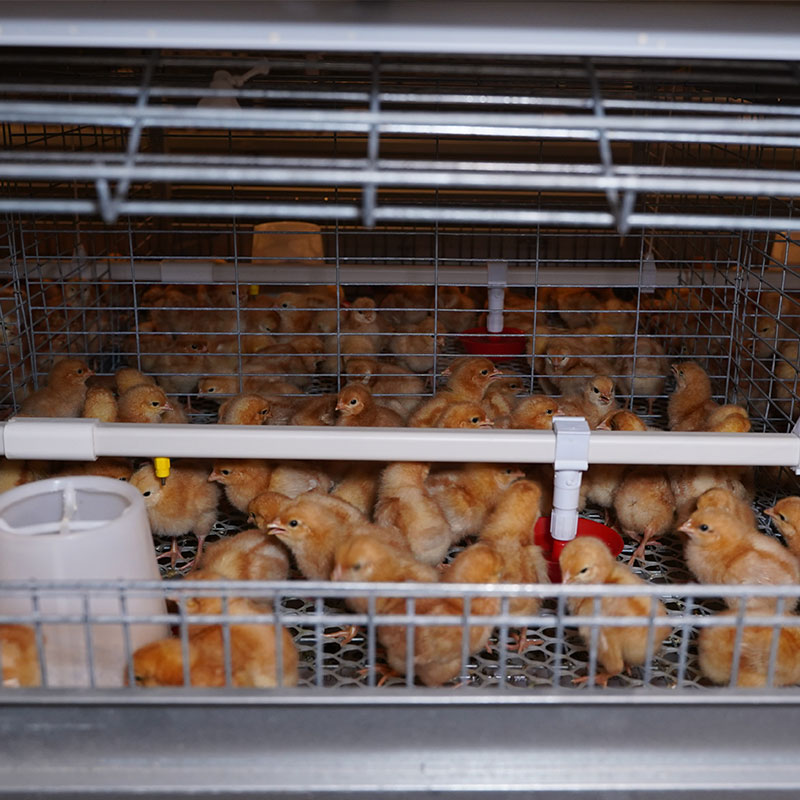
The financial weight of a broiler cage system sits at the core of nearly every expansion or upgrade decision a poultry farmer will make. It’s a figure that can dictate cash flow, influence bird performance, and ultimately, determine the long-term viability of an operation. But focusing solely on the initial invoice price is perhaps the most common and costly mistake made in this industry. The true cost of a cage system is a complex calculation, a multi-year equation where the initial capital outlay is just the first variable. To understand what you’re truly paying for, you must look beyond the price tag and into the metal, the mechanics, and the management implications of the system itself.
A broiler cage, or more accurately, a broiler cage system, is an integrated environment. It’s not just a box of wire to hold a bird. It’s the physical structure, the feeding mechanism, the watering lines, the manure removal system, and the ventilation that interacts directly with the cage tiers. When a supplier gives you a price per bird or per square meter, they are bundling all these components. The quality of each component directly influences the final number and, more importantly, your future costs.
Deconstructing the Initial Quote: Where the Money Goes
When you receive a quotation, it typically breaks down into several key areas. Understanding what you’re being charged for in each category is the first step toward a fair evaluation.
1. The Structure and Materials: This is the cage itself—the galvanized wire mesh, the supports, the frames, and the flooring. The gauge (thickness) and quality of the galvanization are the primary cost drivers here. A heavier-gauge wire with a superior galvanization process will resist corrosion and physical deformation far longer. For a farmer in a humid coastal region, a cheaper, thinner-gauge system might show significant rust within two years, weakening the structure and requiring patching or premature replacement. The initial savings are quickly erased. The flooring design is another critical factor. Some systems use a rigid plastic-coated floor, which is gentler on bird footpads and can improve welfare indicators, but it adds to the initial cost. A standard wire floor may be cheaper upfront but could lead to higher condemnations at the processing plant due to footpad lesions, directly hitting your revenue.
2. The Feeding System: This is often where high-end and budget systems diverge most dramatically. You have two main types:
Trough-and-Chain: A motor pulls a chain through a long trough, delivering feed. This is a proven, relatively simple system. Its cost is influenced by the quality of the chain links, the drive motor, and the trough material. A cheap motor may burn out under load, halting feed delivery to thousands of birds until repaired.
Pan-Feed: Here, the chain delivers feed to individual circular pans at each cage. This system is renowned for reducing feed wastage, as birds must peck at the pan to access feed, rather than flicking it out of an open trough. The initial investment is higher due to the complexity of the pan mechanisms and the additional parts. However, for a farmer spending $50,000 monthly on feed, a pan system that reduces waste by even 2% saves $1,000 every month. That saving pays for the system upgrade very quickly.
3. The Watering System: Nipple drinkers are the standard. The cost variance comes from their quality. A cheap nipple may leak, increasing humidity in the house, wetting litter (in non-caged systems), and wasting water. It may also fail to trigger properly, leading to dehydrated birds and reduced growth rates. A more expensive nipple is designed to be drip-free, requires a precise activation force that chicks can easily use, and is made from durable, non-corrosive materials. The water pressure regulators and filters are also part of this cost; consistent, clean water is non-negotiable for gut health and performance.
4. Manure Removal System: How the system handles waste is a major operational cost center. There are two common designs for multi-tier systems:
Belt System: A continuous belt runs beneath each tier of cages. It is programmed to run at intervals, removing manure from the house and depositing it into a trailer or pit. This provides a drier house environment, superior ammonia control, and allows for easier manure handling. The cost is higher due to the belts themselves, the drive systems, and the controls. However, the bird health benefits—better air quality means stronger respiratory systems and better feed conversion—are a significant financial return. It also drastically reduces labor costs associated with cleaning.
Deep-Pit or High-Rise: Manure accumulates beneath the cages for the entire grow-out period, sometimes longer. This system has a lower initial mechanical cost but creates a challenging environment. Controlling ammonia becomes harder and more expensive, requiring more powerful ventilation running more often, which spikes your electricity bill. The final cleanout is a massive, labor-intensive undertaking. The initial saving on hardware is often paid back many times over in higher utility costs and labor.
5. Automation and Controls: This is the nervous system of the operation. The baseline price might include simple on/off switches for feeders and lights. The premium is for integrated environmental computers that can tie your ventilation, feeding, and lighting into one program. For example, a sophisticated controller can be set to slightly increase light intensity and stimulate feeding activity an hour before the feed chain runs, ensuring birds are active and ready to eat, promoting uniformity. It can modulate fan stages and heater operation based on precise temperature and humidity setpoints, optimizing comfort and fuel usage. This isn’t just a convenience; it’s a tool for extracting maximum genetic potential from your flock.
The Hidden Costs: The Real Price of Ownership
This is where the true financial picture comes into focus. The initial price is a one-time event. The hidden costs recur with every single flock.
Durability and Lifespan: A system priced at $15 per bird place that lasts for 10 years has an annualized capital cost of $1.50 per bird place. A cheaper system at $10 per bird place that corrodes and requires replacement after 5 years has an annualized cost of $2.00 per bird place. The "cheaper" system is actually 25% more expensive per year in capital costs alone. Inspect the welding on the frames, the coating on the wires, and the thickness of the metal. Ask for references from farmers who have used the system for 5+ years.
Energy Consumption: This is a monster cost. The manure system and ventilation are directly linked. A belt system that keeps the house dry will allow your ventilation system to work less hard to remove moisture and ammonia, saving significant electricity. The efficiency of the feed drive motors, while a small load, adds up over thousands of hours of operation. These are operational expenses that come directly out of your profit margin on every kilogram of meat produced.
Labor Efficiency: Your time has value. A system that requires manual adjustment of feed flow at every pan, or that has a manure system demanding daily attention, is consuming hours that could be spent on bird management or other tasks. A highly automated system with central controls might have a higher price, but it can often be managed by one person, reducing labor costs and minimizing human error. Calculate what 5 extra hours of labor per flock costs you over a year.
Bird Performance: This is the ultimate hidden cost—or saving. A poorly designed cage with inadequate feeder space will create non-uniform birds. The weaker ones get pushed out, resulting in a higher coefficient of variation and a lower percentage of prime-grade birds at processing. A watering system that doesn't function perfectly can lead to flushes of wet droppings, disrupting litter quality and triggering enteric problems like necrotic enteritis, which decimates feed conversion ratios. The difference between a Feed Conversion Ratio (FCR) of 1.50 and 1.55 might seem small, but on a 2.5kg bird, that’s 125 grams of extra feed. Multiply that by 50,000 birds and a $400/tonne feed price, and that 0.05 difference in FCR costs you $6,250 per flock. A superior environment that shaves points off your FCR or improves livability pays for itself relentlessly.
Navigating the Market and Making the Decision
Armed with this holistic view of cost, your approach to suppliers should change. Your questions must move from "What is the price?" to "What is the total cost of ownership?"
When evaluating quotes, demand detail. Ask for a breakdown of the components. Specify the galvanization standard (e.g., ask if it’s hot-dipped galvanized after welding). Inquire about the warranty not just on the structure, but on critical moving parts like motors and drives. Ask for the power rating of the feed drive motors and the manure belts to estimate energy draw.
Talk to other farmers. Not just one, but several. Visit their farms if possible. See how a 5-year-old system from Supplier A is holding up compared to one from Supplier B. Ask them about their utility bills before and after installation, their maintenance headaches, and their bird performance metrics.
Finally, model the investment. Don’t just look at the bank loan payment. Create a spreadsheet that factors in:

The total initial investment.
The estimated lifespan of the system.
Projected energy savings (or increases).
Projected labor time savings.

A realistic estimate of performance improvement based on the technology (e.g., a 2-point improvement in livability, a 0.02 improvement in FCR).
Estimated maintenance and repair costs.
This financial model will reveal the genuine value proposition. You may find that the most expensive quote offers the lowest cost per kilogram of meat produced over a 10-year horizon. Conversely, you may find a mid-range system offers the best balance of performance and affordability for your specific operation.
The price of a broiler cage system is a gateway, not a destination. It is the key that unlocks a future of either relentless efficiency and predictable profit or a cycle of repairs, high operating costs, and underperformance. The investment is too significant to be decided by the lowest number on a page. By judging a system on the totality of its impact—on your birds, your labor, your utilities, and your bottom line—you make a decision that isn’t just about housing chickens. It’s about building a resilient and profitable business for the long term.
1. Drinking system include the water pipes, water pressure adjuster, drinking nipples, Waterline front-end device, dosing system etc, choose them according to customer's needs.
2. High-quality water drinking pipes, pressure regulating valves and water drinking nipples can effectively prevent the water leakage. Drinking system adopt the closed piping system, which can minimize the water pollution.
3. 360-degree drinking nipples provide adequate drinking water for poultry at all stages.
4. The automatic drinking water system mainly adopts the steel ball drinking nipple. lt uses imported high-grad stainless steel, POM resin, and APS engineering material, which is wearing resistant, and the durability can be used for long time.



1. Automatic feeding machine can be chosen between gantry and ladder feeding machine. Gantry type feeding machine is a relatively economical and practical machine with simple operation, remote control walking character, easy to manage.
2. Mechanical transmission device running smoothly, low noise, long service life.
3. With the use of automatic control, the feeding system can adjust the amount of material.
4. Feeding with arched structure, high carrying capacity, not easily deformed.
5. Saving man power, saving feed, greatly improving the efficiency of Large-scale farming.
6. The walking speed of gantry feeding machine is 9--12 m/min.




1. Manure removing system included scraper type and conveyor belt type, Which can reduce the labor intensity and labor cost, keep the chicken shed dry and clean.
2. A type chicken cage can use scraper type or conveyor belt type.


3. The scraper type is suitable for A type cages, which can clean two or three rows. For the starters, this type is a good choice. lt can not only save some labor cost, but also save some investment in the whole project. The cleaning speed is 6-10 meters per minute.
4. Conveyor belt type is more suitable for large scale farming. The manure removing belt we use is high quality PP material (polypropylene). The walking speed is 2-4 meters per minute.



High Quality Pellets Made by Mobile Pellet Machine
1. It has professional designed angle of the blade. After the dynamic balance test one by one, the blade can operate smoothly.
2. The air volume is consistent in the whole life of the fan. Bearings has advantage of high strength, low noise, durable and so on.
1. The cooling pads uses high-quality wet curtain paper and adopts space cross-linking technology, which has the advantages of high water absorption, high water resistance, anti-toxicity and long service life.
2. The cooling efficiency is over 80%, without surfactant, natural water absorption, fast diffusion speed and long-lasting effect.
3. The product does not contain phenol and other chemical substances that are easy to cause skin allergies. It is non-toxic and harmless to the human body and chicken when installed and used. It is green, safe, energy-saving, environmentally friendly, economical, and easy to install.
4. The frame aluminum alloy has high strength, good corrosion resistance, durability and beautiful appearance.
5. Use a special filter for the cooling pad at the upper water to ensure clean water quality and support efficient water circulation components.
6. Combined with a negative pressure fan, it can effectively lower the indoor temperature.
The window is made of special selected high-quality engineering plastic, with high strength and long service life, together with superior anti-aging and anti-UV performance.
Function: Ventilation of the chicken house, usually used in the winter.
This system can adjust the wind speed and direction, thus the cold air will not reach chicken directly , which can effectively prevent the phenomenon of cold stress in chicken.
Environmental control system equipment is suitable for large-scale and intensive farming. According to customer requirements, we can provide various types of smart poultry equipment.
1. Our poultry management system is a modular system that manages all aspects of the chicken house, such as climate, temperature, humidity, ammonia, feeding, feed weighing, lighting and ventilation systems, and can monitor the situation of the chicken house in real time through a computer and mobile phone.
2. The management computer is the heart of the poultry farm, allowing you to easily monitor the entire poultry farm.

 WeChat:+8617838608255