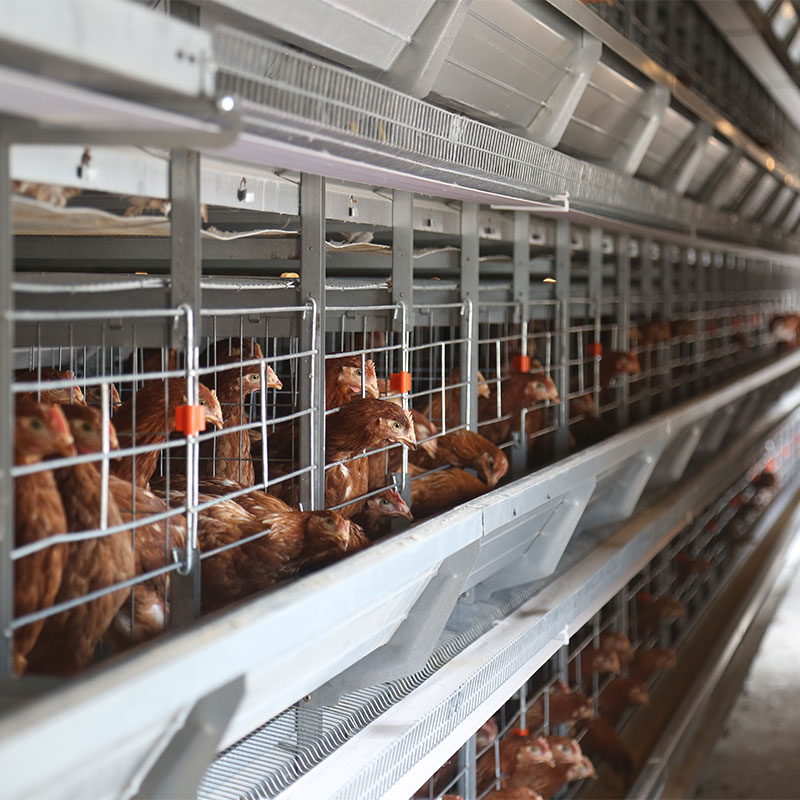
The morning chill still hangs in the air, a reminder that despite the spring sun, the newly arrived chicks in the corner pen are vulnerable. You watch them, a ball of downy fluff huddled tightly under the heat lamp, while a few stragglers on the outskirts peep incessantly, struggling to find the warmth their siblings are hoarding. This scene, repeated in barns and outbuildings across the country, represents the first and one of the greatest challenges in poultry rearing: the critical brooding period. It’s a battle against drafts, temperature gradients, dampness, and the sheer fragility of life. For generations, farmers have managed this phase with cardboard rings, heat lamps, and bedding, accepting the inherent losses and labor as simply part of the job. But a shift is occurring, moving from a managed environment to a controlled one, centered on a piece of equipment that redefines those first crucial weeks: the chicken brooder cage.

A brooder cage system is not merely a pen with a roof; it is an integrated microenvironment designed to replicate the key conditions a mother hen provides. Think of it not as a cage but as a nursery unit, where every element—from the floor to the feeders—is engineered to address a specific survival need of the chick from day one to week four or five.
The most immediate need is thermoregulation. Chicks cannot maintain their own body heat effectively. A traditional heat lamp creates a hot spot directly underneath it, but the temperature can plummet just inches away, creating a dangerous gradient. Chicks pile up directly under the lamp, leading to smothering, while others become chilled, becoming susceptible to failure to thrive and disease. A brooder cage tackles this with precision. Many modern systems incorporate forced-air heat that is distributed evenly across the entire floor space of the cage. It’s the difference between pointing a hair dryer at one spot on a cold floor and installing radiant in-floor heating. The entire floor becomes a warm plate. This eliminates huddling and chilling. You’ll see chicks spread evenly throughout the space, actively eating, drinking, and sleeping—behaviors that indicate contentment and optimal warmth. The heat source is typically thermostatically controlled, connected to a probe placed at chick level. This removes the guesswork. Instead of adjusting a lamp higher or lower based on whether the chicks look comfortable, the system maintains the exact temperature you set, automatically lowering it a few degrees each week to match the chicks’ developing ability to feather out and self-regulate.
This controlled heat has a direct and positive impact on two other critical factors: moisture and air quality. In a deep-litter brooding pen, spilled water and manure combine with the bedding, creating damp patches. This dampness chills chicks from below—a far more effective conductor of cold than air—and releases ammonia into the air as the manure breaks down. Ammonia burns the chicks’ eyes and respiratory tracts, leading to conjunctivitis, pneumonia, and increased susceptibility to pathogens like E. coli. In a brooder cage, the floor is almost always welded wire mesh. This is the single most important feature for managing the environment. Droppings and any spilled water fall through the mesh, away from the chicks, into a droppings pan or belt below. The chicks are living on a dry, draft-free surface. The ammonia-producing waste is physically separated from the birds’ living space almost immediately. The air the chicks breathe remains clean and dry, drastically reducing respiratory pressure and the need for medications to combat ammonia-related illness. It’s a simple but profound mechanical solution: remove the waste, and you remove the problem.

The design of the cage also directly influences feed and water conversion, which is the cornerstone of early growth rates. In a flat pen, feeders and waterers can be trampled, spilled into, and soiled with bedding and manure. You know the sight of wet, caked feed around a feeder—it’s wasted money and a magnet for mold and bacteria. Brooder cages are equipped with integrated feeding and watering systems. Linear trough feeders run along the front of the cage, with adjustable height settings. You start with the trough height at the chicks’ back level, making feed incredibly easy to find and access. As they grow, you raise the feeder, preventing them from raking feed out with their beaks and encouraging proper feeding posture. The same applies to nipple drinkers, which are the standard for cage systems. Chicks learn quickly to peck at the pin to release a drop of water. This keeps water clean and contained. There is no open water to spill, to chill chicks, or to serve as a reservoir for bacteria. Because the feed and water are always clean, dry, and easily accessible, chicks spend less energy searching for nutrients and more energy growing. The result is a more uniform flock weight and a better start, setting the trajectory for the entire grow-out period.
The configuration of these systems varies to fit different operation scales. For the backyard flock owner or small-scale producer, a single-tier brooder cage is common. This is a simple, self-contained unit on legs, perhaps holding 50 to 100 chicks, with a heat source above, a wire floor, and a droppings pan underneath. It’s a manageable system that brings all the benefits of controlled brooding to a smaller operation. For commercial operations, the scale changes to multi-tiered battery systems. These are essentially stacks of brooder cages, two, three, or four high, accessed by a central walkway. This design multiplies the bird capacity without increasing the barn’s footprint, a critical consideration for efficiency. While the scale is larger, the principle for each chick remains the same: a dry, draft-free wire floor, even heat, and clean food and water. Centralized feeding and watering lines service all tiers, and manure belts run beneath each level, often designed to remove waste automatically to a central collection point, dramatically reducing daily labor.
The management of a brooder cage system, while different from floor brooding, streamlines daily routines. The initial setup is more involved and represents a significant investment. You are installing a permanent piece of infrastructure. But the daily labor shifts from constant management to consistent monitoring. Instead of breaking up chick piles, stirring damp bedding, and cleaning soiled feeders, your daily tasks become observing bird behavior, checking that automated systems are functioning, and adjusting temperatures according to the schedule. The major weekly task is managing the manure. Depending on the system, this involves pulling out a pan, scraping it, and replacing it, or activating a manure belt that removes the waste. This is a concentrated, if messy, job that replaces the continuous battle against damp litter.
The impact on bird health is perhaps the most compelling advantage. Beyond the reduction in respiratory issues from ammonia, the physical separation from manure drastically cuts down on the load of coccidia oocysts, the parasites that cause coccidiosis. In a litter-based system, chicks inevitably peck at their manure, ingesting the parasites and requiring the use of in-feed coccidiostats to manage the inevitable infection. In a cage system, the cycle is broken. The oocysts fall through the floor before they can sporulate and become infectious. This allows for the production of birds without relying on anticoccidial drugs, which is a significant advantage for organic, antibiotic-free, or simply health-conscious production systems. The uniformity of the environment also reduces stress, a key immunosuppressant. Less stress, combined with a cleaner environment, means a stronger, more robust immune system and significantly lower mortality rates. It’s not uncommon for farmers to see mortality drop to below 2% in the brooding phase with a well-managed cage system, compared to higher and more variable rates on the floor.
However, the system is not a magic box. Its success hinges on attentive management. The thermostat is only as good as the person who sets and monitors it. You must still be a stockman, reading the chicks. If they are huddled and peeping, the temperature is too low, even if the thermostat says otherwise. If they are pressed against the walls panting, it is too hot. The drinkers must be checked to ensure they are not clogged and are at the correct pressure. The feed lines must be observed to ensure they are full and flowing. And perhaps most importantly, the transition out of the brooder cage must be handled with care. Moving chicks from the highly controlled, predictable environment of the cage to a grow-out barn on litter is a stressor. To mitigate this, some producers begin to lower the temperature in the cage more aggressively in the final week to better match the conditions of the grow-out house. Ensuring the grow-out house is thoroughly preheated and that feed and water are abundantly available in the new location is critical to preventing a growth stall.
The decision to invest in a brooder cage system is ultimately an economic one, balanced against operational goals. The upfront capital cost is substantial, far exceeding the price of heat lamps and cardboard. This must be weighed against the long-term returns: reduced mortality, improved feed conversion, better uniformity, lower medication costs, and significant labor savings during the most hands-on phase of production. For a producer focused on efficiency, scale, and bird health, particularly in specialty markets like organic or free-range (where the cage is used only for the brooding phase before birds are moved to pasture), the investment can be justified quickly. It represents a move from reactive problem-solving to proactive environmental control.
It transforms the brooding phase from a period of anxiety and loss into one of predictable, efficient growth. The quiet hum of a forced-air heater and the sight of dry, active chicks spread evenly across a warm floor replace the worrying sound of distressed peeping from the cold corners of a pen. It is a tool that allows the farmer to exercise a greater degree of control over the variables that dictate success or failure in those first, fragile days of a bird’s life. By mastering the microenvironment, you build a stronger foundation for every bird that leaves the nursery, ultimately producing a healthier, more uniform flock and a more resilient operation.
1. Drinking system include the water pipes, water pressure adjuster, drinking nipples, Waterline front-end device, dosing system etc, choose them according to customer's needs.
2. High-quality water drinking pipes, pressure regulating valves and water drinking nipples can effectively prevent the water leakage. Drinking system adopt the closed piping system, which can minimize the water pollution.
3. 360-degree drinking nipples provide adequate drinking water for poultry at all stages.
4. The automatic drinking water system mainly adopts the steel ball drinking nipple. lt uses imported high-grad stainless steel, POM resin, and APS engineering material, which is wearing resistant, and the durability can be used for long time.



1. Automatic feeding machine can be chosen between gantry and ladder feeding machine. Gantry type feeding machine is a relatively economical and practical machine with simple operation, remote control walking character, easy to manage.
2. Mechanical transmission device running smoothly, low noise, long service life.
3. With the use of automatic control, the feeding system can adjust the amount of material.
4. Feeding with arched structure, high carrying capacity, not easily deformed.
5. Saving man power, saving feed, greatly improving the efficiency of Large-scale farming.
6. The walking speed of gantry feeding machine is 9--12 m/min.




1. Manure removing system included scraper type and conveyor belt type, Which can reduce the labor intensity and labor cost, keep the chicken shed dry and clean.
2. A type chicken cage can use scraper type or conveyor belt type.


3. The scraper type is suitable for A type cages, which can clean two or three rows. For the starters, this type is a good choice. lt can not only save some labor cost, but also save some investment in the whole project. The cleaning speed is 6-10 meters per minute.
4. Conveyor belt type is more suitable for large scale farming. The manure removing belt we use is high quality PP material (polypropylene). The walking speed is 2-4 meters per minute.



High Quality Pellets Made by Mobile Pellet Machine
1. It has professional designed angle of the blade. After the dynamic balance test one by one, the blade can operate smoothly.
2. The air volume is consistent in the whole life of the fan. Bearings has advantage of high strength, low noise, durable and so on.
1. The cooling pads uses high-quality wet curtain paper and adopts space cross-linking technology, which has the advantages of high water absorption, high water resistance, anti-toxicity and long service life.
2. The cooling efficiency is over 80%, without surfactant, natural water absorption, fast diffusion speed and long-lasting effect.
3. The product does not contain phenol and other chemical substances that are easy to cause skin allergies. It is non-toxic and harmless to the human body and chicken when installed and used. It is green, safe, energy-saving, environmentally friendly, economical, and easy to install.
4. The frame aluminum alloy has high strength, good corrosion resistance, durability and beautiful appearance.
5. Use a special filter for the cooling pad at the upper water to ensure clean water quality and support efficient water circulation components.
6. Combined with a negative pressure fan, it can effectively lower the indoor temperature.
The window is made of special selected high-quality engineering plastic, with high strength and long service life, together with superior anti-aging and anti-UV performance.
Function: Ventilation of the chicken house, usually used in the winter.
This system can adjust the wind speed and direction, thus the cold air will not reach chicken directly , which can effectively prevent the phenomenon of cold stress in chicken.
Environmental control system equipment is suitable for large-scale and intensive farming. According to customer requirements, we can provide various types of smart poultry equipment.
1. Our poultry management system is a modular system that manages all aspects of the chicken house, such as climate, temperature, humidity, ammonia, feeding, feed weighing, lighting and ventilation systems, and can monitor the situation of the chicken house in real time through a computer and mobile phone.
2. The management computer is the heart of the poultry farm, allowing you to easily monitor the entire poultry farm.

 WeChat:+8617838608255