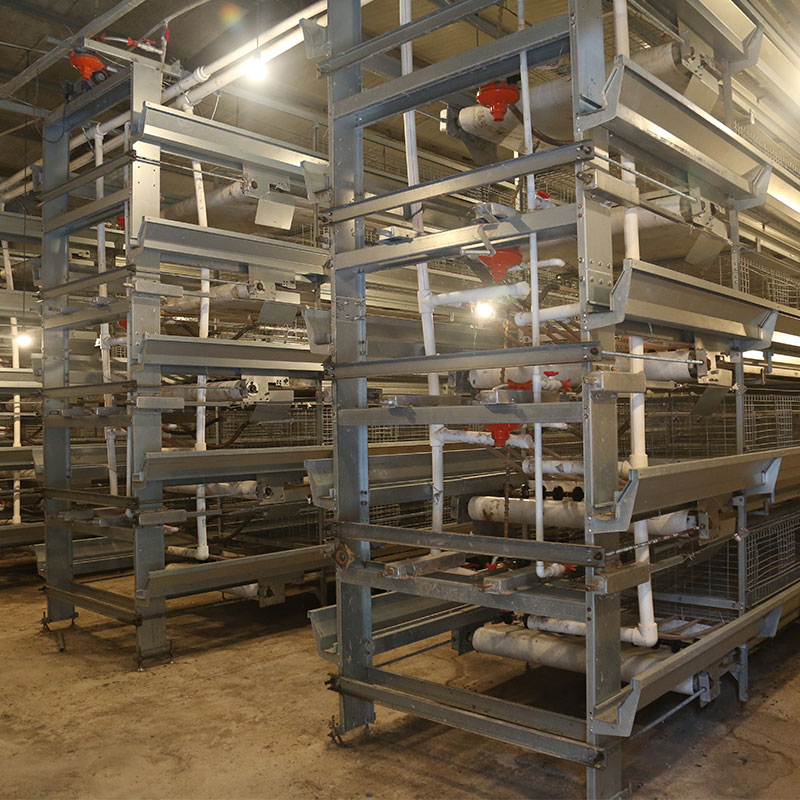
The first 21 days determine the entire trajectory of a broiler flock or the lifelong productivity of a layer pullet. During this critical brooding phase, chicks are not just growing; they are building the immune systems, skeletal structures, and metabolic engines that will define their performance. The environment provided in these initial weeks is the single greatest variable under a farmer’s control. While traditional floor brooding has been the standard for generations, a significant shift is occurring toward specialized chicken brooding coop systems. These are not merely cages; they are integrated environments engineered to address the specific physiological needs of the young chick, offering a level of management precision that floor operations struggle to achieve.
The core challenge in any brooding setup is overcoming the chick’s inherent vulnerabilities. A day-old chick possesses minimal thermoregulatory ability. Its down acts as an insulator but does little to generate heat. In a large, open brooding house, maintaining a precise and uniform temperature is a constant battle. Heaters warm the air near them, but drafts from ventilation inlets or cooler floors can create dangerous microclimates. A chick that becomes chilled will divert energy from growth to maintaining its core temperature, and its immune function can be suppressed, making it susceptible to early pathogens.
This is where the brooding coop system introduces its first major advantage: targeted microclimates. Instead of heating the entire volume of a barn, these systems create a smaller, highly controlled environment immediately around the birds. Picture a series of tiered enclosures, each level equipped with its own dedicated heat source, typically radiant heaters suspended just above the cage floor. Unlike heating the air, radiant heat warms the chicks and the solid surfaces directly, much like the sun warms your skin on a cool day. The chick feels the warmth immediately upon it, regardless of the ambient air temperature a few feet above.
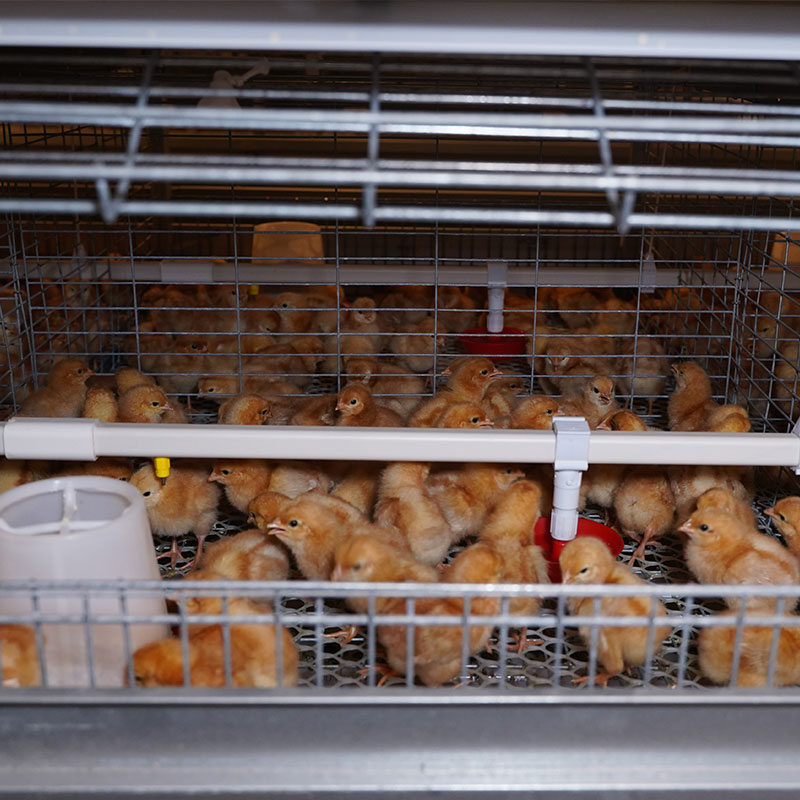
This method is profoundly efficient. A farmer can set the barn’s overall ventilation to optimal levels for air quality—removing ammonia, carbon dioxide, and moisture—without fear of chilling the birds. The barn air might be a comfortable 75°F, while the brooding coop microclimate under the radiant heater is maintained at the chick’s ideal 92-95°F. The energy savings are substantial, as you are no longer wasting fuel to heat empty ceiling space or combating heat loss through walls and insulation. The chick remains in its thermoneutral zone, where feed conversion is most efficient and growth is maximized.
Beyond temperature, access to feed and water is paramount. A weak or less dominant chick in a floor system may have to travel a significant distance from the heat source to find a drinker or a feeder. That journey represents energy expenditure and stress. In a well-designed brooding cage, feed and water are never more than a body-length away. Feeders and nipple drinker lines run the length of each tier, ensuring every chick has constant, unimpeded access. The design of the feeding system also minimizes waste. Adjustable feed trays catch spilled pellets, which chicks can still eat, preventing them from being trampled into the litter and becoming a source of mold or bacteria.
The watering system is a critical component. Nipple drinkers, which release water when pecked, are the standard. They keep water clean and free from contaminants that thrive in open troughs or bell waterers. However, teaching day-old chicks to use them is a common concern. Modern systems integrate training mechanisms. Some feature a small cup beneath the nipple that holds a tiny amount of water, attracting the chick’s attention with a shimmer. Others may use temporary trigger pins that dispense a drop of water with very light pressure, making it easier for the chick to learn the action. Within the first 24 hours, the vast majority of chicks will have learned the system, ensuring excellent hydration from the start.
The flooring of the brooding coop is another area of significant engineering. It must provide secure footing for unsteady legs, be gentle on developing breast bones, and allow manure to pass through cleanly to maintain hygiene. The most common solution is a plastic mesh floor with a carefully calibrated grid pattern. The holes are large enough to allow droppings to fall through but small enough to prevent foot injuries (bumblefoot) and to support the chick comfortably. This separation of bird from manure is perhaps the most powerful health benefit of the system.
On the floor, chicks are in constant contact with their manure. As litter becomes damp—a near inevitability around waterers—it creates an incubator for pathogens like E. coli, coccidia, and Salmonella. Chicks pecking at the litter ingest these organisms, leading to enteric challenges that can require medication and will invariably impact gut health and nutrient absorption. In a cage system, the manure falls through the floor onto a manure belt or into a pit beneath the tiers. This immediate removal drastically reduces the pathogen load the chick is exposed to. The result is a drier, cleaner environment at the bird level, leading to healthier gut development, reduced incidence of disease, and lower mortality rates. For pullet rearers, this means a stronger, more uniform flock with a better chance of reaching its genetic potential in the lay house.
The management of these systems brings a new level of observation and precision to the brooding process. Because the birds are contained on smaller, accessible tiers, daily health checks become far more efficient. A walk down the aisle allows a producer to visually assess every single bird without moving among them. It is easy to spot a chick that is lethargic, off its feed, or showing signs of pasting up (where manure sticks to the vent). Catching and removing such a bird for treatment or culling is a simple task that minimizes disturbance to the rest of the group. This constant, easy visibility allows for rapid intervention, preventing small issues from becoming flock-wide problems.
Stocking density is a crucial calculation. Overcrowding in any system leads to stress, competition for resources, and uneven growth. Brooding coop manufacturers provide clear guidelines on the number of birds per square foot for each phase. The tiered design allows for a high stocking density per square foot of barn space while maintaining excellent bird density per square foot of actual living space. As the chicks grow, most systems are designed to be expanded. Panels can be removed to effectively double the living space on each tier, giving the growing birds the room they need to develop properly without the labor and stress of physically catching and moving them to a new location.
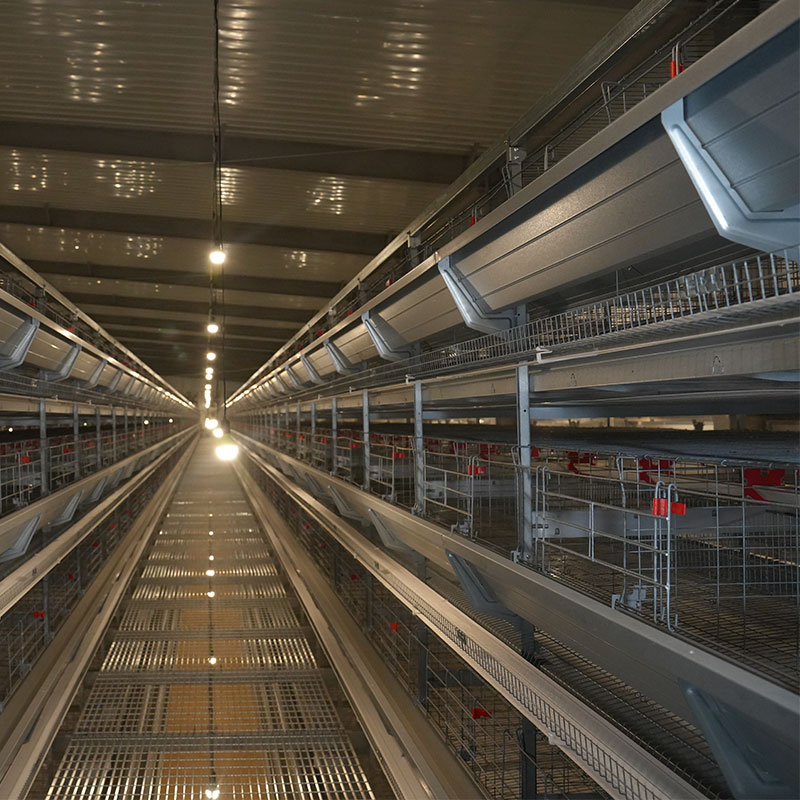
The transition out of the brooding system is a key consideration. For broiler farmers using all-in-all-out production, the entire system is often designed to be mobile or temporary. After the brooding period, the birds may be released onto the floor of the barn for the remainder of their grow-out, or the entire cage structure may be removed. This combines the health benefits of early brooding with the space and cost-effectiveness of floor finishing.
For layer pullet rearers, the transition is typically into the aviary or cage system where they will spend their laying lives. This is where another advantage, sometimes called “system matching,” comes into play. If pullets are reared in a tiered environment with raised slats or mesh floors and nipple drinkers, they are already fully accustomed to the housing system they will encounter at the lay farm. They know how to jump between tiers to find food and water. This eliminates the stress and learning curve associated with moving from a flat floor house to a complex multi-tier aviary. The birds settle into egg production faster and with fewer mislaid eggs or injuries, preserving their peak productivity.
The decision to invest in a dedicated brooding coop system is, ultimately, an economic one. The initial capital outlay is undeniably higher than setting up a traditional floor brooding ring with gas heaters. The return on investment is calculated through several channels: significantly reduced fuel costs for heating, lower mortality rates, improved feed conversion ratios (FCR) in the critical early stage, reduced medication costs, and, for pullets, higher lifetime egg production due to better uniformity and health. The labor savings in daily bird management and the elimination of the labor-intensive task of spreading and later cleaning out litter also contribute to the long-term economic picture.
Implementing such a system requires forethought. Barn layout must be planned to accommodate the physical dimensions of the units and to allow for easy access for feeding trucks and manure removal. Training for staff is essential; understanding how to fine-tune the radiant heaters, manage the ventilation in conjunction with the microclimates, and perform daily checks is different from managing a floor operation. Electrical systems must be robust to handle the load of multiple heaters, and backup power systems are highly recommended to prevent a catastrophic loss of heat.
The evolution of poultry production continues to focus on precision, efficiency, and animal welfare. The specialized chicken brooding coop represents a mature application of these principles. By providing an environment that is meticulously tailored to the biological needs of the young chick—delivering precise heat, immediate nutrition, and unparalleled hygiene—these systems empower farmers to build a stronger foundation for their flocks. The result is not just a healthier bird, but a more resilient, productive, and profitable operation.
1. Drinking system include the water pipes, water pressure adjuster, drinking nipples, Waterline front-end device, dosing system etc, choose them according to customer's needs.
2. High-quality water drinking pipes, pressure regulating valves and water drinking nipples can effectively prevent the water leakage. Drinking system adopt the closed piping system, which can minimize the water pollution.
3. 360-degree drinking nipples provide adequate drinking water for poultry at all stages.
4. The automatic drinking water system mainly adopts the steel ball drinking nipple. lt uses imported high-grad stainless steel, POM resin, and APS engineering material, which is wearing resistant, and the durability can be used for long time.



1. Automatic feeding machine can be chosen between gantry and ladder feeding machine. Gantry type feeding machine is a relatively economical and practical machine with simple operation, remote control walking character, easy to manage.
2. Mechanical transmission device running smoothly, low noise, long service life.
3. With the use of automatic control, the feeding system can adjust the amount of material.
4. Feeding with arched structure, high carrying capacity, not easily deformed.
5. Saving man power, saving feed, greatly improving the efficiency of Large-scale farming.
6. The walking speed of gantry feeding machine is 9--12 m/min.




1. Manure removing system included scraper type and conveyor belt type, Which can reduce the labor intensity and labor cost, keep the chicken shed dry and clean.
2. A type chicken cage can use scraper type or conveyor belt type.


3. The scraper type is suitable for A type cages, which can clean two or three rows. For the starters, this type is a good choice. lt can not only save some labor cost, but also save some investment in the whole project. The cleaning speed is 6-10 meters per minute.
4. Conveyor belt type is more suitable for large scale farming. The manure removing belt we use is high quality PP material (polypropylene). The walking speed is 2-4 meters per minute.



High Quality Pellets Made by Mobile Pellet Machine
1. It has professional designed angle of the blade. After the dynamic balance test one by one, the blade can operate smoothly.
2. The air volume is consistent in the whole life of the fan. Bearings has advantage of high strength, low noise, durable and so on.
1. The cooling pads uses high-quality wet curtain paper and adopts space cross-linking technology, which has the advantages of high water absorption, high water resistance, anti-toxicity and long service life.
2. The cooling efficiency is over 80%, without surfactant, natural water absorption, fast diffusion speed and long-lasting effect.
3. The product does not contain phenol and other chemical substances that are easy to cause skin allergies. It is non-toxic and harmless to the human body and chicken when installed and used. It is green, safe, energy-saving, environmentally friendly, economical, and easy to install.
4. The frame aluminum alloy has high strength, good corrosion resistance, durability and beautiful appearance.
5. Use a special filter for the cooling pad at the upper water to ensure clean water quality and support efficient water circulation components.
6. Combined with a negative pressure fan, it can effectively lower the indoor temperature.
The window is made of special selected high-quality engineering plastic, with high strength and long service life, together with superior anti-aging and anti-UV performance.
Function: Ventilation of the chicken house, usually used in the winter.
This system can adjust the wind speed and direction, thus the cold air will not reach chicken directly , which can effectively prevent the phenomenon of cold stress in chicken.
Environmental control system equipment is suitable for large-scale and intensive farming. According to customer requirements, we can provide various types of smart poultry equipment.
1. Our poultry management system is a modular system that manages all aspects of the chicken house, such as climate, temperature, humidity, ammonia, feeding, feed weighing, lighting and ventilation systems, and can monitor the situation of the chicken house in real time through a computer and mobile phone.
2. The management computer is the heart of the poultry farm, allowing you to easily monitor the entire poultry farm.

 WeChat:+8617838608255