The morning feed run tells the story. On one farm, it’s a two-hour marathon of wrestling with heavy troughs, navigating muddy lots, and watching valuable feed get trampled into the ground. On another, it’s a thirty-minute circuit of checking automated lines, observing content birds, and collecting clean eggs from rolling belts. The difference isn’t just labor; it’s the fundamental infrastructure of the operation: the cage system.
For generations, the choice was simple—open range or a basic shed. Today, the modern poultry farmer faces a complex matrix of decisions. Selecting the right cage system is no longer about mere containment; it’s about investing in the operational heart of your business. It dictates flock health, defines labor efficiency, determines egg quality, and ultimately, calculates your bottom line. Understanding the nuances of each system is paramount.
The Battery Cage: Precision and Productivity Under One Roof
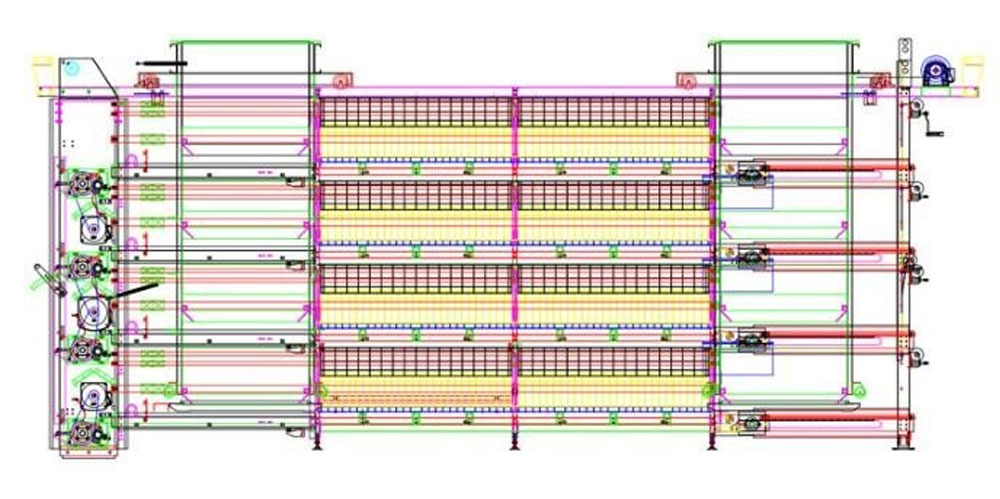
The conventional battery cage system, often now termed the “enriched” or “colony” system in its modern iterations, represents the pinnacle of controlled-environment farming. Picture a long, open-sided shed, its interior a symphony of organized steel. Rows of multi-tiered cages run the length of the building, each tier a self-contained environment for a small group of hens.
The engineering is focused on streamlining the life cycle of the egg. A slight downward slope on the cage floor means that within moments of being laid, an egg gently rolls away from the bird onto a conveyor belt. This single feature is a monumental victory for food safety and quality. The egg is immediately separated from the flock, drastically reducing opportunities for contamination from manure, bacteria, or cracking from foot traffic. For a farmer grading eggs, the difference is stark: a higher percentage of Grade A eggs with clean, uncracked shells directly translates to premium pricing and less waste.
Below the cages, another set of conveyors or a deep pit handles manure management. By keeping waste separate from the birds and their living space, ammonia levels are controlled, and the flock’s respiratory health is significantly improved. This isn’t just an animal welfare point; a bird struggling to breathe is a bird not converting feed into eggs efficiently. The feed itself is delivered via a continuous chain or trough system, ensuring every bird has equal access to a balanced ration without competition or spillage. Water is provided through nipple drinkers, which keep water fresh and prevent the spread of disease common in open waterers.
The management benefits are profound. flock monitoring becomes a data-driven exercise. You can track feed consumption per row, water intake, and egg production rates with precision, allowing for quick intervention if a problem arises. Vaccinations and health checks are logistically simpler. The system is designed for scale, enabling one or two workers to manage thousands of birds effectively. However, this intensity requires an unwavering commitment to barn environment. The ventilation system is the lungs of the operation. A failure here isn’t an inconvenience; it’s a catastrophe. Similarly, a power outage that stops feed chains and water pumps has immediate and severe consequences, making backup systems non-negotiable.
The Aviary System: Freedom and Complexity in Equal Measure
The aviary system answers a growing market demand for eggs produced in a less confined environment. Walk into an aviary barn, and the first thing you notice is the activity. Birds are not confined to small cages but are free to move throughout a large, multi-level enclosure that spans the entire width of the barn. They flutter between perches, forage in scratch areas on the floor, and lay eggs in private nest boxes lined along the walls.
This system is designed to express natural behaviors. Hens can stretch their wings, dust bathe, and interact in a larger social structure. This behavioral freedom can lead to calmer, less-stressed birds, which can positively impact overall flock uniformity and health. For the farmer marketing eggs directly to consumers or through retailers prioritizing welfare, this system provides a powerful story.
But this freedom introduces a different set of management challenges. The egg, for instance, is no longer automatically collected. A hen may lay her egg in a designated nest box—which often has a collective conveyor belt—or she may decide to lay it on the floor. “Floor eggs” are a significant operational headache. They are dirty, more likely to be cracked, and susceptible to being pecked or eaten by other birds, which can start a difficult-to-break vice. Collecting them is a manual, labor-intensive process that must be done multiple times a day.
Manure management is also more complex. While belts are often installed under perching areas to catch the majority of nighttime droppings, manure is distributed throughout the entire system—on the floor, on platforms, and in scratch areas. This requires regular litter management to keep it dry and friable, preventing ammonia buildup and paw quality issues. Feed and water systems, while still automated, must be distributed across the entire barn to ensure all birds can access them, requiring more infrastructure.
The aviary demands a higher level of stockmanship. You must be an astute observer of bird behavior, understanding flock dynamics to prevent issues like feather pecking or crowding. Training pullets to use the multi-tiered system before they are moved into the laying barn is a critical step that cannot be skipped; untrained birds will huddle on the floor, failing to use the resources provided. It is a system that trades some automation for animal behavior, requiring more hands-on time and skilled labor.
The Combi-System: A Strategic Hybrid Approach
For many farmers, the choice between ultimate control and enhanced welfare isn’t a binary one. The combi-system, or convertible system, has emerged as a strategic middle ground. Think of it as a modular approach to poultry housing.
The core structure is that of an aviary: a large, open barn with multiple tiers of platforms, perches, and feeders. This allows the birds the freedom to move, perch, and express natural behaviors during the day. The critical difference is the inclusion of enclosed, darkened nest boxes that are, in effect, small cage units lining the walls. These boxes are highly attractive to laying hens seeking privacy and security.
This hybrid design captures the primary advantages of both systems. It satisfies the hen’s instinct to seek a secluded nest, virtually eliminating floor eggs and delivering a product with the clean, high quality of a battery system. The farmer gets the automated egg collection and food safety benefits without the labor of searching for eggs on the barn floor. Meanwhile, the birds still enjoy the freedom to move, forage, and perch when they are not laying, addressing welfare concerns and market demands.
The combi-system is particularly adept at future-proofing an investment. As regulations and consumer preferences continue to evolve, a farmer with a combi-system has already adapted. It provides the flexibility to market eggs into different streams depending on price premiums. It is an acknowledgment that the industry is not static and that the most resilient operations are those built with adaptability in mind. The management skills required are a blend of both worlds: the data-driven precision of the battery system and the behavioral observation skills of the aviary system.
Considerations Beyond the Cage Type
The decision between battery, aviary, and combi is the first and largest, but it is far from the only one. The hardware within the system dictates its daily performance.
The choice between chain feeders and pan feeders is a classic example. A chain feeder is a continuous loop that moves feed along a trough. It’s a proven, simple technology. However, it can lead to feed segregation, where finer particles and vitamins settle at the bottom of the trough, potentially leading to inconsistent nutrient intake down the line. A pan feeder, which drops a measured amount of feed into a circular pan at each station, ensures every bird gets the same complete ration. It’s more expensive but can improve feed conversion ratio and flock uniformity.
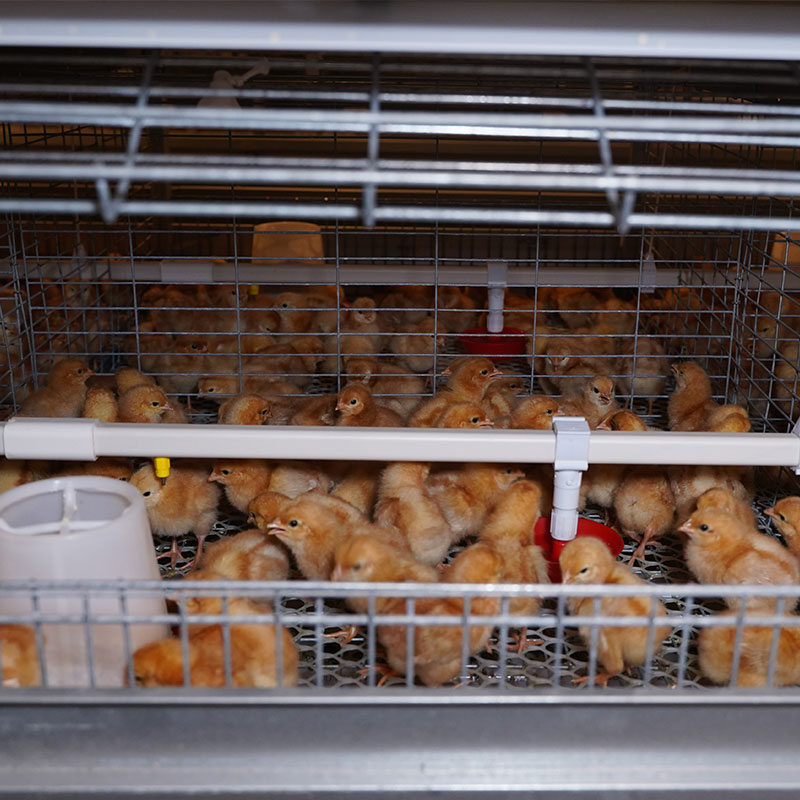
Watering systems are equally critical. Nipple drinkers are the standard for hygiene, but their placement matters. If a hen has to stretch unnaturally to reach a water nipple, her water consumption will drop, and with it, her feed intake and egg production. Ensuring drinkers are at the correct height and that water pressure is calibrated to provide a droplet without leaking is a daily check that has a direct impact on productivity.
Manure handling systems present another fork in the road. A daily scraper system removes manure constantly, requiring less barn height but more daily energy use. A deep-pit system, where manure accumulates over a single flock or longer, requires a taller building but can simplify daily operations and allow for the collection of manure as a single, valuable compost resource.
Ventilation is the invisible hand that guides flock health. Tunnel ventilation, which pulls air along the length of the barn like a wind tunnel, is excellent for hot weather cooling. Cross-ventilation, which pulls air through side walls, can provide more uniform air distribution and is often preferred in cooler climates or for aviary systems where birds move throughout the space. The choice here is dictated by your local climate, barn orientation, and the chosen cage system.
Making the Investment: A Calculation of Value, Not Just Cost
The initial price tag on a cage system is a dangerous metric to use in isolation. A cheaper, less robust system will reveal its true cost over time through constant maintenance, shorter lifespan, higher energy consumption, and poorer production metrics. The true calculation is Total Cost of Ownership (TCO) over a 10-to-15-year horizon.

This includes the capital expenditure, but also the operating costs: the labor hours saved by automation, the feed saved by efficient delivery systems, the reduced medication costs from improved bird health, the higher revenue from a greater percentage of saleable eggs, and the avoided cost of system downtime for repairs.
Furthermore, the system must be viewed as a tool to achieve your specific business goals. Are you a contract producer focused on maximizing output per square foot for a integrator? A battery system likely aligns with those KPIs. Are you an independent producer building a brand around pasture-raised or welfare-focused eggs sold at a farmers' market? An aviary or combi-system may be the necessary foundation for that story. Are you uncertain about future market shifts? The flexibility of a combi-system provides a hedge against change.
Finally, the quality of the supplier is as important as the quality of the steel. This is a long-term partnership. You need a supplier who provides not just equipment but expert advice on barn layout, installation supervision, and, crucially, readily available spare parts and technical support. A system failure on a Saturday afternoon requires a response faster than next-day delivery. The reputation of the manufacturer and their local dealer network is a critical, non-negotiable component of the investment.
The rows of cages are the framework upon which every other aspect of the poultry operation is built. They influence the daily routine, the health of the flock, the quality of the product, and the well-being of the farmer. Choosing the right system is a complex decision, but it is ultimately a strategic one that defines the trajectory of a farm for years to come. It is the difference between a daily struggle and a streamlined operation, between reacting to problems and managing for success.
1. Drinking system include the water pipes, water pressure adjuster, drinking nipples, Waterline front-end device, dosing system etc, choose them according to customer's needs.
2. High-quality water drinking pipes, pressure regulating valves and water drinking nipples can effectively prevent the water leakage. Drinking system adopt the closed piping system, which can minimize the water pollution.
3. 360-degree drinking nipples provide adequate drinking water for poultry at all stages.
4. The automatic drinking water system mainly adopts the steel ball drinking nipple. lt uses imported high-grad stainless steel, POM resin, and APS engineering material, which is wearing resistant, and the durability can be used for long time.



1. Automatic feeding machine can be chosen between gantry and ladder feeding machine. Gantry type feeding machine is a relatively economical and practical machine with simple operation, remote control walking character, easy to manage.
2. Mechanical transmission device running smoothly, low noise, long service life.
3. With the use of automatic control, the feeding system can adjust the amount of material.
4. Feeding with arched structure, high carrying capacity, not easily deformed.
5. Saving man power, saving feed, greatly improving the efficiency of Large-scale farming.
6. The walking speed of gantry feeding machine is 9--12 m/min.




1. Manure removing system included scraper type and conveyor belt type, Which can reduce the labor intensity and labor cost, keep the chicken shed dry and clean.
2. A type chicken cage can use scraper type or conveyor belt type.


3. The scraper type is suitable for A type cages, which can clean two or three rows. For the starters, this type is a good choice. lt can not only save some labor cost, but also save some investment in the whole project. The cleaning speed is 6-10 meters per minute.
4. Conveyor belt type is more suitable for large scale farming. The manure removing belt we use is high quality PP material (polypropylene). The walking speed is 2-4 meters per minute.



High Quality Pellets Made by Mobile Pellet Machine
1. It has professional designed angle of the blade. After the dynamic balance test one by one, the blade can operate smoothly.
2. The air volume is consistent in the whole life of the fan. Bearings has advantage of high strength, low noise, durable and so on.
1. The cooling pads uses high-quality wet curtain paper and adopts space cross-linking technology, which has the advantages of high water absorption, high water resistance, anti-toxicity and long service life.
2. The cooling efficiency is over 80%, without surfactant, natural water absorption, fast diffusion speed and long-lasting effect.
3. The product does not contain phenol and other chemical substances that are easy to cause skin allergies. It is non-toxic and harmless to the human body and chicken when installed and used. It is green, safe, energy-saving, environmentally friendly, economical, and easy to install.
4. The frame aluminum alloy has high strength, good corrosion resistance, durability and beautiful appearance.
5. Use a special filter for the cooling pad at the upper water to ensure clean water quality and support efficient water circulation components.
6. Combined with a negative pressure fan, it can effectively lower the indoor temperature.
The window is made of special selected high-quality engineering plastic, with high strength and long service life, together with superior anti-aging and anti-UV performance.
Function: Ventilation of the chicken house, usually used in the winter.
This system can adjust the wind speed and direction, thus the cold air will not reach chicken directly , which can effectively prevent the phenomenon of cold stress in chicken.
Environmental control system equipment is suitable for large-scale and intensive farming. According to customer requirements, we can provide various types of smart poultry equipment.
1. Our poultry management system is a modular system that manages all aspects of the chicken house, such as climate, temperature, humidity, ammonia, feeding, feed weighing, lighting and ventilation systems, and can monitor the situation of the chicken house in real time through a computer and mobile phone.
2. The management computer is the heart of the poultry farm, allowing you to easily monitor the entire poultry farm.

 WeChat:+8617838608255