
For poultry farmers who have ever watched birds pile into a corner during crate loading, the resulting pressure sores and broken feathers are more than an inconvenience; they represent a direct loss of product quality and animal welfare. The design of transport and housing systems is not merely about moving birds from point A to point B or providing shelter. It is a critical component of flock management that influences everything from egg safety to bird longevity. The right cage system functions as an integrated tool for managing animal welfare, operational efficiency, and final product quality.
The journey of a layer from the pullet house to the production facility is one of the most stressful events in its life. The equipment used during this transition must be engineered to mitigate this stress, not contribute to it. Consider a standard galvanized steel transport crate. At first glance, its value seems to be in its durability and stackability. However, the true value is revealed in the details of its design. A crate with a drop-down door, for instance, transforms a chaotic loading process. Instead of forcing a worker to reach deep into a crate to extract a frightened bird, potentially injuring its wings or legs, the entire front panel opens. This allows for a calm, guided exit, reducing bird panic and handler strain. The smooth, rounded edges of the wire mesh prevent claws from catching and snagging, eliminating a common source of torn nails and foot injuries that can lead to infection.
Ventilation in a transport cage is not just about holes in the sides. It is about creating a consistent microclimate during a stationary or moving journey. A well-designed crate features open mesh construction on all sides, including the floor. This allows for a cross-flow of air that carries away the heat and moisture the birds generate collectively. In a poorly ventilated container, this moisture condenses, dampening feathers and chilling the birds, while ammonia from droppings can build up, irritating respiratory systems. The mesh floor plays a dual role. While facilitating air movement, it also allows droppings to fall through into a catchment area or onto the crate below. This separation is fundamental to maintaining hygiene. A bird arriving at its destination with clean, dry feathers is a bird that has not had to expend extra energy to regulate its body temperature and is not carrying a high bacterial load into its new environment.

Durability in farming equipment is measured in cycles, not just years. A transport crate might be used, cleaned, and stored dozens of times in a single year. The choice of material and finish directly impacts its lifespan and hygiene. A heavy-duty galvanized coating is not a luxury; it is a necessity. This zinc coating acts as a sacrificial layer, preventing the underlying steel from rusting when exposed to moisture during high-pressure washing and harsh weather. A farmer pressure-washing a fleet of crates needs to know that the water jet will remove organic matter without stripping off a cheap paint coating that would leave bare metal exposed to the elements. Rust is not just unsightly; it creates a rough surface that is difficult to sanitize completely, harboring pathogens like Salmonella and E. coli between flocks. The structural integrity—the strength of the welds at every joint—determines whether the crate will maintain its shape when stacked four or five high in a truck. A bent or broken wire can create a sharp protrusion, a hazard to both birds and handlers.
Beyond transport, the principles of good cage design extend to stationary housing within the coop, particularly for layers. The concept of "feather-friendly" housing is grounded in providing an environment that supports the bird's natural behaviors while protecting its physical condition. The wire mesh used for the flooring of layer cages is a precise engineering element. The spacing must be small enough to securely support a hen's foot without her toes slipping through, yet large enough to allow manure to pass through freely. If the gaps are too large, the bird experiences discomfort and potential foot damage; if too small, the floor becomes clogged, creating a dirty environment and increasing ammonia levels.
The gentle slope of the cage floor towards the egg collection roll-out curtain is a silent, continuous labor-saving device. As a hen lays an egg, it rolls away from her immediate nesting area. This simple action achieves several goals. It prevents the egg from being broken or soiled by the bird standing on it. It significantly reduces the incidence of egg-eating, a vice that can spread through a flock once learned. For the farmer, it means that eggs are automatically gathered in a clean, accessible trough, ready for collection. This design minimizes human contact with the birds during the multiple daily egg collections, reducing flock disturbance.
Feed and water systems integrated into the cage are points of constant interaction. The design of the feed trough can influence feed wastage, a significant variable cost. A trough with a rolled lip or an internal ledge can discourage birds from flicking feed out with their beaks, a common behavior. It also ensures that all birds along the line have equal access, preventing dominant individuals from monopolizing resources. Nipple drinking systems, now standard in modern setups, represent a major advancement in water hygiene. Unlike open troughs, which can become contaminated with feed, dust, and manure, nipple drinkers deliver clean water on demand. A hen learns to activate the pin with her beak, receiving a fresh drop of water each time. This system keeps the birds and their environment drier, which in turn suppresses the growth of mold and bacteria. The height of these nipples must be adjustable as the birds grow, ensuring they can access water comfortably without stretching upward or crouching down.
Space allocation is a complex calculation balancing animal welfare, economics, and physiology. It is not simply a matter of square inches per bird. The term "usable space" is more appropriate. A cage must provide enough room for all inhabitants to simultaneously perform essential behaviors: standing upright without their combs touching the top, turning around freely, and flapping their wings without injuring themselves or their cage mates. Overcrowding creates a cascade of problems. It increases competition for feed and water, leading to uneven growth and production. It elevates stress levels, which can suppress immune function and make the flock more susceptible to disease. It also leads to higher levels of feather pecking and cannibalism. Providing adequate space is a proactive measure for flock health, reducing the need for interventions like beak trimming.
The long-term economic perspective on cage investment requires looking beyond the initial purchase price. A cheaper, lightly galvanized crate may save money upfront but will likely begin to rust after a single season of rigorous use and cleaning. Its welds may be weaker, leading to structural failure under load. This results in costly repairs, premature replacement, and potential losses from bird injury. Conversely, a heavier-gauge, hot-dip galvanized crate with reinforced welds may carry a higher initial cost but will withstand years of use, countless washings, and exposure to the corrosive elements of a poultry environment. Its total cost of ownership, when amortized over a decade, is often significantly lower. This same principle applies to permanent coop cages. A robust system that protects bird welfare will result in a more consistent rate of lay, better egg quality with stronger shells, and lower mortality rates. These performance metrics directly translate to higher revenue and profitability.
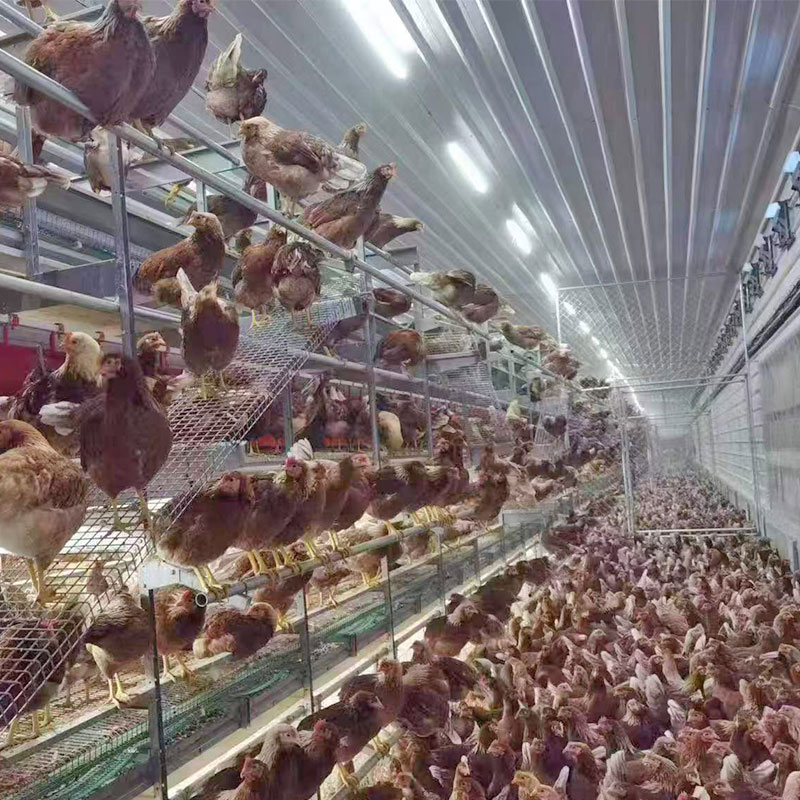
The process of cleaning and sanitizing is where the design of the cage is truly tested. A system with numerous corners, sharp angles, and inaccessible spots is impossible to clean effectively. Manure and organic matter will build up in these areas, creating reservoirs for parasites and pathogens. A well-designed transport crate or layer cage prioritizes smooth, rounded surfaces and an open structure that allows cleaning solutions and water to reach all surfaces. The ability to thoroughly clean equipment is the foundation of any effective biosecurity protocol. After a flock is moved or depopulated, all caging must undergo a multi-step process: dry cleaning to remove organic debris, soaking with a detergent to break down biofilms, high-pressure rinsing with hot water, and finally, application of an approved disinfectant. For this process to work, the design of the equipment must not harbor material in the first place. The choice of a system that facilitates this deep cleaning is a direct investment in the health of every subsequent flock that uses it.
The relationship between housing, transport, and final product quality is direct and measurable. A hen that lives in a well-designed cage with easy access to feed and water, a clean environment, and sufficient space will experience less stress. This physiological state supports a strong immune system and allows the bird to direct its nutritional intake toward consistent egg production. The eggs themselves will benefit. A calm bird is less likely to produce thin-shelled or misshapen eggs. The automated roll-away system ensures eggs are collected quickly, minimizing cracks and keeping them clean. This results in a higher percentage of Grade A eggs entering the marketplace. Similarly, a bird that is transported in a crate that minimizes physical injury and thermal stress arrives at the processing plant or new laying facility in superior condition. For meat birds, this means fewer downgrades due to bruising or broken wings. For layers, it means a shorter recovery period before they resume peak production.
Selecting the right system requires a hands-on evaluation. It is advisable to inspect sample units. Test the latches and doors—do they operate smoothly and feel robust? Examine the welds—are they clean, complete, and free of splatter? Run a cloth along the wire edges—are they smooth, or are there burrs that could snag? Inquire about the gauge of the wire and the specific type of galvanization used. Hot-dip galvanizing, where the steel is immersed in molten zinc, provides a much thicker, more durable coating than electroplating. Ask the manufacturer about the recommended stocking densities for different bird weights to see if their guidance aligns with modern welfare standards. The goal is to find equipment that becomes a seamless, reliable extension of the daily management routine, equipment that supports the birds' well-being while streamlining the labor required to care for them. The right cage is not a container; it is a critical piece of infrastructure that supports the entire production cycle.
1. Drinking system include the water pipes, water pressure adjuster, drinking nipples, Waterline front-end device, dosing system etc, choose them according to customer's needs.
2. High-quality water drinking pipes, pressure regulating valves and water drinking nipples can effectively prevent the water leakage. Drinking system adopt the closed piping system, which can minimize the water pollution.
3. 360-degree drinking nipples provide adequate drinking water for poultry at all stages.
4. The automatic drinking water system mainly adopts the steel ball drinking nipple. lt uses imported high-grad stainless steel, POM resin, and APS engineering material, which is wearing resistant, and the durability can be used for long time.



1. Automatic feeding machine can be chosen between gantry and ladder feeding machine. Gantry type feeding machine is a relatively economical and practical machine with simple operation, remote control walking character, easy to manage.
2. Mechanical transmission device running smoothly, low noise, long service life.
3. With the use of automatic control, the feeding system can adjust the amount of material.
4. Feeding with arched structure, high carrying capacity, not easily deformed.
5. Saving man power, saving feed, greatly improving the efficiency of Large-scale farming.
6. The walking speed of gantry feeding machine is 9--12 m/min.




1. Manure removing system included scraper type and conveyor belt type, Which can reduce the labor intensity and labor cost, keep the chicken shed dry and clean.
2. A type chicken cage can use scraper type or conveyor belt type.


3. The scraper type is suitable for A type cages, which can clean two or three rows. For the starters, this type is a good choice. lt can not only save some labor cost, but also save some investment in the whole project. The cleaning speed is 6-10 meters per minute.
4. Conveyor belt type is more suitable for large scale farming. The manure removing belt we use is high quality PP material (polypropylene). The walking speed is 2-4 meters per minute.



High Quality Pellets Made by Mobile Pellet Machine
1. It has professional designed angle of the blade. After the dynamic balance test one by one, the blade can operate smoothly.
2. The air volume is consistent in the whole life of the fan. Bearings has advantage of high strength, low noise, durable and so on.
1. The cooling pads uses high-quality wet curtain paper and adopts space cross-linking technology, which has the advantages of high water absorption, high water resistance, anti-toxicity and long service life.
2. The cooling efficiency is over 80%, without surfactant, natural water absorption, fast diffusion speed and long-lasting effect.
3. The product does not contain phenol and other chemical substances that are easy to cause skin allergies. It is non-toxic and harmless to the human body and chicken when installed and used. It is green, safe, energy-saving, environmentally friendly, economical, and easy to install.
4. The frame aluminum alloy has high strength, good corrosion resistance, durability and beautiful appearance.
5. Use a special filter for the cooling pad at the upper water to ensure clean water quality and support efficient water circulation components.
6. Combined with a negative pressure fan, it can effectively lower the indoor temperature.
The window is made of special selected high-quality engineering plastic, with high strength and long service life, together with superior anti-aging and anti-UV performance.
Function: Ventilation of the chicken house, usually used in the winter.
This system can adjust the wind speed and direction, thus the cold air will not reach chicken directly , which can effectively prevent the phenomenon of cold stress in chicken.
Environmental control system equipment is suitable for large-scale and intensive farming. According to customer requirements, we can provide various types of smart poultry equipment.
1. Our poultry management system is a modular system that manages all aspects of the chicken house, such as climate, temperature, humidity, ammonia, feeding, feed weighing, lighting and ventilation systems, and can monitor the situation of the chicken house in real time through a computer and mobile phone.
2. The management computer is the heart of the poultry farm, allowing you to easily monitor the entire poultry farm.

 WeChat:+8617838608255