
The financial weight of a new layer cage system sits squarely on the shoulders of every poultry farmer considering an upgrade or expansion. The question isn't just "what does it cost?" but "what am I really paying for, and what will it return?" The price tag on a set of chicken layer cages is a deceptively simple number that obscures a complex calculation of materials, design, functionality, and long-term operational impact. Understanding the variables that dictate this cost is the difference between making a smart investment and acquiring a liability disguised as an asset.
The most immediate factor determining price is the material used in the cage’s construction. This isn't just about thickness; it's about the quality and type of steel and the process used to protect it.
Consider galvanization. A farmer might see two cages that look nearly identical, but one is significantly cheaper. The lower-cost unit likely uses electro-galvanized wire. Think of this as a thin, superficial coating, like a light dusting of snow that melts at the first sign of moisture. In a barn environment with constant ammonia exposure from manure, this coating degrades quickly. Within a year or two, the wires begin to rust. Rust weakens the structure, creates rough surfaces that can injure birds' feet, and drastically shortens the system's lifespan.
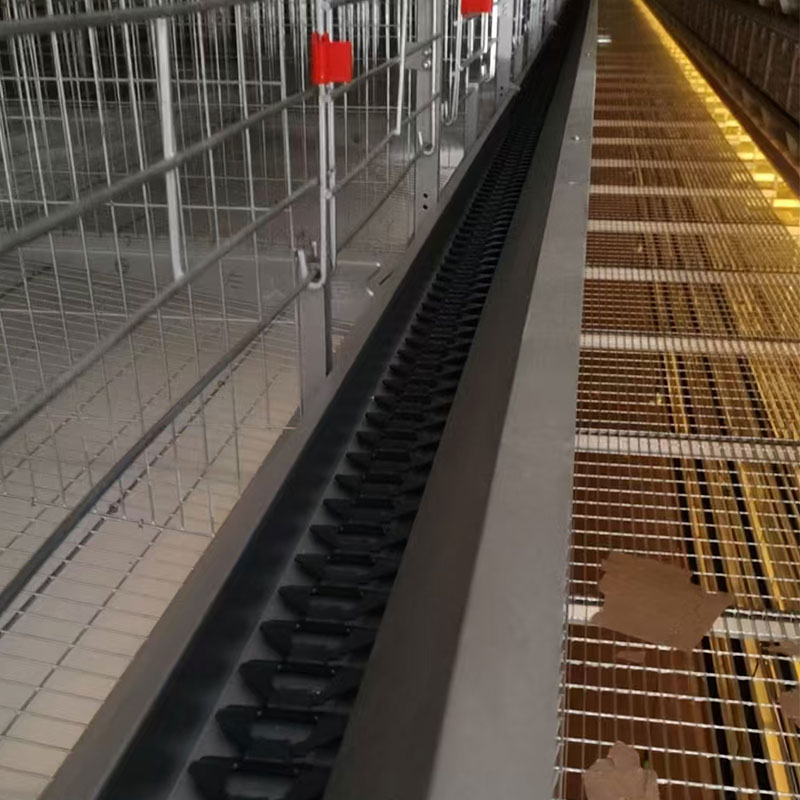
The higher-priced cage uses hot-dip galvanization. Here, the entire steel wire structure is immersed in a molten zinc bath. This process creates a much thicker, bonded coating that is exponentially more resistant to corrosion. It’s not a coating that can chip off; it becomes part of the wire itself. A hot-dip galvanized system might cost 20-30% more upfront, but it will last for 15-20 years instead of 5-7. The cost per year of operation is far lower, and the farmer avoids the premature capital expense of a full replacement. The gauge, or thickness, of the wire is equally critical. A heavier-gauge wire used in the cage floor supports the constant weight of birds without sagging over time. A sagging floor is more than an inconvenience; it leads to uneven egg roll-out, causing eggs to pile up and crack, resulting in direct revenue loss and creating a food safety hazard from broken egg material.
Beyond the raw materials, the engineering design of the cage system is a massive driver of both initial price and long-term profitability. This is where the concept of bird density intersects with welfare and productivity.
A basic, low-density cage system might house 6-7 birds in a compartment. The price per bird seems low, and the initial investment is attractive. However, this design often lacks sophistication in its egg collection system, manure management, and feeding mechanisms. The farmer may save on the cage purchase but pay for it daily in labor. Eggs must be collected by hand multiple times a day to prevent cracking and soiling. Manure builds up beneath the cages, requiring frequent scraping, which elevates labor costs and disturbs the birds, impacting lay rates.
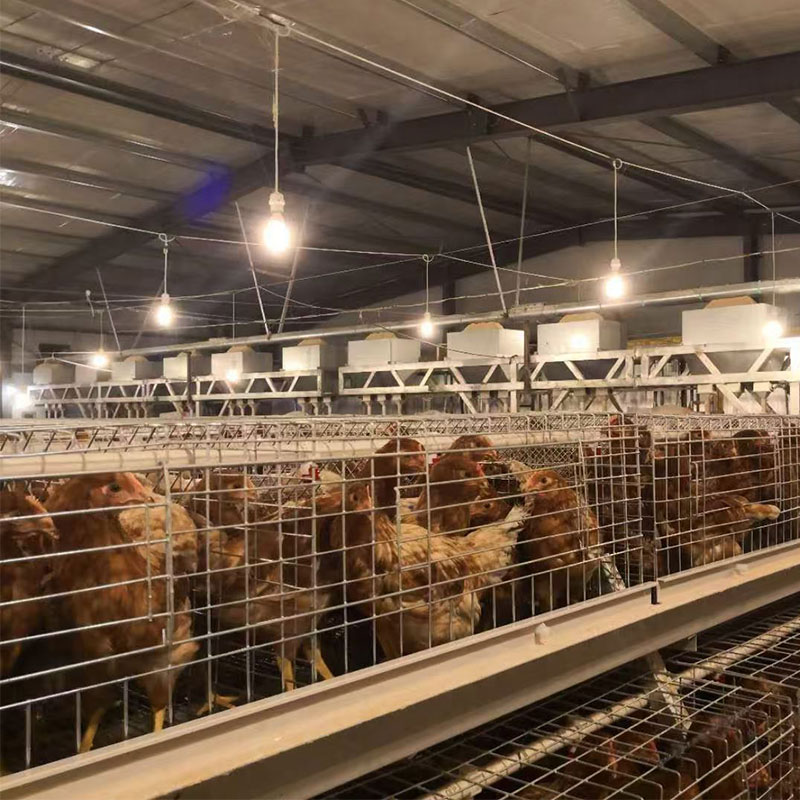
Conversely, a high-density, high-rise cage system represents a much larger capital outlay. The price per bird housed is higher. But this system is an integrated production unit. It features automated belt systems for both eggs and manure. The eggs are gently conveyed on a soft plastic belt directly to the packing room, minimizing handling and drastically reducing cracks and seconds. The manure drying and removal system operates on a set schedule, keeping ammonia levels low, improving overall bird health and air quality, and virtually eliminating manual manure scraping. The feeding system is precise, reducing waste and ensuring consistent nutrition. The higher initial price buys a reduction in ongoing variable costs, particularly labor, and can contribute to better flock performance. The choice isn't just about cage cost; it's about choosing a higher level of operational efficiency.
The configuration of the cages—the layout within the poultry house—is the next critical price determinant. The common configurations are A-type, H-type, and L-type, each with distinct cost and operational implications.
An A-type cage, often seen in smaller operations, is arranged in rows with a steep "A" shape. It’s generally the least expensive system to purchase and install per bird. Its simplicity is its advantage. However, it maximizes space utilization at the potential expense of accessibility. Reaching birds at the back of the cage for inspection, vaccination, or removal can be difficult. This can increase bird stress during handling and make daily health checks less thorough. For a farmer focused strictly on minimizing the initial equipment cost, the A-type offers a straightforward solution.
The H-type cage, or flat-deck system, is a series of vertical tiers, each a flat layer. This is a more expensive system. The cost increases because it requires a stronger superstructure to support the weight of multiple full levels and often incorporates more sophisticated automation. The payoff is unparalleled access. The farmer can walk along every tier, easily observing every bird, identifying health issues immediately, and performing procedures with minimal disruption. This improved animal oversight can directly translate into lower mortality rates and more consistent production. The system also typically offers a better manure management design, with each tier having its own manure belt, leading to drier manure and a healthier environment.
L-type cages represent a hybrid, often a compromise between the space efficiency of the A-type and the accessibility of the H-type. The price point usually falls between the two. The manure belt is often located on one side of the system, influencing the layout and workflow of the barn. The "right" choice depends entirely on the farmer's priorities: absolute lowest cost (A-type), superior bird management and long-term efficiency (H-type), or a middle-ground solution (L-type).
No modern cage system exists in isolation. The degree of automation integrated into the system is perhaps the single largest variable in its final price. This is where a basic cage becomes a capital asset that actively manages costs.
A fully manual system has a low price. It consists of the cages themselves. Feeding is done by hand or with a simple motorized chain that requires manual monitoring. Watering is via basic nipple drinkers. Egg collection is a manual, labor-intensive task performed several times daily. Manure is left to pile up and is cleaned out only after the flock is depopulated. The financial burden here is not the cage price, but the relentless and expensive demand for human labor. The profit from the eggs is constantly eroded by wage costs.
A semi-automated system carries a higher price tag. It might include an automated feeding system with sensors to alert when feed bins are low, and an automated egg collection belt that brings eggs to a central point for easy gathering. This reduces labor needs significantly, perhaps cutting daily chore time in half. The farmer is investing in equipment to save on recurring labor expenses.
A fully automated, closed-loop system commands the highest price. This is the pinnacle of integration. It includes everything in a semi-automated system but adds comprehensive environmental controls. Sensors monitor temperature, humidity, and ammonia levels, linking directly to variable-speed fans and heating systems to maintain a perfect climate. Advanced lighting systems simulate dawn and dusk to optimize laying cycles. Automated manure belts run on timers, removing waste continuously to keep the air clean. The initial investment is substantial, but it allows one person to manage a flock of tens of thousands of birds with remarkable efficiency. The return on investment is calculated not just in labor savings, but in optimized feed conversion, higher peak lay rates, longer peak periods, and superior bird health from a consistently ideal environment.
Finally, the "hidden" costs beyond the cage unit itself must be factored into any price assessment. The delivered price of the cages is only part of the story.
Shipping from the manufacturer, especially for large systems from overseas, can add a significant percentage to the total cost. Local manufacturers might have a higher unit price, but eliminate hefty shipping and import duties, sometimes making the total project cost competitive. Installation is another major factor. Some suppliers provide only the equipment, leaving the farmer to hire local contractors to assemble the complex system, risking improper setup. Other suppliers offer full turn-key installation, where their trained technicians build the entire system. This service is included in a higher overall price but guarantees the system is assembled correctly and operational from day one, preventing costly mistakes and delays.
After-sales service and parts availability have a tangible cost value. A cheaper system from a supplier with no local presence becomes enormously expensive the moment a critical component, like a main drive gear for an egg belt, fails. If the part must be shipped from overseas, production can be halted for weeks. A system from a supplier with a local warehouse and technical team, while perhaps 10% more expensive initially, provides insurance against catastrophic downtime. The ability to get a replacement part within 24 hours protects revenue flow.
The true price of a chicken layer cage system is not found on an invoice. It is a calculation that spans the entire lifespan of the equipment. A cheap cage that rusts out in five years, requires three full-time laborers, and leads to a 5% higher rate of cracked eggs is, in reality, far more expensive than a robust, automated system with a higher purchase price. The intelligent investment involves looking past the initial sticker shock. It requires evaluating the quality of materials to forecast longevity, understanding how the design will impact daily labor costs, and choosing a level of automation that aligns with the scale and management style of the operation. The goal is to minimize the total cost of production per dozen eggs, and the right cage system, priced correctly for its value, is the foundation upon which that profitability is built.
1. Drinking system include the water pipes, water pressure adjuster, drinking nipples, Waterline front-end device, dosing system etc, choose them according to customer's needs.
2. High-quality water drinking pipes, pressure regulating valves and water drinking nipples can effectively prevent the water leakage. Drinking system adopt the closed piping system, which can minimize the water pollution.
3. 360-degree drinking nipples provide adequate drinking water for poultry at all stages.
4. The automatic drinking water system mainly adopts the steel ball drinking nipple. lt uses imported high-grad stainless steel, POM resin, and APS engineering material, which is wearing resistant, and the durability can be used for long time.



1. Automatic feeding machine can be chosen between gantry and ladder feeding machine. Gantry type feeding machine is a relatively economical and practical machine with simple operation, remote control walking character, easy to manage.
2. Mechanical transmission device running smoothly, low noise, long service life.
3. With the use of automatic control, the feeding system can adjust the amount of material.
4. Feeding with arched structure, high carrying capacity, not easily deformed.
5. Saving man power, saving feed, greatly improving the efficiency of Large-scale farming.
6. The walking speed of gantry feeding machine is 9--12 m/min.




1. Manure removing system included scraper type and conveyor belt type, Which can reduce the labor intensity and labor cost, keep the chicken shed dry and clean.
2. A type chicken cage can use scraper type or conveyor belt type.


3. The scraper type is suitable for A type cages, which can clean two or three rows. For the starters, this type is a good choice. lt can not only save some labor cost, but also save some investment in the whole project. The cleaning speed is 6-10 meters per minute.
4. Conveyor belt type is more suitable for large scale farming. The manure removing belt we use is high quality PP material (polypropylene). The walking speed is 2-4 meters per minute.



High Quality Pellets Made by Mobile Pellet Machine
1. It has professional designed angle of the blade. After the dynamic balance test one by one, the blade can operate smoothly.
2. The air volume is consistent in the whole life of the fan. Bearings has advantage of high strength, low noise, durable and so on.
1. The cooling pads uses high-quality wet curtain paper and adopts space cross-linking technology, which has the advantages of high water absorption, high water resistance, anti-toxicity and long service life.
2. The cooling efficiency is over 80%, without surfactant, natural water absorption, fast diffusion speed and long-lasting effect.
3. The product does not contain phenol and other chemical substances that are easy to cause skin allergies. It is non-toxic and harmless to the human body and chicken when installed and used. It is green, safe, energy-saving, environmentally friendly, economical, and easy to install.
4. The frame aluminum alloy has high strength, good corrosion resistance, durability and beautiful appearance.
5. Use a special filter for the cooling pad at the upper water to ensure clean water quality and support efficient water circulation components.
6. Combined with a negative pressure fan, it can effectively lower the indoor temperature.
The window is made of special selected high-quality engineering plastic, with high strength and long service life, together with superior anti-aging and anti-UV performance.
Function: Ventilation of the chicken house, usually used in the winter.
This system can adjust the wind speed and direction, thus the cold air will not reach chicken directly , which can effectively prevent the phenomenon of cold stress in chicken.
Environmental control system equipment is suitable for large-scale and intensive farming. According to customer requirements, we can provide various types of smart poultry equipment.
1. Our poultry management system is a modular system that manages all aspects of the chicken house, such as climate, temperature, humidity, ammonia, feeding, feed weighing, lighting and ventilation systems, and can monitor the situation of the chicken house in real time through a computer and mobile phone.
2. The management computer is the heart of the poultry farm, allowing you to easily monitor the entire poultry farm.

 WeChat:+8617838608255