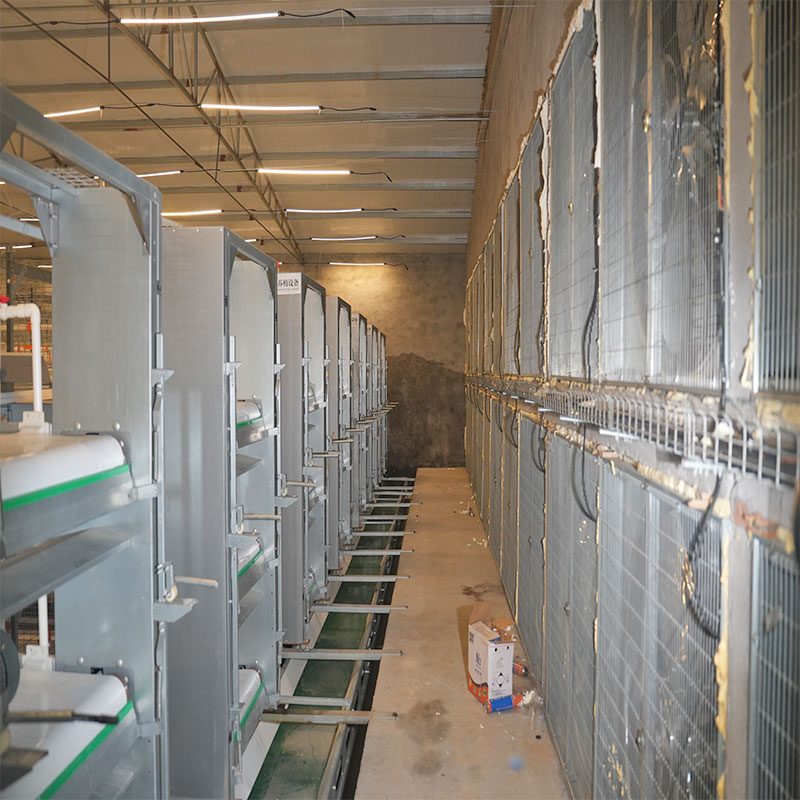
Chicken Layer Cages: A Comprehensive Guide to Systems, Welfare, and Best Practices
For poultry farmers and homesteaders alike, the housing system for egglaying hens is one of the most critical decisions impacting productivity, bird welfare, and operational efficiency. The term "chicken layers cage" refers to a specialized housing system designed to house laying hens for commercial or largescale egg production. This guide delves deep into the world of layer cages, exploring their evolution, types, pros and cons, and the essential management practices required. We'll navigate the complex balance between economic necessity and evolving animal welfare standards, providing you with the knowledge to make informed decisions for your flock.
Layer cages are containment systems where hens live in groups or individually within a wire enclosure. They have evolved significantly from simple battery cages to more complex designs.
These are the systems that sparked much of the welfare debate. They are characterized by:
Small, barren wire enclosures.
High stocking density.
Automated feed and water lines.
Sloped floors for egg collection.
Limited space for natural behaviors.
Developed in response to welfare concerns, these systems offer more space and amenities per hen. Key features include:
Increased Space: Significantly more square inches per bird than conventional cages.
Perches: Allows for roosting behavior.
Nesting Area: A secluded spot for laying eggs.
Scratching Area: Often a litter mat or pad for dustbathing and foraging.
Claw Shorteners: To prevent overgrowth.
While not "cages" in the traditional sense, they are a critical alternative. Hens have freedom to move vertically and horizontally within a barn, with access to perches, nests, and litter areas on multiple tiers.
A balanced view is essential for any farmer considering this system.
Advantages:
Increased Egg Production & Quality: Controlled environment reduces stress and feather pecking, leading to consistent lay rates. Eggs roll away immediately, reducing breakage and contamination.
Disease & Parasite Control: Separation from feces reduces exposure to parasites like worms and bacterial diseases such as avian influenza vectors.
Feed & Water Efficiency: Automated systems minimize waste compared to floor systems.
Lower Labor Costs: Automation in feeding, watering, and egg collection reduces manual labor.
Bird Management: Easier monitoring of individual or small group health, feed intake, and egg production.
Disadvantages & Welfare Concerns:
Restricted Natural Behaviors: Severe limitation of wingflapping, dustbathing, full foraging, and unrestricted perching.
Bone Health Issues: Lack of movement can lead to weaker bones (osteoporosis) and higher risk of fractures during depopulation.
Behavioral Problems: Can lead to frustration manifesting as feather pecking or cannibalism if not managed correctly (e.g., beak trimming).
Public Perception & Market Demand: Growing consumer preference for cagefree eggs is shifting retail and restaurant policies globally.
Success in cage systems hinges on meticulous management.
This is paramount. Always adhere to or exceed local regulations (e.g., the EU's enriched cage standards). Overcrowding is a primary cause of stress, injury, and poor welfare.
Provide a balanced layer ration formulated for caged hens' specific energy needs. Ensure feed lines are evenly distributed so all birds have equal access. Monitor feed consumption daily as it's the first indicator of health issues.
Clean water must be available at all times. Check nipple drinkers daily for clogs or leaks. Implement a regular line flushing and sanitation program.
Cage houses require precise ventilation to remove ammonia from manure pits below while maintaining optimal temperature (typically 1824°C / 6575°F). Proper lighting programs (16 hours of light) are crucial to stimulate consistent egg production.
Conduct daily bird observation ("walking the rows"). Have a strict vaccination program developed with a poultry veterinarian. Maintain rigorous biosecurity: limit visitor access, enforce footbaths/disinfection protocols, and control rodents.
Most cage systems use deep pits or belt systems under the cages.Manure must be removed regularly or dried effectively to control ammonia levels,pests,and disease risk.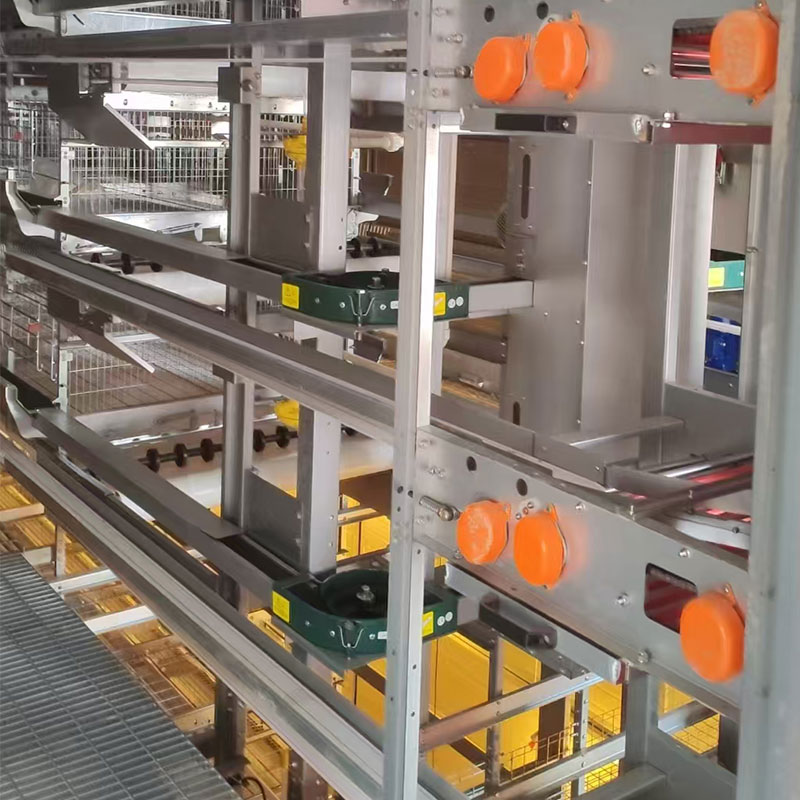
The industry is at a crossroads.Driven by legislation(EU battery cage ban,Welfare commitments in several U.S.states)and corporate pledges(major food chains committing to cagefree supply chains),the trend is moving towards enriched cages or cagefree aviaries.Farmers must consider:
Choosing a housing system for laying hens is a complex decision with ethical,economic,and practical dimensions.Traditional chicken layers cages offer efficiency but face significant welfare criticisms.Enriched colony cages represent an improved middle ground.Ultimately,the best system is one that prioritizes hen healthand productivity while being managed by a skilled,knowledgeable stockperson who understands both the engineering of the systemand ethology(the behavior)of the hen.Regardless of system chosen,intensive management,a commitmentto animal welfare,and adaptabilityto market trendsare nonnegotiablefor sustainable successin modern egg production.
Q1: What is the difference between battery cagesand enriched colony cages?
A:Battery cages are barrenwire enclosureswith very limited spaceper hen.Enriched colony cages provide more spaceand include essential furnishingslikea perch,a nesting area,anda scratching padallowingfor more natural behaviors.They are nowthe EU standardand commonin many regions replacingtraditional battery cages。
Q2: Are layer cages illegal?
A:Laws vary by countryand region.The European Union bannedconventional battery cagessince2012.Certain U.S.states(like California,Massachusetts)have passed laws phasingout extreme confinementincluding certain cage systems。Always check your localagriculturaland animalwelfare regulations。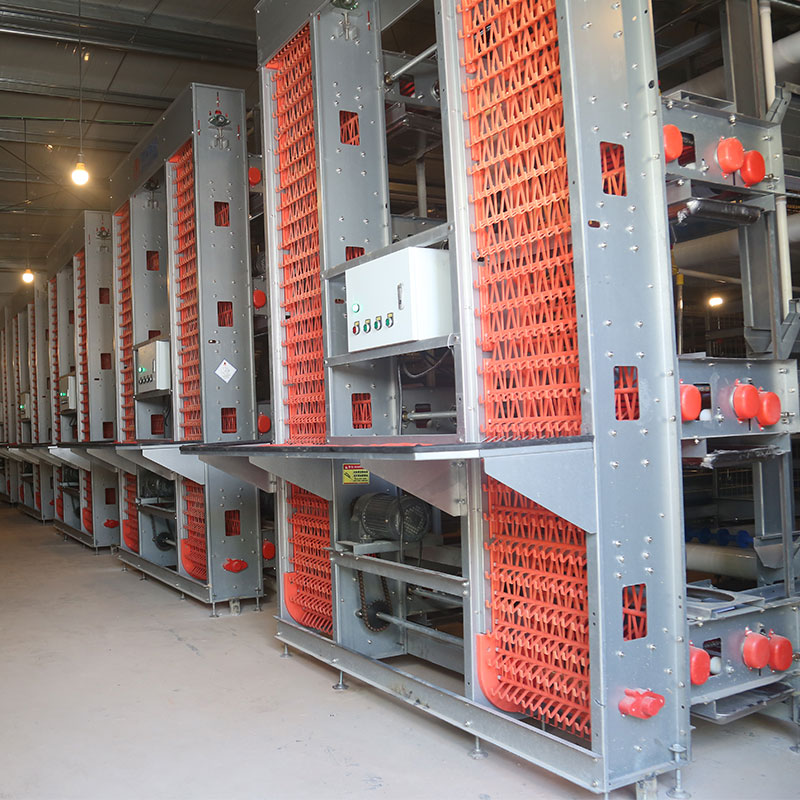
Q3: How many chickens go ina layer cage?
A:In enriched colony systems,group sizescan rangefrom20to60hensper enclosurewith spaceallowancesof at least750cm²per hen(about116 sq.in),plusfurnishings。Stocking densityis strictly regulatedin many areas。
Q4: Do chickens sufferin cages?
A:Animalwelfare science indicatesthat conventionalcages severely restrictnatural behaviorswhich can leadto frustrationand poor physicalhealth(enrichedsystems mitigatebut donot eliminateall concerns)。Welfare dependscriticallyon management,stocking density,andthe specific designof the cage。
Q5:What arethe alternatives tochicken layer cages?
The main commercialalternativesare:
Barn/CageFree:Hens move freelyon an indoor floorwith litter,perches,and nest boxes。
Aviary Systems:Multitiered indoor systemswith platforms,perches,and nests。
FreeRange:As per barn/cagefreebut with additional accessto outdoor areas。
Organic:Often combinesfreerangewith organicfeed requirements。
Q6:Why were battery cagessoinvented?
They were developedin themid20th centuryto dramaticallyincrease efficiencyhygiene,andegg qualityby automatingfeeding/watering/egg collectionwhile separatinghensfrom their manureto control disease。They succeededin makingeggsan affordableprotein source。
Q7:How do I manage manureina cagedlayer house?
Most modernsystemshave manure beltsunder each rowor deep pits。Belts remove manure dailyor weeklyto acentral location。Pitsare typicallycleaned outbetween flocks。Proper ventilationis crucialto dry manureand control ammonia levels。
Q8:Can you raise chicksina layer cage?
No.Pullets(chicks raisedto become layers)are rearedin separatebrooderthen growout facilitieswith different spacefeed,andlighting requirements.They are transferredtothe layercage houseat around1618weeksof agejust before they startlaying。
Q9:What happens tocaged hensat endof lay?
After their productivecycle(usuallyaround7280weeks old),the entire flockis depopulated("spent hens")andleavesthe farmfor processing.Thisis standardacrossall commercialegg productionsystems(cageornoncage)。
Q10:Are eggsfrom cagedhens less nutritious?
Scientific studiesshow thereis no significantdifferencein themacronutrientcontent(protein,fat,vitamins)of eggsbasedon housingalone.Dietof the henhas farmore impacton nutrientprofile(e.g.,omega3enrichedfeed)。Shell strengthmay varydue todifferent activitylevels。
Q11:How do I prevent feather peckingina cage system?
Key strategiesinclude:
Maintainingoptimal stocking density。
Ensuringprecise nutrition(note excessproteinor saltdeficiencies)。
Managinglight intensity(avoidbrightlights)。
Utilizingenrichedcage designswith scratchareas。
Historicalpracticeof beaktrimmingis now restricted/bannedin many regions。
Q12:Whatisthe lifespanofa cagedlayinghen?
In commercialproduction,theireconomiclifespanis about1215monthsfrom firstegg.At thispointlay ratedeclinesandshelldeterioratesmakingthem nolongercommerciallyviableregardlessof housingsystem.Their potentialnatural lifespancan bemuchlonger(5+years)。
1. Drinking system include the water pipes, water pressure adjuster, drinking nipples, Waterline front-end device, dosing system etc, choose them according to customer's needs.
2. High-quality water drinking pipes, pressure regulating valves and water drinking nipples can effectively prevent the water leakage. Drinking system adopt the closed piping system, which can minimize the water pollution.
3. 360-degree drinking nipples provide adequate drinking water for poultry at all stages.
4. The automatic drinking water system mainly adopts the steel ball drinking nipple. lt uses imported high-grad stainless steel, POM resin, and APS engineering material, which is wearing resistant, and the durability can be used for long time.



1. Automatic feeding machine can be chosen between gantry and ladder feeding machine. Gantry type feeding machine is a relatively economical and practical machine with simple operation, remote control walking character, easy to manage.
2. Mechanical transmission device running smoothly, low noise, long service life.
3. With the use of automatic control, the feeding system can adjust the amount of material.
4. Feeding with arched structure, high carrying capacity, not easily deformed.
5. Saving man power, saving feed, greatly improving the efficiency of Large-scale farming.
6. The walking speed of gantry feeding machine is 9--12 m/min.




1. Manure removing system included scraper type and conveyor belt type, Which can reduce the labor intensity and labor cost, keep the chicken shed dry and clean.
2. A type chicken cage can use scraper type or conveyor belt type.


3. The scraper type is suitable for A type cages, which can clean two or three rows. For the starters, this type is a good choice. lt can not only save some labor cost, but also save some investment in the whole project. The cleaning speed is 6-10 meters per minute.
4. Conveyor belt type is more suitable for large scale farming. The manure removing belt we use is high quality PP material (polypropylene). The walking speed is 2-4 meters per minute.



High Quality Pellets Made by Mobile Pellet Machine
1. It has professional designed angle of the blade. After the dynamic balance test one by one, the blade can operate smoothly.
2. The air volume is consistent in the whole life of the fan. Bearings has advantage of high strength, low noise, durable and so on.
1. The cooling pads uses high-quality wet curtain paper and adopts space cross-linking technology, which has the advantages of high water absorption, high water resistance, anti-toxicity and long service life.
2. The cooling efficiency is over 80%, without surfactant, natural water absorption, fast diffusion speed and long-lasting effect.
3. The product does not contain phenol and other chemical substances that are easy to cause skin allergies. It is non-toxic and harmless to the human body and chicken when installed and used. It is green, safe, energy-saving, environmentally friendly, economical, and easy to install.
4. The frame aluminum alloy has high strength, good corrosion resistance, durability and beautiful appearance.
5. Use a special filter for the cooling pad at the upper water to ensure clean water quality and support efficient water circulation components.
6. Combined with a negative pressure fan, it can effectively lower the indoor temperature.
The window is made of special selected high-quality engineering plastic, with high strength and long service life, together with superior anti-aging and anti-UV performance.
Function: Ventilation of the chicken house, usually used in the winter.
This system can adjust the wind speed and direction, thus the cold air will not reach chicken directly , which can effectively prevent the phenomenon of cold stress in chicken.
Environmental control system equipment is suitable for large-scale and intensive farming. According to customer requirements, we can provide various types of smart poultry equipment.
1. Our poultry management system is a modular system that manages all aspects of the chicken house, such as climate, temperature, humidity, ammonia, feeding, feed weighing, lighting and ventilation systems, and can monitor the situation of the chicken house in real time through a computer and mobile phone.
2. The management computer is the heart of the poultry farm, allowing you to easily monitor the entire poultry farm.

 WeChat:+8617838608255