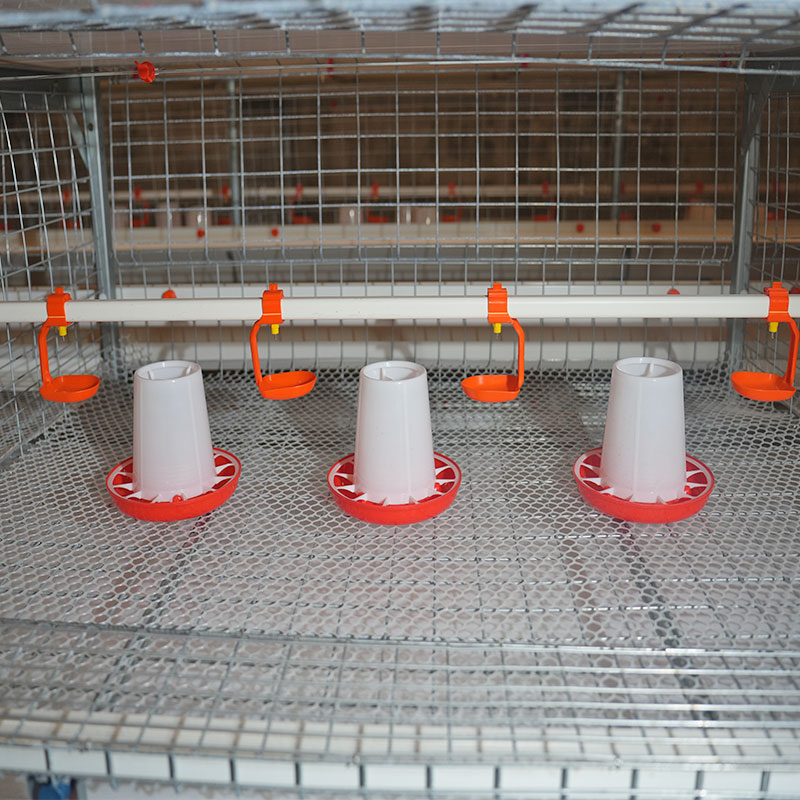
The Ultimate Guide to Chicken Layer Cages: Maximizing Productivity and Welfare
For commercial egg producers and serious poultry farmers, the housing system is the cornerstone of operation. Chicken layer cages represent a significant investment and a critical management decision that directly impacts bird health, egg quality, labor efficiency, and ultimately, profitability. This comprehensive guide delves deep into the world of modern layer cages, moving beyond basic descriptions to explore the nuanced considerations of design, welfare, economics, and management that define successful egg production today. Whether you're planning a new facility or optimizing an existing one, understanding the full spectrum of cage systems is essential.
Gone are the days of onesizefitsall battery cages. Today's layer housing is sophisticated, regulated, and designed with both productivity and animal welfare in mind.
A welldesigned cage system aims to:
Provide a secure, controlled environment for hens.
Facilitate efficient feeding and watering.
Simplify egg collection and minimize breakage.
Allow for effective manure management.
Enable easy monitoring of bird health and performance.
Following EU regulations and evolving global standards, enriched colony cages provide more space per hen than traditional battery cages and are equipped with essential behavioral amenities.
Key Features: Perches, a scratching area (often astroturf), a nest box for private laying, and clawshortening devices.
Space Allowance: Typically provide 750900 cm² per hen (including the nest box area).
Best For: Operations seeking a balance between animal welfare compliance (in regulated markets), productivity, and operational control.
While not "cages" in the traditional sense, aviaries are a major alternative in cagefree production. They feature multiple tiers with open floors, allowing birds to move vertically and horizontally.
Key Features: Litter areas for dust bathing, perches at various levels, designated nest boxes.
Management Note: Requires more skilled stockmanship as birds can roam freely within the house.
Best For: Producers supplying markets demanding cagefree eggs or following specific welfare certification programs.
A hybrid design that starts as a closed colony cage for pullets (to simplify vaccination and early management) and later opens into an aviary system once the birds mature.
Key Features: Convertible walls or doors that open to provide access to litter areas.
Best For: Farms transitioning to or operating both caged and cagefree production from a single house.
Choosing the right cage involves meticulous attention to specifications that affect daily operations.
| Factor | Consideration | Impact |
| : | : | : |
| Tier Height | Number of cage levels (3tier to 6tier common). | Affects building height, air stratification, and inspection access. |
| Cage Depth | Distance from front to back (often 4560cm). | Determines how far a hen must reach for feed/water; impacts group size. |
| Cage Length | Horizontal space for the bird group. | Influences linear feeder/waterer space per bird. |
| Stocking Density | cm²/bird as per local law & certification. | Directly linked to welfare outcomes, feather cover, and stress levels. |
Feeding System: Troughs with continuous chains or spiral augers. Modern systems feature precise feed dosing and antiroost guards.
Watering System: Nipple drinkers are standard. Key points are water pressure regulation, drip cups to keep manure dry, and correct vertical/horizontal placement.
Egg Collection: Options include incage rollout trays with manual collection (small farms) or fully automated belt systems that gently transport eggs to a central packing room.
Manure Management: Belt systems under each tier are superior for inhouse manure drying (reducing ammonia) and removal. Deeppit systems are another option.
Floor Slope & Design: Critical for egg rollout. A gradient of 79% is typical. Mesh floor design (hole size & wire gauge) must support the hen comfortably while allowing manure to pass through.
The discussion around layer cages is incomplete without addressing welfare—a key driver of system design changes globally.
Historically criticized for restricting natural behaviors like wingflapping, dustbathing, full perching, and nesting.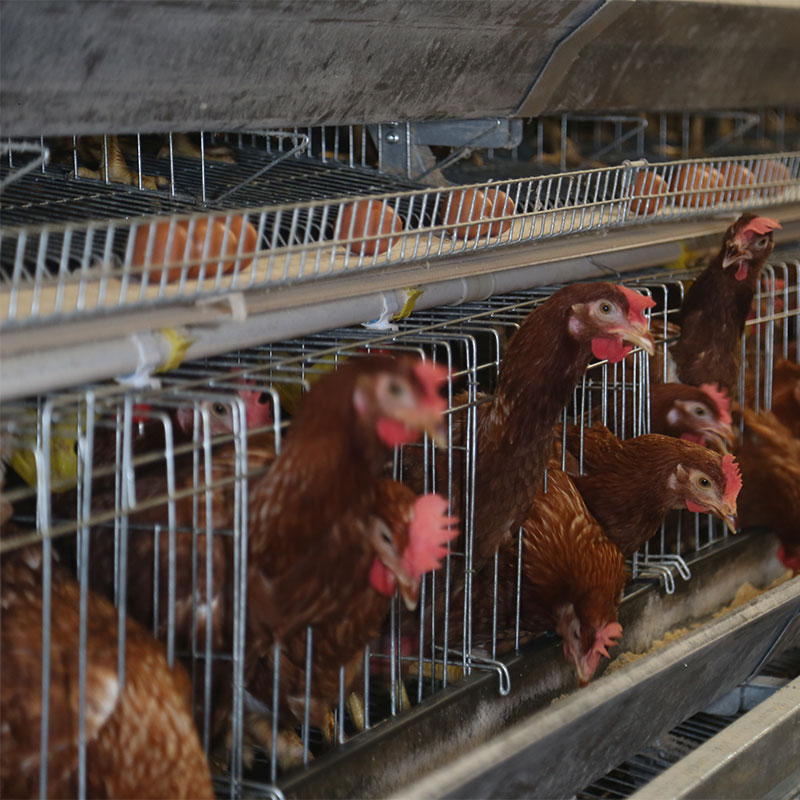
1. Enrichments: Perches satisfy roosting instincts. Scratch pads allow foraginglike behavior.
2. Nesting Areas: Private, darkened nest boxes reduce floor eggs and stress during laying.
3. Increased Space: Allows for more movement within the colony group.
Good welfare is not just ethical; it's economic.Stressed or unhealthy birds do not lay efficiently.Features like nipple drinkers reduce water spillage onto manure (improving paw health), while good ventilation in conjunction with manure belts drastically improves air quality.
Investing in a layer cage system is a major capital expenditure.A thorough analysis is vital.
1. Cage structure & components
2. Feeding & watering automation
3.Egg collection system
4.Manure removal system
5.Ventilation & cooling systems
6.Infrastructure (building,silos,packing station)
| Advantage | Economic Benefit |
| : | : |
| Higher Stocking Density/Building | Maximizes revenue per square meter of farm footprint |
| Feed Efficiency | Precise delivery reduces waste; controlled environment lowers maintenance energy |
| Labor Efficiency | Automation in feeding,Egg collection,and manure handling cuts labor costs by ~50%+ vs.cagefree |
| Egg Quality & Safety | Automated rollout reduces cracks,dirt,and bacterial contamination from litter |
| Bird Health ManagementEasier vaccination,& culling;reduced external parasite loads |
Technology alone doesn't guarantee success.Superior stockmanship does.
1.Pullet Preparation: Ensure pullets are trained on nipple drinkers before transfer.They must be uniform in size&robust enough for the system.
2.Stocking Process: Move birds calmly&stock evenly across all cages&tiers.Avoid overcrowding specific sections.
3.Daily Monitoring: Check water pressure&nipple function first thing.Observe feed consumption patterns.Inspect egg belts for jams.
4.Manure Belt Cycling: Run belts frequently enough to dry manure but not so often it wastes energy.Find the housespecific balance.
5.Lighting Program: Implement consistent,intensitycontrolled lighting schedules tailored to your breed's guidelines.
6.Ventilation Management: Understand minimum ventilation rates for moisture control in winter&tunnel cooling capacity for summer heat stress prevention.
Selecting a chicken layer cage system is a complex decision with longterm implications.There is no single "best" system,but there is a bestfit system for your specific context.This depends on your market requirements(welfare certifications,mande="enriched"or"cagefree"),local regulations available capital,labor skills,& climate.Modern layer cages offer unparalleled efficiency&control when managed with expertise&a commitment to bird welfare.The future lies not in abandoning technology,but in leveraging innovative designs—better enrichments improved air quality monitoring,& datadriven automation—to create environments where hen health&productivity thrive together.Conduct thorough research visit working farms,& consult with reputable suppliers&veterinarians before committing Your flock's performance depends on it
Q1: What is the difference between battery cagesand enriched colony cages?
A: Traditional battery cages were barewire enclosures providing only basic feed water&Egg rollout.Enriched colony cages provide significantly more space per henmandate enrichments like perches scratch areas&a private nest box aligning with higher welfare standardsin many regions
Q2: How many hens can you putin one cage?
A: It depends entirely onthe cage s dimensions&the legal/certification required stocking density.For exampleinan enriched colony cage providing750cm²/henacage measuring120cm wideby60cm deep(7200cm² total)could house approximately910hensAlways calculate based onyour local regulationswhich supersede any general guideline
Q3: Are layer cages banned?
A:The legality variesglobally.The European Union banned conventional battery cagessince2012mandating enriched colonies.Several U.S.stateshave passed laws phasing outcagesselling certain eggsOther countriesmay have no banProducers must knowtheir target market s regulations&retailer requirements
Q4:What arethe biggest advantagesof usinglayer cages?
A:The primary advantagesare superior feed conversion ratios(FCR)due toreduced activityhigher stocking densityper building square meterdrastically reduced laborfor Egg collectionfeedingmanure handlingand generally lower disease exposurefrom litter&feces
Q5:What arethe mainwelfare concernsassociatedwith caged systems?
A:Historically concerns centered onbehavioral restriction—inabilityto perform natural behaviorslike full wingflappingdustbathingperchingand foraging.Modern enriched designsaimto mitigatethese byproviding specific featuresfor these behaviorsSpace restrictionremainsa key pointof debateevenin enriched systems
Q6:How doyou collect eggsfrom alayer cage system?
A:In modern automated systemsEggs rollgentlyout ofthe cageto acentral conveyor belt running alongeach tierBelts then transportEggsto acentral elevatorwhich takes themto apacking roomwhere theyare automatically sortedgradedand packedManual collectionis rareexceptin very small setupswhere Eggsare gatheredfrom rollout traysbyhand
Q7:What type offeeding systemis bestfor layercages?
A:A continuous chain feederor spiral auger systemthat deliversa consistentuniform feed rationalongthe entire troughis industry standard.Key featuresincludeadjustable fill levelsantiroost guardsto keep birdsoutofthe troughand reliable motorswith overload protectionto preventjams
Q8:How often shouldmanure beltsbe rununderneathcages?
A:The goalis todry themanureto reduceammonia emissionsFrequency depends onhumiditytemperatureand bird age.A common starting pointis runningbelts24timesper dayfor short durations(1015minutes)Monitor manure consistency—itshouldbecrumblynot wetor cakey—and adjustthe schedule accordinglyMore frequent cyclesare neededinhumid conditions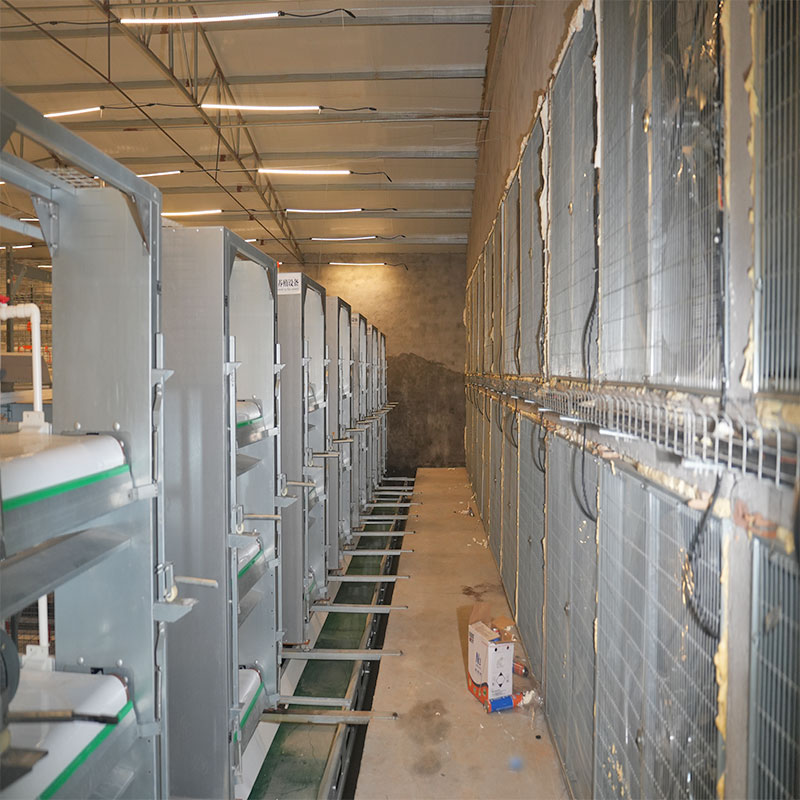
Q9:Canyou raise chicksorpulletsinthesamecagesaslayers?
A:No.Chicksrequirebrooding equipmentwith preciseheatlightand different feeder/watereraccessPulletsare typically raisedin separatepulletrearing housesoftenusingaviariesorcombisystemsto develop bone strengthbefore beingtransferredtolayercagesat around1618weeksof age
Q10:What ventilationis requiredfor amultitiercage house?
A:Sophisticated tunnel ventilationcombinedwith sideinletsis criticalAir mustbe drawn evenlyacrossall tiers topreventstratificationof heatammoniaand moistureMinimum ventilationratesin wintermustbe maintainedfor moisture controlevenifit requires supplemental heatingSummer coolingrelieson high airspeed( tunnel velocity )acrossthe birdsto create awindchill effect
Q11:What isthenormal lifespanof agoodqualitylayer cage system?
A:A wellmaintainedautomatedlayer cage systemmade fromgalvanized steelcan havea usefullife expectancyof1520yearsormoreCritical componentslikefeed motorsconveyor beltsandelectronicsmay requireperiodic replacementor upgradingduringthis timeRegular maintenance(lubricationbelt tension checksrust prevention)is keyto maximizingthesystem slifespan
Q12:Iscagefreeoralternativehousing alwaysbetterfor henwelfare?
A:It snot inherentlysimplerWhilecagefreesystemsallowfor expressionof abroader rangeof natural behaviorstheyintroducenewwelfare challengeslikehigher risksof feather peckingcannibalismgreater exposuretoparasites(both internalexternal)and potentiallymore keel bone fracturesif fallsfrom high perchesaren t managedGoodwelfareis achievablein varioussystemsbutit dependson excellentdesignstockmanshipand managementnot solelyonthe housing type
1. Drinking system include the water pipes, water pressure adjuster, drinking nipples, Waterline front-end device, dosing system etc, choose them according to customer's needs.
2. High-quality water drinking pipes, pressure regulating valves and water drinking nipples can effectively prevent the water leakage. Drinking system adopt the closed piping system, which can minimize the water pollution.
3. 360-degree drinking nipples provide adequate drinking water for poultry at all stages.
4. The automatic drinking water system mainly adopts the steel ball drinking nipple. lt uses imported high-grad stainless steel, POM resin, and APS engineering material, which is wearing resistant, and the durability can be used for long time.



1. Automatic feeding machine can be chosen between gantry and ladder feeding machine. Gantry type feeding machine is a relatively economical and practical machine with simple operation, remote control walking character, easy to manage.
2. Mechanical transmission device running smoothly, low noise, long service life.
3. With the use of automatic control, the feeding system can adjust the amount of material.
4. Feeding with arched structure, high carrying capacity, not easily deformed.
5. Saving man power, saving feed, greatly improving the efficiency of Large-scale farming.
6. The walking speed of gantry feeding machine is 9--12 m/min.




1. Manure removing system included scraper type and conveyor belt type, Which can reduce the labor intensity and labor cost, keep the chicken shed dry and clean.
2. A type chicken cage can use scraper type or conveyor belt type.


3. The scraper type is suitable for A type cages, which can clean two or three rows. For the starters, this type is a good choice. lt can not only save some labor cost, but also save some investment in the whole project. The cleaning speed is 6-10 meters per minute.
4. Conveyor belt type is more suitable for large scale farming. The manure removing belt we use is high quality PP material (polypropylene). The walking speed is 2-4 meters per minute.



High Quality Pellets Made by Mobile Pellet Machine
1. It has professional designed angle of the blade. After the dynamic balance test one by one, the blade can operate smoothly.
2. The air volume is consistent in the whole life of the fan. Bearings has advantage of high strength, low noise, durable and so on.
1. The cooling pads uses high-quality wet curtain paper and adopts space cross-linking technology, which has the advantages of high water absorption, high water resistance, anti-toxicity and long service life.
2. The cooling efficiency is over 80%, without surfactant, natural water absorption, fast diffusion speed and long-lasting effect.
3. The product does not contain phenol and other chemical substances that are easy to cause skin allergies. It is non-toxic and harmless to the human body and chicken when installed and used. It is green, safe, energy-saving, environmentally friendly, economical, and easy to install.
4. The frame aluminum alloy has high strength, good corrosion resistance, durability and beautiful appearance.
5. Use a special filter for the cooling pad at the upper water to ensure clean water quality and support efficient water circulation components.
6. Combined with a negative pressure fan, it can effectively lower the indoor temperature.
The window is made of special selected high-quality engineering plastic, with high strength and long service life, together with superior anti-aging and anti-UV performance.
Function: Ventilation of the chicken house, usually used in the winter.
This system can adjust the wind speed and direction, thus the cold air will not reach chicken directly , which can effectively prevent the phenomenon of cold stress in chicken.
Environmental control system equipment is suitable for large-scale and intensive farming. According to customer requirements, we can provide various types of smart poultry equipment.
1. Our poultry management system is a modular system that manages all aspects of the chicken house, such as climate, temperature, humidity, ammonia, feeding, feed weighing, lighting and ventilation systems, and can monitor the situation of the chicken house in real time through a computer and mobile phone.
2. The management computer is the heart of the poultry farm, allowing you to easily monitor the entire poultry farm.

 WeChat:+8617838608255