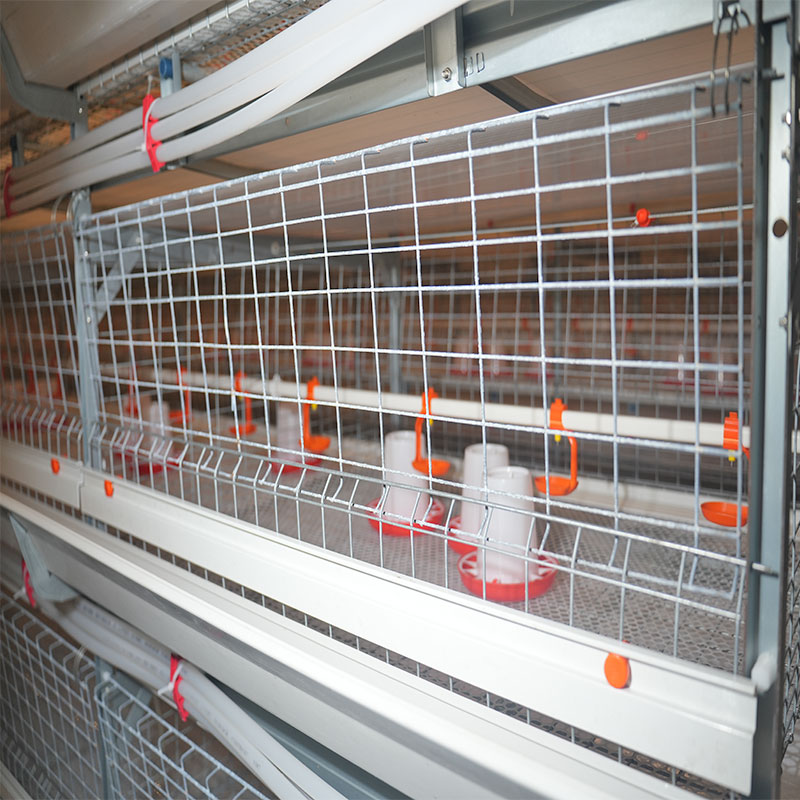
For the poultry farmer eyeing expansion or replacement of an aging flock housing system, the decision of which cage system to install is one of the most critical financial and operational choices to be made. The modern poultry cage is no longer a simple wire box; it is an integrated environment designed to maximize bird welfare, egg quality, and labor efficiency. When considering a purchase as significant as a hen house for 1000 chickens, understanding the nuances of the equipment—from the sourcing through chicken project bird cage export to the specific design of the chicken cage layer—is paramount to a successful and profitable operation.
Sourcing and Logistics: Navigating the Chicken Project Bird Cage Export Market
The global nature of agricultural equipment manufacturing means that many of the most advanced and cost-effective cage systems are produced overseas. Engaging in a chicken project bird cage export purchase can offer substantial advantages in terms of price and technological innovation, but it requires careful planning.
The first consideration is the supplier's reputation and compliance. A reputable exporter will not only provide competitive pricing but will also have a proven track record of adhering to international standards for materials. For instance, the zinc coating on the wire mesh isn't just a finish; it’s a crucial barrier against rust and corrosion from constant exposure to moisture and ammonia. A farmer who once spent weekends spot-welding patches on flaking galvanized wire will immediately recognize the value of a heavy-gauge, hot-dipped galvanized frame that can withstand years of automated washing and manure scraping without structural compromise.
Logistics form the second critical pillar. A 1000-bird unit does not arrive in a single crate. It is a complex kit of parts: upright supports, mesh panels, nipple drinker lines, feed troughs, egg collection belts, and manure drying plates. The exporter should provide a detailed packing list and container loading plan. Imagine receiving a 40-foot container where the heaviest items, like the central support columns, are stacked on top of the delicate egg belts, resulting in costly damage and project delays. A professional exporter understands that proper packing is the first step in a successful installation. They will often provide schematic diagrams that show how each component fits into the shipping container, almost like a 3D puzzle, ensuring everything arrives in the same condition it left the factory.
Furthermore, the export process includes navigating customs clearance and duties. A farmer is well-advised to work with a supplier experienced in shipping to their region, one who can provide all the necessary documentation, such as the commercial invoice, packing list, and certificate of origin. This foresight prevents the shipment from being held at the port, accruing demurrage charges that can quickly erase any initial savings from the purchase.
The Engine of Production: Deconstructing the Modern Chicken Cage Layer
At the heart of the system lies the chicken cage layer unit itself. Its design directly influences the health of the birds, the quality of the eggs, and the daily workload of the farmer. Modern layer cages are engineered systems, not just containment units.
Consider the floor slope and design. The cage floor is typically made of welded wire mesh, sloped gently towards the front of the cage. This isn't an arbitrary angle. A slope that is too steep can cause foot and leg problems for the hens, while one that is too shallow will result in eggs failing to roll out efficiently. The ideal slope ensures that a laid egg gently rolls away from the bird onto the egg-saving roll-out tray, preventing egg eating and keeping the shell clean. The wire gauge and spacing are equally deliberate. The spaces must be large enough to allow manure to drop through, yet small enough to provide secure and comfortable footing for the hens, preventing bumblefoot and other pododermatitis issues.

The feeding and watering systems are integrated into the cage structure. A common design features a continuous trough running along the front of the cage bank, served by an automated chain or auger system. When the feed motor hums to life, it doesn't just dump pellets into a pile. It moves a precise, fresh ration along the entire length of the trough, ensuring that every bird, regardless of her position in the row, has equal access to feed. This prevents dominant birds from monopolizing the food source and promotes uniform flock growth and production.
The nipple drinking system represents a significant advancement over older cup or trough waterers. Each cage compartment has one or more stainless steel nipples. A hen learns to activate the nipple with her beak, receiving a drop of fresh water. This closed system is a major boon for flock health. Unlike open water troughs which can become contaminated with feed, dust, and manure, nipple drinkers keep the water clean, drastically reducing the spread of waterborne pathogens like E. coli. For the farmer, it means less time spent cleaning water lines and a notable reduction in medication costs.
Manure management is handled through the design of the cage tiers. In a multi-tier A-type cage system, manure belts run beneath each level. Instead of manure building up in a pit below the cages, these belts are programmed to run at set intervals, transporting the waste out of the hen house to a collection point. This continuous removal significantly improves the indoor air quality by reducing ammonia levels. A farmer walking into a house with a functioning manure belt system will notice the absence of the characteristic sharp ammonia smell, a direct indicator of a healthier respiratory environment for both the birds and the workers.
Designing a Complete Environment: The Hen House for 1000 Chickens
A cage system does not operate in a vacuum. It is the central component of a fully integrated environment—the hen house itself. Planning a house for 1000 birds requires a holistic approach that considers ventilation, lighting, and spatial logistics.
Ventilation is the lungs of the poultry house. In a 1000-bird setup, a simple passive system is insufficient. A mechanically ventilated system, often combining tunnel and cross-ventilation, is standard. During a hot afternoon, side curtains may roll up to allow for a cooling cross-breeze, while large exhaust fans at one end of the house pull air through the building. In colder weather, the system switches to minimum ventilation, where small inlet fans bring in just enough fresh air to remove moisture and ammonia without chilling the birds. The placement of the cages is critical here; they must be oriented to ensure this airflow moves effectively through all tiers, preventing stagnant, humid air pockets where pathogens can thrive.
Lighting is the regulator of the hens' reproductive cycles. Modern houses use automated LED lighting systems programmed to specific photoperiods. The lights don't just turn on and off; they can be set to simulate a slow dawn and dusk, preventing panic and piling among the birds. The intensity is also carefully controlled. A brighter light period stimulates peak feeding activity and egg production, while a dimmer, rest period allows the birds to calm down. This precise control over light is a powerful tool for managing the productivity and welfare of the entire flock.
The layout of a 1000-bird house must prioritize workflow efficiency. The central aisle should be wide enough for a cart or small utility vehicle to pass, allowing for easy transport of feed bags, collected eggs, and equipment. The cage banks themselves are arranged to allow clear access to both the feed system at the front and the egg collection belt at the back. An efficient layout means a farmer can complete a daily check of all birds, monitor feed and water systems, and inspect the egg collection mechanism without unnecessary backtracking or struggling in cramped spaces. The time saved in daily chores, multiplied over the life of the flock, represents a significant labor saving.
The Integration: Where Systems Converge for Operational Success
The true test of a poultry housing system is not in its individual components, but in how they work together seamlessly. The integration of the cage, the house, and the management practices defines the operational reality.

The egg collection process is a prime example of this integration. In a well-designed system, eggs roll out of the cage onto a central conveyor belt. This belt, often made of soft, plastic matting to prevent cracks, runs the length of the cage row and transports the eggs directly to the grading and packing room. Contrast this with a manual collection system where an employee must walk the aisles, opening and closing cage doors to retrieve eggs by hand. The automated belt not only saves countless hours of labor but also results in a cleaner, higher-quality egg with a significantly lower rate of cracks and checks.
Similarly, the manure removal system is integrated with the cage support structure. The belts that carry manure away are timed to operate when it is most efficient, often during the night when bird activity is low. This waste is then typically deposited into a trailer or a dedicated drying shed. Some advanced systems even incorporate a manure drying tunnel where the waste is treated and dehydrated, transforming a disposal problem into a potential revenue stream as a valuable, odor-reduced organic fertilizer.
The daily management routine is transformed by this level of integration. Instead of spending the bulk of the day on manual tasks like feeding, watering, and egg collection, the farmer’s role shifts to that of a systems manager. The morning walk-through involves checking digital readouts on the feed bin, ensuring the water pressure in the nipple lines is correct, listening for the smooth operation of the ventilation fans, and inspecting the eggs on the collection belt for any shell quality issues. This proactive monitoring allows for the early detection of problems—a slight drop in water consumption can be the first sign of a health issue, and a change in eggshell consistency can indicate a nutritional deficiency.
Investing in a modern, exported cage system for a 1000-bird hen house is a strategic move toward a more resilient, efficient, and profitable poultry operation. It is a capital investment that pays dividends not just in the quantity of eggs produced, but in the quality of the product, the health of the flock, and the quality of life for the farmer. By focusing on the integrity of the export process, the engineered details of the cage design, and the holistic planning of the housing environment, a farmer can build a foundation for sustainable production for years to come.
1. Drinking system include the water pipes, water pressure adjuster, drinking nipples, Waterline front-end device, dosing system etc, choose them according to customer's needs.
2. High-quality water drinking pipes, pressure regulating valves and water drinking nipples can effectively prevent the water leakage. Drinking system adopt the closed piping system, which can minimize the water pollution.
3. 360-degree drinking nipples provide adequate drinking water for poultry at all stages.
4. The automatic drinking water system mainly adopts the steel ball drinking nipple. lt uses imported high-grad stainless steel, POM resin, and APS engineering material, which is wearing resistant, and the durability can be used for long time.



1. Automatic feeding machine can be chosen between gantry and ladder feeding machine. Gantry type feeding machine is a relatively economical and practical machine with simple operation, remote control walking character, easy to manage.
2. Mechanical transmission device running smoothly, low noise, long service life.
3. With the use of automatic control, the feeding system can adjust the amount of material.
4. Feeding with arched structure, high carrying capacity, not easily deformed.
5. Saving man power, saving feed, greatly improving the efficiency of Large-scale farming.
6. The walking speed of gantry feeding machine is 9--12 m/min.




1. Manure removing system included scraper type and conveyor belt type, Which can reduce the labor intensity and labor cost, keep the chicken shed dry and clean.
2. A type chicken cage can use scraper type or conveyor belt type.


3. The scraper type is suitable for A type cages, which can clean two or three rows. For the starters, this type is a good choice. lt can not only save some labor cost, but also save some investment in the whole project. The cleaning speed is 6-10 meters per minute.
4. Conveyor belt type is more suitable for large scale farming. The manure removing belt we use is high quality PP material (polypropylene). The walking speed is 2-4 meters per minute.



High Quality Pellets Made by Mobile Pellet Machine
1. It has professional designed angle of the blade. After the dynamic balance test one by one, the blade can operate smoothly.
2. The air volume is consistent in the whole life of the fan. Bearings has advantage of high strength, low noise, durable and so on.
1. The cooling pads uses high-quality wet curtain paper and adopts space cross-linking technology, which has the advantages of high water absorption, high water resistance, anti-toxicity and long service life.
2. The cooling efficiency is over 80%, without surfactant, natural water absorption, fast diffusion speed and long-lasting effect.
3. The product does not contain phenol and other chemical substances that are easy to cause skin allergies. It is non-toxic and harmless to the human body and chicken when installed and used. It is green, safe, energy-saving, environmentally friendly, economical, and easy to install.
4. The frame aluminum alloy has high strength, good corrosion resistance, durability and beautiful appearance.
5. Use a special filter for the cooling pad at the upper water to ensure clean water quality and support efficient water circulation components.
6. Combined with a negative pressure fan, it can effectively lower the indoor temperature.
The window is made of special selected high-quality engineering plastic, with high strength and long service life, together with superior anti-aging and anti-UV performance.
Function: Ventilation of the chicken house, usually used in the winter.
This system can adjust the wind speed and direction, thus the cold air will not reach chicken directly , which can effectively prevent the phenomenon of cold stress in chicken.
Environmental control system equipment is suitable for large-scale and intensive farming. According to customer requirements, we can provide various types of smart poultry equipment.
1. Our poultry management system is a modular system that manages all aspects of the chicken house, such as climate, temperature, humidity, ammonia, feeding, feed weighing, lighting and ventilation systems, and can monitor the situation of the chicken house in real time through a computer and mobile phone.
2. The management computer is the heart of the poultry farm, allowing you to easily monitor the entire poultry farm.

 WeChat:+8617838608255