
For the poultry farmer managing a flock of a thousand birds, the daily routine is a delicate balance. The morning feed run, the collection of eggs, the constant monitoring of water lines, and the assessment of bird health—these tasks form the rhythm of the enterprise. The physical infrastructure that houses the flock is not merely a shelter; it is the central nervous system of the entire operation. It dictates labor efficiency, bird welfare, feed conversion ratios, and, ultimately, the profitability of the farm. The decision to invest in a structured housing system, such as a complete hen house for 1000 chickens, is a significant one, moving beyond makeshift shelters to a professionally engineered environment.
The core of this system is the chicken cage layer unit. Unlike open floor systems, these are multi-tiered structures designed with precision for the layer hen's life cycle. Imagine a series of galvanized wire panels formed into compartments, stacked in ascending rows, often in an A-frame configuration. This is not about confining a bird but about creating a specialized micro-environment for each phase of its productive life. The design of each compartment ensures that a hen has dedicated space to eat, drink, lay her egg, and rest without excessive competition from flock mates.
The flooring of these cages is a critical feature, often made from a strong, sloped wire mesh. The slope is not arbitrary; a gentle incline of about 8-10 degrees allows a freshly laid egg to roll gently away from the hen the moment it is produced. This single design element addresses several major challenges. It drastically reduces the number of floor eggs, which are labor-intensive to collect and often soiled. More importantly, it minimizes the instance of egg eating, a vice that can spread through a flock and destroy product yield. The egg rolls out of the cage onto a continuous conveyor belt running the length of the tier, which can be programmed to carry the eggs directly to a central collection point. This eliminates the need for farmhands to walk the aisles with baskets, manually gathering eggs from hundreds of individual nests.
Beneath the cages runs another conveyor system, the manure belt. In a 1000-bird house, waste management is a primary concern, impacting both bird health and ammonia levels. A traditional deep-pit system requires periodic, large-scale cleanouts that are disruptive and laborious. The manure belt system, however, operates on a scheduled removal basis. The belt might run once daily or several times a week, transporting the accumulated droppings directly out of the hen house and into a dedicated storage or composting facility. This continuous removal prevents the buildup of harmful gases like ammonia, which can damage the birds' respiratory systems and compromise their immune function. For the farmer, this means a healthier flock and a much more manageable, odor-controlled environment.
Feeding and watering are fully automated, turning what was once a twice-daily chore into a system of constant availability. A feed trough runs along the front of each tier, connected to a central feed line. This line is supplied by a bulk bin located outside the house. At programmed intervals, an auger system activates, moving a fresh supply of feed along the entire length of the house, filling the troughs. The birds have ad-libitum access, but the system prevents them from wasting it by scratching or soiling it. Similarly, nipple drinking systems are installed at strategic points within the cage. When a bird is thirsty, it pecks at a stainless-steel nipple, releasing a few drops of water directly into its beak. This closed system keeps the water clean, prevents spillage that would increase humidity, and provides a hygienic water source that reduces the risk of waterborne diseases.
When considering a complete hen house for 1000 chickens sale, it is essential to view it not as a collection of parts but as an integrated system. The ventilation system is a prime example of this integration. In a densely stocked house, temperature and air quality control are non-negotiable. A combination of inlet fans on one side and exhaust fans on the other creates a cross-breeze, but modern systems are far more sophisticated. Tunnel ventilation can be employed, where a bank of large exhaust fans at one end of the house pull air the entire length of the building, creating a wind-chill effect that cools the birds during hot weather. This is managed by a central environmental controller, a computer that acts as the brain of the operation. The farmer sets parameters for temperature and humidity, and the controller automatically activates fans, opens or closes air inlets, and can even trigger evaporative cooling pads when the temperature rises above a certain threshold.
Lighting is another managed variable. The laying cycle of a hen is directly influenced by photoperiod, or the length of daylight. To maximize consistent egg production, farmers use an artificial lighting program. In a fully enclosed hen house, this is controlled with precision. The lights will gradually brighten in the morning to simulate dawn, remain at a consistent intensity for a set number of hours to encourage feeding and activity, and then slowly dim to mimic dusk, signaling the birds to roost. This controlled environment prevents the seasonal drops in production that can occur with natural light alone.
The global market for poultry equipment has matured, leading to the rise of specialized chicken project bird cage export companies. These firms do not merely sell cages; they provide comprehensive solutions. A farmer in a region with a developing poultry sector can now partner with an exporter who offers a full project package. This typically begins with consultancy, where experts assess the farmer’s specific goals, local climate, and market demands. The exporter then designs a custom layout for the 1000-bird house, optimizing the placement of cages, feeders, and ventilation for that particular site.
Following the design phase, the exporter manufactures all the components—the cage tiers, the manure belts, the egg collection systems, the feed bins, and the environmental controllers. These components are then packaged and shipped in containers, complete with detailed assembly manuals and, crucially, installation support. It is common for the exporting company to send a team of technicians to the farm to supervise the construction of the building shell and the installation of all the equipment. They ensure that every belt is aligned, every electrical connection is secure, and every system is calibrated before the first bird is ever placed inside. This turn-key approach de-risks the investment for the farmer, transforming a complex engineering project into a manageable process.
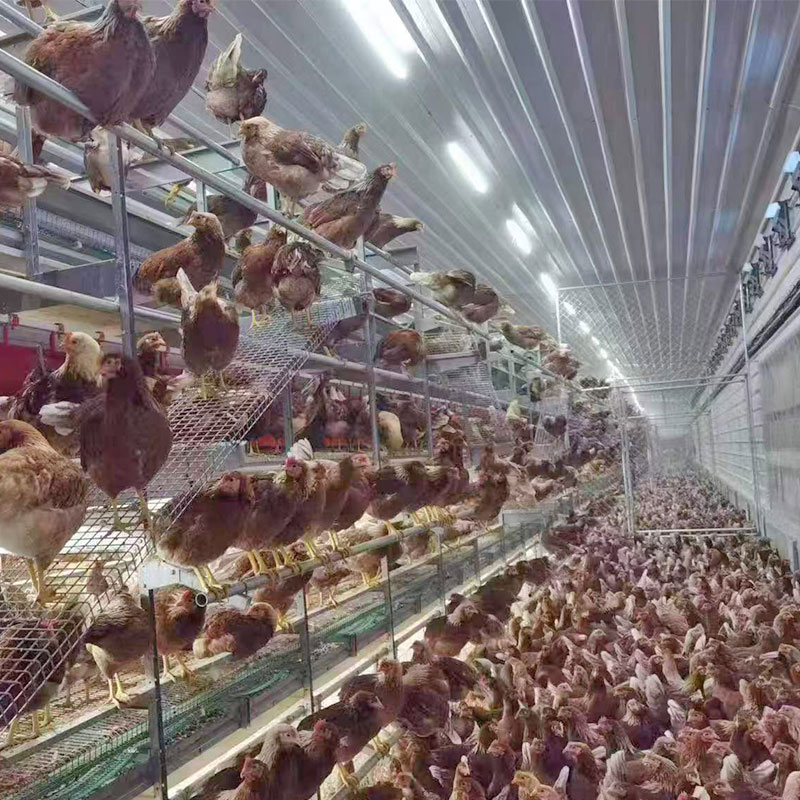
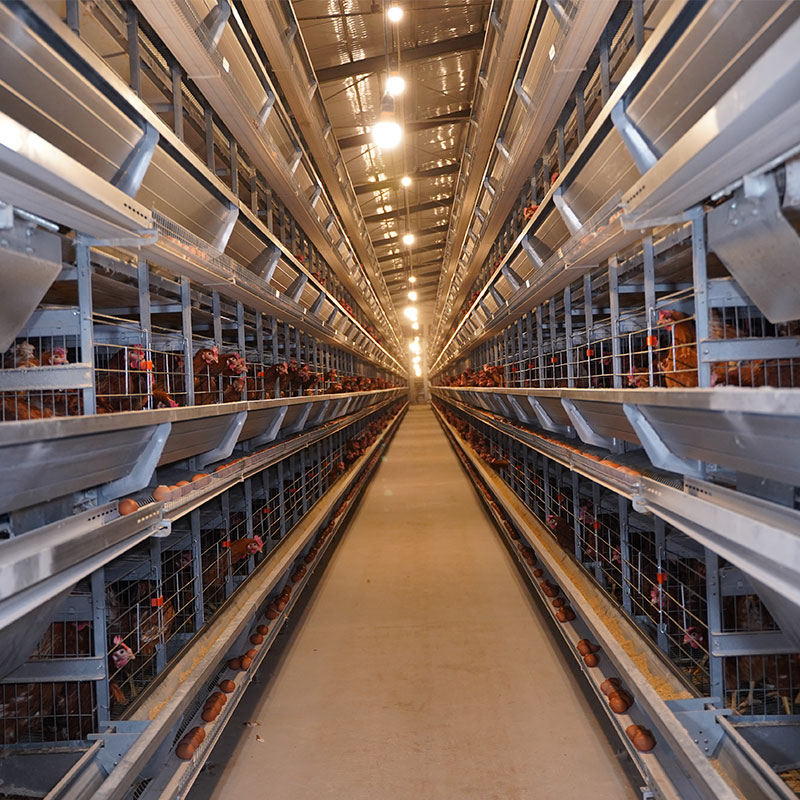
The economic justification for such an investment is calculated over the long term. The initial capital outlay for a 1000-bird automated layer house is substantial. However, the return is realized through persistent operational efficiencies. Labor costs are perhaps the most significantly reduced. What once required multiple workers for several hours each day—feeding, watering, and egg collection—can now be managed by a single individual in a fraction of the time. This frees up labor for more critical tasks like bird health monitoring, maintenance, and marketing.
Feed, which constitutes up to 70% of the cost of egg production, is utilized with far greater efficiency. In the automated cage system, feed is delivered directly to the trough with minimal spillage. The design discourages the birds from engaging in wasteful behaviors. When feed is scattered on the floor in a open system, a significant portion can be trampled, soiled, or consumed by pests. The controlled environment of the cage system can improve the Feed Conversion Ratio (FCR), meaning less feed is required to produce a dozen eggs. Over the lifespan of a 1000-bird flock, this saving translates into a considerable sum.
Bird performance metrics also show marked improvement. The reduced stress from a stable environment, consistent access to feed and water, and superior air quality leads to better flock uniformity and livability. Fewer birds are lost to disease or vices like cannibalism. A healthier bird is a more productive bird; she will lay more eggs over her laying cycle, and the eggs themselves will be of higher quality. The automated egg collection system means eggs are gathered frequently and gently, resulting in a lower percentage of cracks and stains. This allows the farmer to command a higher price in the market, particularly from buyers who grade eggs for retail sale.
The management of the flock within this system is data-driven. The environmental controller provides a log of temperature fluctuations. The feed system can be monitored for consumption rates—a sudden drop is often the first sign of an emerging health issue. Egg collection counts are precise, allowing the farmer to track daily production against established curves. This level of oversight enables proactive management rather than reactive problem-solving. A farmer can adjust the feed formula, fine-tune the lighting schedule, or identify a sick bird much earlier than in a less controlled environment.
Transitioning to such a system requires a shift in management mindset. The farmer becomes less of a manual laborer and more of a systems manager. Daily walks through the house are still essential, but they are for observation, not just for task completion. The farmer listens for the sound of the equipment, ensuring the gentle hum of the feeders and the smooth operation of the belts. They observe the birds' behavior—their activity levels, the condition of their feathers, the brightness of their eyes. They check the control panel not as a mysterious box, but as a source of critical information about the environment they have created for their livestock.
The choice to invest in a modern cage system for a thousand layers is a commitment to a specific model of poultry farming. It is capital-intensive, technologically reliant, and demands a high level of management skill. Yet, for the commercial farmer focused on scale, efficiency, and product quality, the advantages are compelling. It represents a move away from unpredictable, labor-heavy methods toward a standardized, controlled, and economically sustainable operation. The hen house ceases to be a simple barn and becomes a finely tuned production facility, where every element, from the air the birds breathe to the path of a rolling egg, is orchestrated to support the vitality of the flock and the viability of the farm.
1. Drinking system include the water pipes, water pressure adjuster, drinking nipples, Waterline front-end device, dosing system etc, choose them according to customer's needs.
2. High-quality water drinking pipes, pressure regulating valves and water drinking nipples can effectively prevent the water leakage. Drinking system adopt the closed piping system, which can minimize the water pollution.
3. 360-degree drinking nipples provide adequate drinking water for poultry at all stages.
4. The automatic drinking water system mainly adopts the steel ball drinking nipple. lt uses imported high-grad stainless steel, POM resin, and APS engineering material, which is wearing resistant, and the durability can be used for long time.



1. Automatic feeding machine can be chosen between gantry and ladder feeding machine. Gantry type feeding machine is a relatively economical and practical machine with simple operation, remote control walking character, easy to manage.
2. Mechanical transmission device running smoothly, low noise, long service life.
3. With the use of automatic control, the feeding system can adjust the amount of material.
4. Feeding with arched structure, high carrying capacity, not easily deformed.
5. Saving man power, saving feed, greatly improving the efficiency of Large-scale farming.
6. The walking speed of gantry feeding machine is 9--12 m/min.




1. Manure removing system included scraper type and conveyor belt type, Which can reduce the labor intensity and labor cost, keep the chicken shed dry and clean.
2. A type chicken cage can use scraper type or conveyor belt type.


3. The scraper type is suitable for A type cages, which can clean two or three rows. For the starters, this type is a good choice. lt can not only save some labor cost, but also save some investment in the whole project. The cleaning speed is 6-10 meters per minute.
4. Conveyor belt type is more suitable for large scale farming. The manure removing belt we use is high quality PP material (polypropylene). The walking speed is 2-4 meters per minute.



High Quality Pellets Made by Mobile Pellet Machine
1. It has professional designed angle of the blade. After the dynamic balance test one by one, the blade can operate smoothly.
2. The air volume is consistent in the whole life of the fan. Bearings has advantage of high strength, low noise, durable and so on.
1. The cooling pads uses high-quality wet curtain paper and adopts space cross-linking technology, which has the advantages of high water absorption, high water resistance, anti-toxicity and long service life.
2. The cooling efficiency is over 80%, without surfactant, natural water absorption, fast diffusion speed and long-lasting effect.
3. The product does not contain phenol and other chemical substances that are easy to cause skin allergies. It is non-toxic and harmless to the human body and chicken when installed and used. It is green, safe, energy-saving, environmentally friendly, economical, and easy to install.
4. The frame aluminum alloy has high strength, good corrosion resistance, durability and beautiful appearance.
5. Use a special filter for the cooling pad at the upper water to ensure clean water quality and support efficient water circulation components.
6. Combined with a negative pressure fan, it can effectively lower the indoor temperature.
The window is made of special selected high-quality engineering plastic, with high strength and long service life, together with superior anti-aging and anti-UV performance.
Function: Ventilation of the chicken house, usually used in the winter.
This system can adjust the wind speed and direction, thus the cold air will not reach chicken directly , which can effectively prevent the phenomenon of cold stress in chicken.
Environmental control system equipment is suitable for large-scale and intensive farming. According to customer requirements, we can provide various types of smart poultry equipment.
1. Our poultry management system is a modular system that manages all aspects of the chicken house, such as climate, temperature, humidity, ammonia, feeding, feed weighing, lighting and ventilation systems, and can monitor the situation of the chicken house in real time through a computer and mobile phone.
2. The management computer is the heart of the poultry farm, allowing you to easily monitor the entire poultry farm.

 WeChat:+8617838608255