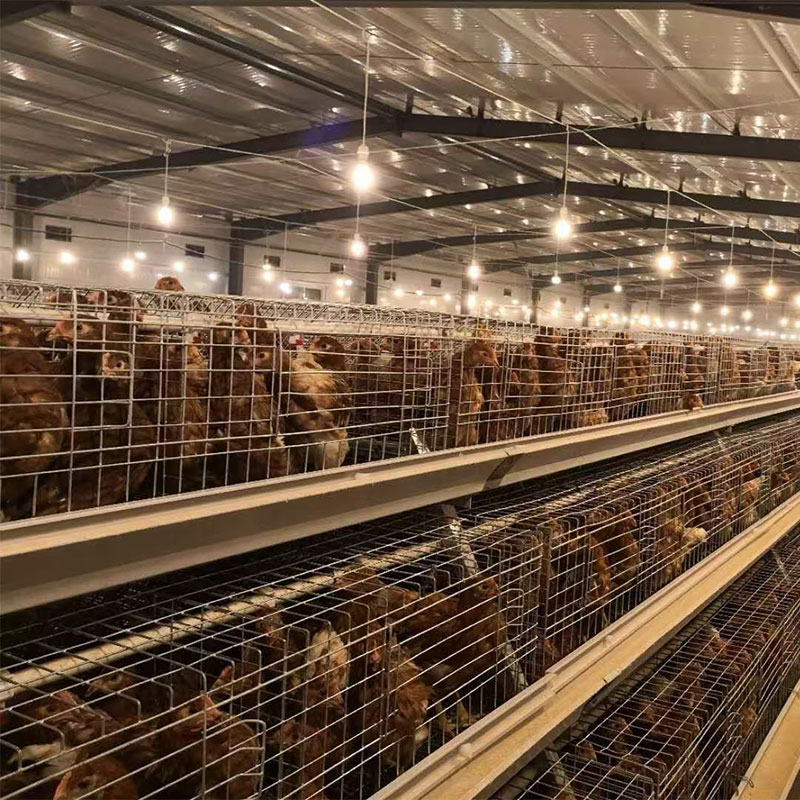
The rhythmic clucking of hens echoes across the farmyard, a sound synonymous with productivity and rural life. Yet, for any poultry farmer, this idyllic scene is underpinned by a critical, often overlooked component: the wire mesh that forms the very boundaries of their operation. The choice between standard chicken wire and galvanized welded wire mesh is not merely a matter of cost; it is a fundamental decision impacting animal welfare, operational efficiency, and long-term profitability. Understanding the distinct characteristics and applications of these materials transforms them from simple commodities into strategic assets for a modern poultry enterprise.

For generations, the hexagonal, diamond-shaped pattern of chicken wire has been a familiar sight. Its flexibility is its most notable feature. A farmer can unroll a length of it over uneven ground, around tree roots, or over the curved top of a small, temporary run with relative ease. It requires no special tools for installation beyond a pair of wire cutters and some staples. This makes it suitable for short-term, low-security applications. Imagine needing to quickly partition a section of the barn for a broody hen and her new chicks, or creating a temporary grazing ark on a patch of pasture. In these scenarios, the pliability of chicken wire is an advantage.
However, this same flexibility reveals its significant weaknesses under the persistent pressure of a poultry flock. The woven nature of the mesh lacks structural rigidity. A determined rooster or a dog pressing against it can cause it to bow and deform permanently. Over time, this constant stress weakens the thin wires at their connection points. A farmer might notice a small bulge in the fence one week, and the next, find a gap large enough for a curious pullet to squeeze through. Furthermore, the thin gauge of the wire offers little resistance to predators. A raccoon’s dexterous paws can easily pry the hexagons apart, while a fox can bite and tear through it. For anyone raising poultry beyond a handful of backyard birds, chicken wire often functions more as a visual barrier than a genuine physical one. Its galvanization, if present, is typically a light coating that quickly succumbs to rust when exposed to constant moisture from rain, manure, and soil, leading to brittle failure.

In stark contrast, galvanized welded wire mesh represents a shift toward permanent, resilient infrastructure. Instead of being woven, this mesh is manufactured by laying straight steel wires in a grid pattern and welding them together at every intersection. This process creates a rigid, pane-like sheet. When you pick up a panel of welded mesh, it holds its shape. It does not roll up as tightly or as easily as chicken wire, signaling its inherent strength. This rigidity is its primary advantage, transforming it from a simple fence into a structural element.
The benefits of this welded construction become immediately apparent in practical farm settings. Consider the construction of a permanent chicken coop. The walls and framing can be built, and the welded mesh can be stapled or screwed directly onto it, creating a solid, unyielding barrier. There is no sagging or bowing. For larger flight pens or aviaries, the mesh can be attached to sturdy posts, creating a taut, secure enclosure that can withstand birds flying into it or jostling against it. The weld points prevent the entire panel from deforming; if a single wire is cut, the damage remains localized and does not unravel the entire section, making repairs simpler and more contained.
The galvanization process for this type of mesh is also typically far more robust. While chicken wire may receive a thin, electroplated coating, quality welded mesh is often hot-dip galvanized. This means the entire steel wire panel is immersed in a bath of molten zinc. The result is a thick, durable coating that bonds metallurgically to the steel. On the farm, this translates to a product that can endure decades of exposure. It resists the corrosive effects of ammonia from poultry manure, constant humidity, and frequent cleaning with water and disinfectants. A farmer building a new laying facility can install this mesh with the confidence that it will not need replacement in five or ten years, making it a superior long-term investment despite a higher initial outlay.
The grid pattern of welded mesh offers another layer of strategic advantage: selectivity. Chicken wire comes in a limited range of hole sizes, generally designed to keep adult chickens in but often ineffective against smaller threats. Welded mesh, however, is available in a vast array of grid dimensions. A farmer can select the exact specification needed for their specific challenge.
For the main enclosure housing standard-sized laying hens, a grid of 1 inch by 2 inches is common. This prevents birds from putting their heads through and getting stuck, a very real and fatal risk with larger-holed mesh. For containing bantams or young pullets, a ½ inch by 1 inch grid would be more appropriate. This selectivity extends to predator proofing. To protect against weasels and mink, which can slink through incredibly small openings, a farmer would need a grid no larger than ½ inch on all sides. For the floor of a raised coop, a smaller grid prevents bumblefoot and other foot injuries, providing a more uniform and comfortable walking surface than widely spaced hardware cloth. When used as a floor in a brooder for day-old chicks, a fine mesh over a drop pan allows waste to fall through while providing secure footing, a detail that significantly improves hygiene and chick health.
The application of welded mesh extends far beyond the basic coop walls. Its structural integrity allows it to be used in ways that chicken wire never could. A common issue in poultry farming is the separation of feed from waste. Birds scratch and peck, often dragging feed out of troughs and into litter, where it is soiled and wasted. By constructing a vertical partition or a "feed curtain" from welded mesh with openings just large enough for a hen’s head to pass through, farmers can create a designated feeding area. The birds can access the feed from one side, but cannot scratch it out or defecate in it, leading to substantial feed savings and cleaner water.
Similarly, manure management is streamlined. Building dropping boards beneath roosts from solid material is standard, but covering them with a layer of wide-grid welded mesh (e.g., 2-inch by 4-inch) keeps the birds from walking in the accumulated droppings, which reduces the spread of parasites and keeps feathers cleaner. The manure simply falls through the grid onto the board or collection tray below.
For free-range or pastured poultry operations, welded mesh is indispensable for creating mobile pens or "chicken tractors." While these structures benefit from being lightweight, their frames must be strong enough to withstand daily moves. Using welded mesh for the sides and top provides the necessary strength-to-weight ratio. The rigid panels can be securely fastened to the tractor's frame, preventing collapse during transport and offering robust protection from aerial predators like hawks and ground threats. The longevity of the galvanized coating means the tractor can endure years of being moved through dewy grass and occasional rain without rusting out.
The initial economic calculation often leads farmers to choose chicken wire. Its lower per-roll cost is immediately appealing. However, a true cost analysis must be conducted over the lifespan of the infrastructure. A fence made from chicken wire around a main run may need patching within a year, a complete replacement in three, and could fail to prevent a single predator attack, resulting in the loss of an entire flock. The cost of that failure—in lost livestock, emotional distress, and lost production—dwarfs the initial savings.
A welded mesh fence, while costing more upfront, represents a one-time, long-term investment. It will not need replacing. It will effectively deter predators, saving birds and income. Its rigidity reduces ongoing maintenance time; there are no sags to re-stretch or holes to patch. The time a farmer saves on constant fence repairs is time that can be redirected toward other value-adding tasks, such as flock health monitoring, marketing, or product development. Therefore, the Return on Investment (ROI) for welded mesh is realized through durability, security, and reduced labor, making it the more economically sound choice for any serious poultry production system.
The process of working with welded mesh requires a slightly different approach than with chicken wire. Its rigidity means it is best handled as flat panels. It is crucial to wear heavy-duty gloves, as the cut ends of the wires can be sharp. A pair of aviation snips or bolt cutters is necessary for cutting it to size. When installing, it should be fastened securely to a solid frame at regular intervals using galvanized staples, screws with washers, or u-nails to prevent any section from being pried loose. Taking the time to install it correctly on a well-built frame unlocks its full potential as a permanent part of the farm’s infrastructure.
From the brooder to the main coop, from feed-saving curtains to mobile tractors, galvanized welded wire mesh provides a versatile, strong, and lasting solution. It is the material that allows a farmer to build with confidence, knowing that the boundaries they create will hold firm against internal pressure and external threats. It is an investment not just in wire, but in the peace of mind that comes from a secure, efficient, and well-managed poultry operation. The choice ultimately reflects the farmer’s vision for their enterprise: whether it is a temporary hobby or a durable, productive, and sustainable business built to last.
1. Drinking system include the water pipes, water pressure adjuster, drinking nipples, Waterline front-end device, dosing system etc, choose them according to customer's needs.
2. High-quality water drinking pipes, pressure regulating valves and water drinking nipples can effectively prevent the water leakage. Drinking system adopt the closed piping system, which can minimize the water pollution.
3. 360-degree drinking nipples provide adequate drinking water for poultry at all stages.
4. The automatic drinking water system mainly adopts the steel ball drinking nipple. lt uses imported high-grad stainless steel, POM resin, and APS engineering material, which is wearing resistant, and the durability can be used for long time.



1. Automatic feeding machine can be chosen between gantry and ladder feeding machine. Gantry type feeding machine is a relatively economical and practical machine with simple operation, remote control walking character, easy to manage.
2. Mechanical transmission device running smoothly, low noise, long service life.
3. With the use of automatic control, the feeding system can adjust the amount of material.
4. Feeding with arched structure, high carrying capacity, not easily deformed.
5. Saving man power, saving feed, greatly improving the efficiency of Large-scale farming.
6. The walking speed of gantry feeding machine is 9--12 m/min.




1. Manure removing system included scraper type and conveyor belt type, Which can reduce the labor intensity and labor cost, keep the chicken shed dry and clean.
2. A type chicken cage can use scraper type or conveyor belt type.


3. The scraper type is suitable for A type cages, which can clean two or three rows. For the starters, this type is a good choice. lt can not only save some labor cost, but also save some investment in the whole project. The cleaning speed is 6-10 meters per minute.
4. Conveyor belt type is more suitable for large scale farming. The manure removing belt we use is high quality PP material (polypropylene). The walking speed is 2-4 meters per minute.



High Quality Pellets Made by Mobile Pellet Machine
1. It has professional designed angle of the blade. After the dynamic balance test one by one, the blade can operate smoothly.
2. The air volume is consistent in the whole life of the fan. Bearings has advantage of high strength, low noise, durable and so on.
1. The cooling pads uses high-quality wet curtain paper and adopts space cross-linking technology, which has the advantages of high water absorption, high water resistance, anti-toxicity and long service life.
2. The cooling efficiency is over 80%, without surfactant, natural water absorption, fast diffusion speed and long-lasting effect.
3. The product does not contain phenol and other chemical substances that are easy to cause skin allergies. It is non-toxic and harmless to the human body and chicken when installed and used. It is green, safe, energy-saving, environmentally friendly, economical, and easy to install.
4. The frame aluminum alloy has high strength, good corrosion resistance, durability and beautiful appearance.
5. Use a special filter for the cooling pad at the upper water to ensure clean water quality and support efficient water circulation components.
6. Combined with a negative pressure fan, it can effectively lower the indoor temperature.
The window is made of special selected high-quality engineering plastic, with high strength and long service life, together with superior anti-aging and anti-UV performance.
Function: Ventilation of the chicken house, usually used in the winter.
This system can adjust the wind speed and direction, thus the cold air will not reach chicken directly , which can effectively prevent the phenomenon of cold stress in chicken.
Environmental control system equipment is suitable for large-scale and intensive farming. According to customer requirements, we can provide various types of smart poultry equipment.
1. Our poultry management system is a modular system that manages all aspects of the chicken house, such as climate, temperature, humidity, ammonia, feeding, feed weighing, lighting and ventilation systems, and can monitor the situation of the chicken house in real time through a computer and mobile phone.
2. The management computer is the heart of the poultry farm, allowing you to easily monitor the entire poultry farm.

 WeChat:+8617838608255