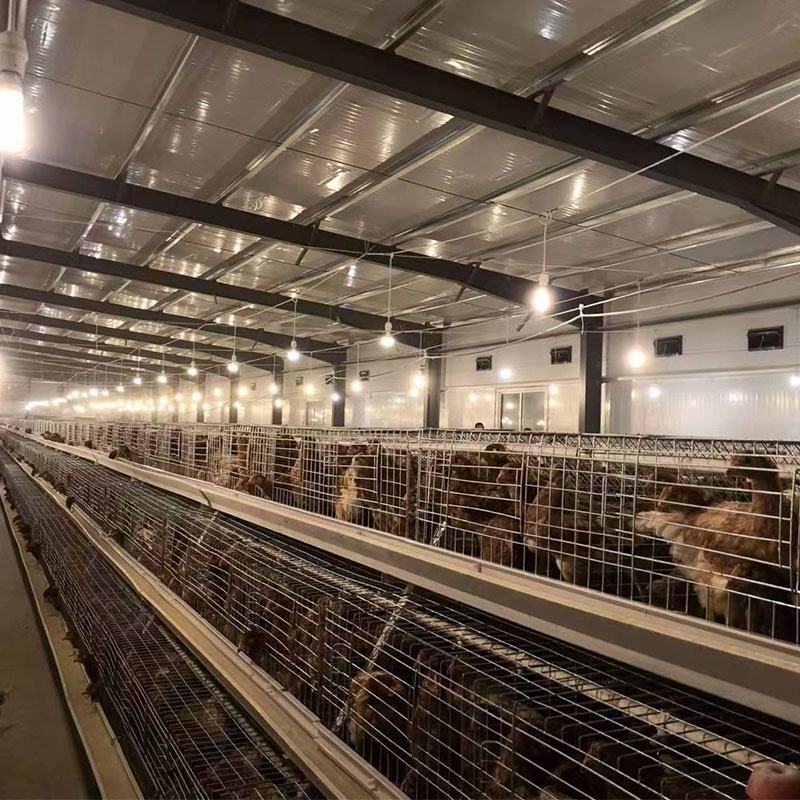
For poultry farmers across Kenya, the morning egg collection represents more than just daily revenue—it’s a tangible measure of their operation’s health and efficiency. The sight of broken eggs, the struggle to reach nests in poorly designed housing, or the tell-tale signs of stress and disease in a flock are constant reminders that the physical structure of a poultry house is not a mere shelter, but a critical piece of farming equipment. The choice of housing system, particularly the cage, dictates daily labor, bird welfare, feed conversion, and ultimately, the profitability of the entire enterprise.
The shift from traditional, open-sided shelters to modern, controlled-environment housing is no longer a luxury but a necessity for farmers aiming to scale their operations and compete effectively. At the heart of this transformation is the steel frame layer cage system, a technology that has been refined over decades and is now accessible to Kenyan farmers through direct partnerships with Chinese suppliers. These systems are engineered to address the specific challenges of intensive egg production, turning the poultry house into a highly tuned production line.
The Core Anatomy of a Modern Layer Cage System
Understanding the components of these systems is crucial, not to memorize parts, but to comprehend how each element contributes to the overall functionality and bird management.
The foundation is the galvanized steel frame. This isn't just any steel; it's coated with a layer of zinc through a hot-dip process. Imagine a typical iron sheet left out in the rain—it will rust quickly. A galvanized steel wire, however, can withstand years of exposure to the corrosive ammonia from chicken manure and the humid environment of a poultry house without significant corrosion. This longevity is non-negotiable for a long-term investment.
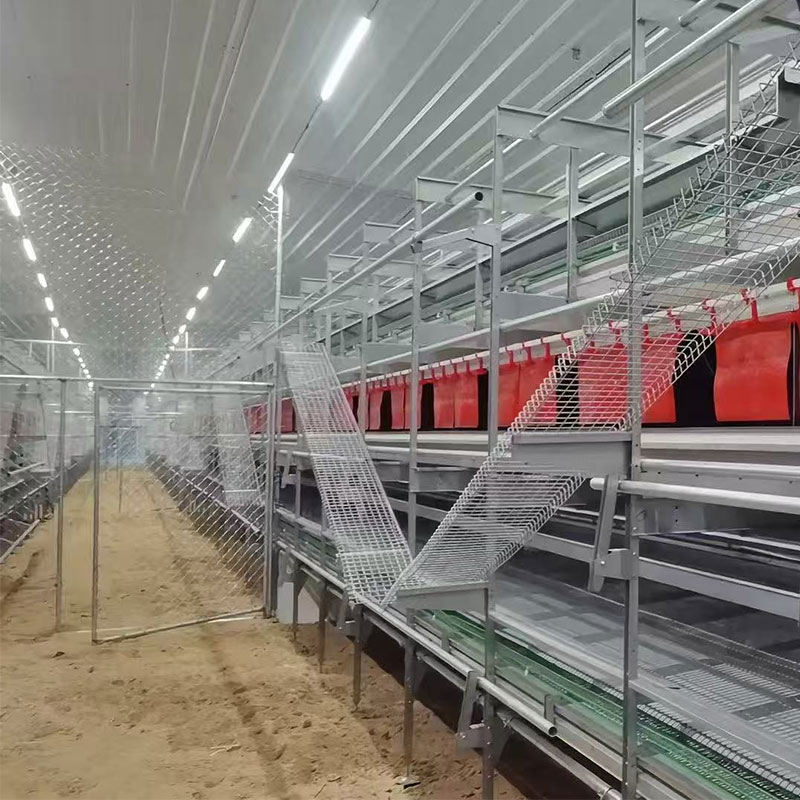
Suspended within this robust frame is the cage battery itself. The term "battery" simply refers to a modular unit of multiple cages connected together, much like batteries in a remote control. A single tier is a row of these cages. Systems can be single-tier (all cages on one level) or multi-tiered, with the A-type and H-type configurations being the most common.
An A-type cage system arranges cages in rows that slope towards a central aisle, forming an 'A' shape when viewed from the end. The eggs laid by the hens roll gently down the sloped wire floor onto a conveyor belt running the length of the row. This design is excellent for manure management, as droppings fall through the cage floor onto a deep pit or a belt below, keeping the birds separate from their waste. For a farmer with 10,000 birds, this means manure can be collected in bulk every few weeks rather than being scraped daily, a massive labor saving.
An H-type cage system, also known as a ladder system, stacks cages directly on top of one another in vertical tiers. This is a space-saving marvel. Where an A-type system might require a wider building to accommodate the sloping tiers, an H-type system can house the same number of birds in a narrower, taller structure. This makes it ideal for farms where land is at a premium. In both systems, the cage floors are not flat; they are sloped, typically at about 8 degrees. This slight incline is enough for a freshly laid egg to roll away to safety but is not so steep that it causes discomfort or foot problems for the hens.
The manure removal system is what separates modern designs from outdated ones. The two primary methods are the scraper and the belt. A manure scraper is a metal bar that moves slowly along a pit beneath the cages, pushing the accumulated droppings to one end for removal. A manure belt is a continuous, slow-moving plastic belt that carries the waste away. The belt system is generally cleaner and produces drier manure, which is easier to handle and sell as fertilizer.
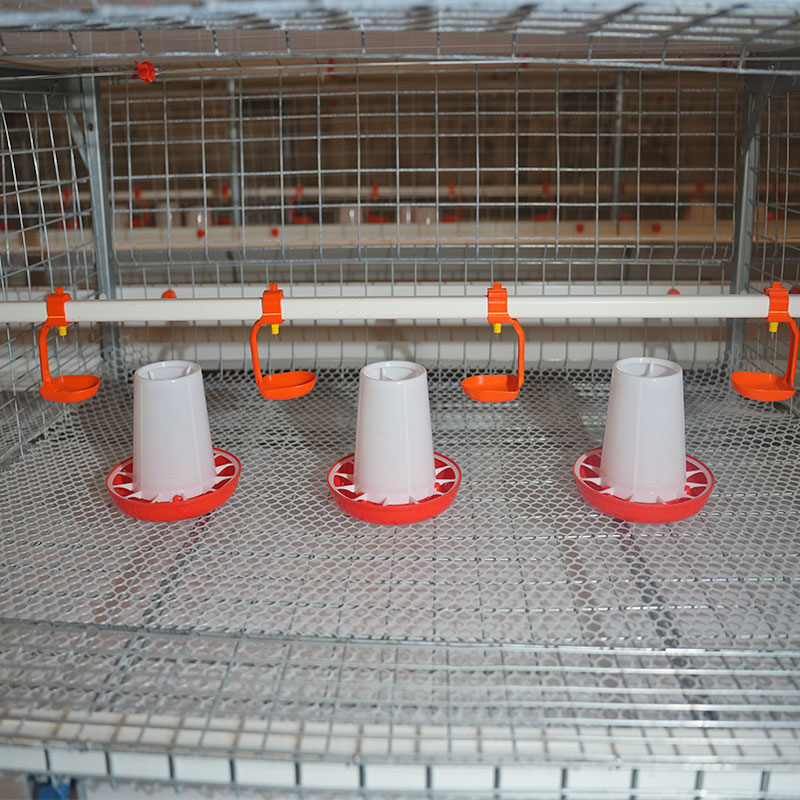
Perhaps the most critical subsystem is automated feeding and watering. A feed trough runs along the front of the cages, connected to a central hopper. An auger—a giant screw inside a tube—rotates at set intervals, moving feed from the hopper throughout the entire length of the trough. This ensures every hen has access to fresh feed simultaneously, preventing dominant birds from monopolizing the food. Similarly, nipple drinking systems provide a constant supply of clean water. Hens learn to peck at a small metal pin, releasing a drop of water directly into their beak. This is far superior to open troughs, which quickly become contaminated with feed and droppings, becoming a breeding ground for disease.
Operational Advantages on the Kenyan Farm
The integration of these components creates a cascade of practical benefits that directly impact a farmer's bottom line.
Maximized Stocking Density and Land Use
For a farmer on a one-acre plot outside Nairobi, the verticality of an H-type system is transformative. Instead of a single, sprawling shed housing 5,000 birds, a three-tier H-type system can house 15,000 birds in the same footprint. This tripling of capacity on the same piece of land is a fundamental shift in production economics. The high stocking density is managed effectively because the automated systems for feed, water, and manure prevent the chaos and health issues that would plague a similarly crowded traditional house.
Precision Feed and Water Management
Feed constitutes up to 70% of the cost of producing an egg. In a scatter-feeding system, wastage is enormous—hens scratch it out, it gets soiled, and it attracts pests. The automated trough system in a cage battery contains the feed, and the controlled delivery means farmers can precisely track consumption. If a farmer notices a sudden drop in feed intake in one row of cages, it’s an early warning sign of potential health issues in that group. The closed nipple water system similarly prevents spillage and contamination, directly reducing water bills and the incidence of waterborne diseases like coccidiosis.
Labor Optimization and Redefined Work
The most immediate change farmers report is the dramatic reduction in physically demanding labor. No longer is the workday dominated by carrying heavy sacks of feed, filling individual waterers, or hand-collecting thousands of eggs from dirty nests. The labor shifts from manual, repetitive tasks to management and supervision. A worker’s role becomes monitoring the automated systems, checking bird health by observing behavior at the cage fronts, and performing routine maintenance. This makes poultry farming more sustainable and allows the farm owner to manage a larger operation with the same or fewer staff.
Enhanced Bird Health and Biosecurity
By keeping hens off the ground and away from their manure, cage systems drastically reduce the parasite load and the incidence of bacterial diseases. A hen in a traditional system is in constant contact with its droppings, leading to dirty feathers, footpad dermatitis, and internal parasites. In a cage, the manure falls through the wire floor, breaking the cycle of reinfection. This separation is the core of improved biosecurity. It also makes it easier to identify sick birds early; a listless hen sitting at the back of a cage is far more visible than one hiding in a large flock on a litter floor.
Superior Egg Quality
The automated egg collection system is a game-changer for quality. The moment an egg is laid, it rolls away from the hen onto a soft conveyor belt. It is not pecked, broken, or soiled. The eggs collected at the end of the line are consistently clean, with strong, uncracked shells. This directly translates to a higher grade of egg and a better price in the market. For farmers supplying supermarkets or exporters, this consistent quality is a mandatory requirement.
Navigating the Sourcing Process from China
Engaging with a Chinese supplier is a process that requires diligence and clear communication to ensure a successful outcome.
Supplier Verification is Paramount
The first step is to move beyond a simple Alibaba search. A reputable supplier will have a track record. Request a company profile, ask for a business license, and seek out references from other projects, preferably in Africa. A serious manufacturer will have a professional website, detailed product catalogs, and engineering drawings. They should be able to provide a video tour of their factory and their production process. This isn't just about checking product quality; it's about assessing their capability to handle an international export project.
The Criticality of a Detailed Quotation
A quote that simply states "Layer Cage System for 10,000 Birds - $XX,XXX" is a red flag. A professional quotation must be an itemized bill of materials. It should break down the cost of the galvanized steel wire (specifying the zinc coating thickness), the framing system, the feeding system (including motor power and auger specifications), the drinking system (nipple type and pipe quality), the egg collection system, and the manure removal system. It should also clearly state what is not included, such as shipping, import duties, and on-site installation. This level of detail prevents costly surprises and allows for accurate comparisons between different suppliers.
Customization for the Kenyan Environment
A one-size-fits-all design from a European climate may fail in the Kenyan context. A competent supplier will work with you to customize the house design. considerations include:
Ventilation: This is the most critical environmental control. The design must incorporate a combination of side curtain inlets and powerful exhaust fans. The system should be designed to achieve a specific air exchange rate per minute, tailored to Kenya's ambient temperatures. A farmer in the cooler highlands of Kericho will have different needs than one in the coastal heat of Mombasa.
Cooling Systems: For hotter regions, the inclusion of evaporative cooling pads is essential. These are honeycombed pads at the air inlets over which water is trickled. As incoming hot, dry air passes through the wet pad, it is cooled significantly, acting as an air conditioner for the birds.
Lighting: The design must include a controlled lighting program. Layers require specific hours of light to maintain peak production. The system should have an automated timer to simulate consistent day length, a crucial factor for year-round laying.
Logistics, Shipping, and After-Sales Support
Understand the Incoterms. An FOB (Free On Board) price means the supplier gets the goods to a Chinese port, and you are responsible for the main shipping cost, insurance, and all Kenyan import procedures. A CIF (Cost, Insurance, and Freight) price includes the sea freight to the port of Mombasa, but you still handle customs clearance and transport to your farm. Factor in these costs, which can be significant. Crucially, discuss after-sales support. What is the warranty on motors and mechanical parts? Will the supplier provide detailed assembly manuals and video guides? Do they offer remote technical support? The best suppliers will offer the option to send a supervisor to Kenya to oversee the installation, ensuring it is done correctly.
Financial Planning and Implementation
Transitioning to a steel cage system is a major capital expenditure, and its viability hinges on a realistic financial analysis.
The initial investment includes the cost of the cage system itself, international shipping, import duties and VAT, the construction or modification of the poultry house structure, and the cost of professional installation if not done by the farm's team. This must be weighed against the operational savings and increased revenue.
The return on investment is realized through multiple channels: a higher bird density per square meter, a significant reduction in feed wastage, a drastic cut in labor costs, a lower mortality rate, and a higher percentage of saleable, first-grade eggs. A farmer might calculate that the savings on feed and labor alone will pay for the system's finance costs within a few years, after which the increased production and efficiency represent pure profit.
The construction phase requires meticulous planning. The foundation for a multi-tiered H-type system, which can weigh several tons when fully stocked, must be engineered to support the load. The poultry house must be properly oriented to take advantage of prevailing winds for natural ventilation and have a roof that provides adequate insulation. All utilities—a reliable electrical connection for the automated systems, a clean water source for the drinking lines, and a drainage plan for the manure—must be integrated into the design from the outset.
The modern steel frame layer cage is not merely a container for chickens. It is the central component of a integrated production system that brings predictability, control, and scalability to poultry farming. For the Kenyan farmer, adopting this technology is a decisive step away from subsistence-level practices and toward a modern, profitable, and sustainable agricultural enterprise. The initial investment is substantial, but the long-term gains in efficiency, product quality, and operational control make it a foundational investment for the future of any serious egg production business.
1. Drinking system include the water pipes, water pressure adjuster, drinking nipples, Waterline front-end device, dosing system etc, choose them according to customer's needs.
2. High-quality water drinking pipes, pressure regulating valves and water drinking nipples can effectively prevent the water leakage. Drinking system adopt the closed piping system, which can minimize the water pollution.
3. 360-degree drinking nipples provide adequate drinking water for poultry at all stages.
4. The automatic drinking water system mainly adopts the steel ball drinking nipple. lt uses imported high-grad stainless steel, POM resin, and APS engineering material, which is wearing resistant, and the durability can be used for long time.



1. Automatic feeding machine can be chosen between gantry and ladder feeding machine. Gantry type feeding machine is a relatively economical and practical machine with simple operation, remote control walking character, easy to manage.
2. Mechanical transmission device running smoothly, low noise, long service life.
3. With the use of automatic control, the feeding system can adjust the amount of material.
4. Feeding with arched structure, high carrying capacity, not easily deformed.
5. Saving man power, saving feed, greatly improving the efficiency of Large-scale farming.
6. The walking speed of gantry feeding machine is 9--12 m/min.




1. Manure removing system included scraper type and conveyor belt type, Which can reduce the labor intensity and labor cost, keep the chicken shed dry and clean.
2. A type chicken cage can use scraper type or conveyor belt type.


3. The scraper type is suitable for A type cages, which can clean two or three rows. For the starters, this type is a good choice. lt can not only save some labor cost, but also save some investment in the whole project. The cleaning speed is 6-10 meters per minute.
4. Conveyor belt type is more suitable for large scale farming. The manure removing belt we use is high quality PP material (polypropylene). The walking speed is 2-4 meters per minute.



High Quality Pellets Made by Mobile Pellet Machine
1. It has professional designed angle of the blade. After the dynamic balance test one by one, the blade can operate smoothly.
2. The air volume is consistent in the whole life of the fan. Bearings has advantage of high strength, low noise, durable and so on.
1. The cooling pads uses high-quality wet curtain paper and adopts space cross-linking technology, which has the advantages of high water absorption, high water resistance, anti-toxicity and long service life.
2. The cooling efficiency is over 80%, without surfactant, natural water absorption, fast diffusion speed and long-lasting effect.
3. The product does not contain phenol and other chemical substances that are easy to cause skin allergies. It is non-toxic and harmless to the human body and chicken when installed and used. It is green, safe, energy-saving, environmentally friendly, economical, and easy to install.
4. The frame aluminum alloy has high strength, good corrosion resistance, durability and beautiful appearance.
5. Use a special filter for the cooling pad at the upper water to ensure clean water quality and support efficient water circulation components.
6. Combined with a negative pressure fan, it can effectively lower the indoor temperature.
The window is made of special selected high-quality engineering plastic, with high strength and long service life, together with superior anti-aging and anti-UV performance.
Function: Ventilation of the chicken house, usually used in the winter.
This system can adjust the wind speed and direction, thus the cold air will not reach chicken directly , which can effectively prevent the phenomenon of cold stress in chicken.
Environmental control system equipment is suitable for large-scale and intensive farming. According to customer requirements, we can provide various types of smart poultry equipment.
1. Our poultry management system is a modular system that manages all aspects of the chicken house, such as climate, temperature, humidity, ammonia, feeding, feed weighing, lighting and ventilation systems, and can monitor the situation of the chicken house in real time through a computer and mobile phone.
2. The management computer is the heart of the poultry farm, allowing you to easily monitor the entire poultry farm.

 WeChat:+8617838608255