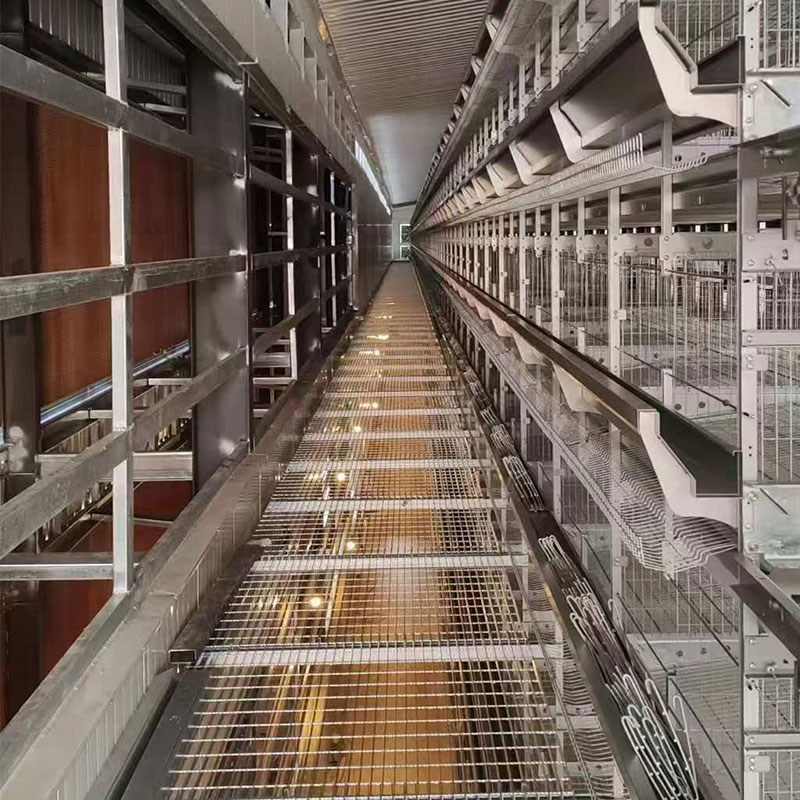
For poultry farmers, the decision of where and how to house your birds is one of the most critical investments you'll make. Commercial chicken cages for sale represent more than just a piece of equipment; they are the foundation of your operation's productivity, bird health, and longterm profitability. Whether you're establishing a new layer facility for egg production, a broiler unit, or upgrading an existing system, navigating the market requires expert insight. This comprehensive guide delves into everything you need to know, blending industry best practices with a focus on animal welfare and operational excellence.
When searching for "commercial chicken cages for sale," users typically fall into two primary intents:
1. Commercial Investigation/Purchase: This user is ready to buy and is comparing systems, specifications, suppliers, and pricing to make an informed capital investment.
2. Informational Research: This user is in the planning stages, seeking to understand the types of systems available, modern welfare considerations (like enriched colonies or aviaries), key features, and industry trends before engaging with suppliers.
This article is structured to serve both intents—providing deep technical knowledge for the serious buyer while educating the planner on crucial industry developments.
Gone are the days of onesizefitsall battery cages. Today's commercial poultry farming demands a sophisticated balance between efficiency, animal welfare compliance, biosecurity, and automation. The modern commercial chicken cage system is a technologically advanced environment designed to optimize feed conversion, egg collection, manure management, and bird health. Choosing the right system impacts every aspect of your bottom line and your ability to meet evolving consumer and regulatory standards. This guide will equip you with the knowledge to select a system that aligns with your production goals.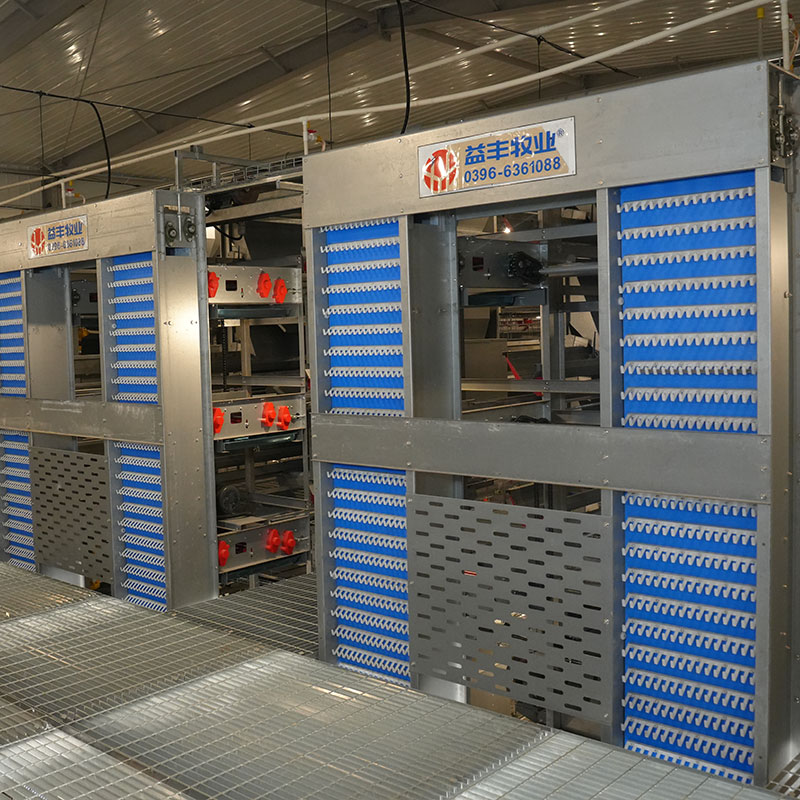
Your primary output dictates cage design.
Layer Cages (Egg Production): Designed for hens. Key features include egg rollout belts to keep eggs clean, gentle slope flooring, and specific feeder/nipple drinker placement.
Broiler Cages (Meat Production): Focus on maximizing growth space and durability. Flooring must support heavier birds and promote good leg health.
Pullet/Rearer Cages: For raising young hens before they move to laying systems. Often multitiered with adjustable features.
| System Type | Description | Key Advantages | Key Considerations | Best For |
| : | : | : | : | : |
| Conventional Battery Cages | Traditional stacked wire cages. | High stocking density, costeffective per bird, efficient feeding/watering automation. | Increasingly regulated/banned in many regions due to welfare concerns (EU, some US states). | Markets where still legally permitted; focus on maximum output efficiency. |
| Enriched/Colony Cages | Provide amenities per EU Directive & similar standards. | Includes perches, nesting area, scratch pad; improves behavioral expression while maintaining control. | Higher initial cost per bird than conventional; requires more management of nesting behavior. | Farmers needing compliance with higher welfare standards (e.g., EUcompliant egg production). |
| Aviary Systems (CageFree) | Multitiered indoor systems with open floors/litter areas. | Allows full range of natural behaviors (flying perching dustbathing). Meets "cagefree" market demands.| Higher labor/cost,biosecurity challenges,increased risk offeather pecking¶sites.| Branded cagefree or freerange egg production; responding to major retailer commitments. |
| Combi Systems | Convertible between enriched cage and aviary setup by opening doors. | Offers operational flexibility to adapt to market demands.Welfare upgrade path.| Complex design; higher investment cost; requires skilled management switch between modes.| Forwardthinking farms wanting to futureproof their investment against market shifts. |
Tier Configuration: Aframe vs stairstep vs vertical stacking impacts space utilization,microclimate,and manure belt placement.
Automation Integration:
Feeding Systems: Chain feeders vs pan feeders—consider feed waste reduction.
Watering Systems: Nipple drinkers with correct pressure settings are essential for hygiene.
Manure Management: Deep pit vs daily removal belts.Dry manure belts significantly reduce ammonia and improve air quality.
Egg Collection: Centralized conveyor belts vs intier collection.Speed and gentle handling are paramount.
Climate Control: Cage design must integrate seamlessly with ventilation,intake,and cooling systems.
Materials & Durability: Hotdip galvanized steel is standard for corrosion resistance.Gauge of wire mesh impacts longevity.Cage door mechanisms should be robust for thousands of cycles.
When evaluating suppliers of commercial chicken cages:
Request case studies or visits to existing installations.
Inquire about customization options (row length,tier height).
Assess their technical support,warranty,and availability of spare parts.
Compare total cost of ownership (installation,lifetime maintenance)not just unit price.
Modern purchasing decisions cannot ignore the macrotrends:
Animal Welfare Legislation: Stay ahead of regulations.Know your local laws (e.g.,California's Prop 12) and major customer requirements.
Consumer Preferences: "Cagefree," "enriched colony,"and "pastureraised"are powerful market drivers.Even if not required by law,capturing this market may require specific systems.
Sustainability Metrics: Systems that reduce water use(via efficient drinkers),minimize antibiotic need through better health,and manage manure effectively have a competitive edge.
Selecting the right commercial chicken cages is a strategic decision that reverberates for years.It requires balancing capital expenditure with operational efficiency,bird welfare outcomes,and market access.The most successful farmers are those who partner with reputable suppliers,treat their housing system as an integrated biological environment,and remain adaptable to industry evolution.Do not simply search for a cage; invest in a complete poultry production environment designed for success.
Q1: What is the difference between battery cages and enriched colony cages?
A1: Traditional battery cages are primarily focused on space efficiency.Enriched colony cages provide significantly more space per hen(approx750 cm² vs550 cm²)and mandate key amenities:a nesting area,a perch,a scratch pad/turf,and clawshortening devices.This allows hens to express more natural behaviors while still operating within an automated housed system.
Q2: Are battery cages illegal?
A2: Legality varies by jurisdiction.They are banned in the European Union,the UK,Australia,and several U.S.states(including California,Michigan,Massachusetts under certain conditions).Always check your national and state/provincial legislation before purchasing any system.
Q3: How many chickens fit in a commercial cage?
A3: It depends entirely on the system type,cage dimensions,and local laws.For example,in an EUstyle enriched colony,a common group size is4080 hens sharing a larger furnished space.In traditional systems,density was much higher.Calculate based on usable floor area(cm²or in²)per bird as required by your applicable code.
Q4:What are the main advantages of automated cage systems?
A4:
1.Reduced labor costs(automated feeding watering egg collection manure removal).
2.Optimized feed conversion ratios(minimized waste).
3.Superior biosecurity(limited human contact reduced disease vector risk).
4.Consistent egg quality(clean dry eggs from rollout belts).
5.Precise environmental control within the cage bank.
Q5:What maintenance do commercial chicken cages require?
A5:Routine maintenance includes daily checks of nipple drinkersfor clogs/leaks inspectionof egg beltsand feeder chains lubricationof moving partsand periodic deep cleaning/disinfection between flocks.Structural integrity checksfor wire damageor corrosion should be done annually.
Q6:Cagefree vs enriched colonies which is better?
A6:"Better"is contextdependent.Enriched colonies offera controlled environmentwith strong healthand productivity metricswhile providingmore behavioral freedomthan conventional cages.Cagefree(aviaries)allowthe fullest rangeof behaviorsbut present greater challengesin managingsocial stress feather pecking parasite controland requiremore skilled stockmanship.The choice depends onyour target market resource sand management expertise.
Q7:What questions should I aska supplierbefore buying?
A7:
Can you provide references at farmswith similar setups?
What isthe lead timefor manufacturingand delivery?
Do you offer onsite installation supervision?
What isthedetailed warrantyon structureand mechanical parts?
How readily availablearespare parts whatistheir cost?
Can themanure belt systemintegratewith my existing compostor drying setup?
Q8:Whatisthe typicallifespanof agoodqualitycagesystem?
A8:A wellmaintainedsystem made fromhotdip galvanizedsteel can last15to20yearsorde more.Key wearitemslikebeltsdrivemotorsand nipple drinkersmay needreplacementsoverthat periodbutthe mainstructureshould endure
1. Drinking system include the water pipes, water pressure adjuster, drinking nipples, Waterline front-end device, dosing system etc, choose them according to customer's needs.
2. High-quality water drinking pipes, pressure regulating valves and water drinking nipples can effectively prevent the water leakage. Drinking system adopt the closed piping system, which can minimize the water pollution.
3. 360-degree drinking nipples provide adequate drinking water for poultry at all stages.
4. The automatic drinking water system mainly adopts the steel ball drinking nipple. lt uses imported high-grad stainless steel, POM resin, and APS engineering material, which is wearing resistant, and the durability can be used for long time.



1. Automatic feeding machine can be chosen between gantry and ladder feeding machine. Gantry type feeding machine is a relatively economical and practical machine with simple operation, remote control walking character, easy to manage.
2. Mechanical transmission device running smoothly, low noise, long service life.
3. With the use of automatic control, the feeding system can adjust the amount of material.
4. Feeding with arched structure, high carrying capacity, not easily deformed.
5. Saving man power, saving feed, greatly improving the efficiency of Large-scale farming.
6. The walking speed of gantry feeding machine is 9--12 m/min.




1. Manure removing system included scraper type and conveyor belt type, Which can reduce the labor intensity and labor cost, keep the chicken shed dry and clean.
2. A type chicken cage can use scraper type or conveyor belt type.


3. The scraper type is suitable for A type cages, which can clean two or three rows. For the starters, this type is a good choice. lt can not only save some labor cost, but also save some investment in the whole project. The cleaning speed is 6-10 meters per minute.
4. Conveyor belt type is more suitable for large scale farming. The manure removing belt we use is high quality PP material (polypropylene). The walking speed is 2-4 meters per minute.



High Quality Pellets Made by Mobile Pellet Machine
1. It has professional designed angle of the blade. After the dynamic balance test one by one, the blade can operate smoothly.
2. The air volume is consistent in the whole life of the fan. Bearings has advantage of high strength, low noise, durable and so on.
1. The cooling pads uses high-quality wet curtain paper and adopts space cross-linking technology, which has the advantages of high water absorption, high water resistance, anti-toxicity and long service life.
2. The cooling efficiency is over 80%, without surfactant, natural water absorption, fast diffusion speed and long-lasting effect.
3. The product does not contain phenol and other chemical substances that are easy to cause skin allergies. It is non-toxic and harmless to the human body and chicken when installed and used. It is green, safe, energy-saving, environmentally friendly, economical, and easy to install.
4. The frame aluminum alloy has high strength, good corrosion resistance, durability and beautiful appearance.
5. Use a special filter for the cooling pad at the upper water to ensure clean water quality and support efficient water circulation components.
6. Combined with a negative pressure fan, it can effectively lower the indoor temperature.
The window is made of special selected high-quality engineering plastic, with high strength and long service life, together with superior anti-aging and anti-UV performance.
Function: Ventilation of the chicken house, usually used in the winter.
This system can adjust the wind speed and direction, thus the cold air will not reach chicken directly , which can effectively prevent the phenomenon of cold stress in chicken.
Environmental control system equipment is suitable for large-scale and intensive farming. According to customer requirements, we can provide various types of smart poultry equipment.
1. Our poultry management system is a modular system that manages all aspects of the chicken house, such as climate, temperature, humidity, ammonia, feeding, feed weighing, lighting and ventilation systems, and can monitor the situation of the chicken house in real time through a computer and mobile phone.
2. The management computer is the heart of the poultry farm, allowing you to easily monitor the entire poultry farm.

 WeChat:+8617838608255