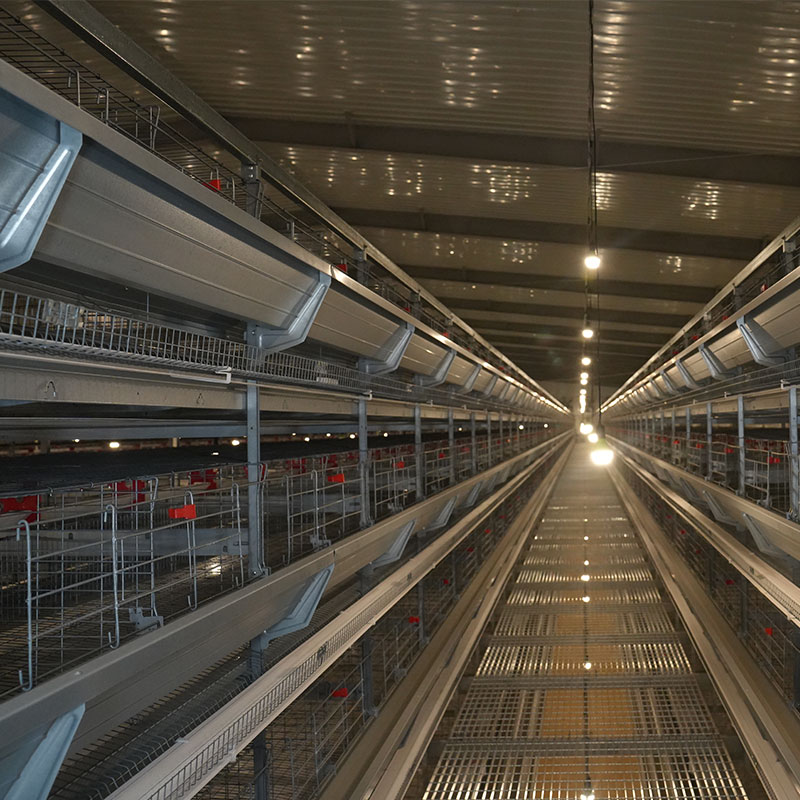
The steel frame groans under the weight of a thousand birds, the rust flaking off like dead skin onto the manure-caked floor below. A farmer, let’s call him John, wrestles with a jammed feeding chain, his knuckles bleeding. The morning’s egg collection is a back-breaking chore of reaching into dark corners, and the mortality rate has crept up again, a silent tax on his already thin margins. This scene, repeated in countless older sheds, is the ghost that modern commercial cage systems are designed to exorcise.
The decision to invest in a new cage system isn’t about buying a product; it’s about architecting the entire workflow and profitability of a poultry operation for the next decade or more. The wrong choice becomes a daily constraint, a source of escalating costs and frustration. The right choice fades into the background, a reliable, silent partner that simply enables better bird welfare, higher productivity, and a more manageable operation.
The Core Architecture: More Than Just Wire
At its heart, every cage system is built around a simple principle: creating optimized, controllable micro-environments for layers. But the devil, and the dividends, are in the engineering details.
Consider the galvanization process. A cheap, thinly galvanized system might look fine in the showroom, but in the humid, ammonia-rich atmosphere of a poultry house, it’s a death sentence. The coating will fail, leading to rapid rust. This isn’t just an aesthetic issue. Rust weakens the structural integrity of the wires holding your birds. It creates rough surfaces that can injure feet and keel bones, opening pathways for infection. A high-quality system uses a heavier gauge steel and a robust hot-dip galvanization process. You can’t see this difference on a spec sheet, but you will see it years later when your neighbor’s cheap cages are flaking apart while yours show only a dull, protective patina.
The wire design itself is a critical balancing act. The floor mesh must be strong enough to support the birds comfortably without sagging, yet have an open area large enough to allow manure to pass through cleanly. A mesh that’s too closed will cause manure to build up on the floor, increasing ammonia levels and soiling eggs. A design that’s too open can lead to foot injuries or bumblefoot. The best systems use a carefully engineered pattern, often with a slight downward slope toward the manure belt, to encourage waste to clear the cage entirely.
The Three Operational Backbones: Manure, Feed, and Eggs

The true efficiency of a system is measured by how it handles these three outputs. A bottleneck in any one creates a cascade of problems.
Manure management is the first line of defense against disease and poor air quality. The old method of deep pits or daily scraping is labor-intensive and creates peaks of high ammonia. Modern systems employ continuous manure removal via belts. There are two primary types: daily removal and deep drying tunnel systems.
A daily removal belt runs once every 24 hours, carrying the fresh manure out of the house to a collection point. This is excellent for maintaining consistent low ammonia levels. However, it requires daily attention and an external manure handling system.
A deep drying system uses a deeper belt that runs only once every few days or even weekly. Powerful ventilation air is drawn through the accumulating manure pile on this slow-moving belt, drying it significantly before it even leaves the building. This dried manure is lighter, easier to handle, has vastly reduced odor, and is a more valuable fertilizer product. The choice often comes down to local climate (drying is less effective in high humidity) and the farm’s overall waste management strategy.
The feeding system is the direct line to your feed conversion ratio (FCR). A poorly designed system wastes more money than almost any other fault. The standard is the chain feeder, a simple loop of chain that drags feed along a trough. But not all chains are created equal. A jerky, poorly aligned chain with sharp corners can cause feed separation—where the finer, vitamin-rich particles sift to the bottom and the birds only eat the larger grains, leading to nutritional deficiencies. High-quality systems use a perfectly level trough, smooth corners, and a drive system that provides a steady, gentle flow of feed, ensuring a homogenous mix from the first to the last bird.
Nipple drinkers have become universal for their hygiene and water conservation. The critical factor here is water pressure. Too high, and the trigger is hard for birds to activate, leading to water deprivation. Too low, and water drips continuously, creating wet manure that is difficult to manage and a breeding ground for pathogens. A built-in pressure regulator and a gauge at the end of each line are non-negotiable features for precise control.
Egg collection is where labor savings are most immediately visible. Manual collection in a large operation is simply not viable. Automatic systems use plastic belts that run gently under the cage floors, collecting eggs several times a day and transporting them to a central collection point. The key is gentle handling. Belts should run at a slow, consistent speed to prevent eggs from jostling and cracking. The transition points where eggs move from one belt to another must be engineered with soft curves and cushions to avoid impact. Every cracked egg is a direct loss, and a rough system can easily degrade 3-4% of your total production into breakage.
The Welfare Equation: Beyond Compliance
Market and legislative pressures are relentlessly pushing toward enriched colony systems. While often viewed as a compliance cost, well-designed enriched systems can actually contribute to operational stability.
The provisions—a scratch pad, perching space, and a secluded nest box—aren’t just amenities. They address specific behavioral needs that, when unmet, lead to problems that cost the producer money. Feather pecking and cannibalism are often stress-induced behaviors. A scratch pad divertes this natural foraging instinct away from other birds. Perches allow for natural roosting behavior, which improves bone strength. A dark, private nest box dramatically reduces the incidence of floor eggs—eggs laid in the manure system that are lost, dirty, and require manual retrieval.
The space allowance itself, while a cost in terms of birds per square foot, can be offset by improvements in livability. Less stressed birds have stronger immune systems, leading to lower mortality and reduced medication costs. They often maintain more consistent peak production for longer periods. The goal is to view welfare not as a line-item expense, but as an integral component of flock health and lifetime productivity.
Navigating the Selection Process: A Practical Checklist
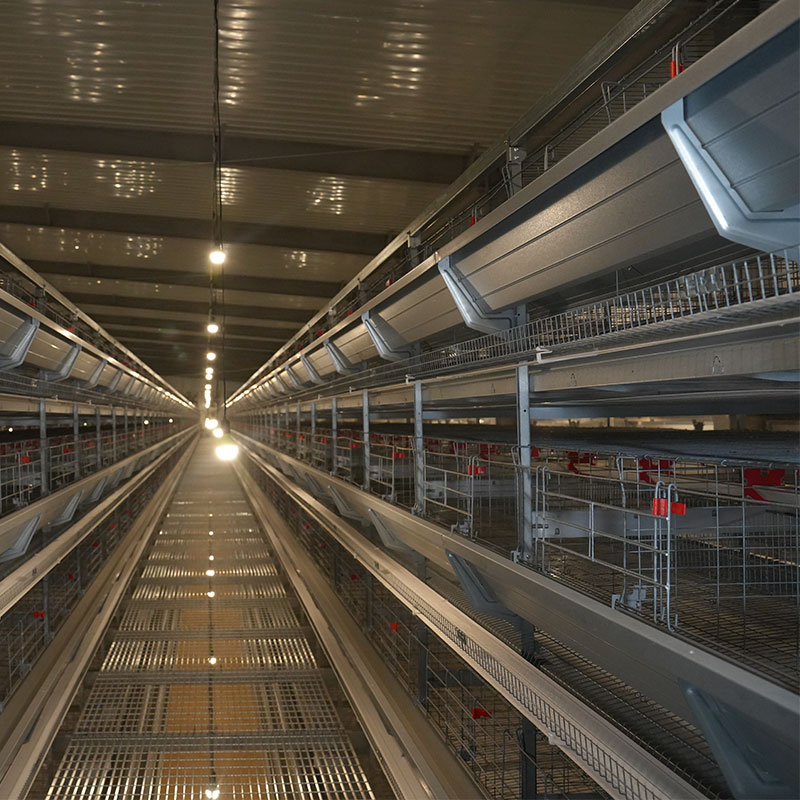
Walking into a supplier’s office without a plan is a sure way to be sold a system, rather than to buy the right one. Your evaluation must be ruthless and practical.
First, demand to see systems in operation. Not a pristine, brand-new installation, but a system that has been running for three or four flocks. Talk to the farmer without the salesperson present. Ask them what breaks. What parts wear out fastest? How is the technical support? What would they change? This real-world feedback is more valuable than any brochure.
Second, interrogate the details. Don’t just ask if it has a manure belt. Ask about the material of the belt itself. Is it a durable, non-porous polymer that cleans easily and won’t absorb moisture? What is the design of the drive drum and tensioners? Are they accessible for maintenance, or will you have to dismantle half the system to replace a bearing?
Third, analyze the structural design. Look at how the cages are supported. A system with a forest of thin legs is a nightmare for maneuvering equipment and for air flow. A robust, overhead A-frame support structure clears the floor, making cleaning and movement easier and allowing for better ventilation at the manure level.
Fourth, and most critically, get a total cost of ownership projection, not just a price per bird place. This must include:
Energy Consumption: The wattage of all motors (feed, egg belt, manure belts) multiplied by their daily run time. This is a recurring cost for 10+ years.
Spare Parts: Request a recommended annual spare parts inventory list with pricing. How much does a replacement chain, drive motor, or nipple drinker cost?
Projected Labor Savings: Calculate the man-hours currently spent on feeding, egg collection, and manure handling. A modern system should reduce this by 60-70%. Assign a dollar value to those saved hours.
Installation and The Long Haul
The best system in the world will underperform if installed incorrectly. Professional, experienced installation is not an area to cut corners. A misaligned feed trough of just a few millimeters will cause feed to spill over the entire length of the row. An unlevel egg belt will cause eggs to pile up and crack. Ensure your supplier has a certified installation team and that the contract includes commissioning—the process of fine-tuning all systems with birds in the house to ensure everything operates perfectly.
Once operational, a proactive maintenance schedule is the key to longevity. This means weekly inspections of drive systems, monthly lubrication of all moving parts according to the manufacturer’s specs, and a full system overhaul during the downtime between flocks. Keeping a detailed log of repairs and part replacements helps predict future failures and budget for them.
The transition to a new cage system is one of the most significant capital investments a poultry farmer will make. It is a complex calculus of animal welfare, operational efficiency, mechanical reliability, and long-term financial return. By moving beyond superficial features and focusing on the rugged, practical engineering that defines a system’s life in the harsh reality of a working shed, producers can choose a platform that doesn’t just house birds, but actively drives their profitability and sustainability for years to come. The goal is to make the system itself invisible, its only testimony the consistent hum of machinery, the clean quality of the eggs rolling onto the grader, and the health of the birds it serves.
1. Drinking system include the water pipes, water pressure adjuster, drinking nipples, Waterline front-end device, dosing system etc, choose them according to customer's needs.
2. High-quality water drinking pipes, pressure regulating valves and water drinking nipples can effectively prevent the water leakage. Drinking system adopt the closed piping system, which can minimize the water pollution.
3. 360-degree drinking nipples provide adequate drinking water for poultry at all stages.
4. The automatic drinking water system mainly adopts the steel ball drinking nipple. lt uses imported high-grad stainless steel, POM resin, and APS engineering material, which is wearing resistant, and the durability can be used for long time.



1. Automatic feeding machine can be chosen between gantry and ladder feeding machine. Gantry type feeding machine is a relatively economical and practical machine with simple operation, remote control walking character, easy to manage.
2. Mechanical transmission device running smoothly, low noise, long service life.
3. With the use of automatic control, the feeding system can adjust the amount of material.
4. Feeding with arched structure, high carrying capacity, not easily deformed.
5. Saving man power, saving feed, greatly improving the efficiency of Large-scale farming.
6. The walking speed of gantry feeding machine is 9--12 m/min.




1. Manure removing system included scraper type and conveyor belt type, Which can reduce the labor intensity and labor cost, keep the chicken shed dry and clean.
2. A type chicken cage can use scraper type or conveyor belt type.


3. The scraper type is suitable for A type cages, which can clean two or three rows. For the starters, this type is a good choice. lt can not only save some labor cost, but also save some investment in the whole project. The cleaning speed is 6-10 meters per minute.
4. Conveyor belt type is more suitable for large scale farming. The manure removing belt we use is high quality PP material (polypropylene). The walking speed is 2-4 meters per minute.



High Quality Pellets Made by Mobile Pellet Machine
1. It has professional designed angle of the blade. After the dynamic balance test one by one, the blade can operate smoothly.
2. The air volume is consistent in the whole life of the fan. Bearings has advantage of high strength, low noise, durable and so on.
1. The cooling pads uses high-quality wet curtain paper and adopts space cross-linking technology, which has the advantages of high water absorption, high water resistance, anti-toxicity and long service life.
2. The cooling efficiency is over 80%, without surfactant, natural water absorption, fast diffusion speed and long-lasting effect.
3. The product does not contain phenol and other chemical substances that are easy to cause skin allergies. It is non-toxic and harmless to the human body and chicken when installed and used. It is green, safe, energy-saving, environmentally friendly, economical, and easy to install.
4. The frame aluminum alloy has high strength, good corrosion resistance, durability and beautiful appearance.
5. Use a special filter for the cooling pad at the upper water to ensure clean water quality and support efficient water circulation components.
6. Combined with a negative pressure fan, it can effectively lower the indoor temperature.
The window is made of special selected high-quality engineering plastic, with high strength and long service life, together with superior anti-aging and anti-UV performance.
Function: Ventilation of the chicken house, usually used in the winter.
This system can adjust the wind speed and direction, thus the cold air will not reach chicken directly , which can effectively prevent the phenomenon of cold stress in chicken.
Environmental control system equipment is suitable for large-scale and intensive farming. According to customer requirements, we can provide various types of smart poultry equipment.
1. Our poultry management system is a modular system that manages all aspects of the chicken house, such as climate, temperature, humidity, ammonia, feeding, feed weighing, lighting and ventilation systems, and can monitor the situation of the chicken house in real time through a computer and mobile phone.
2. The management computer is the heart of the poultry farm, allowing you to easily monitor the entire poultry farm.

 WeChat:+8617838608255