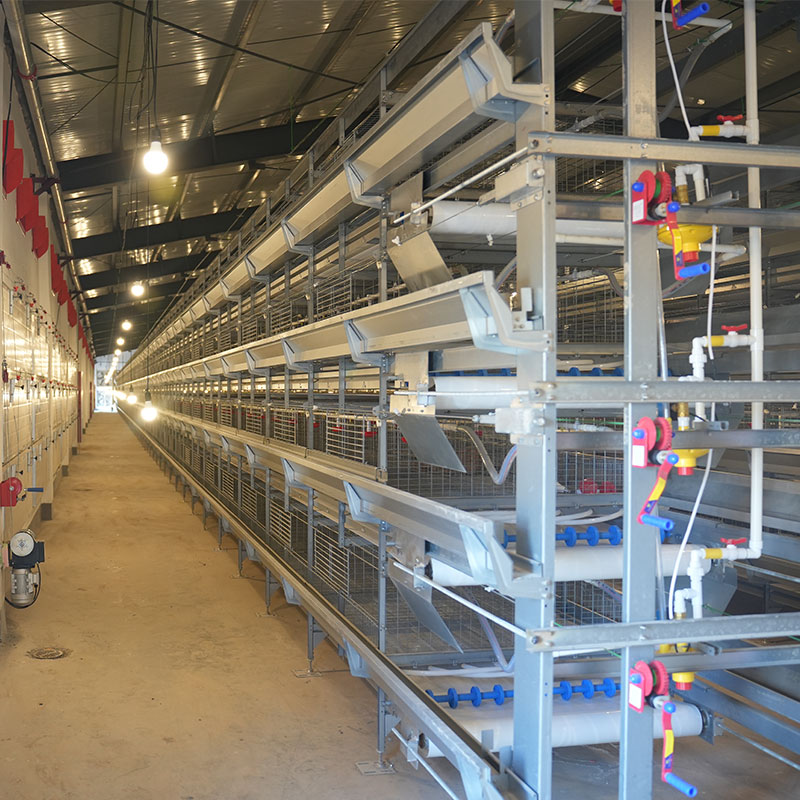
The Complete Guide to Broiler Chicken House Costs: Investment Breakdown for 2024
Building a broiler chicken house is a significant agricultural investment, one that forms the foundation of your poultry operation's efficiency, bird welfare, and longterm profitability. Prospective farmers often ask, "How much does it cost?" only to find the answer is complex and varies dramatically. A simple pole barn structure might start in the tens of thousands, while a fully automated, climatecontrolled house can easily surpass half a million dollars. This guide moves beyond ballpark figures to provide a detailed, transparent breakdown of every cost component. We'll explore the factors that influence your final investment—from scale and technology to regional regulations—empowering you to budget accurately and build a facility that aligns with your production goals and financial plan.
Before diving into line items, it's crucial to understand what shapes the total price tag. These variables explain why one farmer's quote can differ so vastly from another's.
The most obvious driver. Costs are not linear; perbird costs often decrease as scale increases due to economies of scale in materials and contracting.
SmallScale (1,000 5,000 birds): Often simpler structures, possibly retrofitted barns.
MidScale (10,000 25,000 birds): The sweet spot for many independent growers.
LargeScale (40,000+ birds): Standard for integrated contract growing; requires significant infrastructure.
This is where costs diverge most significantly.
Basic: Manual feeding/watering, curtainsided ventilation.
Intermediate: Automated feeders and nipple drinkers, tunnel ventilation.
Advanced: Computerized environmental controls (temperature, humidity, air quality), integrated monitoring systems, advanced energy solutions.
Material & Labor Costs: Vary by region and proximity to suppliers.
Climate: Cold climates require more insulation and heating capacity; hot/humid climates demand superior ventilation and cooling systems (evaporative cooling pads).
Building Codes & Zoning: Permit costs and specific construction requirements (e.g., wind/snow load ratings) differ by county and state.
Renovating an existing structure can save on core materials but may involve hidden costs like bringing old systems up to code or remediating structural issues.
The following breakdown estimates costs for a new construction of a moderately sophisticated, tunnelventilated house designed for approximately 25,000 birds (~40ft x 500ft).
This phase prepares the land and creates a stable base.
Land Clearing & Grading: $5,000 $15,000
Footings & Concrete Slab Floor: The single largest material cost after the steel frame. A 45 inch reinforced slab.
Cost: $40,000 $70,000+
Utility Hookups (Electrical conduit/water lines): $8,000 $15,000
Subtotal Range: $53,000 $100,000
The "bones" and "skin" of the building.
Steel Truss Frame & Erection: Premiumgrade galvanized steel is standard.
Cost: $70,000 $120,000
Insulated Wall & Roof Panels: Rvalue matters for energy efficiency. Includes installation.
Cost: $30,000 $50,000
Subtotal Range: $100,000 $170,000
The heart of modern poultry production; nonnegotiable for bird health.
| System | Description | Estimated Cost Range |
| : | : | : |
| Ventilation | Tunnel fans (typically 812 large fans), inlet systems,circulation fans. | $25,00$45,00 |
| Cooling | Evaporative cooling pad system(including pump&piping)。 |$10,00$20,00|
| Heating | Radiant brooders for chicks + wholehouse heaters(furnaces)。|$15,00$30,00|
| Controller | Computerized thermostat&ventilation controller。|$5,00$10,00|
| Subtotal Range ||$55,00$105,00|
These are the tools for daily operations。
These are easy to overlook but essential。
1。 Architect/Engineering Plans: May be required for permits。($2,$6)
2。 Building Permits&Inspections: Varies widely by jurisdiction。($1,$10+)
3。 Contractor/Labor Overhead&Profit: Typically calculated as percentage(15%25%)of total project cost。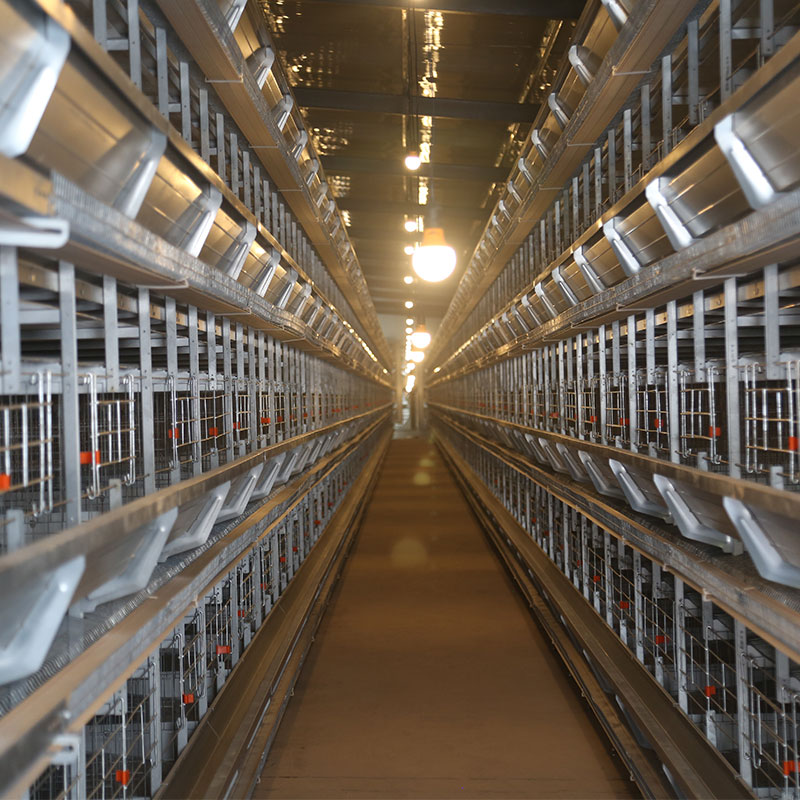
Never spend every last dollar on construction。
To synthesize the data above here are two consolidated scenarios:
+ Construction Phases Subtotal : ~$255,
+ Soft Costs/Contingency (~25%): ~$63,
+ Estimated Total Project Cost : ~$318 ,
+ Construction Phases Subtotal : ~$460,
+ Soft Costs/Contingency (~25%): ~$115,
+ Estimated Total Project Cost : ~$575 ,
Note : These are illustrative estimates 。 Actual quotes can vary by ±30% or more based on previously discussed drivers 。 Always obtain multiple detailed quotes 。
1。 Plan Meticulously : Changes after groundbreaking are exponentially expensive 。 Finalize every detail in the blueprint stage 。
2。 Invest in Energy Efficiency : Higher Rvalue insulation / LED lighting / efficient fans reduce operational costs forever , offsetting higher upfront spend 。
3。 Prioritize Key Systems : Never compromise on ventilation or water quality 。 You can potentially phase in some automation later 。
4。 Get Multiple Bids : Obtain at least three detailed , itemized bids from reputable poultryspecific builders 。
5。 Explore Financing Early : Speak with agricultural lenders or integrators(if contracting)to understand loan terms 、 down payments ,and cash flow requirements 。
The cost of building a broiler chicken house is a multifaceted equation blending concrete , steel , technology ,and expertise 。 While the initial capital outlay is substantial , viewing it as a longterm strategic investment is key 。 A welldesigned 、 efficiently built house minimizes daily operating expenses , optimizes bird performance ,and enhances your operation's resilience and profitability for decades 。 By thoroughly understanding each cost component 、 obtaining detailed quotes ,and planning for both construction and operational phases , you can move forward with confidence , building not just a structure , but the future of your poultry business .
Here are answers to some of the most commonly searched questions , modeled after "People Also Ask" boxes .
Q1 : What is the cheapest way to build a chicken house for broilers ?
A : The most costeffective method is often renovating an existing sound structure like a pole barn . Focus spending on essential environmental controls (minimum ventilation) and reliable watering/feeding systems over aesthetics . Using basic curtainsided walls instead of insulated panels can also lower initial cost , though it may increase heating/cooling expenses longterm .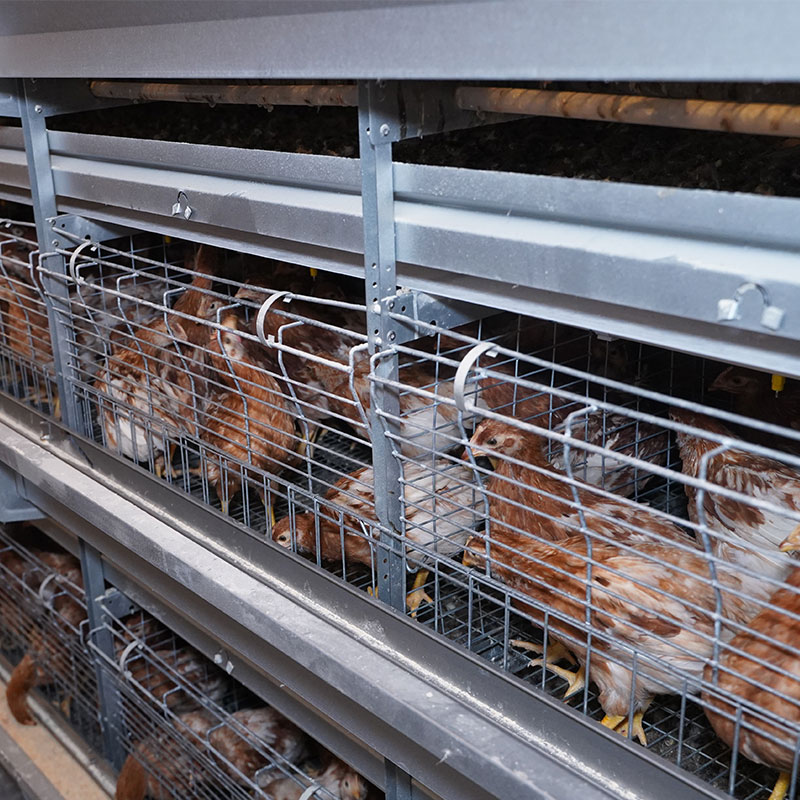
Q2 : How much does it cost to build a chicken house per bird ?
A : Perbird costs decrease with scale . For basic setups , it can range from $10 $15 per bird . For modern , automated houses , expect $20 $30 per bird space . These figures include structure and essential equipment .
Q3 : Can I get funding or grants to build a poultry house ?
A : Yes , options exist . The USDA Farm Service Agency (FSA) offers guaranteed loans . Some states have agricultural development grants . Most commonly , growers secure financing through local agricultural banks or through partnership/contracting agreements with major poultry integrators , who may provide construction specifications and financial backing .
Q4 : What is the most expensive part of building a broiler house ?
A : Typically , the steel framing/superstructure and the concrete slab foundation are the two largest single material costs . However , when combined ,the environmental control systems (ventilation / heating / cooling) often represent the most complex and costly system in the build .
Q5 : How long does it take to build a commercial broiler house from start to finish ?
A From groundbreaking to being ready for chicks typically takes 4 to 6 months . This includes site work 、 foundation pouring 、 erecting the structure 、 installing all systems 、and final inspections / testing . Weather delays permitting issues can extend this timeline .
Q6 : What size should my broiler house be ?
A Standard commercial dimensions are often around 40' wide x 400' –600' long which comfortably houses between20k–40k birds depending on target stocking density Design should be based on your planned flock size、available land、and equipment layout not just arbitrary dimensions
Q7 Is it cheaper to build my own chicken house or buya prefabricated kit?
A Prefab kits can offer predictability in materialcosts but may lack customization Professional installationis usually recommendedfor structural integrityand system integration Skilled DIYcan saveon laborbut errorsin criticalsystemslike ventilationcanbe catastrophicin termsof birdloss
Q8 What ongoingoperationalcostsshouldI budgetfor afterconstruction?
A Majoroperatingcostsinclude:
+ Feed (largestvariablecost)
+ Chicks/poults
+ Bedding (shavings)
+ Fuel (for heating)
+ Electricity (for ventilationfanslights)
+ Water
+ Routine maintenance repairs
Q9 Do I needa specialpermitor zoneto builda broilerhouse?
A Almostcertainly yes You willneedtocheckwithyourcountyplanning zoningdepartmentforagriculturalbuildingpermits Environmentalpermitsrelatedtowaterrunofformanuremanagementmayalsoapply Distancerestrictionsfromneighbors( setbacks )arecommon
Q10 How longdoesabroilerhouselastbeforeneedingmajorenvestment?
A Withpropermaintenancea wellbuiltsteelframehousecanlast25 yearsorequipmentlikefansfeedersandheaterswillneedreplacementorsovertime typicallyevery7 yearsMajorupgradeslikecomputercontrollersmaybeneededsoonerastechnologyadvances
1. Drinking system include the water pipes, water pressure adjuster, drinking nipples, Waterline front-end device, dosing system etc, choose them according to customer's needs.
2. High-quality water drinking pipes, pressure regulating valves and water drinking nipples can effectively prevent the water leakage. Drinking system adopt the closed piping system, which can minimize the water pollution.
3. 360-degree drinking nipples provide adequate drinking water for poultry at all stages.
4. The automatic drinking water system mainly adopts the steel ball drinking nipple. lt uses imported high-grad stainless steel, POM resin, and APS engineering material, which is wearing resistant, and the durability can be used for long time.



1. Automatic feeding machine can be chosen between gantry and ladder feeding machine. Gantry type feeding machine is a relatively economical and practical machine with simple operation, remote control walking character, easy to manage.
2. Mechanical transmission device running smoothly, low noise, long service life.
3. With the use of automatic control, the feeding system can adjust the amount of material.
4. Feeding with arched structure, high carrying capacity, not easily deformed.
5. Saving man power, saving feed, greatly improving the efficiency of Large-scale farming.
6. The walking speed of gantry feeding machine is 9--12 m/min.




1. Manure removing system included scraper type and conveyor belt type, Which can reduce the labor intensity and labor cost, keep the chicken shed dry and clean.
2. A type chicken cage can use scraper type or conveyor belt type.


3. The scraper type is suitable for A type cages, which can clean two or three rows. For the starters, this type is a good choice. lt can not only save some labor cost, but also save some investment in the whole project. The cleaning speed is 6-10 meters per minute.
4. Conveyor belt type is more suitable for large scale farming. The manure removing belt we use is high quality PP material (polypropylene). The walking speed is 2-4 meters per minute.



High Quality Pellets Made by Mobile Pellet Machine
1. It has professional designed angle of the blade. After the dynamic balance test one by one, the blade can operate smoothly.
2. The air volume is consistent in the whole life of the fan. Bearings has advantage of high strength, low noise, durable and so on.
1. The cooling pads uses high-quality wet curtain paper and adopts space cross-linking technology, which has the advantages of high water absorption, high water resistance, anti-toxicity and long service life.
2. The cooling efficiency is over 80%, without surfactant, natural water absorption, fast diffusion speed and long-lasting effect.
3. The product does not contain phenol and other chemical substances that are easy to cause skin allergies. It is non-toxic and harmless to the human body and chicken when installed and used. It is green, safe, energy-saving, environmentally friendly, economical, and easy to install.
4. The frame aluminum alloy has high strength, good corrosion resistance, durability and beautiful appearance.
5. Use a special filter for the cooling pad at the upper water to ensure clean water quality and support efficient water circulation components.
6. Combined with a negative pressure fan, it can effectively lower the indoor temperature.
The window is made of special selected high-quality engineering plastic, with high strength and long service life, together with superior anti-aging and anti-UV performance.
Function: Ventilation of the chicken house, usually used in the winter.
This system can adjust the wind speed and direction, thus the cold air will not reach chicken directly , which can effectively prevent the phenomenon of cold stress in chicken.
Environmental control system equipment is suitable for large-scale and intensive farming. According to customer requirements, we can provide various types of smart poultry equipment.
1. Our poultry management system is a modular system that manages all aspects of the chicken house, such as climate, temperature, humidity, ammonia, feeding, feed weighing, lighting and ventilation systems, and can monitor the situation of the chicken house in real time through a computer and mobile phone.
2. The management computer is the heart of the poultry farm, allowing you to easily monitor the entire poultry farm.

 WeChat:+8617838608255