The decision to construct a new broiler house represents one of the most significant financial commitments a poultry operation will make. It’s a complex equation where initial capital outlay must be carefully weighed against long-term operational efficiency, bird welfare outcomes, and ultimately, profitability. For generations, the industry has steadily moved away from open-sided, naturally ventilated houses toward more technologically advanced environmental control systems. Today’s modern broiler house is less a simple shelter and more a precision-engineered production facility, where every element—from insulation R-value to fan CFM ratings—directly impacts the bottom line.
Understanding the true cost of building a broiler chicken house requires a deep dive into the components, the choices available, and the long-term financial implications of those choices. This isn't about finding the cheapest price per square foot; it's about investing in infrastructure that will lower your cost of production per pound of meat for years to come.
The Foundation of Cost: Site Preparation and Basic Structure
Before a single truss is raised, the building site itself demands investment. Costs here can vary wildly depending on your geography and the existing condition of the land.
Land Clearing and Grading: A level building pad with proper drainage is non-negotiable. On a flat, clear field, this might involve minimal work. On a wooded or sloped plot, the expense for clearing trees, stumps, and rocks, followed by extensive grading and compaction, can add tens of thousands of dollars to the project. Proper grading isn’t just for the house footprint; it must account for water runoff away from the structure to prevent foundation issues and moisture intrusion.
Concrete Foundation and Slab: The industry standard is a monolithic pour—a combined footing and slab. The perimeter footing, often 18-24 inches deep and 16-20 inches wide, provides stability, while the interior slab is typically 4-5 inches thick, reinforced with wire mesh. The cost of concrete and labor is a major line item. A 40’ x 500’ house (20,000 sq. ft.) requires approximately 300 cubic yards of concrete. Beyond the basic pour, consider the finish. A hard-troweled finish is smoother, easier to clean between flocks, and more durable than a broom finish, though it may cost slightly more.
The Steel Frame Structure: The skeleton of the house is a pre-engineered steel building. The primary cost drivers are the gauge (thickness) of the steel and the design wind and snow loads dictated by your local building codes. A house in Alabama will have different structural requirements than one in Pennsylvania. The price includes primary columns, rafters, purlins (horizontal beams that support the roof and walls), and girts (vertical wall supports). A common mistake is to undervalue the roof pitch. A steeper pitch (e.g., 4:12 or 5:12), while more expensive initially, sheds snow more effectively and creates a larger attic space that acts as a thermal buffer, reducing heating and cooling costs.
The Building Envelope: Insulation, Curtains, and Roofing
If the steel frame is the skeleton, the insulation and siding are the skin and fat that regulate the bird's environment. This is where upfront investment pays the most consistent dividends.
Insulation is an Investment, Not an Expense: The goal is to create a tightly sealed envelope that minimizes heat transfer. Spray foam insulation has become the gold standard for new construction. While more expensive than fiberglass batt insulation upfront, its performance is superior. Closed-cell spray foam provides an R-value of roughly 6.5-7 per inch, acts as an air and vapor barrier, and adds structural rigidity to the entire building. For a broiler house, walls are typically sprayed to R-19 to R-21, and ceilings to R-30 to R-38. The difference in fuel consumption between a poorly insulated house (R-13 in the ceiling) and a well-insulated one (R-38) can be the difference between spending $15,000 and $5,000 on propane per year. That savings alone can pay for the insulation upgrade in a few seasons.
Sidewalls and Curtains: The lower 4-5 feet of the sidewalls are typically solid, insulated panels. Above this, the entire length of the house is lined with automated curtain systems. The quality of the curtain material, the drive motors, and the control system are critical. Cheap vinyl curtains can become brittle and crack in UV light, while reinforced, treated fabrics last for years. The motors must be powerful and reliable enough to open and close the curtains evenly and quickly in response to the controller, preventing hot or cold spots along the length of the house.
Roofing and Ceiling: A typical roof system consists of steel roof panels on the exterior, a layer of spray foam insulation applied to the underside of those panels, and an interior ceiling liner. The white interior liner is crucial. It reflects light evenly for the birds, is easy to wash down, and protects the insulation from moisture and dust. The choice here is between a fabric liner (less expensive, shorter lifespan) and a durable plastic liner (more expensive, lasts the life of the building).
The Lifeblood Systems: Ventilation, Heating, and Cooling
This is the nervous system of the modern broiler house. Its design and component quality dictate bird health, growth rates, feed conversion, and mortality. Cutting corners here is the most expensive mistake a farmer can make.
Tunnel Ventilation: The standard for modern broiler production is a negative pressure tunnel system. At one end of the house, large exhaust fans pull air the length of the building. At the opposite end, air inlets (either evaporative cooling pads or fresh air doors) open to allow air in.
Exhaust Fans: These are measured in cubic feet per minute (CFM). A 20,000 sq. ft. house requires a total fan capacity of 400,000 to 600,000 CFM, achieved with a bank of 12-20 large fans (36-inch to 50-inch diameter). The choice is between standard shutters and more expensive, high-efficiency cone fans. Cone fans, which have a shaped housing that reduces air turbulence, can move 10-20% more air for the same energy consumption. This higher efficiency means you might need one or two fewer fans to achieve your target CFM, saving on both initial equipment cost and long-term electricity use.
Air Inlets: For most of the year, fresh air enters through controlled side-wall or ceiling inlets that are managed by the environmental computer. These inlets create a high-velocity jet of air that travels along the ceiling, mixing with the warmer air there before descending on the birds in a gentle, draft-free manner. This is known as minimum ventilation and is critical during brooding and colder weather.
Evaporative Cooling Systems: During hot weather, the primary air inlet becomes the evaporative cooling pad system at the opposite end of the house from the fans. These cellulose pads are kept wet by a recirculating water system. As hot outside air is pulled through the saturated pads, the water evaporates, cooling the air dramatically—often by 15-20 degrees Fahrenheit. The size, quality, and maintenance access of the pad system are vital. An undersized system will be ineffective on the hottest days, leading to heat stress and increased mortality.
Heating: The most common systems are radiant tube heaters suspended from the ceiling. They burn propane or natural gas and radiate heat downward onto the litter and birds, which is far more efficient than heating the entire air volume of the house. The number and BTU capacity of the heaters are calculated based on the house's insulation value and the coldest expected outdoor temperature. A well-insulated 20,000 sq. ft. house might have eight to twelve 100,000-BTU heaters. High-efficiency models that extract more heat from the combustion gases are worth the premium.
The Environmental Controller: This is the brain of the operation. It’s a computer that receives input from temperature and humidity sensors throughout the house and automatically commands all the equipment—fans, inlets, heaters, and cooling pads—to maintain the preset conditions. Modern controllers are incredibly sophisticated, allowing for stage-by-stage programming of fan and inlet operation, temperature set points that decrease as the birds age, and alarms that can call a farmer’s phone if conditions deviate. Investing in a top-tier controller from a reputable brand is cheap insurance for your entire flock.
Feed and Water Delivery Systems
These are the arteries that deliver nutrition. Reliability is paramount, as any interruption directly impacts growth.
Feed Systems: A typical setup includes a bulk feed bin outside the house, an auger system that moves feed from the bin into the house, and a chain or pan delivery system that runs the length of the house.
Feed Lines: The choice is between older-style chain systems and modern pan systems. Pan systems are generally preferred as they cause less feed degradation (fines), are easier to adjust for height, and are perceived to be more bird-friendly. The number of lines is determined by stock density; a house might have four to six lines running its length.

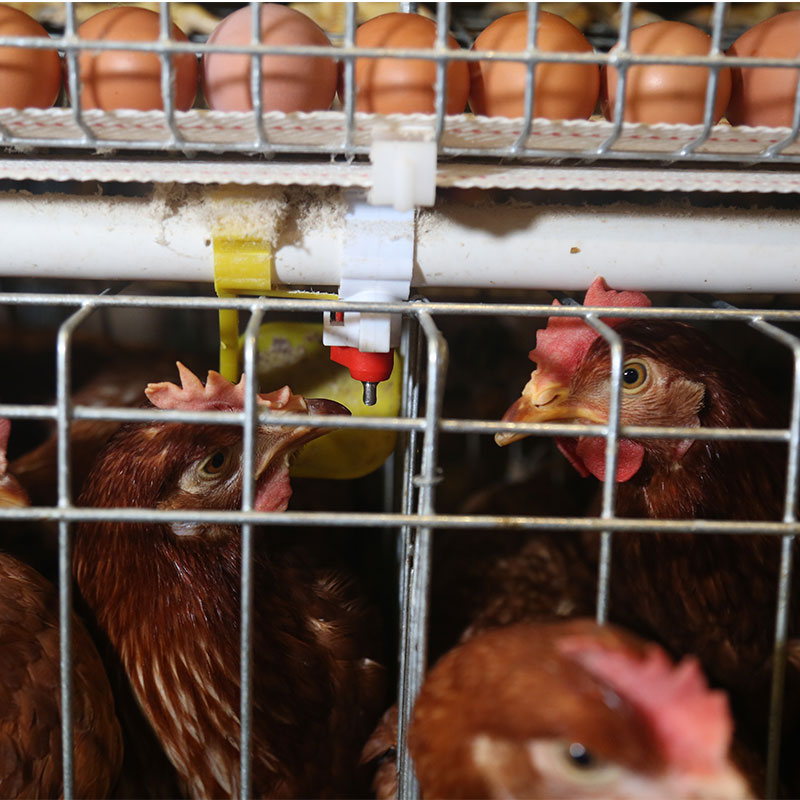
Water Lines: Nipple drinker systems are universal. The key considerations are the number of drinkers per bird (aim for 10-12 birds per nipple) and the quality of the pressure regulator and filters. A well-designed system will have a pressure-reducing valve at the inlet and a regulator on each line to ensure every nipple delivers the same, precise amount of water. Including a water medicator system for introducing vaccines, vitamins, or medications into the water line is a necessary addition.
Electrical and Lighting
A broiler house is a power-hungry facility. A dedicated electrical service, often 400-amp three-phase, is required to run all the motors, heaters, and controllers. Wiring must be in conduit to protect it from the corrosive environment. Backup power is not a luxury; it is an absolute necessity. A automatic transfer switch connected to a large diesel generator is a mandatory part of any build. When the power fails, the generator must start within seconds to keep ventilation running and prevent bird loss.
Lighting has evolved from simple incandescent bulbs to programmable LED systems. LEDs use a fraction of the electricity and generate very little heat. The controller can be programmed to simulate dawn and dusk, provide periods of darkness for bird rest, and adjust intensity to influence activity and feed consumption.
The Cage System Consideration
While much of the global broiler industry operates on a litter-based floor system, cage systems for broilers represent a significant capital investment and a different operational model. The term "cage" can be misleading; these are typically large, multi-tiered aviary or compartment systems.
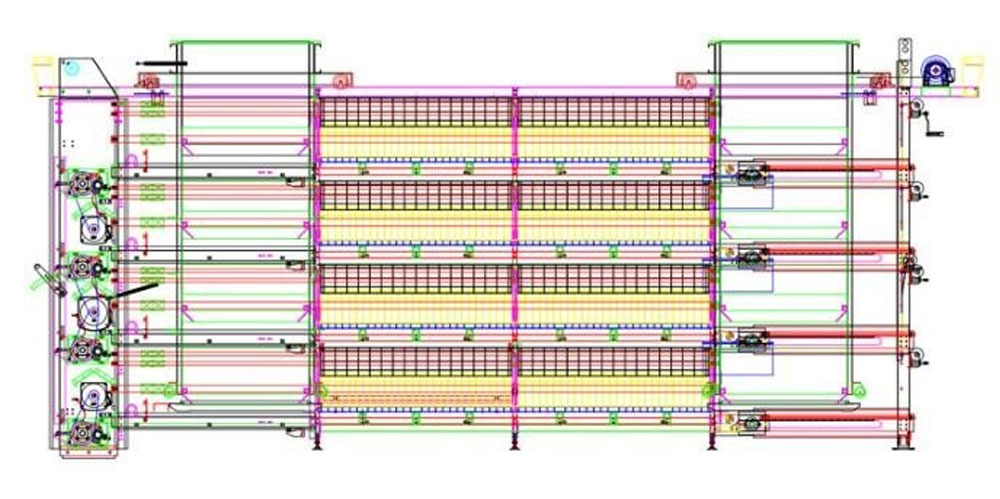
The cost of the cage structure itself is a massive additional capital outlay on top of all the previously described infrastructure. You are still building the fully insulated house with ventilation, heating, and cooling. On top of that, you must purchase and install the metal cage tiers, the manure belt system that runs beneath each tier, and the enhanced feeding and watering systems that service each level.
The primary financial justification for this immense added cost is increased stock density per square foot of building footprint. By growing birds on multiple levels, you can potentially place two to three times as many birds in the same building. This spreads the fixed cost of the building (mortgage, insurance, taxes) and its systems (ventilation, heating) over more pounds of meat produced.
However, this comes with trade-offs. The manure belt system adds another layer of mechanical complexity and energy consumption. The environment within a multi-tier system can be more challenging to manage, with potential for temperature and air quality stratification between levels. The initial investment is so substantial that it typically only pencils out for very large, integrated operations with a guaranteed market.
Navigating the Financial Landscape
Providing a single price per square foot is nearly impossible due to the variables. However, a baseline for a basic, but complete, 20,000 sq. ft. tunnel-ventilated house on a litter system can range from $350,000 to $500,000. A house with premium features—spray foam insulation, high-efficiency fans and heaters, a top-tier controller, and a robust backup generator—can easily reach $600,000 to $750,000 or more. Adding a multi-tier cage system can add several hundred thousand dollars to that total.
Financing such a project usually involves a long-term loan through a agricultural lender or the Farm Service Agency (FSA). Lenders will require detailed projections showing how the increased production and efficiency of the new house will generate the revenue to service the debt.
The final and often overlooked cost is the investment in your own knowledge. Operating a modern broiler house is a technical profession. Understanding the intricacies of ventilation biology, interpreting controller data, and performing proactive maintenance are skills that directly impact the return on your physical investment. The most technologically advanced house in the world will underperform in the hands of an untrained manager. The true cost of building is not just the sum of the materials and labor; it is the commitment to mastering the environment within.
1. Drinking system include the water pipes, water pressure adjuster, drinking nipples, Waterline front-end device, dosing system etc, choose them according to customer's needs.
2. High-quality water drinking pipes, pressure regulating valves and water drinking nipples can effectively prevent the water leakage. Drinking system adopt the closed piping system, which can minimize the water pollution.
3. 360-degree drinking nipples provide adequate drinking water for poultry at all stages.
4. The automatic drinking water system mainly adopts the steel ball drinking nipple. lt uses imported high-grad stainless steel, POM resin, and APS engineering material, which is wearing resistant, and the durability can be used for long time.



1. Automatic feeding machine can be chosen between gantry and ladder feeding machine. Gantry type feeding machine is a relatively economical and practical machine with simple operation, remote control walking character, easy to manage.
2. Mechanical transmission device running smoothly, low noise, long service life.
3. With the use of automatic control, the feeding system can adjust the amount of material.
4. Feeding with arched structure, high carrying capacity, not easily deformed.
5. Saving man power, saving feed, greatly improving the efficiency of Large-scale farming.
6. The walking speed of gantry feeding machine is 9--12 m/min.




1. Manure removing system included scraper type and conveyor belt type, Which can reduce the labor intensity and labor cost, keep the chicken shed dry and clean.
2. A type chicken cage can use scraper type or conveyor belt type.


3. The scraper type is suitable for A type cages, which can clean two or three rows. For the starters, this type is a good choice. lt can not only save some labor cost, but also save some investment in the whole project. The cleaning speed is 6-10 meters per minute.
4. Conveyor belt type is more suitable for large scale farming. The manure removing belt we use is high quality PP material (polypropylene). The walking speed is 2-4 meters per minute.



High Quality Pellets Made by Mobile Pellet Machine
1. It has professional designed angle of the blade. After the dynamic balance test one by one, the blade can operate smoothly.
2. The air volume is consistent in the whole life of the fan. Bearings has advantage of high strength, low noise, durable and so on.
1. The cooling pads uses high-quality wet curtain paper and adopts space cross-linking technology, which has the advantages of high water absorption, high water resistance, anti-toxicity and long service life.
2. The cooling efficiency is over 80%, without surfactant, natural water absorption, fast diffusion speed and long-lasting effect.
3. The product does not contain phenol and other chemical substances that are easy to cause skin allergies. It is non-toxic and harmless to the human body and chicken when installed and used. It is green, safe, energy-saving, environmentally friendly, economical, and easy to install.
4. The frame aluminum alloy has high strength, good corrosion resistance, durability and beautiful appearance.
5. Use a special filter for the cooling pad at the upper water to ensure clean water quality and support efficient water circulation components.
6. Combined with a negative pressure fan, it can effectively lower the indoor temperature.
The window is made of special selected high-quality engineering plastic, with high strength and long service life, together with superior anti-aging and anti-UV performance.
Function: Ventilation of the chicken house, usually used in the winter.
This system can adjust the wind speed and direction, thus the cold air will not reach chicken directly , which can effectively prevent the phenomenon of cold stress in chicken.
Environmental control system equipment is suitable for large-scale and intensive farming. According to customer requirements, we can provide various types of smart poultry equipment.
1. Our poultry management system is a modular system that manages all aspects of the chicken house, such as climate, temperature, humidity, ammonia, feeding, feed weighing, lighting and ventilation systems, and can monitor the situation of the chicken house in real time through a computer and mobile phone.
2. The management computer is the heart of the poultry farm, allowing you to easily monitor the entire poultry farm.

 WeChat:+8617838608255