
The financial commitment required for a layer chicken house represents one of the most significant capital outlays a poultry farmer will make. This investment is not merely about erecting walls and a roof; it is about constructing a highly specialized environment where animal welfare, operational efficiency, and long-term economic viability converge. The choice of a cage system, while a substantial upfront cost, is fundamentally an investment in predictable management, controlled production, and bird health. The final price tag is not a single figure but a complex sum derived from a multitude of interdependent decisions.
Understanding the breakdown of these costs is critical for accurate budgeting, securing financing, and ultimately, achieving a return on investment. This analysis will move beyond generic square-foot estimates to examine the specific components that dictate the final cost of a modern layer house.
Foundational Costs: The Unseen Investment
Before the first post is set, significant expenditure occurs on the site itself. Land clearing, grading, and compaction are essential first steps. The soil type on your property directly impacts cost; sandy soil may require additional stabilization, while rocky terrain necessitates expensive excavation. A crucial and non-negotiable foundation element is the concrete slab. This is not a simple pad of cement; it is a engineered structural element.
For a cage system, the slab must be designed to bear immense point loads. Each cage tier, filled with hens, feed, and equipment, concentrates weight onto a relatively small number of support posts. A slab poured without proper reinforcement and thickness—often 4 to 6 inches with a mesh of rebar—will crack under this stress, leading to catastrophic equipment failure. Furthermore, the concrete must be finished to a smooth, level surface. An uneven floor will prevent manure belts from tracking correctly, cause cages to sit unevenly, and create low spots where water can pool. The cost of rectifying a poor foundation after construction is exponentially higher than doing it correctly the first time.
Structural Shell: The Building Envelope

The building itself, its frame, and its cladding form the shell that protects your investment from the elements. The primary choice here is between a rigid-frame clear-span building and a post-frame (or pole-barn) construction.
A clear-span building, typically made from steel I-beams, offers a completely open interior space. This is the preferred choice for larger, commercial-scale operations because it provides maximum flexibility for arranging cage rows and manure belts without obstructive support posts. While the materials are more expensive, the unobstructed space improves airflow and simplifies equipment installation and future maintenance.
Post-frame construction uses large, treated wooden posts set into the ground as the primary supports, with smaller rafters creating the roof structure. This method can be more economical for smaller operations or those on a tighter budget. However, the interior posts can complicate the layout of cage rows and manure removal systems, potentially creating dead zones for ventilation.
The cladding—the walls and roof—is almost universally made from insulated metal panels. These panels are a composite: two sheets of galvanized steel with a core of rigid foam insulation sandwiched between them. The R-value, a measure of insulation's effectiveness, is a critical cost and performance factor. In a temperate climate, an R-16 wall and an R-26 roof might be sufficient. In a region with extreme heat or cold, investing in higher R-values (e.g., R-25 for walls, R-38 for roofs), while increasing material cost, will drastically reduce the ongoing expense of heating in winter and cooling in summer. The savings in energy bills over the lifespan of the building will often justify the higher initial outlay.
The Heart of the Operation: Cage System and Equipment
This is where the functional purpose of the building is realized. The cage system is the single largest equipment cost and its selection dictates the specifications for many other components.
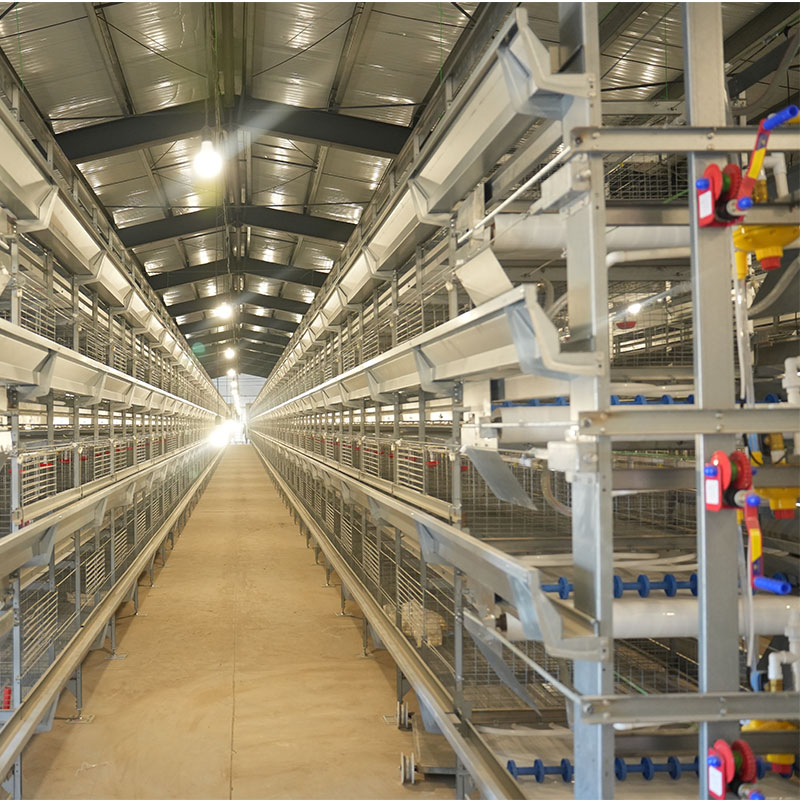
The Cage System: Modern systems are a world away from the simple, small battery cages of the past. Today's enriched colony systems or aviary designs are complex structures. A farmer might choose a 6-tier, A-type cage system. The per-bird cost decreases with higher tiers as you are utilizing vertical space more efficiently, but the system's complexity and the required building height increase. These systems integrate the cages with the birds' feed and water lines. The quality of the galvanized steel, the design of the cage doors, the flooring slope (which directs eggs to the collection belt), and the robustness of the support structure all influence price. A cheaper system may use thinner-gauge wire that bends more easily or components that are harder to sanitize between flocks.
Feed and Water Systems: These are the lifelines of the house. A modern feed system consists of a bulk bin outside the house, a motor-driven auger that runs the length of each row of cages, and troughs at each tier. The cost is influenced by the level of automation. A basic system might require manual activation of the auger. A more advanced, and more expensive, system is tied to a control computer that runs the auger at set intervals throughout the day, ensuring a constant supply of fresh feed and preventing hopper gaps that can lead to feed spoilage. Water systems have evolved from simple nipple drinkers to units that include built-in cup collectors to minimize water spillage into the manure, a key factor in maintaining litter quality.
Manure Management: This is a major differentiator in cost and labor. The traditional method involved a deep pit under the cages where manure would accumulate for an entire flock cycle, to be removed after the birds were depopulated. While cheaper to install, this method creates significant ammonia challenges and requires a major labor event for cleanout.
The modern standard is a continuous manure belt system. A durable plastic belt runs beneath each tier of cages. A drive motor automatically moves these belts, typically once or twice a day, transporting the fresh manure to a cross-conveyor at the end of the house, which then moves it to a storage container or trailer outside. This system represents a significant added cost—thousands of dollars per row—but it provides immense value. It dramatically improves air quality by removing ammonia at its source, reduces fly pressure, and allows for the daily export of manure, which can be composted or sold, turning a waste product into a potential revenue stream.
Egg Collection: Manual egg collection is virtually nonexistent in any modern operation of scale. An automated egg collection system consists of a soft, plastic belt that runs along each tier, gently carrying eggs to the end of the row. From there, a central conveyor belt transports all eggs to the egg room for collection. The system must be designed to minimize jostling and cracking. The added cost of automation is quickly recouped through labor savings and a higher percentage of saleable, first-quality eggs.
Environmental Control: Creating an Artificial Climate
A layer house is a living organism that breathes. The environmental control system is its lungs and nervous system. For birds confined indoors, this system is not a luxury; it is a absolute necessity for health and productivity.
At the most basic level, this consists of exhaust fans, air inlets, and heaters. The cost escalates quickly as you add precision. A simple thermostat-controlled system will turn fans on and off at set temperatures. A more advanced system uses a negative pressure tunnel ventilation design. Large fans at one end of the house pull air through specially designed side-wall inlets, creating a wind-chill effect down the length of the building during hot weather. This is far more effective at cooling birds than a simple air exchange.
The pinnacle of environmental control is a computer-based system that integrates all components. This controller doesn't just react to temperature. It takes inputs from temperature and humidity sensors and is programmed with a target curve for the birds' age. It can stage fans, modulate inlet openings, and control evaporative cooling pads (another add-on cost that provides critical cooling in arid climates) to maintain a precise environment. It can also control light intensity and duration. The initial investment in a sophisticated controller is high, but the payoff comes in consistent bird performance, reduced mortality, and optimized feed conversion, as birds are not expending energy to combat heat or cold stress.
Utilities and Infrastructure
The equipment needs power. A modern layer house requires a robust electrical service. The feed augers, manure belts, egg collection system, and most critically, the ventilation fans are all electrically driven. A power outage is not an inconvenience; it is an emergency. Within minutes of a fan failure in hot weather, temperatures inside the house can soar to lethal levels. Therefore, a standby generator is not an optional extra; it is an essential insurance policy. The cost of a large-capacity automatic transfer switch generator—one that can sense a power loss and start up within seconds—is a mandatory part of the budget.
Water is another key utility. A reliable water source and a delivery system with sufficient pressure to supply all nipple drinkers simultaneously are required. A water meter and medicator system, which allows for the precise administration of vaccines or medications through the water lines, is another standard cost.
The Intangible Costs: Planning, Permits, and Labor
Beyond the physical materials, soft costs can add 10-20% to the total project.
Architectural and Engineering Plans: Most counties require stamped engineering drawings for a building of this scale to obtain a permit. These plans ensure the structure is designed for local wind and snow loads and that the equipment loads are properly accounted for.
Permits: Building, electrical, and environmental permits all carry fees. The environmental permit, particularly for manure management planning, can be a complex and time-consuming process.
Labor: While some farmers may act as their own general contractor to save money, the specialized nature of installing cage systems and environmental controls often necessitates hiring experienced crews. Their expertise ensures the equipment is installed correctly and functions as designed, preventing costly operational problems down the line.
A Real-World Cost Scenario
Consider a farmer planning a new house for 50,000 hens. They opt for a 120-foot wide by 500-foot long clear-span building (60,000 sq ft). They choose a 6-tier enriched colony system with integrated manure belts and egg collection. The environmental system will be a computer-controlled tunnel ventilation setup with evaporative cooling pads.
Site Work & Foundation: Site prep and a 5-inch reinforced concrete slab: ~$4.50/sq ft = $270,000
Building Shell: Steel frame and insulated metal panels (R-25 walls, R-30 roof): ~$30/sq ft = $1,800,000
Cage & Equipment: 6-tier system with feed/water, manure belts, egg collection: ~$25-$30/bird space = $1,400,000
Environmental Control: Fans, inlets, heaters, cooling pads, advanced controller: ~$4.00/bird space = $200,000
Electrical & Generator: Service upgrade, wiring, automatic standby generator: $150,000
Soft Costs: Engineering, permits, contractor fees: ~10% of construction = $380,000
This rough estimate totals approximately $4,200,000, or $84 per bird space. This figure can vary wildly based on location, material price fluctuations, specific equipment choices, and the scale of the operation. A smaller house will have a higher cost per bird due to the fixed costs of the building shell and environmental systems being spread over fewer birds.
The decision to build a new layer house is a monumental one. Viewing it through the lens of its constituent costs—from the quality of the concrete to the sophistication of the climate computer—transforms it from a daunting expense into a series of strategic investments. Each choice, from the insulation value in the panels to the decision for daily manure removal, is a trade-off between initial capital and long-term operational performance. The most successful operations are built not on the cheapest options, but on the most sensible investments for their specific goals, ensuring the structure that houses the flock is a tool for profitability for years to come.
1. Drinking system include the water pipes, water pressure adjuster, drinking nipples, Waterline front-end device, dosing system etc, choose them according to customer's needs.
2. High-quality water drinking pipes, pressure regulating valves and water drinking nipples can effectively prevent the water leakage. Drinking system adopt the closed piping system, which can minimize the water pollution.
3. 360-degree drinking nipples provide adequate drinking water for poultry at all stages.
4. The automatic drinking water system mainly adopts the steel ball drinking nipple. lt uses imported high-grad stainless steel, POM resin, and APS engineering material, which is wearing resistant, and the durability can be used for long time.



1. Automatic feeding machine can be chosen between gantry and ladder feeding machine. Gantry type feeding machine is a relatively economical and practical machine with simple operation, remote control walking character, easy to manage.
2. Mechanical transmission device running smoothly, low noise, long service life.
3. With the use of automatic control, the feeding system can adjust the amount of material.
4. Feeding with arched structure, high carrying capacity, not easily deformed.
5. Saving man power, saving feed, greatly improving the efficiency of Large-scale farming.
6. The walking speed of gantry feeding machine is 9--12 m/min.




1. Manure removing system included scraper type and conveyor belt type, Which can reduce the labor intensity and labor cost, keep the chicken shed dry and clean.
2. A type chicken cage can use scraper type or conveyor belt type.


3. The scraper type is suitable for A type cages, which can clean two or three rows. For the starters, this type is a good choice. lt can not only save some labor cost, but also save some investment in the whole project. The cleaning speed is 6-10 meters per minute.
4. Conveyor belt type is more suitable for large scale farming. The manure removing belt we use is high quality PP material (polypropylene). The walking speed is 2-4 meters per minute.



High Quality Pellets Made by Mobile Pellet Machine
1. It has professional designed angle of the blade. After the dynamic balance test one by one, the blade can operate smoothly.
2. The air volume is consistent in the whole life of the fan. Bearings has advantage of high strength, low noise, durable and so on.
1. The cooling pads uses high-quality wet curtain paper and adopts space cross-linking technology, which has the advantages of high water absorption, high water resistance, anti-toxicity and long service life.
2. The cooling efficiency is over 80%, without surfactant, natural water absorption, fast diffusion speed and long-lasting effect.
3. The product does not contain phenol and other chemical substances that are easy to cause skin allergies. It is non-toxic and harmless to the human body and chicken when installed and used. It is green, safe, energy-saving, environmentally friendly, economical, and easy to install.
4. The frame aluminum alloy has high strength, good corrosion resistance, durability and beautiful appearance.
5. Use a special filter for the cooling pad at the upper water to ensure clean water quality and support efficient water circulation components.
6. Combined with a negative pressure fan, it can effectively lower the indoor temperature.
The window is made of special selected high-quality engineering plastic, with high strength and long service life, together with superior anti-aging and anti-UV performance.
Function: Ventilation of the chicken house, usually used in the winter.
This system can adjust the wind speed and direction, thus the cold air will not reach chicken directly , which can effectively prevent the phenomenon of cold stress in chicken.
Environmental control system equipment is suitable for large-scale and intensive farming. According to customer requirements, we can provide various types of smart poultry equipment.
1. Our poultry management system is a modular system that manages all aspects of the chicken house, such as climate, temperature, humidity, ammonia, feeding, feed weighing, lighting and ventilation systems, and can monitor the situation of the chicken house in real time through a computer and mobile phone.
2. The management computer is the heart of the poultry farm, allowing you to easily monitor the entire poultry farm.

 WeChat:+8617838608255