
For poultry farmers navigating the complex landscape of modern agriculture, the housing system is not merely a shelter but the operational heart of the entire enterprise. The concept of a "Customized Chicken Cage System" represents a significant departure from the one-size-fits-all metal enclosures of the past. It is an integrated approach to designing the physical environment where birds live, directly influencing their health, your labor efficiency, and the ultimate profitability of your farm.
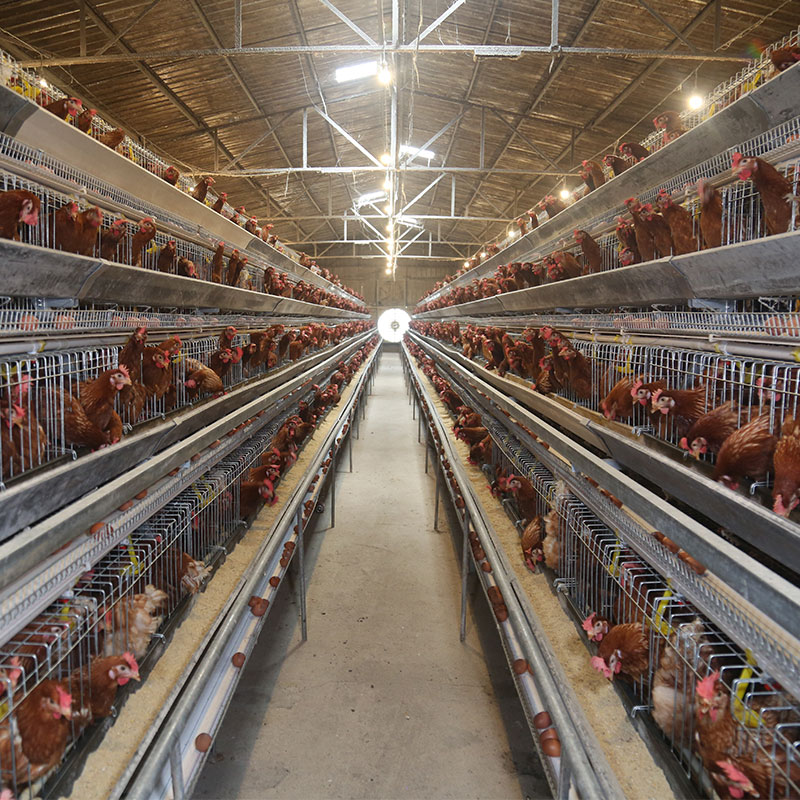
The Foundation of Customization: Assessing Your Flock’s Blueprint
The journey toward a customized cage system begins long before the first wire panel is installed. It starts with a deep understanding of the specific biological and behavioral needs of the birds you intend to raise. A system designed for high-production laying hens, for instance, will look fundamentally different from one built for broilers being raised for meat or for parent stock in a breeder operation.

Consider the layer. Her primary purpose is to produce a consistent, high-quality egg. A customized layer system is engineered around this goal. It’s not just about providing a nest box; it’s about creating an environment that encourages its use. A poorly designed nest, perhaps one that is too bright or difficult to access, will lead to floor eggs—eggs laid in the walkways or on the slatted floor. These are not only more labor-intensive to collect but are also far more likely to become contaminated, reducing their market value and posing a food safety risk. A well-designed system features dark, inviting, and easily accessible nest boxes with comfortable matting, strategically placed to make them the most appealing location for a hen to lay.
For broilers, the focus shifts from egg production to rapid, efficient growth and feed conversion. The design priorities change accordingly. Space allowance per bird is a critical calculation. Too little space, and you risk increased aggression, feather pecking, and a higher incidence of breast blisters and hock burns from constant contact with manure. Too much space, and you are inefficiently using your capital investment in the building. A customized broiler system calculates the optimal square centimeters per bird based on the target slaughter weight, ensuring the birds have enough room to move and access feed and water without stress, while maximizing the stocking density for economic return.
Ventilation within the cage is another area where customization proves its worth. A static, uniform airflow might be sufficient for adult birds in a temperate climate, but it is disastrous for day-old chicks who require a much warmer, draft-free environment. Advanced cage systems can incorporate zone-controlled environments. For a farmer receiving a new flock of chicks, this means being able to create a "brooding ring" within the larger cage structure. By adjusting vents and fans, you can maintain a precise temperature in the chick area while the rest of the house acclimatizes, allowing for a smoother, less stressful transition as the chicks grow and their temperature requirements change.
The Mechanics of Modern Caging: Beyond Basic Wire
The materials and mechanics of a customized system are where engineering meets animal husbandry. Galvanized steel remains a standard for its durability, but the quality of the coating and the gauge of the wire are crucial. A farmer in a coastal region with high humidity needs a cage with a superior galvanization layer to resist salt-induced corrosion, whereas an inland operation might prioritize a different cost-to-durability ratio.
The flooring design is arguably one of the most impactful elements on bird welfare and health. Traditional, stiff wire mesh can lead to footpad lesions and discomfort. Modern systems employ carefully engineered plastic-coated wires or plastic slats. The coating provides a gentler surface, while the specific design of the mesh openings is critical. The openings must be large enough to allow manure to pass through freely, keeping the birds clean and dry, but small enough to provide secure and comfortable footing. A clogged floor not only creates a wet, ammonia-rich environment that can lead to respiratory issues but also increases the labor required for cleaning.
Manure management is seamlessly integrated into a well-customized system. The angle of the manure deflectors, the placement of manure belts, and the timing of their operation are all variables that can be tuned. For example, a belt that runs too infrequently allows manure to build up, increasing ammonia levels. A belt that runs too often consumes unnecessary electricity and can break up the manure, making it more difficult to handle and compost. A system can be programmed to run the belts at specific intervals, perhaps just after peak feeding times when the birds are most active and defecating more, ensuring a consistently clean environment with optimal resource use.
Feed and water delivery, the lifelines of the flock, are also prime candidates for customization. The choice between a chain feeder and a pan feeder system depends on the bird type and age. Chain feeders are common and effective, but for more precise control and to minimize feed wastage, pan feeders are often preferred. The height of these systems is not fixed; it should be adjustable. As birds grow, the feeders and drinkers must be raised to the level of the birds' backs. This encourages natural feeding and drinking postures and prevents spillage. A nipple drinker system, now standard, must be calibrated to provide the correct water pressure—too high, and the birds are hesitant to drink; too low, and they cannot get enough water, leading to dehydration and reduced feed intake.
Automation and Data: The Invisible Workforce
The true potential of a customized cage system is unlocked when it is integrated with automation and data collection technologies. This transforms the cage from a passive structure into an active management tool.
Automatic egg collection is a classic example. In a layer house, belts running on a schedule gently gather eggs from the nest boxes and transport them to a central collection point. This does more than just save labor. It minimizes human handling, which reduces the number of cracked and dirty eggs. It also allows for the eggs to be quickly moved to a cooler environment, preserving their freshness and quality from the moment they are laid.
Climate control integration takes the guesswork out of environmental management. Sensors placed throughout the house, and even within the cage tiers themselves, continuously monitor temperature, humidity, and ammonia levels. This data is fed into a central computer that automatically adjusts fan speeds, inlet openings, and even heating or cooling systems. A farmer no longer needs to react to a sudden temperature spike; the system anticipates and compensates, maintaining a stable, optimal environment 24 hours a day. This stability is key to preventing heat stress in summer and respiratory diseases in winter.
Perhaps the most advanced form of customization lies in data-driven insights. Modern systems can track feed consumption in real-time. A sudden drop in consumption is one of the earliest indicators of a health problem. Instead of discovering an issue days later during a walk-through, the farmer receives an alert, allowing for immediate investigation. Similarly, water consumption meters can signal the onset of disease or a problem with the water pressure. By monitoring the weight of the birds (through specialized perches or platforms) or even the quality of the eggs (via on-line grading systems), the farmer gains an unprecedented understanding of flock performance. This data allows for fine-tuning the feed formulation, adjusting lighting programs, or making other management decisions based on hard evidence rather than estimation.
The Long-Term View: Durability, Adaptability, and Return on Investment
Investing in a customized cage system is a major capital decision, and its long-term value must be carefully considered. Durability is not just about the strength of the steel but about the design's resilience to the harsh, corrosive environment of a poultry house. Components that are easy to remove and replace, such as individual nipple drinkers or sections of feeding trough, minimize downtime during maintenance.
A truly forward-thinking design also incorporates adaptability. A farmer might start with a system optimized for a certain bird type or density but may need to pivot in the future. Can the system be easily reconfigured? Can nest boxes be added or removed? Can the manure removal system be upgraded? A system designed with modularity in mind protects the investment against future changes in market demands or farming practices.
The ultimate justification for customization is return on investment. This is not measured solely in the initial purchase price, but in the accumulated gains over the system's lifespan. These gains manifest as improved bird performance—more eggs per hen, better feed conversion ratios in broilers, and lower mortality rates. They appear as reduced operational costs—less labor for egg collection and manure management, lower energy bills through efficient climate control, and less feed wasted. They are also seen in the premium quality of the final product—clean, uncracked eggs and broilers free of blemishes, which command better prices in the market.
A poultry house equipped with a thoughtfully customized cage system operates as a cohesive biological machine. Every element, from the width of the mesh to the schedule of the manure belt, works in concert to support the well-being of the birds and the efficiency of the operation. It moves beyond simply containing animals and becomes a proactive tool for managing health, optimizing production, and securing the financial sustainability of the farm. The decision to customize is a decision to build the foundation of your business around the specific life that will inhabit it.
1. Drinking system include the water pipes, water pressure adjuster, drinking nipples, Waterline front-end device, dosing system etc, choose them according to customer's needs.
2. High-quality water drinking pipes, pressure regulating valves and water drinking nipples can effectively prevent the water leakage. Drinking system adopt the closed piping system, which can minimize the water pollution.
3. 360-degree drinking nipples provide adequate drinking water for poultry at all stages.
4. The automatic drinking water system mainly adopts the steel ball drinking nipple. lt uses imported high-grad stainless steel, POM resin, and APS engineering material, which is wearing resistant, and the durability can be used for long time.



1. Automatic feeding machine can be chosen between gantry and ladder feeding machine. Gantry type feeding machine is a relatively economical and practical machine with simple operation, remote control walking character, easy to manage.
2. Mechanical transmission device running smoothly, low noise, long service life.
3. With the use of automatic control, the feeding system can adjust the amount of material.
4. Feeding with arched structure, high carrying capacity, not easily deformed.
5. Saving man power, saving feed, greatly improving the efficiency of Large-scale farming.
6. The walking speed of gantry feeding machine is 9--12 m/min.




1. Manure removing system included scraper type and conveyor belt type, Which can reduce the labor intensity and labor cost, keep the chicken shed dry and clean.
2. A type chicken cage can use scraper type or conveyor belt type.


3. The scraper type is suitable for A type cages, which can clean two or three rows. For the starters, this type is a good choice. lt can not only save some labor cost, but also save some investment in the whole project. The cleaning speed is 6-10 meters per minute.
4. Conveyor belt type is more suitable for large scale farming. The manure removing belt we use is high quality PP material (polypropylene). The walking speed is 2-4 meters per minute.



High Quality Pellets Made by Mobile Pellet Machine
1. It has professional designed angle of the blade. After the dynamic balance test one by one, the blade can operate smoothly.
2. The air volume is consistent in the whole life of the fan. Bearings has advantage of high strength, low noise, durable and so on.
1. The cooling pads uses high-quality wet curtain paper and adopts space cross-linking technology, which has the advantages of high water absorption, high water resistance, anti-toxicity and long service life.
2. The cooling efficiency is over 80%, without surfactant, natural water absorption, fast diffusion speed and long-lasting effect.
3. The product does not contain phenol and other chemical substances that are easy to cause skin allergies. It is non-toxic and harmless to the human body and chicken when installed and used. It is green, safe, energy-saving, environmentally friendly, economical, and easy to install.
4. The frame aluminum alloy has high strength, good corrosion resistance, durability and beautiful appearance.
5. Use a special filter for the cooling pad at the upper water to ensure clean water quality and support efficient water circulation components.
6. Combined with a negative pressure fan, it can effectively lower the indoor temperature.
The window is made of special selected high-quality engineering plastic, with high strength and long service life, together with superior anti-aging and anti-UV performance.
Function: Ventilation of the chicken house, usually used in the winter.
This system can adjust the wind speed and direction, thus the cold air will not reach chicken directly , which can effectively prevent the phenomenon of cold stress in chicken.
Environmental control system equipment is suitable for large-scale and intensive farming. According to customer requirements, we can provide various types of smart poultry equipment.
1. Our poultry management system is a modular system that manages all aspects of the chicken house, such as climate, temperature, humidity, ammonia, feeding, feed weighing, lighting and ventilation systems, and can monitor the situation of the chicken house in real time through a computer and mobile phone.
2. The management computer is the heart of the poultry farm, allowing you to easily monitor the entire poultry farm.

 WeChat:+8617838608255