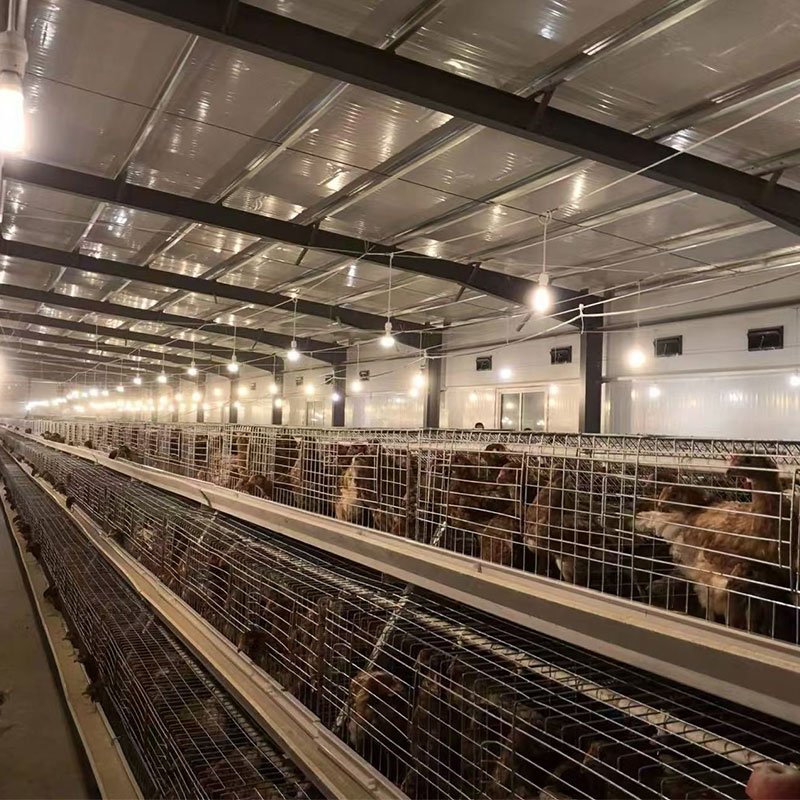
The rhythmic clucking of contented hens echoes through the barn, a sound that signifies more than just a healthy flock—it’s the sound of a well-oiled production system. For the modern poultry farmer, the choice of housing is not merely a capital expense; it is the very framework upon which daily operations, bird welfare, and ultimately, profitability are built. The transition from traditional floor systems to structured cage environments represents a significant step towards optimizing these factors. Among the available options, the 3/4-tier A-type layer cage system, designed to house 96 or 128 birds, presents a compelling model for farms aiming to balance density with animal well-being and operational efficiency.
The "A-type" designation is the first key feature to understand. Picture a classic house roof, with two sloping sides meeting at a central peak. This cage design mimics that shape. The primary advantage of this configuration is gravity. When a hen lays an egg, it rolls gently away from her and out of the main living area onto a dedicated collection tray. This simple, passive system is the first critical step in preserving egg quality. It prevents eggs from being broken or soiled by the birds inside the cage, a common issue in flatter, non-sloped systems where eggs remain within the birds' reach. This design directly translates to a higher percentage of saleable, Grade A eggs arriving at the packing station.
The decision between a 3-tier and a 4-tier system hinges on the specific geometry and operational style of your poultry house. A 3-tier structure offers greater vertical space between each level. This improved headroom makes visual inspections of birds in the middle and top tiers considerably easier. A farmer can quickly scan for signs of distress, illness, or feather pecking without straining. It also simplifies the process of catching birds for vaccination or end-of-lay depopulation. Furthermore, the increased air volume between tiers enhances natural ventilation, allowing warm, moist air and ammonia to rise and dissipate more effectively. This can be a significant advantage in regions with hotter climates or in buildings with less sophisticated mechanical ventilation.
Conversely, the 4-tier model is an exercise in spatial maximization. It allows a farmer to house more birds within the same building footprint. For operations where land or building space is the primary limiting factor, this increased density is a powerful economic driver. However, this efficiency comes with specific management requirements. The reduced clearance between tiers necessitates a more structured approach to bird observation, often requiring a small step ladder for thorough checks of the upper levels. Ventilation must be more actively managed; relying solely on natural convection becomes less effective, making a well-designed fan and inlet system crucial to maintain air quality across all levels, especially for the birds in the lower tiers.
The bird capacity—96 or 128 per cage unit—is another critical specification. This isn't just a number; it defines the stocking density and the social environment within each cage. A 96-bird cage provides more square inches per hen. In practical terms, this means less competition at the feed trough and easier access to water nipples. For flocks with a more nervous temperament or in situations where peak productivity is paramount, the additional space can reduce stress-related behaviors and ensure each bird consumes her required daily ration without being bullied away. This often results in more consistent egg size and shell quality across the entire flock.
The 128-bird configuration pushes the efficiency of the system further. It houses more birds using a similar amount of steel and occupying the same floor space. This lowers the capital cost per bird. The management focus here shifts slightly. The farmer must be exceptionally vigilant about feed distribution to ensure birds at the back of the deeper cage have equal access. Water line pressure must be checked regularly to guarantee all nipples are functioning, as a higher bird-to-nipple ratio leaves less margin for error. While modern hybrid layers are bred to thrive in these controlled group sizes, it demands a higher standard of stockmanship to identify and address any issues before they impact the whole group.
The structural integrity of the system is non-negotiable. These cages are not simple shelving units; they are a dynamic load-bearing structure supporting thousands of pounds of live birds, feed, and equipment. The galvanized steel wire used must have a high tensile strength. When you press your thumb against the cage floor, it should feel firm and resilient, not flex excessively. This gauge of wire prevents "fatigue" over the 60-100 week laying cycle, maintaining a stable platform for the hens. The galvanization process, which coats the steel in a layer of zinc, is what prevents the constant exposure to moisture, ammonia, and manure from causing rust. A flaking or thin galvanized coating will lead to premature corrosion, weakening the structure and creating sharp, hazardous edges for both birds and handlers.
The manure removal system is arguably the most critical component for maintaining flock health and a manageable work environment. Two main types are employed: the belt system and the scraper system. A manure belt is a continuous, slow-moving synthetic conveyor that runs beneath each tier of cages. Every day or two, the farmer activates a switch, and the belt transports the entire accumulation of droppings out of the building to a collection point. This method is remarkably clean and minimizes ammonia release within the house, as the manure is removed frequently and in a contained manner. It is the preferred choice for larger operations and for farms in closer proximity to residential areas due to its superior odor control.
The alternative is the scraper system, which uses a metal blade that periodically travels the length of the building, pushing the accumulated manure from all tiers into a deep pit at one end. This system is mechanically simpler and often has lower upfront costs. However, it can create periodic spikes in ammonia and dust levels during the scraping process. The choice between belt and scraper often comes down to initial investment, local environmental regulations, and the desired labor routine for manure handling.
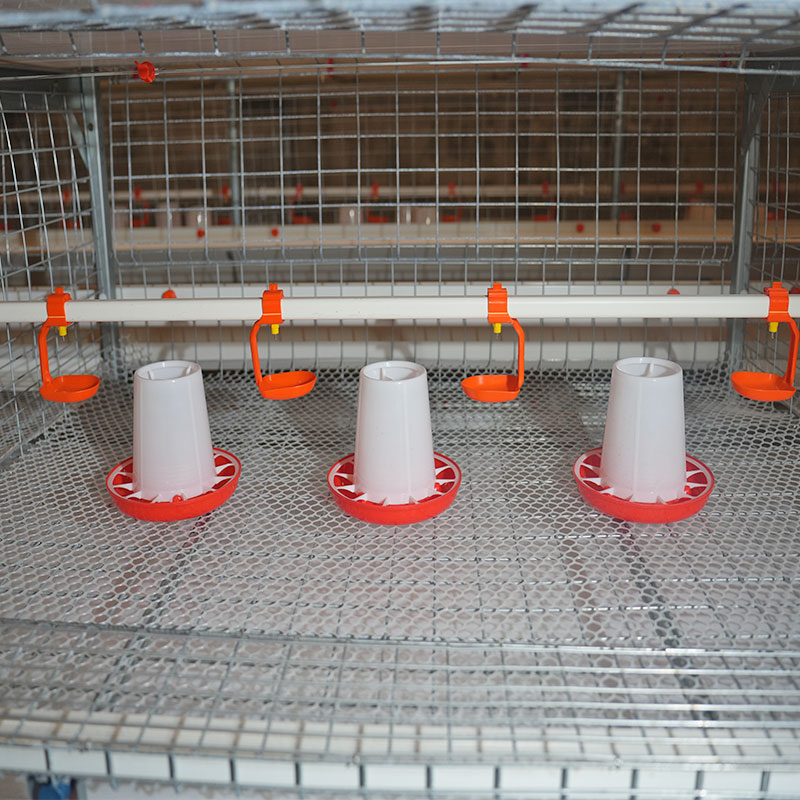
Feeding and watering are the lifeblood of the operation, and their design within the cage system dictates daily feed conversion rates. The feed trough runs along the front of each cage tier. Modern systems use an automated chain or spiral auger that circulates feed from a central bin. The key is consistency and availability. When the chain starts, feed should appear promptly and evenly at every point along the trough. If the feed flow is sluggish or inconsistent, the birds at the far end of the line will receive less nutrition, leading to weight and production variance within the flock. The height of the trough and the design of the "lip" are also crucial—it must be easily accessible to the hens while minimizing feed wastage from being flicked out.
The watering system typically consists of a PVC pipe running above each tier, with stainless steel nipples positioned at regular intervals. When a hen is thirsty, she pecks at the nipple, releasing a droplet of water. The system's water pressure is calibrated to provide this droplet without leaking or dripping continuously. A leaking nipple not only wastes water and creates wet manure, which increases ammonia production, but also poses a sanitation risk. Farmers learn to listen to the sound of the water system; a constant dripping or the sight of wet litter beneath the cages is an immediate signal that pressure needs adjustment or nipples need replacement.
Lighting is the external trigger that governs the hen's reproductive cycle. In a controlled environment house, light is not left to chance. A uniform grid of energy-efficient LED bulbs provides a consistent photoperiod. The farmer programs a timer to simulate the increasing day length that stimulates egg production. The even distribution of light is vital; darker corners can lead to reduced activity, lower feed intake, and a drop in lay percentage for birds in those areas. The light intensity is also managed—bright enough to encourage activity and feeding, but not so bright as to induce stress or feather pecking.

The installation of such a system is a foundational process. The ground must be perfectly level. An unlevel floor causes the entire cage structure to be out of alignment. This misalignment can prevent manure belts from tracking correctly, cause feed chains to bind, and lead to water lines that don't drain properly. It is a precision operation, more akin to setting up industrial machinery than assembling furniture. Furthermore, the cages must be properly grounded. The movement of birds, feed, and equipment can generate static electricity, and a proper ground wire prevents small shocks that can unsettle the flock and lead to panic or smothering events.
Daily management within this system becomes a rhythm of observation and minor adjustments. The walk through the house is not a casual stroll; it is an active audit. The farmer's eyes are constantly scanning: is the feed depth consistent in every trough? Is there any feed mold or clumping in the corners? Are all water nipples functioning, or is there a wet patch indicating a leak? The manure belts or scrapers are checked for proper operation. The eggs, as they collect on the trays, are visually inspected for cracks, dirt, or abnormalities in shell texture. The birds themselves are the best indicators. Their vocalizations, feather condition, and activity level provide a constant stream of data on their well-being. A quiet, listless flock is as much a cause for concern as a suddenly frantic one.
The choice to implement a 3/4-tier A-type cage system is a strategic one. It represents an investment in controlled-environment agriculture. It centralizes the birds' needs—feed, water, light, and climate—into a manageable framework, allowing the farmer to apply their expertise with greater precision. The 96-bird versus 128-bird, 3-tier versus 4-tier decisions are not about which is universally better, but about which is better suited to a specific farm's physical layout, labor resources, and management philosophy. By understanding the engineering and the husbandry required to make these systems work in harmony, poultry farmers can create an environment where animal welfare and production efficiency are not competing interests, but mutually reinforcing goals.
1. Drinking system include the water pipes, water pressure adjuster, drinking nipples, Waterline front-end device, dosing system etc, choose them according to customer's needs.
2. High-quality water drinking pipes, pressure regulating valves and water drinking nipples can effectively prevent the water leakage. Drinking system adopt the closed piping system, which can minimize the water pollution.
3. 360-degree drinking nipples provide adequate drinking water for poultry at all stages.
4. The automatic drinking water system mainly adopts the steel ball drinking nipple. lt uses imported high-grad stainless steel, POM resin, and APS engineering material, which is wearing resistant, and the durability can be used for long time.



1. Automatic feeding machine can be chosen between gantry and ladder feeding machine. Gantry type feeding machine is a relatively economical and practical machine with simple operation, remote control walking character, easy to manage.
2. Mechanical transmission device running smoothly, low noise, long service life.
3. With the use of automatic control, the feeding system can adjust the amount of material.
4. Feeding with arched structure, high carrying capacity, not easily deformed.
5. Saving man power, saving feed, greatly improving the efficiency of Large-scale farming.
6. The walking speed of gantry feeding machine is 9--12 m/min.




1. Manure removing system included scraper type and conveyor belt type, Which can reduce the labor intensity and labor cost, keep the chicken shed dry and clean.
2. A type chicken cage can use scraper type or conveyor belt type.


3. The scraper type is suitable for A type cages, which can clean two or three rows. For the starters, this type is a good choice. lt can not only save some labor cost, but also save some investment in the whole project. The cleaning speed is 6-10 meters per minute.
4. Conveyor belt type is more suitable for large scale farming. The manure removing belt we use is high quality PP material (polypropylene). The walking speed is 2-4 meters per minute.



High Quality Pellets Made by Mobile Pellet Machine
1. It has professional designed angle of the blade. After the dynamic balance test one by one, the blade can operate smoothly.
2. The air volume is consistent in the whole life of the fan. Bearings has advantage of high strength, low noise, durable and so on.
1. The cooling pads uses high-quality wet curtain paper and adopts space cross-linking technology, which has the advantages of high water absorption, high water resistance, anti-toxicity and long service life.
2. The cooling efficiency is over 80%, without surfactant, natural water absorption, fast diffusion speed and long-lasting effect.
3. The product does not contain phenol and other chemical substances that are easy to cause skin allergies. It is non-toxic and harmless to the human body and chicken when installed and used. It is green, safe, energy-saving, environmentally friendly, economical, and easy to install.
4. The frame aluminum alloy has high strength, good corrosion resistance, durability and beautiful appearance.
5. Use a special filter for the cooling pad at the upper water to ensure clean water quality and support efficient water circulation components.
6. Combined with a negative pressure fan, it can effectively lower the indoor temperature.
The window is made of special selected high-quality engineering plastic, with high strength and long service life, together with superior anti-aging and anti-UV performance.
Function: Ventilation of the chicken house, usually used in the winter.
This system can adjust the wind speed and direction, thus the cold air will not reach chicken directly , which can effectively prevent the phenomenon of cold stress in chicken.
Environmental control system equipment is suitable for large-scale and intensive farming. According to customer requirements, we can provide various types of smart poultry equipment.
1. Our poultry management system is a modular system that manages all aspects of the chicken house, such as climate, temperature, humidity, ammonia, feeding, feed weighing, lighting and ventilation systems, and can monitor the situation of the chicken house in real time through a computer and mobile phone.
2. The management computer is the heart of the poultry farm, allowing you to easily monitor the entire poultry farm.

 WeChat:+8617838608255