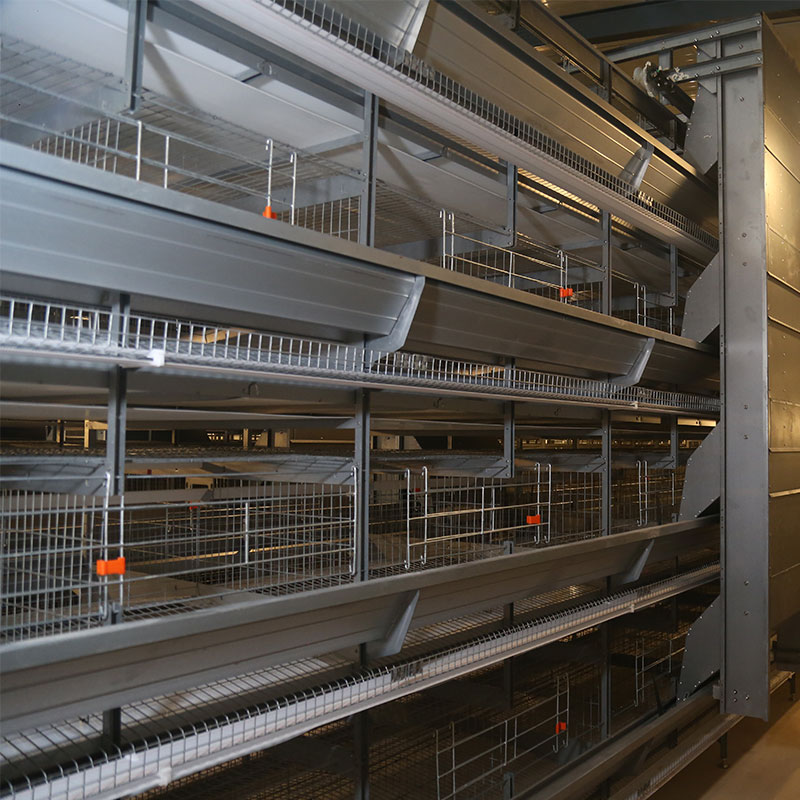
For poultry farmers evaluating cage systems, the decision between H-type layer cages, broiler cages, and battery cage systems represents a fundamental choice in operational strategy. Each design carries distinct implications for bird management, egg production, and meat yield. Understanding how these systems function in daily practice separates profitable operations from struggling ones.
H-Type Layer Cages: The Vertical Advantage
The H-type cage system takes its name from its structural resemblance to the letter H when viewed from the end. This configuration stacks multiple tiers vertically, connected by a central manure belt system that forms the "horizontal bar" of the H. Unlike older systems where waste drops from upper cages to lower ones, this design maintains hygiene across all levels.
Consider a farmer with a 10,000-bird layer operation. In a traditional three-tier stair-step cage house, the footprint might be 120 feet long by 30 feet wide. By implementing a five-tier H-type system in the same building, the farmer effectively increases stocking density without expanding the building's footprint. The critical difference lies in manure management. Each tier features a dedicated scraper or belt that removes droppings to a central collection point. This eliminates the ammonia buildup common in systems where upper cages drip moisture onto lower ones, directly impacting respiratory health in the entire flock.
The feeder system in H-type designs typically employs a chain that runs along each tier. When a farmer fills the feed hopper, the chain carries nutrition along the entire length of the row. Hens learn the sound of the chain motor and approach the trough in anticipation. Watering occurs through nipple systems positioned at the back of each cage, with cups to catch spillage. The vertical design means one set of feed lines and water pipes services multiple tiers, reducing both initial equipment costs and ongoing maintenance compared to single-level systems.
Egg collection exemplifies the efficiency of this design. As hens lay, the eggs roll forward onto a padded conveyor belt that runs the length of each tier. These individual belts then transfer eggs to a central cross-collection belt, which carries them directly to the grading room. This automation means one employee can manage egg collection for thousands of birds—a task that previously required multiple workers gathering eggs manually several times daily.
Broiler Cages: Reimagining Meat Production
While layers remain in cages for over a year, broilers have a much shorter production cycle of 6-7 weeks. This fundamental difference shapes cage design priorities. Broiler cages prioritize weight gain and muscle development over egg safety and long-term durability.
A farmer raising 20,000 broilers per cycle uses cages with plastic-coated flooring instead of the wire mesh common in layer systems. This softer surface prevents breast blisters and leg issues that can downgrade carcass value. The cage height is lower than in layer systems because broilers don't need standing height for nesting activities. Feed troughs are deeper to accommodate higher consumption rates—a broiler may consume twice as much feed per body weight compared to a layer.
Ventilation demands differ significantly. Broilers generate more heat per bird than layers, requiring stronger air movement across all cage levels. A farmer might install additional circulation fans between tiers to prevent heat stress in upper cages where warm air accumulates. The manure removal system must handle wetter droppings, as broiler feed contains more protein, resulting in higher moisture content in waste.
Density calculations change completely. Where layer cages might hold 5-7 birds, broiler cages contain larger groups to reduce activity and promote feeding. This "controlled confinement" approach minimizes energy expenditure, directing calories toward muscle development rather than movement. The trade-off requires meticulous climate control—any ventilation failure in a densely stocked broiler cage system can cause rapid heat mortality.
Battery Cage Systems: The Integrated Approach
The term "battery cage" simply refers to the repeating modular units that make up the system—like batteries in a flashlight. Modern battery systems incorporate features from both H-type and broiler designs, creating configurable solutions for different poultry types.
A farmer with a multi-age flock might use the same basic battery structure for both pullets (young hens) and layers, adjusting only the feeder height and stocking density as birds mature. The cages arrive in pre-assembled sections that bolt together on-site, allowing customization of row lengths and tier configurations based on building dimensions.
The feeding mechanism in these systems often uses a "trolley" design rather than a continuous chain. A feed cart travels along rails on top of the cages, dispensing precise amounts into each trough. This approach benefits farmers who mix their own feed or use multiple feed formulations, as different rows can receive different rations during the same pass.
Water systems in modern battery cages have evolved significantly. The standard nipple drinker now often includes a trigger pin that requires the bird to actively engage it, reducing water waste. Some systems incorporate water meters that alert farmers to consumption changes—often the first sign of health issues. When a flock of 10,000 birds suddenly increases water intake by 10%, the farmer knows to check for temperature spikes or early-stage disease.
Manure handling in battery systems varies by configuration. Some use deep pit storage beneath the cages, where waste accumulates for an entire production cycle. Others employ daily scraper systems that remove droppings to external storage. The choice depends on local regulations, labor availability, and manure valorization plans. A farmer who sells compost to horticultural operations might prefer daily removal to maintain quality, while another using it for biogas production may opt for pit storage.
Feeder Design: Beyond the Trough
The feeding system represents the largest recurring expense in poultry operations, making its efficiency critical. Modern cage systems employ several approaches to minimize waste.
The classic chain feeder works well for uniform flocks receiving the same ration. A farmer with a single-age layer house might use a system that runs the chain for 15 minutes every two hours, ensuring feed remains fresh and available. The chain speed matters—too fast and feed spills over the trough edges; too slow and birds at the end of the row receive less nutrition.
The newer pan feeder system uses circular dishes positioned at regular intervals along the feed line. Birds access feed through adjustable openings, allowing the farmer to control how much each bird can consume at one time. This proves particularly valuable for broiler operations where uniform growth matters. By limiting access, smaller birds get more feeding time while dominant birds can't monopolize resources.
Feed formulation logistics influence system choice. A farmer using pelleted feed might prefer chain systems that handle the durable pellets well. Those using mash formulations might choose trolley systems that minimize separation of fine particles. The decision extends beyond the cage system to feed mill operations and transportation methods.
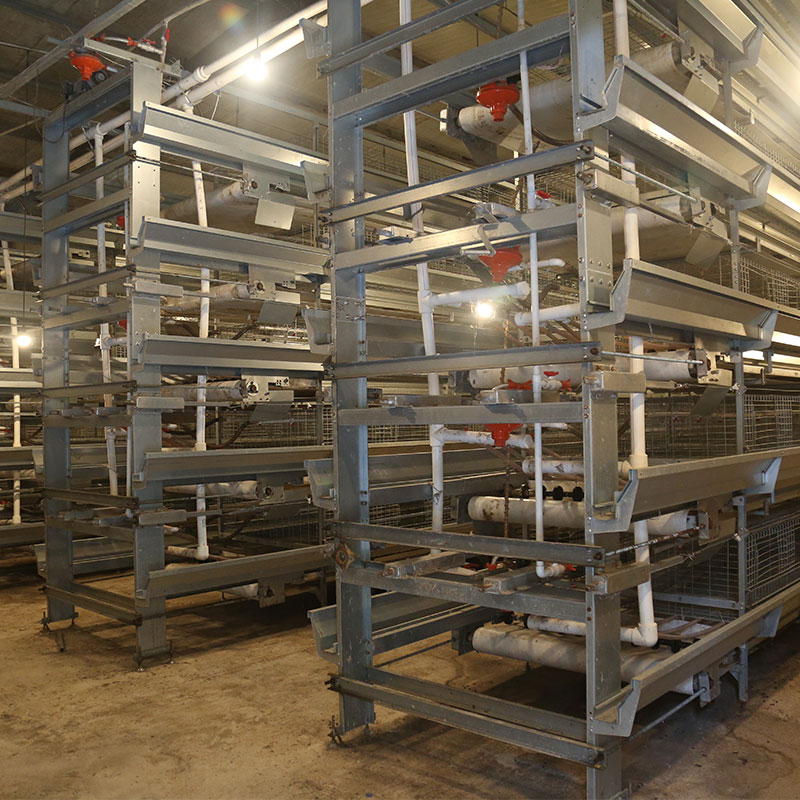
Environmental Control Integration
Successful cage systems function as part of an integrated environmental control strategy. The cage design directly impacts how temperature, humidity, and air quality management systems perform.
In multi-tier systems, temperature stratification becomes a significant concern. In a four-tier H-type cage installation, the temperature difference between bottom and top tiers can exceed 5°F without proper air mixing. Farmers address this with tunnel ventilation that creates horizontal air movement across all levels, or with baffles that direct air from ceiling inlets to specific tiers.
Lighting systems must accommodate the cage structure. LED fixtures mounted between tiers provide uniform illumination to all levels, crucial for maintaining consistent laying cycles. The farmer programs gradual sunrise and sunset simulations to prevent stress, with light intensity measured at the cage level rather than at building height.
The relationship between cage density and ventilation requirements follows predictable calculations. Each broiler requires approximately 0.5-1.0 cubic feet per minute of fresh air at market weight, while layers need slightly less. A farmer planning a new installation calculates total ventilation needs by multiplying birds by their maximum airflow requirement, then selects fans and inlets accordingly.
Stockmanship in Automated Systems

Despite automation, human management remains the determining factor in system performance. The skilled stockperson interprets subtle cues that machines cannot.
Walking the house remains essential, even with remote monitoring. The experienced farmer listens to bird vocalization—content hens produce different sounds than stressed ones. They observe feeding behavior, noting whether birds approach the trough eagerly or hang back. They check water pressure manually, feeling the nipples to ensure proper operation despite automated pressure readouts.
Manure inspection provides a health diary. The skilled farmer reads droppings like a chart—too wet might indicate digestive issues or excessive protein; unusual colors signal potential disease. In cage systems, they check manure consistency across tiers, as upper levels often show the first signs of problems.
The human eye catches what sensors miss. A slight reduction in egg size might not trigger alarms but signals the need for dietary adjustment. Minor feather wear patterns indicate cage friction points needing modification. These nuanced observations separate adequate management from exceptional performance.
Economic Considerations Beyond Initial Cost
The cage system decision extends beyond purchase price to operational economics that compound over years.
Durability directly impacts depreciation schedules. Galvanized steel cages might cost 20% more initially but last 15 years versus 8 years for cheaper alternatives. The farmer calculates not just the cage cost per bird, but the annualized cost over the system's lifespan.
Energy consumption varies significantly between systems. A chain feeder uses continuous power during operation, while a trolley system uses higher power in short bursts. The farmer analyzes local electricity rates and demand charges to determine the most cost-effective approach.
Labor efficiency shows the greatest variation. A well-designed cage system might enable one worker to manage 50,000 birds versus 20,000 in a less automated setup. The labor savings often justify the higher capital investment within two production cycles.
Transition Management Between Systems
Farmers upgrading from conventional to modern cage systems face specific transition challenges that impact flock performance.
The change from open troughs to nipple drinkers requires adaptation time. Farmers typically run both systems simultaneously for several days, allowing birds to discover the nipples while maintaining water access through familiar troughs. Deactivating the old system too soon can depress water intake and reduce production.
Feed transition timing matters when moving to automated systems. The farmer might run the new feeders empty for the first day, allowing birds to become accustomed to the sound and motion before introducing feed. This prevents the panic that can occur when unfamiliar equipment suddenly delivers nutrition.
Stocking density adjustments require careful monitoring. Moving birds from conventional cages to modern systems with different dimensions affects social dynamics. The experienced farmer watches for pecking order establishment and may temporarily reduce density if aggression issues emerge.
Preventive Maintenance Protocols
Modern cage systems require disciplined maintenance to preserve their advantages. Neglecting small issues leads to cascading failures.
Weekly inspection routines cover critical components. The farmer checks feed system tension—too loose and the chain jumps sprockets; too tight and wear accelerates. They verify water pressure at the farthest point from the source, not just at the regulator. They examine egg collection belts for alignment and cushioning integrity.
Monthly maintenance addresses less frequent but crucial elements. Manure belt scrapers get cleaned and adjusted. Ventilation fans receive blade cleaning and motor lubrication. Electrical connections get checked for corrosion in the humid poultry house environment.
Annual shutdowns allow comprehensive overhaul. The farmer completely empties feed systems for cleaning and inspection. They test every nipple drinker for function and replacement rate. They examine structural components for corrosion and fatigue. This systematic approach prevents mid-cycle failures that disrupt production.
Regulatory Compliance and Certification
Modern cage systems operate within an increasingly regulated environment that influences design choices.
Manure management regulations vary by region. Some areas require immediate removal from the building, favoring belt systems over pit storage. Others mandate covered storage, influencing the external infrastructure planning. The farmer must design the complete waste handling system, not just the cage component.
Egg safety standards impact material choices. Cage floors must be steep enough for eggs to roll clear but not so steep that eggs crack upon impact. The farmer tests this with sample eggs before flock placement, adjusting angles as needed.
Animal welfare certifications create specific requirements. Some programs mandate minimum space per bird, influencing cage dimensions. Others require specific enrichments like scratching areas. The farmer selects systems that comply with target market standards while maintaining operational efficiency.
The Integration Imperative
The most successful cage system implementations treat equipment as interconnected components rather than isolated elements.
The relationship between feeding and watering illustrates this principle. When farmers increase feed protein levels, water consumption rises proportionally. The watering system must accommodate this increase without pressure drops at distant cages. Simultaneously, the manure system must handle the additional moisture load.
Climate control interacts with every system component. During cold weather, the farmer might reduce ventilation to conserve heat, increasing humidity. This higher moisture content requires more frequent manure removal to prevent caking. The feeding program might shift to include more energy-dense ingredients to offset lower ambient temperatures.
Egg collection efficiency depends on coordinated function. If the ventilation system allows excessive heat buildup, hens lay weaker-shelled eggs that break during collection. If the feeding program lacks sufficient calcium, shell quality suffers regardless of collection system quality. Each component relies on proper function of the others.
This integrated perspective transforms cage system selection from an equipment purchase to a comprehensive production strategy. The farmer considers not just cage specifications but how those cages will perform within their specific operation—with their building constraints, labor availability, climate conditions, and market requirements. The optimal system aligns with all these factors, creating a cohesive production environment where equipment, animals, and management practices function as a unified whole.
1. Drinking system include the water pipes, water pressure adjuster, drinking nipples, Waterline front-end device, dosing system etc, choose them according to customer's needs.
2. High-quality water drinking pipes, pressure regulating valves and water drinking nipples can effectively prevent the water leakage. Drinking system adopt the closed piping system, which can minimize the water pollution.
3. 360-degree drinking nipples provide adequate drinking water for poultry at all stages.
4. The automatic drinking water system mainly adopts the steel ball drinking nipple. lt uses imported high-grad stainless steel, POM resin, and APS engineering material, which is wearing resistant, and the durability can be used for long time.



1. Automatic feeding machine can be chosen between gantry and ladder feeding machine. Gantry type feeding machine is a relatively economical and practical machine with simple operation, remote control walking character, easy to manage.
2. Mechanical transmission device running smoothly, low noise, long service life.
3. With the use of automatic control, the feeding system can adjust the amount of material.
4. Feeding with arched structure, high carrying capacity, not easily deformed.
5. Saving man power, saving feed, greatly improving the efficiency of Large-scale farming.
6. The walking speed of gantry feeding machine is 9--12 m/min.




1. Manure removing system included scraper type and conveyor belt type, Which can reduce the labor intensity and labor cost, keep the chicken shed dry and clean.
2. A type chicken cage can use scraper type or conveyor belt type.


3. The scraper type is suitable for A type cages, which can clean two or three rows. For the starters, this type is a good choice. lt can not only save some labor cost, but also save some investment in the whole project. The cleaning speed is 6-10 meters per minute.
4. Conveyor belt type is more suitable for large scale farming. The manure removing belt we use is high quality PP material (polypropylene). The walking speed is 2-4 meters per minute.



High Quality Pellets Made by Mobile Pellet Machine
1. It has professional designed angle of the blade. After the dynamic balance test one by one, the blade can operate smoothly.
2. The air volume is consistent in the whole life of the fan. Bearings has advantage of high strength, low noise, durable and so on.
1. The cooling pads uses high-quality wet curtain paper and adopts space cross-linking technology, which has the advantages of high water absorption, high water resistance, anti-toxicity and long service life.
2. The cooling efficiency is over 80%, without surfactant, natural water absorption, fast diffusion speed and long-lasting effect.
3. The product does not contain phenol and other chemical substances that are easy to cause skin allergies. It is non-toxic and harmless to the human body and chicken when installed and used. It is green, safe, energy-saving, environmentally friendly, economical, and easy to install.
4. The frame aluminum alloy has high strength, good corrosion resistance, durability and beautiful appearance.
5. Use a special filter for the cooling pad at the upper water to ensure clean water quality and support efficient water circulation components.
6. Combined with a negative pressure fan, it can effectively lower the indoor temperature.
The window is made of special selected high-quality engineering plastic, with high strength and long service life, together with superior anti-aging and anti-UV performance.
Function: Ventilation of the chicken house, usually used in the winter.
This system can adjust the wind speed and direction, thus the cold air will not reach chicken directly , which can effectively prevent the phenomenon of cold stress in chicken.
Environmental control system equipment is suitable for large-scale and intensive farming. According to customer requirements, we can provide various types of smart poultry equipment.
1. Our poultry management system is a modular system that manages all aspects of the chicken house, such as climate, temperature, humidity, ammonia, feeding, feed weighing, lighting and ventilation systems, and can monitor the situation of the chicken house in real time through a computer and mobile phone.
2. The management computer is the heart of the poultry farm, allowing you to easily monitor the entire poultry farm.

 WeChat:+8617838608255