For poultry farmers navigating the ever-present pressures of efficiency and bird welfare, the physical infrastructure of the layer house represents one of the most critical long-term investments. The choice of cage system is not merely a purchase; it is the selection of the foundational environment where productivity, health, and operational costs are determined daily for years to come. The emergence of Durable Laminated Galvanized Magnesium Aluminum (GMA) Poultry Layer Cages marks a significant evolution in this space, moving beyond traditional galvanized steel to address the unique and punishing challenges of a modern poultry operation.
The core of this advancement lies in the material science of the cage wire. Traditional galvanized steel has been the industry standard for decades, providing a basic level of rust resistance. However, in the highly corrosive atmosphere of a chicken house—saturated with ammonia from manure, high humidity from bird respiration, and the constant abrasion of feed and claws—this protection has its limits. Over time, the zinc coating can degrade, leading to the first signs of red rust. This rust is more than an aesthetic issue; it weakens the structural integrity of the wire, creates rough surfaces that can injure birds' feet, and provides a porous surface where pathogens like bacteria and mites can thrive, sheltered from cleaning and disinfection.
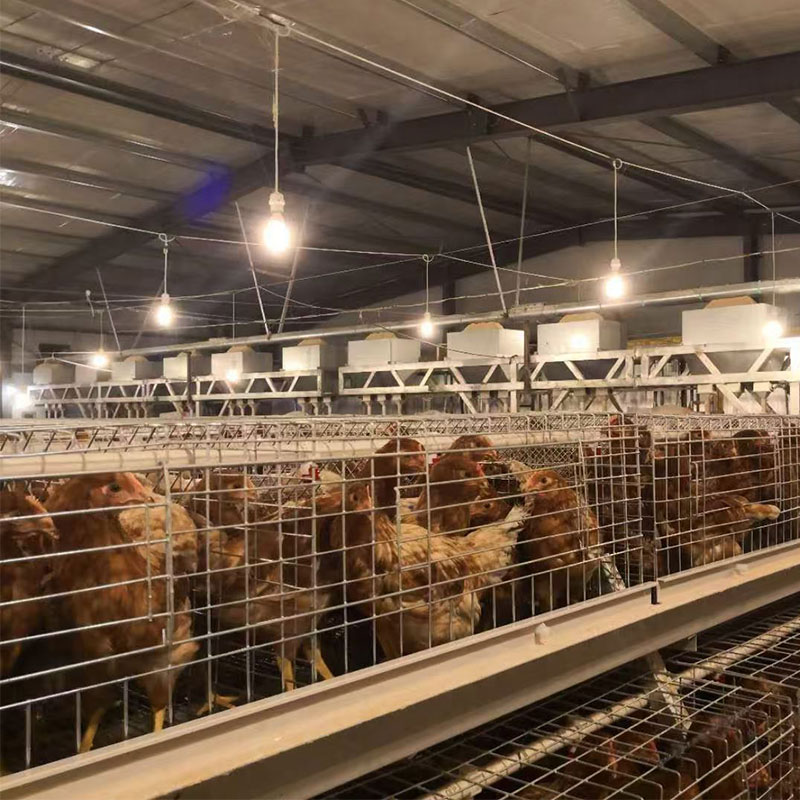
The GMA lamination process fundamentally changes this dynamic. Imagine the base wire is first given a robust galvanized coating, the first line of defense. Then, while the wire is still hot, a second, unique metallic alloy—a precise blend of aluminum and magnesium—is bonded to its surface in a lamination process. This is not merely a paint or a thin spray-on coating; it is a metallurgical bond that becomes part of the wire itself. The result is a material with a synergistic defense mechanism.
The aluminum in the alloy is the workhorse of corrosion resistance. It reacts with oxygen to form a microscopic, inert layer of aluminum oxide, a ceramic-like shield that is highly resistant to chemical attack. This is what makes the cage so effective against ammonia and moisture. A farmer might notice that after a year of use, while a standard galvanized cage shows white powdery oxidation (white rust) and the first speckles of red rust, the GMA cage surface remains uniformly dark grey and smooth, with no sign of chemical degradation.
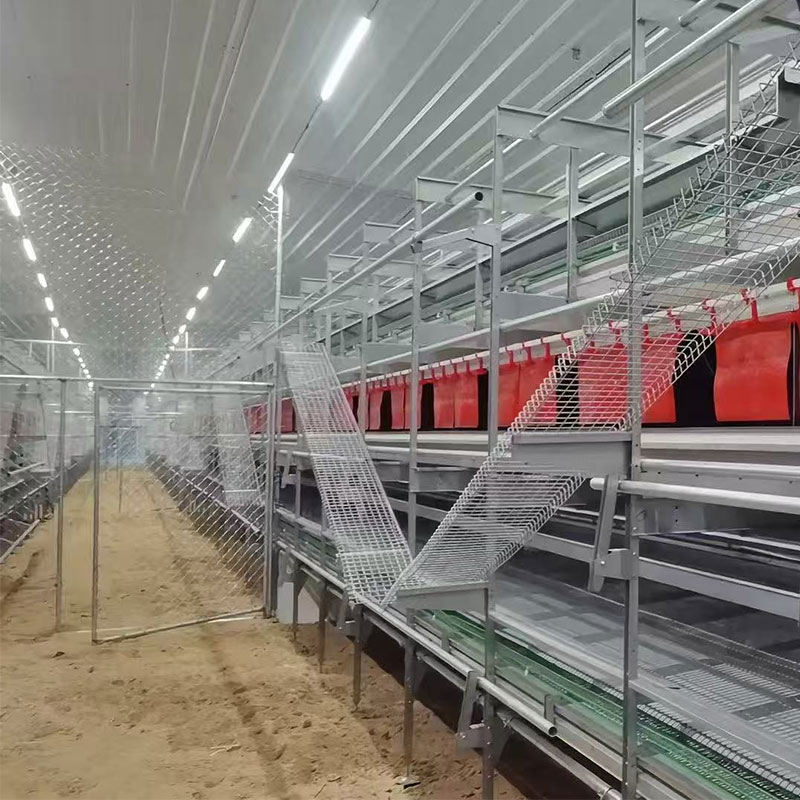
The magnesium component plays a different but equally vital role. It enhances the ductility and "formability" of the coating. During the manufacturing process, when the wire is bent and shaped into the cage panels, door frames, and egg saver rolls, a brittle coating could crack or flake off at the stress points, exposing the raw steel underneath. The magnesium ensures the lamination is tough yet flexible, bending with the wire without compromising its protective seal. This means that even the sharpest bend on an egg saver roll, a common failure point, remains as protected as the flat surface of the cage floor.
The practical implications of this durability are felt across the entire operation. The most obvious is the dramatic extension of the cage system's functional lifespan. Where a farmer might have budgeted for a replacement system after 8-10 years due to pervasive rust and weakening, a GMA system can reliably last 15-20 years or more. This transforms the capital expenditure from a recurring cost into a generational investment, drastically reducing the annualized cost of the infrastructure.
Beyond longevity, the surface quality of the cage has a direct impact on bird welfare and product quality. The smooth, non-porous finish of the GMA wire is easy to clean and disinfect between flocks. There are no microscopic pits or rust spots for Northern Fowl Mites or Red Poultry Mites to establish harborage. Controlling these ectoparasites is a constant battle, and a cage system that doesn't provide them a home is a powerful tool in Integrated Pest Management. This leads to calmer, less stressed birds that are not losing blood to parasites, translating directly into more consistent egg production.
Furthermore, the integrity of the cage floor is paramount for foot health. A rusted, pitted floor can cause bumblefoot, a painful bacterial infection and inflammatory reaction on the footpad. This condition not only causes suffering but also impacts the bird's mobility and willingness to move to the feeders and drinkers. The smooth, uniform surface of a GMA cage floor minimizes abrasions and pressure points, promoting excellent foot health throughout the laying cycle. Healthy feet are a cornerstone of a healthy, productive bird.
The egg saver roll, a critical component for minimizing floor eggs and cracks, also benefits immensely. A rusted or chipped roll can have sharp edges that score the eggshell as it rolls toward the collection belt, creating hairline cracks or micro-fractures that lead to downgrades and breakage. The consistent, durable coating on a GMA roll ensures a smooth journey for every egg, preserving its quality and market value from the moment it is laid.
While the material is the star of the show, the design of the modern layer cage system integrates this durable material into a holistic management tool. These are not just cages; they are engineered environments.
The cage floor is typically designed with a precise slope, often around 8 degrees. This is a carefully calculated angle. Too steep, and the birds struggle to maintain their footing, leading to stress and leg problems. Too shallow, and eggs will not roll away efficiently, resulting in hens pecking at them or them becoming soiled. The gentle, consistent slope of a well-designed cage encourages eggs to roll clear of the bird immediately, keeping them cleaner and reducing the incidence of egg-eating behavior.
Feed and water systems are fully integrated. The feed trough runs along the front of the cage, often with a specially designed lip to prevent wastage. Hens are naturally messy eaters, and feed represents one of the largest operational costs. A design that minimizes spillage, even by a few percent, compounds into significant savings over the lifetime of a flock. Nipple drinkers are the modern standard, placed at a height that encourages natural drinking behavior while keeping the water clean and free from contamination. Each activation by a bird releases a droplet of water directly into its beak, unlike open troughs which can become reservoirs for bacteria, algae, and medication sediment.
Manure management is handled through the design of the manure drying plates or belts. In multi-tiered "A-type" battery cages, manure falls onto staggered plates or belts. The key here is the gap between tiers and the ventilation strategy. Proper spacing allows for adequate air circulation around the manure, facilitating drying. Dry manure produces significantly less ammonia than wet manure. By managing moisture at the source, the cage system directly contributes to better overall air quality in the house. This reduces respiratory challenges for the birds, improves the working environment for staff, and lessens the corrosive load on the entire building structure, not just the cages. Some advanced systems incorporate a central manure belt that runs continuously or at intervals, removing manure from the house entirely and further enhancing air quality.
The structural framework of these systems, also constructed from GMA material, provides the necessary rigidity to support multiple tiers. A wobbling or sagging cage bank is a sign of poor structural integrity, which can lead to misaligned doors, malfunctioning egg belts, and potential collapse. The robustness of the GMA framework ensures the entire system remains stable and plumb, guaranteeing that all automated components function as intended for the life of the system.
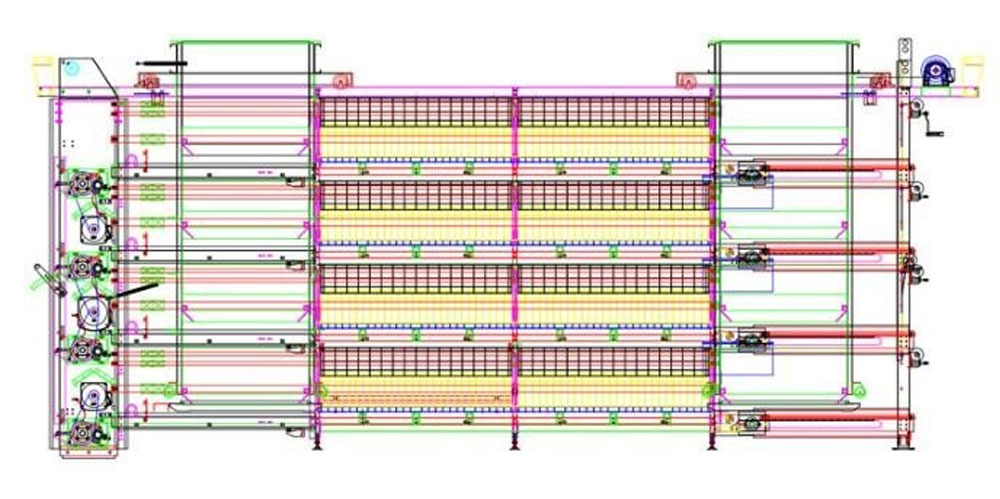
When planning for the installation of a GMA cage system, several practical considerations come to the forefront. The choice between an "A-type" battery cage and a "H-type" vertical stack system depends on the farmer's specific goals. A-type cages, with their slanted tiers, are space-efficient and rely on natural manure drying through air circulation. They are a proven, cost-effective solution for many operations. H-type systems, where cages are stacked directly vertically with a manure belt on every level, offer a higher degree of automation and superior manure removal, leading to the best possible air quality. They are often chosen for larger-scale, highly automated facilities where labor efficiency is paramount.
Stocking density is a critical decision point, balancing economic efficiency with animal welfare outcomes. Regulations and market certification programs (like cage-free or enriched colony requirements) often dictate these numbers. A well-designed cage, regardless of density, must provide each bird unobstructed access to feed and water. Overcrowding creates competition, stress, and increases the risk of vices like feather pecking. The farmer must work within their regulatory and market framework to choose a system that allows for the expression of natural behaviors like standing, turning around, and preening without obstruction.
The integration of the cage system with the poultry house's broader ventilation and lighting schemes is non-negotiable. Even the most durable cage cannot compensate for poor environmental control. Ventilation must be designed to move air uniformly through all tiers of the cage system, preventing stale, humid, and ammonia-laden air from accumulating in pockets. This requires a combination of ridge exhaust fans and properly adjusted side-wall inlets. Similarly, lighting must be intense and uniform enough to penetrate to the lowest tiers, ensuring all birds receive the same photoperiodic stimulation for consistent egg production.
In essence, the shift to a Durable Laminated GMA Poultry Layer Cage System is a strategic decision to preemptively solve the problems of corrosion, bird injury, and pathogen harborage that have long plagued traditional systems. It is an investment in operational predictability. By choosing a system whose structural heart is built to withstand the very environment it operates in, farmers secure a stable, sanitary, and welfare-oriented platform for their flocks. This stability pays dividends not only in the extended lifespan of the equipment but in the day-to-day consistency of egg production, bird health, and ultimately, the long-term profitability and sustainability of the farming enterprise.
1. Drinking system include the water pipes, water pressure adjuster, drinking nipples, Waterline front-end device, dosing system etc, choose them according to customer's needs.
2. High-quality water drinking pipes, pressure regulating valves and water drinking nipples can effectively prevent the water leakage. Drinking system adopt the closed piping system, which can minimize the water pollution.
3. 360-degree drinking nipples provide adequate drinking water for poultry at all stages.
4. The automatic drinking water system mainly adopts the steel ball drinking nipple. lt uses imported high-grad stainless steel, POM resin, and APS engineering material, which is wearing resistant, and the durability can be used for long time.



1. Automatic feeding machine can be chosen between gantry and ladder feeding machine. Gantry type feeding machine is a relatively economical and practical machine with simple operation, remote control walking character, easy to manage.
2. Mechanical transmission device running smoothly, low noise, long service life.
3. With the use of automatic control, the feeding system can adjust the amount of material.
4. Feeding with arched structure, high carrying capacity, not easily deformed.
5. Saving man power, saving feed, greatly improving the efficiency of Large-scale farming.
6. The walking speed of gantry feeding machine is 9--12 m/min.




1. Manure removing system included scraper type and conveyor belt type, Which can reduce the labor intensity and labor cost, keep the chicken shed dry and clean.
2. A type chicken cage can use scraper type or conveyor belt type.


3. The scraper type is suitable for A type cages, which can clean two or three rows. For the starters, this type is a good choice. lt can not only save some labor cost, but also save some investment in the whole project. The cleaning speed is 6-10 meters per minute.
4. Conveyor belt type is more suitable for large scale farming. The manure removing belt we use is high quality PP material (polypropylene). The walking speed is 2-4 meters per minute.



High Quality Pellets Made by Mobile Pellet Machine
1. It has professional designed angle of the blade. After the dynamic balance test one by one, the blade can operate smoothly.
2. The air volume is consistent in the whole life of the fan. Bearings has advantage of high strength, low noise, durable and so on.
1. The cooling pads uses high-quality wet curtain paper and adopts space cross-linking technology, which has the advantages of high water absorption, high water resistance, anti-toxicity and long service life.
2. The cooling efficiency is over 80%, without surfactant, natural water absorption, fast diffusion speed and long-lasting effect.
3. The product does not contain phenol and other chemical substances that are easy to cause skin allergies. It is non-toxic and harmless to the human body and chicken when installed and used. It is green, safe, energy-saving, environmentally friendly, economical, and easy to install.
4. The frame aluminum alloy has high strength, good corrosion resistance, durability and beautiful appearance.
5. Use a special filter for the cooling pad at the upper water to ensure clean water quality and support efficient water circulation components.
6. Combined with a negative pressure fan, it can effectively lower the indoor temperature.
The window is made of special selected high-quality engineering plastic, with high strength and long service life, together with superior anti-aging and anti-UV performance.
Function: Ventilation of the chicken house, usually used in the winter.
This system can adjust the wind speed and direction, thus the cold air will not reach chicken directly , which can effectively prevent the phenomenon of cold stress in chicken.
Environmental control system equipment is suitable for large-scale and intensive farming. According to customer requirements, we can provide various types of smart poultry equipment.
1. Our poultry management system is a modular system that manages all aspects of the chicken house, such as climate, temperature, humidity, ammonia, feeding, feed weighing, lighting and ventilation systems, and can monitor the situation of the chicken house in real time through a computer and mobile phone.
2. The management computer is the heart of the poultry farm, allowing you to easily monitor the entire poultry farm.

 WeChat:+8617838608255