
The Ultimate Guide to Buying Egg Chicken Cages: A Smart Investment for Your Poultry Farm
For poultry farmers, the decision to purchase egg chicken cages is one of the most significant investments in their operation's efficiency, bird welfare, and bottom line. Whether you're a smallscale homesteader looking to expand or a commercial producer aiming to optimize output, choosing the right cage system is paramount. The market is flooded with options, making it crucial to navigate with expertise. This comprehensive guide is designed to be your definitive resource. We'll move beyond a simple list of "egg chicken cages for sale" and delve into the critical factors that separate a profitable, humane, and sustainable purchase from a costly mistake. We'll explore cage types, key features, welfare considerations, and the essential questions you must ask before buying.
Before searching for "egg chicken cages for sale," you must first conduct an internal audit of your operation. The right cage for a 50bird backyard flock is vastly different from what a 50,000bird commercial facility requires.
Scale of Operation: Are you a hobbyist, a midtier producer, or a large commercial entity?
Production Goals: What is your target egg output? Are you focused on volume or premium (e.g., freerange, organic) markets?
Available Space & Infrastructure: What is the dimensions and layout of your poultry house? Consider ceiling height, ventilation points, and access doors.
Budget: This includes not only the initial capital expenditure (CAPEX) but also longterm operational costs (OPEX) like labor, feed efficiency gains, and maintenance.
Local Regulations & Welfare Standards: Compliance with laws (e.g., United Egg Producers (UEP) standards in the US, EU Council Directive 1999/74/EC in Europe) is nonnegotiable. Your market may also demand specific animal welfare certifications.
Not all cages are created equal. Understanding the core systems available will help you align your purchase with your ethics and business model.
Description: Multitiered enclosures where hens live in small groups within a wire mesh cage.
Pros: Historically offered the lowest cost per egg, high stocking density maximizing space use, easy egg collection and manure management.
Cons: Increasingly banned or phased out due to severe animal welfare restrictions. Offers minimal space for natural behaviors like perching, nesting, or dustbathing.
Current Status: Being rapidly replaced by enriched or colony systems in most regulated markets.
Description: The modern evolution of battery cages. They provide significantly more space per hen and are legally mandated to include essential furnishings:
A nesting area for private egg laying.
Perches for roosting.
A scratching area or mat for foraging behavior.
Clawshortening devices.
Pros: Balances welfare improvements with operational efficiency. Eggs are still automatically collected from outside the cage; manure management remains systematic. Compliant with newer welfare laws in many regions.
Cons: Higher initial investment than conventional cages; still more restrictive than cagefree systems.
While not "cages" in the traditional sense, they are a critical alternative for farmers responding to market demand.
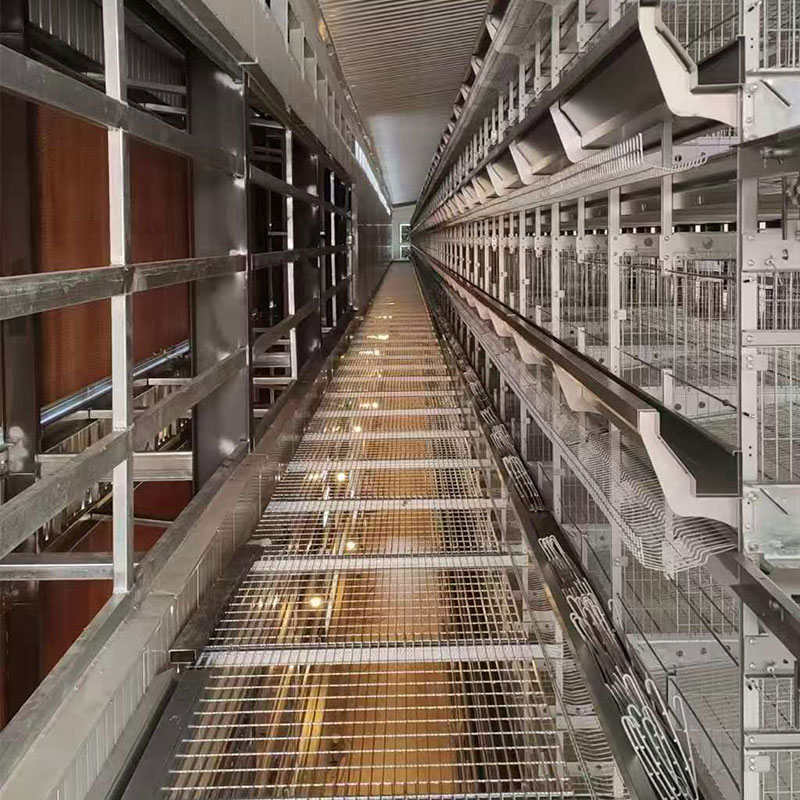
Description: Hens have freedom to move vertically and horizontally inside a barn. Multitiered structures (aviaries) provide platforms for feeding, drinking, laying eggs in nests boxes), and roosting.
Pros: Meets highest consumer welfare expectations and many retail standards (e.g., major grocery chains). Allows for full expression of natural behaviors.
Cons: Requires more skilled management, higher risk of feather pecking/cannibalism without proper oversight), lower stocking density (more space per bird), manual egg collection may be required from floor levels.
Comparison Table: Core Cage System Features
| Feature | Conventional Battery Cage | Enriched/Colony Cage | CageFree Aviary |
| : | : | : | : |
| Space per Hen | Very Limited (~6786 sq in/bird) | Increased (~116150 sq in/bird + furnishings) | Substantial (>1 sq ft/bird indoors) |
| Key Furnishings | None mandated | Nesting box), perch,) scratch area | Multiple nest boxes,) numerous perches,) litter area |
| Egg Collection | Fully Automated | Fully Automated | Partially Automated (nest boxes); floor eggs possible |
| Manure Management | Belt system under cages; dry storage | Belt system under cages; dry storage | Mixed: belts under tiers + litter management |
| Labor Intensity | Low | LowMedium | MediumHigh |
| Welfare Perception | Poor / NonCompliant | Improved / Compliant in many regions | High / Preferred by many consumers |
When reviewing suppliers' offers), look beyond price at these engineering and design elements:
1. Material & Durability: Heavygauge galvanized steel is standard for corrosion resistance). Electrogalvanized after welding offers superior protection). Check wire thickness).
2. Feeding System: Look at trough design,) feed distribution consistency,) and minimal waste mechanisms). Nipple drinker systems should be reliable and leakproof).
3. Egg Collection System: Smoothly rolling plasticcoated egg saver trays prevent cracks and bruises). The incline should ensure eggs roll away promptly).
4. Manure Removal System: Durable scrapers or belt systems that operate without jamming). Consider drying/cake removal frequency).
5. Cage Floor Slope & Design: Optimal slope (~78 degrees) ensures eggs roll out but doesn't stress hens' feet). Mesh size must support hen comfort while allowing manure to pass).
6. Integration Capabilities: Can the cage row easily integrate with your existing or planned ventilation), feeding lines), watering lines), lighting), and egg collection conveyors?
Modern farming inextricably links welfare with productivity.) Stressed hens do not lay optimally.) When evaluating cages,) consider how the design impacts key metrics:
HenDay Production Rate): Comfortable hens with access to nests lay more consistently with fewer floor eggs).
Feed Conversion Ratio): Efficient feeding systems reduce waste directly impacting feed costs—your largest expense).
Mortality & Morbidity Rates): Good design minimizes injury,) reduces aggression from overcrowding,) and promotes overall flock health).
Egg Quality): Systems that gently collect eggs minimize cracks checks—a major source of loss).
Your relationship with the supplier matters as much as the equipment itself).
1. Seek companies with proven industry experience)) testimonials)), case studies)).
2. Inquire about custom design services))—a onesizefitsall approach rarely works best)).
3. Scrutinize warranty terms)) parts availability)), technical support response times)).
4.A reputable supplier will ask detailed questions about your operation)) goals)), constraints))—they act as consultants)), not just salespeople)).
Searching for "egg chicken cages for sale" marks the beginning of an important journey)). The most costeffective cage isn't always the cheapest upfront)). It's the system that delivers optimal bird welfare)), robust egg quality)), efficient labor use)), reliable operation over its lifespan)),and full regulatory compliance)). By thoroughly assessing your needs)), understanding system types)), inspecting critical features)),and partnering with an expert supplier)),you make an investment that pays dividends in productivity sustainability)and peaceofmind)). Prioritize value over price,and build a foundation for longterm success)).
Q1: What is currently considered best practice when buying laying hen cages?
Best practice prioritizes systems that meet or exceed modern animal welfare standards while ensuring farm viability.Enriched colony cages are often seen as this balance point commercially,many regions.Cagefree aviaries represent best practice where market demand infrastructure,and management skill align.
Q2: How much does an egglaying cage system cost?
Costs vary dramatically.A small backyard unit may cost few hundred dollars.Commercialscale enriched cage systems can range $30$50 per bird place including installation.This covers structure feeding watering egg collection.Manure drying systems ventilation etc.)are typically separate line items).
Q3: How many hens fit into one cage unit?
In enriched colony systems group sizes typically range from ~40 upto80+hens per compartment depending on total space provided legal minimums.Group size affects social dynamics management observation).
Q4: What are key legal requirements I must know before buying?
Regulations differ by country state province.Key areas regulate minimum space per hen height specific enrichments like nests perches claw conditioners beak trimming bans phaseout dates conventional cages Always consult local agricultural authorities legal counsel).
Q5: Can I retrofit my old conventional battery cages meet new standards?
Generally no.The structural changes required add enrichments increase spaceperhen usually make retrofitting impractical uneconomical compared purchasing compliant new system).
Q6: What's lifespan quality commercial layer cage system?
Wellmaintained highquality galvanized steel system last +15 years.Key factors include environmental corrosiveness humidity ammonia levels maintenance diligence quality original components)).
Q7: How important ventilation when planning install new cages?
Critically important.Ventilation removes heat moisture ammonia pathogens ensures air quality directly impacting respiratory health feed intake production performance.Cage layout must not obstruct airflow work alongside ventilation system design)).
Q8: What main advantages automated manure belt system?
Automated belts provide drier healthier environment reducing ammonia levels disease pressure.They allow frequent removal improve air quality enable manure be handled resource fertilizer rather waste product)).
Q9: Are plasticcoated wire floors better than galvanized wire?
Plastic coating can improve foot health reduce bumblefoot incidence provides insulation cold surfaces.It also quieter reduces feather wear.Higher initial cost durability over time cleaning ability considerations)).
Q10: How ensure consistent water supply all birds tiered system?
Proper hydraulic design using pressure regulators balanced lines essential.Nipple drinkers must deliver correct water volume pressure each tier.Regular monitoring checking nipple function endoflines prevents dehydration production drops)).
Q11:What questions should ask supplier before purchasing?
Ask about warranty parts availability lead times technical support training references similar farms.Crucially ask their knowledge local regulations propose layout optimized YOUR specific building dimensions airflow patterns)).
Q12:Cagefree future inevitable should I skip cages altogether now?)
Marketdriven decision.If your target buyers retailers demand cagefree investing aviary may right longterm strategy.If supplying market where enriched colonies standard foreseeable future investing modern compliant system remains sound business decision based solid ROI analysis)).
1. Drinking system include the water pipes, water pressure adjuster, drinking nipples, Waterline front-end device, dosing system etc, choose them according to customer's needs.
2. High-quality water drinking pipes, pressure regulating valves and water drinking nipples can effectively prevent the water leakage. Drinking system adopt the closed piping system, which can minimize the water pollution.
3. 360-degree drinking nipples provide adequate drinking water for poultry at all stages.
4. The automatic drinking water system mainly adopts the steel ball drinking nipple. lt uses imported high-grad stainless steel, POM resin, and APS engineering material, which is wearing resistant, and the durability can be used for long time.



1. Automatic feeding machine can be chosen between gantry and ladder feeding machine. Gantry type feeding machine is a relatively economical and practical machine with simple operation, remote control walking character, easy to manage.
2. Mechanical transmission device running smoothly, low noise, long service life.
3. With the use of automatic control, the feeding system can adjust the amount of material.
4. Feeding with arched structure, high carrying capacity, not easily deformed.
5. Saving man power, saving feed, greatly improving the efficiency of Large-scale farming.
6. The walking speed of gantry feeding machine is 9--12 m/min.




1. Manure removing system included scraper type and conveyor belt type, Which can reduce the labor intensity and labor cost, keep the chicken shed dry and clean.
2. A type chicken cage can use scraper type or conveyor belt type.


3. The scraper type is suitable for A type cages, which can clean two or three rows. For the starters, this type is a good choice. lt can not only save some labor cost, but also save some investment in the whole project. The cleaning speed is 6-10 meters per minute.
4. Conveyor belt type is more suitable for large scale farming. The manure removing belt we use is high quality PP material (polypropylene). The walking speed is 2-4 meters per minute.



High Quality Pellets Made by Mobile Pellet Machine
1. It has professional designed angle of the blade. After the dynamic balance test one by one, the blade can operate smoothly.
2. The air volume is consistent in the whole life of the fan. Bearings has advantage of high strength, low noise, durable and so on.
1. The cooling pads uses high-quality wet curtain paper and adopts space cross-linking technology, which has the advantages of high water absorption, high water resistance, anti-toxicity and long service life.
2. The cooling efficiency is over 80%, without surfactant, natural water absorption, fast diffusion speed and long-lasting effect.
3. The product does not contain phenol and other chemical substances that are easy to cause skin allergies. It is non-toxic and harmless to the human body and chicken when installed and used. It is green, safe, energy-saving, environmentally friendly, economical, and easy to install.
4. The frame aluminum alloy has high strength, good corrosion resistance, durability and beautiful appearance.
5. Use a special filter for the cooling pad at the upper water to ensure clean water quality and support efficient water circulation components.
6. Combined with a negative pressure fan, it can effectively lower the indoor temperature.
The window is made of special selected high-quality engineering plastic, with high strength and long service life, together with superior anti-aging and anti-UV performance.
Function: Ventilation of the chicken house, usually used in the winter.
This system can adjust the wind speed and direction, thus the cold air will not reach chicken directly , which can effectively prevent the phenomenon of cold stress in chicken.
Environmental control system equipment is suitable for large-scale and intensive farming. According to customer requirements, we can provide various types of smart poultry equipment.
1. Our poultry management system is a modular system that manages all aspects of the chicken house, such as climate, temperature, humidity, ammonia, feeding, feed weighing, lighting and ventilation systems, and can monitor the situation of the chicken house in real time through a computer and mobile phone.
2. The management computer is the heart of the poultry farm, allowing you to easily monitor the entire poultry farm.

 WeChat:+8617838608255