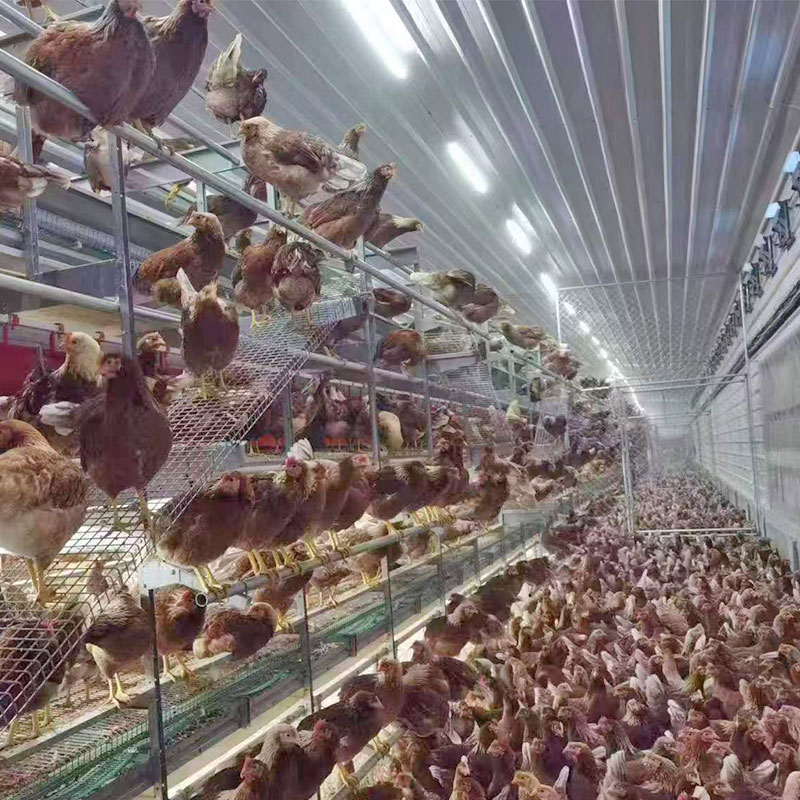
Egg Layer Cages: A Comprehensive Guide to Systems, Welfare, and Productivity
For poultry farmers and agricultural professionals, the choice of housing system for laying hens is one of the most critical decisions impacting animal welfare, operational efficiency, and economic viability. "Egg layer cages" represent a specific and widely used technology within modern egg production. This comprehensive guide delves deep into the world of egg laying cages, moving beyond simplistic debates to provide a nuanced analysis of cage designs, their evolution, comparative benefits and challenges, welfare considerations, and best management practices. Whether you're evaluating systems for a new operation or optimizing an existing one, understanding the full spectrum of cagebased housing is essential for making informed, responsible, and sustainable decisions.
Egg layer cages are containment systems designed to house laying hens for commercial egg production. They have evolved significantly from earlier models, driven by research, consumer demand, and regulatory changes.
The traditional system features rows of identical wire cages arranged in tiers. Each cage typically housed multiple hens with limited space per bird. While maximizing space efficiency and simplifying management (feeding, watering, egg collection), these systems faced intense criticism for severely restricting natural behaviors like perching, nesting, dustbathing, and full wing extension.
Developed in response to welfare concerns, enriched cages are a major evolution. They provide more space per hen and are legally mandated in many regions (like the European Union). Key furnished features include:
A Nesting Area: A secluded space for egg laying.
Perches: Raised bars for roosting.
A Scratching/DustBathing Area: Often with a substrate like astroturf.
Claw Shorteners: To help maintain claw health.
These modifications allow hens to express more natural behaviors than in conventional cages while retaining many of the management benefits of cage systems.
A larger version of furnished cages, colony cages house larger groups of hens (often tens to hundreds). They offer greater freedom of movement and more complex environments but operate on the same fundamental principle as smaller furnished cages.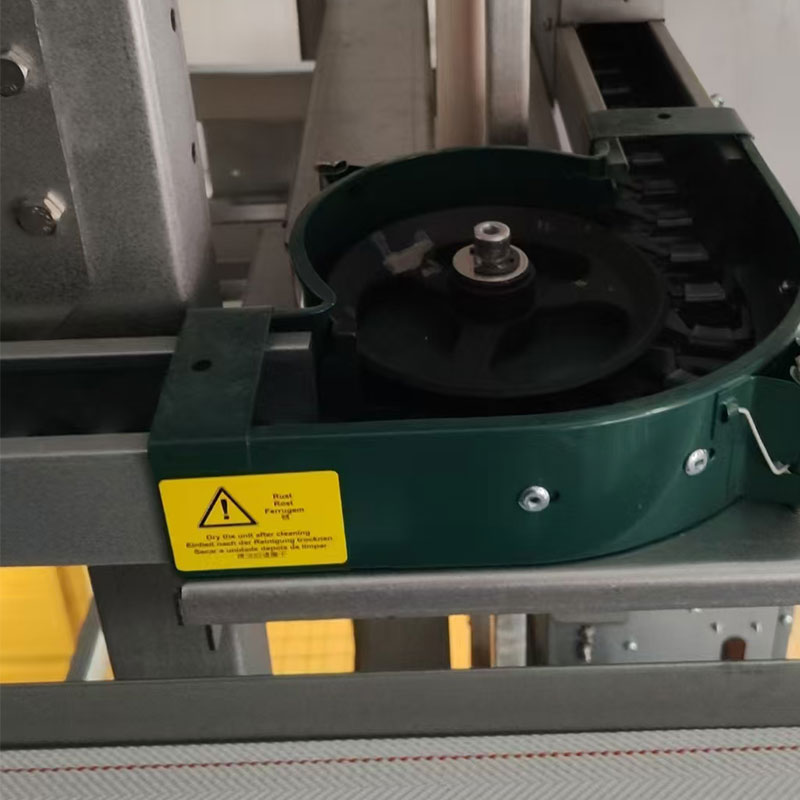
To understand the role of cages, it's essential to compare them with other prevalent systems.
| Feature | Enriched/Furnished Cages | Aviary/FreeRun Systems | FreeRange/Organic Systems |
| : | : | : | : |
| Space & Movement | Restricted but defined; vertical & horizontal movement within cage. | High indoor freedom; multitiered with litter floor. | Highest freedom; indoor space plus outdoor access. |
| Key Welfare Behaviors | Limited expression; nesting/perching possible in furnished models. | Good expression; perching, scratching, dustbathing enabled. | Fullest expression; includes foraging outdoors. |
| Health & Mortality | Generally lower disease transmission (manure removal), lower cannibalism/feather pecking risk. Can have higher bone fragility. | Higher risk of parasites, respiratory issues (dust), keel bone injuries, and cannibalism requiring beak treatment. | Highest exposure to predators/weather/wildlife diseases (e.g., avian influenza). Variable health outcomes based on management. |
| Egg Quality & Safety | Very high hygiene; eggs roll away quickly minimizing contamination (lower Salmonella risk). Cleanest eggs. | Higher risk of floor eggs/dirty eggs; more labor for collection. Higher bacterial load potential. | Similar issues as aviaries plus variable outdoor conditions impacting safety/hygiene consistency. |
| Labor & Management Highly automated; efficient feeding/watering/collection/manure removal.Lower labor intensity.| More manual labor required for bird management across tiers/litter floors.Manure management is complex.| Most laborintensive due to managing birds across large indoor/outdoor areas.Predator control is vital.|
| Economic Efficiency Highest bird density; lowest feed waste; highest automation = typically lowest production cost per dozen.| Higher capital/labor costs per bird.Lower density.Feed efficiency can be lower.| Highest operational costs.Lowest stocking density.Product often commands premium price.|
Welfare assessment must go beyond simple "cage vs. cagefree" labels.The Five Freedoms framework is a useful tool:
1.Freedom from Hunger/Thirst: Achievable in all wellmanaged systems.Automated nipple drinkers and chain feeders are standard in modern cage designs.
2.Freedom from Discomfort: Furnished cages provide improved comfort via designated areas.Enriched features like perches must be designed correctly to prevent keel bone deviations.Space allowance is a primary legal and ethical metric.
3.Freedom from Pain/Injury/Disease:Cage design minimizes aggressive pecking/cannibalism.Manure removal via belts beneath tiers reduces ammonia/pathogen load.Foot health depends on floor slope/wire design.Osteoporosis remains a concern due to limited loadbearing exercise.
4.Freedom to Express Normal Behavior: This is the most significant limitation.Even enriched cages restrict foraging,dustbathing in full substrate,and full flight/wingflapping.This behavioral restriction is central to welfare criticisms.
5.Freedom from Fear/Distress: Properly managed cage environments can be very stable with minimal humanbird conflict.Staff must be trained in lowstress handling during placement/depopulation.
Maximizing welfare and productivity within cage systems requires exceptional management.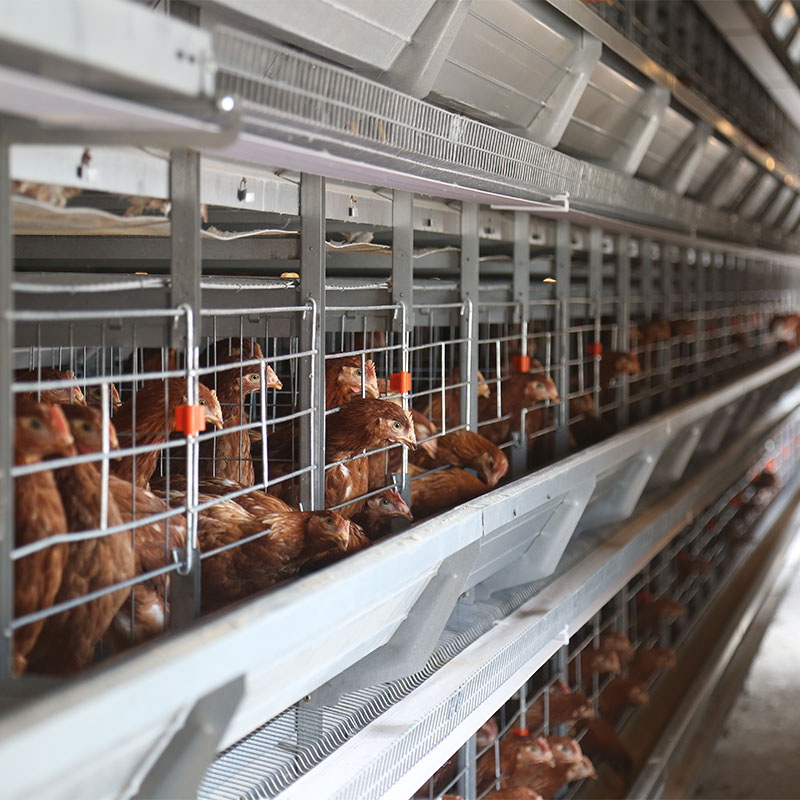
Stockmanship & Training: Skilled staff who can recognize subtle signs of health or distress are irreplaceable.Regular birdbased welfare assessments (feather cover,foot health) are mandatory.
Environmental Control: Precision is key.Tight control over temperature humidity ventilation(ammonia <10 ppm)and lighting programs(1416 hours light) directly impacts stress levels&production.
Nutrition & Water: Formulate diets specifically for caged hens' energy needs.Water quality&availability are nonnegotiable.Regular system checks prevent leaks/dry nipples.
Health Monitoring & Biosecurity: Implement strict protocols.Cage systems allow easier individual/sick bird monitoring.Vaccination programs&rodent/pest control are critical.Daily mortality removal is essential.
Equipment Maintenance: Automated systems require rigorous maintenance.Schedule checks on feeders drinkers egg belts ventilation fans&manure removal systems.Preventative maintenance avoids catastrophic failures.
The landscape for egg layer cages continues to evolve:
Genetic Selection: Breeding companies are selecting strains suitable for various systems including robust birds that thrive in enriched colony environments.
Technology Integration: Sensors for realtime monitoring of environment feed/water consumption&even vocalizations(stress indicators)are becoming viable.AIdriven health alerts are on the horizon.
Regulatory Pressure: Legislation continues shifting toward furnished/enriched systems&bans on conventional cages.Markets like California(Prop 12)&the EU set stringent space&furnishing requirements that influence global supply chains.
Market Segmentation: Consumer demand drives diverse offerings.Some retailers commit to 100% cagefree while others provide choice recognizing that cost&safety drive decisions for different consumers.This creates a complex market where multiple housing types including advanced cage systems will coexist.
Egg layer cages particularly modern enriched or colony systems remain a significant component of global egg production.They offer distinct advantages in terms of biosecurity feed efficiency egg hygiene worker safety&production cost.The primary tradeoff historically has been the restriction of certain natural behaviors which newer furnished designs aim to mitigate.The optimal system does not exist universally it depends on regional resources market demands regulatory frameworks&the producer's commitment to implementing best practices regardless of housing type.Informed decisionmaking requires balancing animal welfare economic sustainability food safety&environmental impact.For many operations advanced cagebased housing when managed with exceptional skill&attention to welfare represents a balanced pragmatic solution capable of delivering safe affordable food while addressing core ethical concerns through continuous improvement.
Q1: What exactly are "enriched" or "furnished" egg laying cages?
A1: Enriched or furnished cages are an evolution from conventional battery cages.They provide more space per hen and include specific furnishings mandated by law in many countries: a private nesting area perches for roosting a scratching area (often with artificial turf) and clawshortening devices.They aim to allow hens to express more natural behaviors while retaining the management benefits of cage systems.
Q2: Are egg layer cages being phased out?
A2: Conventional battery cages are being phased out or banned in many regions including the European Union United Kingdom Canada California etc.The trend is toward enriched colony cages or noncage systems like aviaries barns freerange However globally various types of cage systems remain prevalent due to economic food safety factors.Market demand varies significantly by region.
Q3: What are the main animal welfare concerns with caged hens?
A3: The primary concern is behavioral restriction.Even enriched cages limit full expressionof behaviors like foraging dustbathing(with loose substrate) flying extensive walking Other concerns include potentialfor bone fragility(osteoporosis) due lack weightbearing exercise foot health issues if wire floors poorly designed Keel bone injuries associated certain perch designs also monitored.
Q4: Do chickens in cages get sick more often?
A4: Actually disease transmission between birds can be lowerin wellmanaged cage systems because manure removed regularly via belts reducing exposure parasites pathogens However respiratory issues less common but specific health challengeslike osteoporosis fatty liver syndrome may present differently Stressrelated behaviors feather pecking cannibalism typically lowerin caged environments compared some large flock noncage systemswhere establishment pecking order difficult manage without beak treatment
Q5: Why do some farmers still use cage systems if there are welfare concerns?
A5: Farmers choose based multiple factors:Cage systemsoffer higher degree control over environment diet individual hen monitoring They generally result lower mortality rates reduced need antibioticsvia decreased disease transmission higher hygiene cleaner eggs lower production costs leading affordable protein Consumer price sensitivity major driver Additionally transitioning entirely noncage requires massive capital investment retrofit existing barns
Q6: How much space does a hen havein an enriched colony cage?
A6: Space requirements defined law vary For example EU mandates minimum 750 cm² usable area per henof which 600 cm² mustbe height >45cm also provide nest scratching area perch Specific measurements differ other jurisdictions California Prop12 requires 144 square inches(~929 cm²)per hen by2022 Always check local regulations which constantly evolving
Q7: Are eggsfrom caged hens less nutritious than freerange eggs?
A7: Scientific studies show minimal consistent nutritional difference attributable housing alone Primary factor determining nutritional content yolk color etc.is hen’s diet Freerange hens may ingest varied forage impacting fatty acid profile slightly but core protein vitamin mineral content largely similar Food safety profile however differs Cageproduced eggs consistently show lower bacterial contamination rates(Salmonella)due automated collection separation manure
Q8:What happens manurein modern layer cage operations?
A8 Modern facilities feature manure beltssituated beneath each tiercages Belts remove droppings dailyor multiple times weekto central collection point This drastically reduces ammonia levels improves air quality barn The collected manure often dried processed used fertilizer composted sometimes even burned bioenergy contributing circular economy nutrient management plan essential part operation’s environmental stewardship
1. Drinking system include the water pipes, water pressure adjuster, drinking nipples, Waterline front-end device, dosing system etc, choose them according to customer's needs.
2. High-quality water drinking pipes, pressure regulating valves and water drinking nipples can effectively prevent the water leakage. Drinking system adopt the closed piping system, which can minimize the water pollution.
3. 360-degree drinking nipples provide adequate drinking water for poultry at all stages.
4. The automatic drinking water system mainly adopts the steel ball drinking nipple. lt uses imported high-grad stainless steel, POM resin, and APS engineering material, which is wearing resistant, and the durability can be used for long time.



1. Automatic feeding machine can be chosen between gantry and ladder feeding machine. Gantry type feeding machine is a relatively economical and practical machine with simple operation, remote control walking character, easy to manage.
2. Mechanical transmission device running smoothly, low noise, long service life.
3. With the use of automatic control, the feeding system can adjust the amount of material.
4. Feeding with arched structure, high carrying capacity, not easily deformed.
5. Saving man power, saving feed, greatly improving the efficiency of Large-scale farming.
6. The walking speed of gantry feeding machine is 9--12 m/min.




1. Manure removing system included scraper type and conveyor belt type, Which can reduce the labor intensity and labor cost, keep the chicken shed dry and clean.
2. A type chicken cage can use scraper type or conveyor belt type.


3. The scraper type is suitable for A type cages, which can clean two or three rows. For the starters, this type is a good choice. lt can not only save some labor cost, but also save some investment in the whole project. The cleaning speed is 6-10 meters per minute.
4. Conveyor belt type is more suitable for large scale farming. The manure removing belt we use is high quality PP material (polypropylene). The walking speed is 2-4 meters per minute.



High Quality Pellets Made by Mobile Pellet Machine
1. It has professional designed angle of the blade. After the dynamic balance test one by one, the blade can operate smoothly.
2. The air volume is consistent in the whole life of the fan. Bearings has advantage of high strength, low noise, durable and so on.
1. The cooling pads uses high-quality wet curtain paper and adopts space cross-linking technology, which has the advantages of high water absorption, high water resistance, anti-toxicity and long service life.
2. The cooling efficiency is over 80%, without surfactant, natural water absorption, fast diffusion speed and long-lasting effect.
3. The product does not contain phenol and other chemical substances that are easy to cause skin allergies. It is non-toxic and harmless to the human body and chicken when installed and used. It is green, safe, energy-saving, environmentally friendly, economical, and easy to install.
4. The frame aluminum alloy has high strength, good corrosion resistance, durability and beautiful appearance.
5. Use a special filter for the cooling pad at the upper water to ensure clean water quality and support efficient water circulation components.
6. Combined with a negative pressure fan, it can effectively lower the indoor temperature.
The window is made of special selected high-quality engineering plastic, with high strength and long service life, together with superior anti-aging and anti-UV performance.
Function: Ventilation of the chicken house, usually used in the winter.
This system can adjust the wind speed and direction, thus the cold air will not reach chicken directly , which can effectively prevent the phenomenon of cold stress in chicken.
Environmental control system equipment is suitable for large-scale and intensive farming. According to customer requirements, we can provide various types of smart poultry equipment.
1. Our poultry management system is a modular system that manages all aspects of the chicken house, such as climate, temperature, humidity, ammonia, feeding, feed weighing, lighting and ventilation systems, and can monitor the situation of the chicken house in real time through a computer and mobile phone.
2. The management computer is the heart of the poultry farm, allowing you to easily monitor the entire poultry farm.

 WeChat:+8617838608255