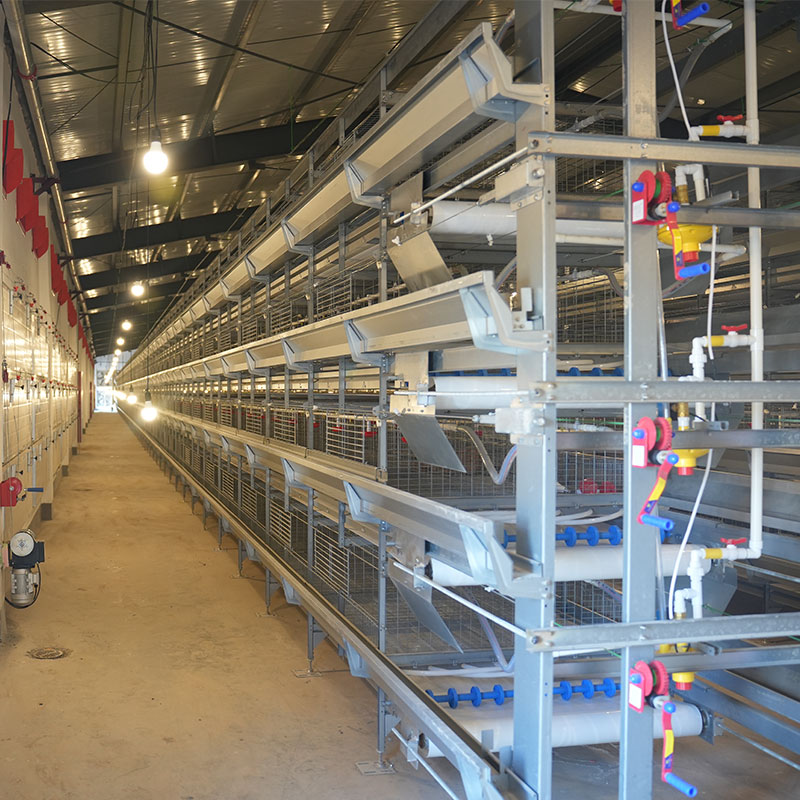
For poultry farmers weighing the decision between traditional floor systems and modern cage-based operations, the H-type chicken cage represents one of the most significant efficiency upgrades available. These vertically-stacked systems are engineered not just to house birds, but to fundamentally transform the workflow, bird management, and financial output of a layer operation. The "H" shape, visible from the end of the unit, describes the central support column with tiers extending symmetrically to both sides, creating a structure that maximizes bird density per square foot of floor space without compromising on animal welfare or ease of management.
The core principle of the H-type system is gravity-assisted management. Each cage tier is sloped slightly, guiding freshly laid eggs to roll gently onto a collection belt the moment they are produced. This simple mechanical action has profound implications. It immediately separates the egg from the bird and the manure, drastically reducing the opportunities for contamination. A farmer who previously spent hours each morning collecting eggs from nest boxes, only to find a percentage soiled or cracked, will find that the automated collection system delivers cleaner eggs directly to a central collection point. This directly translates to a higher percentage of Grade A eggs, commanding better prices from distributors.
Beneath each tier, manure removal is handled with similar automation. Manure belts or scrapers run at set intervals, moving waste away from the cages to a designated disposal area. This contrasts sharply with deep litter systems where manure accumulates, creating ammonia fumes that stress the birds' respiratory systems and can suppress egg production. By keeping the birds' living environment drier and the air cleaner, the system supports flock health. A farmer walking through a house equipped with an H-type system will notice the absence of the overpowering ammonia smell common in poorly ventilated floor operations. Healthier birds are more productive birds; they utilize their feed for egg production rather than fighting off constant low-grade respiratory challenges.
The design of the individual cages within the H-type system is a critical factor in bird welfare and productivity. Modern designs prioritize sufficient space for the hen to stand comfortably, turn around, and access feed and water without competition. The flooring is typically a welded wire mesh, strong enough to support the birds while allowing manure to pass through. This keeps the birds separated from their waste, preventing soiling of feathers and feet, which is a common precursor to health issues like bumblefoot. Feed and water lines run along the front of each tier. Nipple drinkers deliver fresh water on demand, minimizing spillage and keeping the litter dry, while the feed trough ensures every bird has equal access to nutrition. This eliminates the "boss hen" syndrome seen in floor systems, where dominant birds can monopolize resources, leading to an uneven flock with varying body conditions and production rates.
For the farm manager, the data collection opportunities presented by an H-type system are a game-changer. Because the system is automated and centralized, monitoring becomes a matter of checking key metrics rather than observing individual birds. Water consumption is a prime example. The water lines for each tier or section can be metered. A sudden drop in water consumption is often the very first sign of an emerging health problem, stress, or an issue with the water pressure itself. Noticing this change a day or two before a drop in egg production or a visible sign of illness allows for preemptive intervention, potentially containing a disease outbreak before it spreads through the entire flock.
The structural integrity of these systems is non-negotiable. A high-quality H-type cage is fabricated from hot-dipped galvanized steel, a process that coats the metal in a layer of zinc to resist the corrosive effects of ammonia and moisture in the poultry house environment. A farmer considering a purchase should look for this galvanization; a cage made from painted or untreated steel will show signs of rust within a year or two, compromising its strength and drastically shortening its operational lifespan. The framework must be designed to bear not only the weight of the birds but also the substantial load of the feed and water systems, the egg collection belts, and the farm workers who will need to perform inspections and maintenance.
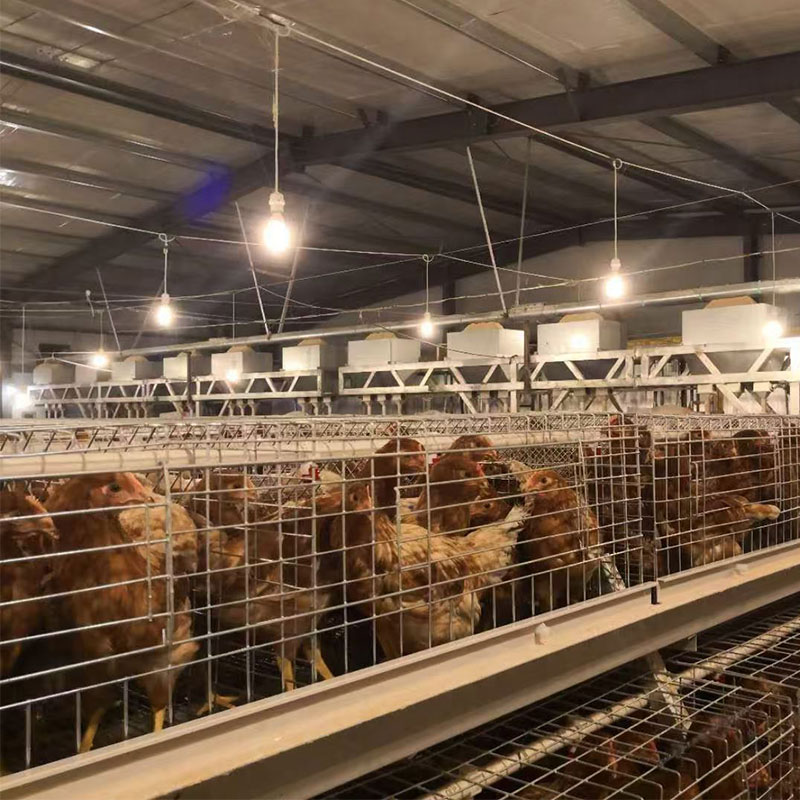
When transitioning a flock to a new H-type system, the process requires careful planning. The birds are typically moved from the pullet house at around 16-18 weeks of age, just before they begin to lay. It is crucial that they have ample time to acclimate to their new environment. They must learn where to find feed and, most importantly, how to use the nipple drinkers. A farmer should ensure the water pressure is set correctly—too high and it will startle the birds, too low and they won't be able to trigger the mechanism. Spending extra time during the first week to walk the aisles and observe the birds, ensuring they are all drinking and eating, pays long-term dividends in a uniform start to the lay cycle.
While the initial capital outlay for an H-type system is higher than for cage-free barn equipment, the return on investment is realized through persistent operational savings. Labor requirements for daily tasks like feeding, watering, and egg collection are slashed, sometimes by as much as 50-70%. This allows existing staff to focus on higher-value tasks like flock monitoring, maintenance, and record-keeping. Feed efficiency also sees a marked improvement. In a floor system, a significant amount of feed is wasted—kicked out of feeders, spilled, or mixed with litter. In a cage system, the feed trough contains the ration, and the design minimizes spillage. Every pound of feed saved goes directly toward improving the farm's feed conversion ratio, a key determinant of profitability.
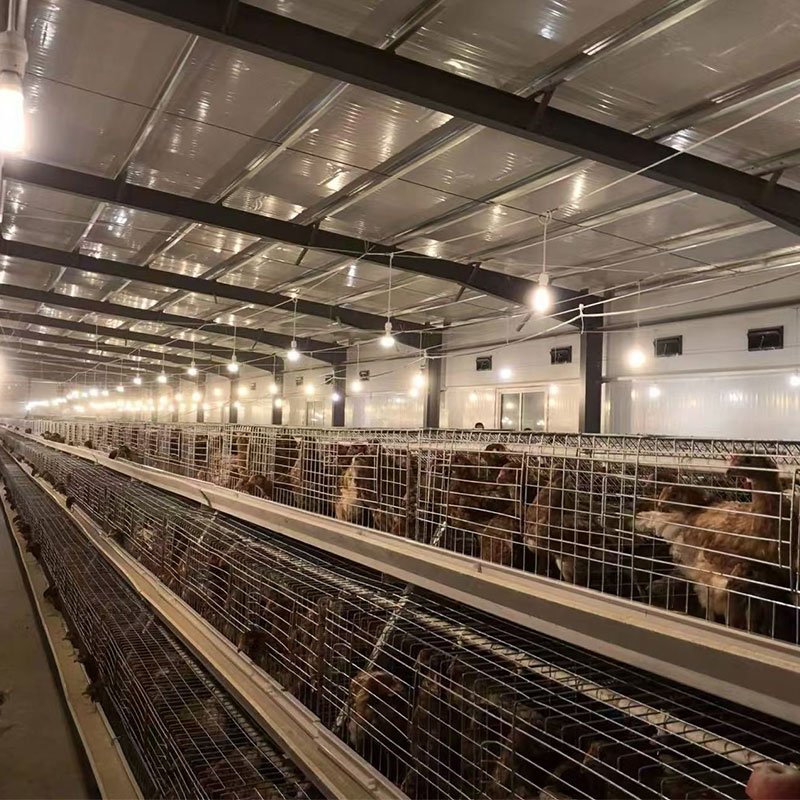
The scalability of H-type cages allows a farm to grow its production capacity without necessarily expanding its building footprint. A farmer with a long, narrow poultry house that is maxed out with a single-level floor system can often double or even triple the number of birds by installing a multi-tiered H-type unit. This makes it an ideal solution for operations looking to increase output where land is expensive or permits for new construction are difficult to obtain. The system works within the existing shell, turning previously unused air space into productive asset.
The principles of the H-type layer cage can also be effectively scaled down for other poultry species, such as quail. Quail cages operate on the same fundamental concepts: vertical stacking to save space, sloped floors for egg roll-out, and integrated systems for feeding and watering. However, the engineering is adapted to the birds' smaller size and different behaviors. The wire mesh used for the flooring must have smaller openings to securely support the quail and their smaller eggs. Because quail are flighty birds, the cage design often includes features to prevent them from startling and injuring themselves, and the feed and water lines are positioned appropriately for their height. For a farmer already familiar with layer cages, managing a quail cage system involves the same operational mindset, just applied to a smaller, faster-maturing bird with a different market for its meat and eggs.
Beyond the daily operations, the choice of a cage system has long-term implications for biosecurity. A controlled environment is a more secure environment. By housing birds in cages, the spread of pathogens through direct contact or contaminated litter is significantly reduced. When a health issue does arise in a particular cage or tier, it can be more easily isolated. Furthermore, during depopulation at the end of a laying cycle, the "all-in, all-out" process is more thorough. Once the birds are removed, the entire system—cages, belts, and feeders—can be power-washed and disinfected as a single unit, leaving no hidden pockets of contamination in deep litter to threaten the next flock. This rigorous cleaning protocol is far more challenging to execute effectively in a floor-based system.
The modern H-type cage is not a static piece of equipment; it is a platform that can integrate with evolving technology. Options for automation are continually expanding. For instance, centralized egg collection systems can be fitted with counters that provide real-time data on egg output from each row of cages, helping a manager pinpoint a problem area instantly. Climate control computers can be integrated to work in concert with the house's ventilation, heating, and cooling systems, using the structured layout of the cages to ensure even air distribution and temperature control throughout the flock. This level of environmental precision minimizes stress on the birds caused by temperature fluctuations, which is a known factor in optimizing consistent egg production.
Ultimately, the adoption of a Great Farm H-type cage system is an investment in predictability and control. It shifts the farmer's role from one of constant, reactive labor to one of proactive management. The system itself handles the repetitive, physically demanding tasks, freeing up human intelligence for observation, analysis, and strategic decision-making. The data generated by the automated processes provides an objective picture of flock performance, replacing guesswork with measurable metrics. For the poultry farmer focused on producing a consistent, high-quality product in the most efficient and sustainable manner possible, the vertical integration of the H-type cage offers a proven path to achieving those goals.
1. Drinking system include the water pipes, water pressure adjuster, drinking nipples, Waterline front-end device, dosing system etc, choose them according to customer's needs.
2. High-quality water drinking pipes, pressure regulating valves and water drinking nipples can effectively prevent the water leakage. Drinking system adopt the closed piping system, which can minimize the water pollution.
3. 360-degree drinking nipples provide adequate drinking water for poultry at all stages.
4. The automatic drinking water system mainly adopts the steel ball drinking nipple. lt uses imported high-grad stainless steel, POM resin, and APS engineering material, which is wearing resistant, and the durability can be used for long time.



1. Automatic feeding machine can be chosen between gantry and ladder feeding machine. Gantry type feeding machine is a relatively economical and practical machine with simple operation, remote control walking character, easy to manage.
2. Mechanical transmission device running smoothly, low noise, long service life.
3. With the use of automatic control, the feeding system can adjust the amount of material.
4. Feeding with arched structure, high carrying capacity, not easily deformed.
5. Saving man power, saving feed, greatly improving the efficiency of Large-scale farming.
6. The walking speed of gantry feeding machine is 9--12 m/min.




1. Manure removing system included scraper type and conveyor belt type, Which can reduce the labor intensity and labor cost, keep the chicken shed dry and clean.
2. A type chicken cage can use scraper type or conveyor belt type.


3. The scraper type is suitable for A type cages, which can clean two or three rows. For the starters, this type is a good choice. lt can not only save some labor cost, but also save some investment in the whole project. The cleaning speed is 6-10 meters per minute.
4. Conveyor belt type is more suitable for large scale farming. The manure removing belt we use is high quality PP material (polypropylene). The walking speed is 2-4 meters per minute.



High Quality Pellets Made by Mobile Pellet Machine
1. It has professional designed angle of the blade. After the dynamic balance test one by one, the blade can operate smoothly.
2. The air volume is consistent in the whole life of the fan. Bearings has advantage of high strength, low noise, durable and so on.
1. The cooling pads uses high-quality wet curtain paper and adopts space cross-linking technology, which has the advantages of high water absorption, high water resistance, anti-toxicity and long service life.
2. The cooling efficiency is over 80%, without surfactant, natural water absorption, fast diffusion speed and long-lasting effect.
3. The product does not contain phenol and other chemical substances that are easy to cause skin allergies. It is non-toxic and harmless to the human body and chicken when installed and used. It is green, safe, energy-saving, environmentally friendly, economical, and easy to install.
4. The frame aluminum alloy has high strength, good corrosion resistance, durability and beautiful appearance.
5. Use a special filter for the cooling pad at the upper water to ensure clean water quality and support efficient water circulation components.
6. Combined with a negative pressure fan, it can effectively lower the indoor temperature.
The window is made of special selected high-quality engineering plastic, with high strength and long service life, together with superior anti-aging and anti-UV performance.
Function: Ventilation of the chicken house, usually used in the winter.
This system can adjust the wind speed and direction, thus the cold air will not reach chicken directly , which can effectively prevent the phenomenon of cold stress in chicken.
Environmental control system equipment is suitable for large-scale and intensive farming. According to customer requirements, we can provide various types of smart poultry equipment.
1. Our poultry management system is a modular system that manages all aspects of the chicken house, such as climate, temperature, humidity, ammonia, feeding, feed weighing, lighting and ventilation systems, and can monitor the situation of the chicken house in real time through a computer and mobile phone.
2. The management computer is the heart of the poultry farm, allowing you to easily monitor the entire poultry farm.

 WeChat:+8617838608255