
The rhythmic rustle of thousands of feathers fills the air as a flock of Ross 308 broilers moves uniformly across a deep bed of soft wood shavings. A farmer walks the length of the barn, not on concrete slats but on the same earth floor the birds occupy, feeling the springy, compost-like litter underfoot. This is the essence of the ground breeding system, a method that is witnessing a significant resurgence as consumer preferences shift and the industry re-evaluates the meaning of holistic bird welfare and operational efficiency. For poultry farmers navigating this transition, understanding the intricate dance between animal, environment, and management is paramount to turning a deep-litter system from a concept into a profitable reality.

Unlike the controlled, contained environment of multi-tiered cages, ground breeding, or deep-litter systems, return the broiler to a single, ground-level plane. The entire flock lives on a bedding material, typically pine shavings or rice hulls, which accumulates and transforms over the grow-out period. This is not merely a housing choice; it is a commitment to managing a living, breathing ecosystem. The litter is not just a floor—it is the bird’s bedroom, playground, and, crucially, the primary interface for its health. The success or failure of the entire crop often hinges on the condition of this litter. When you pinch a handful of good litter, it should be friable, like moist garden compost, not clumping together with a sour, ammonia-heavy smell. That smell is the first warning sign of a system out of balance, where microbial activity has turned harmful instead of beneficial.
The foundation of this system is, quite literally, the foundation. Site selection and floor construction are long-term investments. While many older barns have compacted earth floors, newer constructions often utilize a concrete base with a slight slope for drainage. The critical factor is creating a barrier against moisture wicking up from the soil below. A layer of heavy-duty plastic sheeting or a vapor barrier under a thin concrete screed can prevent a world of problems later, stopping ground moisture from turning the litter base into a cold, damp sponge. Before the first chick ever arrives, the floor should be cleaned, disinfected, and completely dried. The initial bedding application is more science than simple covering. A depth of four to six inches of fresh, dry, and dust-free shavings is the target. This isn’t just for comfort; it’s the initial absorbent bank that will process the moisture from 25,000 chicks, each producing a surprising amount of water vapor through respiration and droppings.
Ventilation ceases to be a background function and becomes the heartbeat of the ground breeding operation. In a cage system, manure belts remove a large portion of the moisture and ammonia at the source. In a deep-litter house, the ventilation system must perform this duty. Its role is twofold: thermoregulation and moisture management. The goal is to maintain a relative humidity between 50% and 70%. During the brooding period, this is a delicate act. The chicks need warmth, often provided by radiant brooders, but their high stocking density in the brooding ring creates immense humidity. A farmer must listen to the barn. The sound of the ventilation fans cycling on and off, the feel of the air on the cheek—it should be fresh, not stagnant or heavy. Condensation forming on the ceiling or walls is a clear signal that the minimum ventilation rate is insufficient to exchange the moist indoor air with drier outside air.
As the birds grow, their water consumption skyrockets, and so does the moisture load on the litter. Drinkline management becomes a frontline defense against wet litter. Nipple drinkers must be calibrated to the perfect height—at the level of the bird’s eyes so they can drink easily without spilling water onto the floor. A common mistake is having drinkers too high, causing birds to drip water from their beaks as they disengage, or too low, forcing them to play with the pin and create puddles. Checking for wet spots around drinkers several times a day is non-negotiable. Placing catch-up trays under lines can mitigate spillage, but they must be cleaned daily to prevent them from becoming sources of contamination themselves.
The litter itself is a dynamic, composting mass. The aim is to encourage aerobic (with oxygen) decomposition by a consortium of beneficial bacteria and fungi. This process generates heat, which helps to dry the litter from within, and breaks down manure into relatively stable compounds. This is where the term “caking” enters the farmer’s vocabulary. When litter becomes too wet and compacted, it seals off oxygen, allowing anaerobic bacteria to take over. These microbes produce ammonia, hydrogen sulfide, and other harmful gases, and create a hard, crusty layer on top—a cake. A slight, thin crust can be beneficial, but a thick, impermeable cake is a problem. It traps moisture and gases underneath, burns the birds’ footpads and breast skin, and suppresses their immune systems. The sound of a flock walking across a badly caked floor changes from a soft rustle to a crackling, crunching noise—an auditory alarm for the attuned farmer.
The primary tool for managing this ecosystem is the humble litter fork. The practice of tilling or stirring the litter, particularly in wet spots and around drinkers, is a daily chore that pays massive dividends. It breaks up the crust, introduces oxygen back into the lower layers, and reactivates the aerobic composting process. Some operations employ mechanical de-cakers—rotary harrows pulled by a small tractor—to perform this task on a larger scale mid-flock. This active management is the key differentiator between a successful deep-litter operation and a failed one. It is hands-on, physical labor that directly correlates to bird health and air quality.
The air the birds breathe is the final product of this litter management. Ammonia is the invisible enemy. Levels should be kept below 25 parts per million (ppm). A simple test is to enter the barn at bird level first thing in the morning, kneel down, and take a breath. If your eyes water or you feel a burning sensation in your throat, the ammonia is already at a level that is damaging the birds’ respiratory tracts, making them susceptible to diseases like bronchitis and E. coli. High ammonia levels also suppress feed consumption; a bird that isn’t eating comfortably will not convert feed to muscle efficiently.
Stocking density is a contentious but critical economic and welfare calculation. While cage systems can stock birds at very high densities due to automated manure removal, ground systems have a natural ceiling. European welfare standards often mandate a density of around 30-33 kg/m², which for a 2.8kg bird translates to roughly 11-12 birds per square meter. Pushing density higher risks overwhelming the litter’s capacity to process manure and moisture, leading to a cascade of health and welfare issues. The extra space isn’t just a luxury; it is a functional requirement for the system to work. It allows for better air circulation around the birds, reduces heat stress, and provides space for natural behaviors like wing flapping, dust bathing, and running. A less stressed bird is a healthier, more efficient-growing bird.
The behavioral benefits are the most visually apparent advantage. Birds in a well-managed ground system exhibit a full range of natural behaviors. You will see them perform dust-bathing rituals, scratching and rolling in the litter to clean their feathers and control parasites. You’ll see them run and flap their wings during periods of activity. This enhanced behavioral freedom is a strong marketable point, aligning with the values of a growing segment of consumers. However, this freedom introduces other management challenges. With more space to move, birds will naturally create activity zones. They tend to congregate around feeders and drinkers, leading to higher manure deposition and litter moisture in these “high traffic” areas, requiring more focused management. They may also crowd certain areas, particularly in colder weather, leading to localized wetting and potential smothering risks if they pile in a corner.
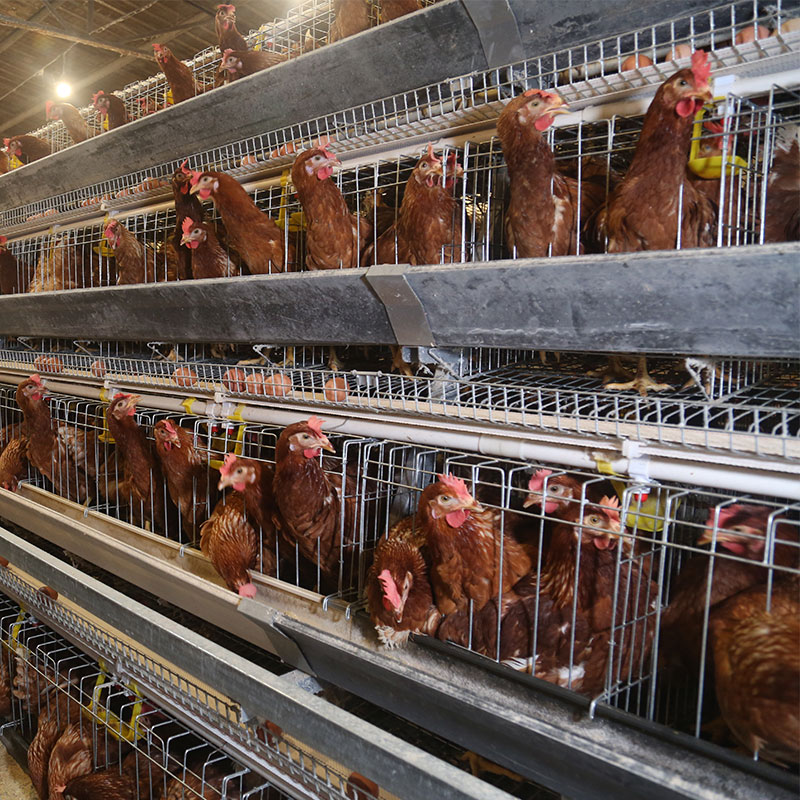
Feed and water distribution must be planned to mitigate this. Having a uniform spread of pan feeders and drinker lines throughout the house encourages the flock to disperse evenly, preventing hot spots of moisture and manure build-up. The type of feeder can also impact litter quality. shallow pan feeders with adjusted grills minimize feed spillage. Spilled feed not only represents a direct economic loss but, when mixed with litter and moisture, can ferment and contribute to souring and bacterial growth.
Health challenges in a ground system have a different profile. The constant contact with litter means cocci oocysts are ever-present. A robust coccidiosis control program is not an option; it is a cornerstone of health management. This can be achieved through in-feed anticoccidials or, increasingly, via live vaccines. The choice often depends on the integrator’s program and the desire to move towards antibiotic-free production. Vaccination requires even more meticulous management, as it introduces a controlled exposure that must be managed through litter moisture to allow for oocyst sporulation and cycling to build immunity. Gut health is paramount, as any enteric disturbance like dysbacteria will lead to wetter droppings, immediately impacting litter quality.
The closed environment also means pathogens can persist between flocks if not properly addressed. This makes downtime and thorough cleaning and disinfection absolutely critical. After depopulation, the entire litter mass must be completely removed from the house. This is a significant operational task, often requiring front-end loaders and coordination with spreading it on fields as fertilizer. Once empty, the entire house—walls, ceilings, feeders, drinkers, and the now-bare floor—must be washed with a high-pressure washer and then disinfected with a broad-spectrum disinfectant. Allowing for an adequate downtime of at least 14 days between flocks lets the barn dry completely and breaks the cycle of persistent pathogens.
The economic calculus for a ground breeding system differs from a cage system. The initial capital investment for the building itself can be lower, as it doesn’t require the complex metalwork, cages, manure belts, and egg collection systems of a layer cage operation. However, the ongoing variable costs can be higher. Bedding material is a recurring expense that must be sourced, stored, and paid for. Labor requirements are significantly higher for daily litter management, stirring, and the more intensive clean-out process. Feed conversion ratios (FCR) can be slightly higher (worse) because the birds are using more energy for movement and maintaining body temperature, as the litter floor is generally cooler than the controlled environment of a cage.
However, the product often commands a premium. The market for pasture-raised, free-range, and welfare-centric poultry products is growing rapidly. A ground breeding system is the fundamental first step toward these certifications. Furthermore, the end product—the spent litter—is not a waste product but a valuable commodity. Removed after each flock, it is a rich, composted fertilizer that can be sold to crop farmers, providing an additional revenue stream that partially offsets the cost of the fresh bedding.
Transitioning from a cage system to ground breeding is not a simple conversion; it is a paradigm shift in management philosophy. It moves the farmer from a primarily mechanical and automated oversight role to an ecological one. The farmer becomes a manager of a biological system, constantly interpreting subtle signs—the feel of the litter, the smell of the air, the sound of the flock, the behavior of the birds. It is a more intimate, hands-on form of husbandry. The rewards are a product that meets evolving market demands, the satisfaction of providing a higher state of welfare, and the resilience that comes from mastering a complex, natural system. It demands more, but for those who learn its language, it gives back in equal measure.
1. Drinking system include the water pipes, water pressure adjuster, drinking nipples, Waterline front-end device, dosing system etc, choose them according to customer's needs.
2. High-quality water drinking pipes, pressure regulating valves and water drinking nipples can effectively prevent the water leakage. Drinking system adopt the closed piping system, which can minimize the water pollution.
3. 360-degree drinking nipples provide adequate drinking water for poultry at all stages.
4. The automatic drinking water system mainly adopts the steel ball drinking nipple. lt uses imported high-grad stainless steel, POM resin, and APS engineering material, which is wearing resistant, and the durability can be used for long time.



1. Automatic feeding machine can be chosen between gantry and ladder feeding machine. Gantry type feeding machine is a relatively economical and practical machine with simple operation, remote control walking character, easy to manage.
2. Mechanical transmission device running smoothly, low noise, long service life.
3. With the use of automatic control, the feeding system can adjust the amount of material.
4. Feeding with arched structure, high carrying capacity, not easily deformed.
5. Saving man power, saving feed, greatly improving the efficiency of Large-scale farming.
6. The walking speed of gantry feeding machine is 9--12 m/min.




1. Manure removing system included scraper type and conveyor belt type, Which can reduce the labor intensity and labor cost, keep the chicken shed dry and clean.
2. A type chicken cage can use scraper type or conveyor belt type.


3. The scraper type is suitable for A type cages, which can clean two or three rows. For the starters, this type is a good choice. lt can not only save some labor cost, but also save some investment in the whole project. The cleaning speed is 6-10 meters per minute.
4. Conveyor belt type is more suitable for large scale farming. The manure removing belt we use is high quality PP material (polypropylene). The walking speed is 2-4 meters per minute.



High Quality Pellets Made by Mobile Pellet Machine
1. It has professional designed angle of the blade. After the dynamic balance test one by one, the blade can operate smoothly.
2. The air volume is consistent in the whole life of the fan. Bearings has advantage of high strength, low noise, durable and so on.
1. The cooling pads uses high-quality wet curtain paper and adopts space cross-linking technology, which has the advantages of high water absorption, high water resistance, anti-toxicity and long service life.
2. The cooling efficiency is over 80%, without surfactant, natural water absorption, fast diffusion speed and long-lasting effect.
3. The product does not contain phenol and other chemical substances that are easy to cause skin allergies. It is non-toxic and harmless to the human body and chicken when installed and used. It is green, safe, energy-saving, environmentally friendly, economical, and easy to install.
4. The frame aluminum alloy has high strength, good corrosion resistance, durability and beautiful appearance.
5. Use a special filter for the cooling pad at the upper water to ensure clean water quality and support efficient water circulation components.
6. Combined with a negative pressure fan, it can effectively lower the indoor temperature.
The window is made of special selected high-quality engineering plastic, with high strength and long service life, together with superior anti-aging and anti-UV performance.
Function: Ventilation of the chicken house, usually used in the winter.
This system can adjust the wind speed and direction, thus the cold air will not reach chicken directly , which can effectively prevent the phenomenon of cold stress in chicken.
Environmental control system equipment is suitable for large-scale and intensive farming. According to customer requirements, we can provide various types of smart poultry equipment.
1. Our poultry management system is a modular system that manages all aspects of the chicken house, such as climate, temperature, humidity, ammonia, feeding, feed weighing, lighting and ventilation systems, and can monitor the situation of the chicken house in real time through a computer and mobile phone.
2. The management computer is the heart of the poultry farm, allowing you to easily monitor the entire poultry farm.

 WeChat:+8617838608255