The landscape of poultry farming is undergoing a profound transformation, driven by the relentless pursuit of efficiency, bird welfare, and farm profitability. For generations, the A-frame or ladder-style cage was the industry standard, a familiar sight in broiler houses worldwide. But as operations have scaled and the science of poultry husbandry has advanced, a new paradigm has emerged: the H Type Broiler Cage system. This isn't a minor iteration on an old design; it represents a fundamental rethinking of how we house broilers from day-old chicks to processing weight.

Unlike the traditional stacked cages that form a pyramid-like structure, the H Type system is characterized by its vertical, parallel tiers that resemble the rungs of a ladder standing on its end. Each tier is a self-contained environment, and the entire system operates with a precision that allows for unprecedented control over the flock's environment and management. The shift from A-type to H-type is akin to moving from a manual, multi-tool workshop to a fully automated, single-purpose production line. Every element is designed to eliminate wasted motion, reduce stress on the birds and the workers, and create a consistent, controllable growing environment.
Architectural Superiority and Spatial Efficiency
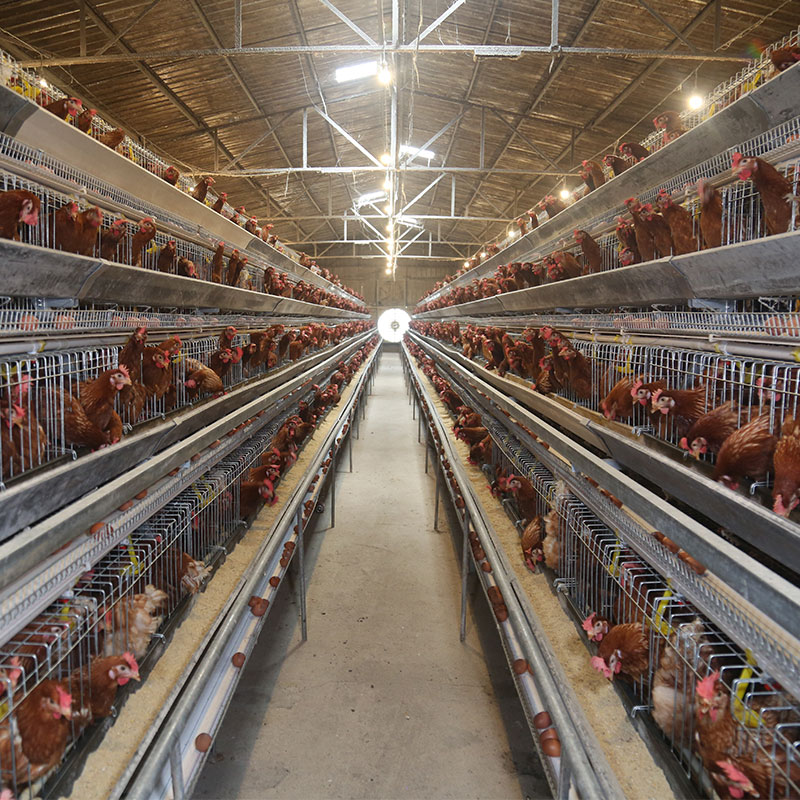
The most immediate advantage of an H Type system is its radical improvement in spatial efficiency. Where an A-type cage might house three or four tiers before the base becomes impractically wide, H Type systems can efficiently stack six, eight, or even more tiers high without a significant footprint increase. This allows a farmer to potentially double the bird capacity within the same house dimensions. For a farmer with a 120x80 foot house, this isn't just about packing in more birds; it's about maximizing the return on a significant fixed asset—the housing itself. The cost per bird of housing infrastructure plummets.
This vertical design also completely reconfigures the farmer's interaction with the flock. In an A-type system, accessing the bottom tiers often requires crouching or working in an awkward, bent position, a major contributor to labor fatigue and potential injury over time. With an H Type system, the walkways between the vertical tiers are clear, full-height aisles. A farm worker can walk comfortably down the aisle, standing upright, and have every single cage at eye level or within easy arm's reach. This ergonomic design means tasks like bird inspection, vaccination, or removing mortality are faster, less physically demanding, and more thorough. When you can clearly see every bird without straining, you catch problems earlier.
The Manure Belt: A Revolution in Environment Control
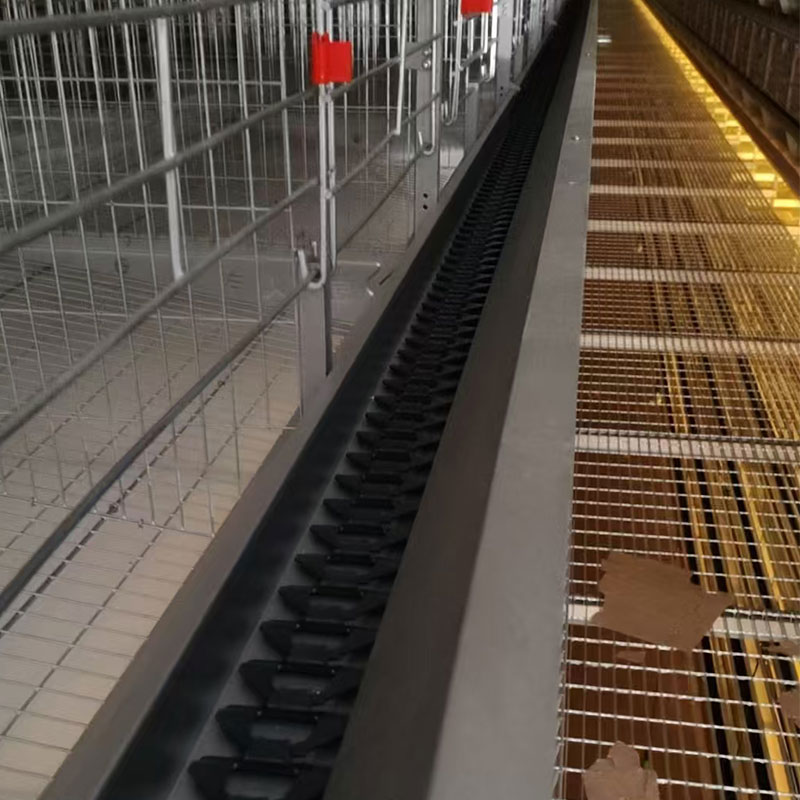
Perhaps the most significant contributor to bird health in an H Type system is the integrated manure management system. Each tier is equipped with its own continuous manure belt, typically made of a durable PVC or polymer material.
In a traditional deep-litter house or a cage without immediate manure removal, droppings accumulate. They begin to break down, releasing ammonia and moisture into the air the birds breathe. High ammonia levels scorch the birds' respiratory tracts, making them susceptible to infections like E. coli and bronchitis. The damp litter also becomes a breeding ground for pathogens like coccidia and fosters footpad dermatitis, a painful condition that can lead to condemnations at the processing plant.
The manure belts in an H Type cage solve this at the source. The belts run on a timed cycle, removing fresh droppings from the cage environment multiple times a day. This waste is then transported to one end of the house and deposited into a sealed container or cross-conveyor for immediate removal. The result is a dramatic and measurable improvement in air quality. Ammonia levels are kept negligible, and the relative humidity inside the cage drops significantly.
For a farmer, the impact is tangible. You walk into the house and the air is clearer. There’s no eye-watering ammonia smell. The birds are quieter because they aren't irritated by gaseous fumes. This directly translates to performance: better feed conversion ratios (because energy isn't diverted to fighting inflammation and illness), lower mortality rates, and superior bird weight. The veterinarian bills drop, and the use of medications, particularly for respiratory and enteric diseases, can be drastically reduced. Furthermore, by keeping the manure dry and managing it promptly, the system produces a valuable, stable byproduct that is far easier to compost or process into fertilizer than wet, caked litter.
Precision Feeding and Watering Systems
H Type cages are rarely just cages; they are integrated life support systems. The feeding and watering mechanisms are engineered for zero waste and consistent delivery.
The feeding system typically consists of a central feed line that runs the length of the tier, serving a trough that is accessible to all birds in that row. This line is filled by an automated auger system on a demand-based schedule. The design of the trough prevents birds from scratching and flicking feed out, a common source of waste in pan-feeder systems. Because every bird has equal access to the trough, you see far less variation in bird size within a flock. There are no dominant birds monopolizing the feeder and pushing smaller ones out. This uniformity is critical for meeting processor specifications and maximizing the yield of premium cuts.
Watering is handled by nipple drinker systems. When a bird is thirsty, it pecks at a pin, releasing a droplet of water directly into its beak. This stands in stark contrast to bell drinkers or troughs, where water can become contaminated with feed, litter, and manure, becoming a soup of potential disease. Nipple drinkers provide fresh, clean water with every sip. They also keep the birds themselves drier. A wet bird is a cold bird, and expending energy to stay warm hurts feed conversion. By keeping the drinking area dry, the system ensures that the birds' energy intake is directed toward growth, not thermoregulation.
Optimized Bird Welfare and Stockmanship
The concept of cages often sparks debate around animal welfare, but a modern H Type system, when managed correctly, addresses many critical welfare points. The cage environment eliminates threats like predation, cannibalism, and piling—a major cause of smothering mortality in open-floor systems. The controlled environment minimizes disease challenges.
The key to welfare in any cage system is stocking density. Modern H Type designs provide ample space for birds to move freely, stand normally, and access feed and water without competition. The European Union, with its strict welfare regulations, has approved certain high-tier cage systems that meet specific space and enrichment criteria. The design allows for the incorporation of features like scratch pads or perches to encourage natural behaviors.
For the stockperson, welfare monitoring is vastly improved. The open design allows for a "windshield survey" of the entire flock in minutes. Identifying a bird that is off its legs, lethargic, or showing signs of illness is immediate. In a floor system, a sick bird can hide in a corner or amongst thousands of others; in a cage, it is immediately visible. This allows for prompt intervention, treatment, or culling, which is both a welfare benefit for the individual bird and a biosecurity benefit for the rest of the flock.
Economic Viability and Return on Investment
The transition to an H Type Broiler Cage system requires a substantial capital investment. The cost of the caging system, the reinforced housing structure to support the weight, and the ancillary equipment (manure belts, advanced ventilation, feeding systems) is significant. This is not a decision to be made lightly. However, the investment must be evaluated against the long-term operational savings and revenue increases.
The economic drivers are powerful:
Increased Stocking Density: More birds per square foot of house directly increases revenue potential.
Improved Feed Conversion Ratio (FCR): Better air quality and reduced disease pressure mean less feed is required to produce a pound of meat. A improvement of just 0.05 in FCR on a large flock represents tens of thousands of dollars in saved feed costs annually.
Reduced Mortality: Saving an additional 2-3% of birds from hatch to harvest has a direct impact on the bottom line.
Labor Efficiency: Tasks like feeding, watering, and manure cleaning are 95% automated. One worker can manage a vastly larger flock, reducing labor costs and eliminating the most difficult, unpleasant jobs on the farm.
Reduced Medication Costs: A healthier environment means less money spent on antibiotics and other treatments.
Superior Product Quality: Consistently lower ammonia levels virtually eliminate footpad dermatitis and breast blisters, leading to fewer condemnations and higher quality grades from processors.
For many operations, the payback period on a well-planned H Type system investment can be surprisingly short, often within three to five years, after which the ongoing savings become pure profit.
Implementation and Operational Considerations
Adopting this technology successfully requires careful planning. The house must be designed or retrofitted with a strong enough foundation and structure to bear the immense weight of the cages, equipment, and birds. Ventilation must be completely re-engineered. While the manure belts control humidity, the birds still produce heat. A traditional tunnel ventilation system must be adapted to ensure even air distribution and temperature control from the top tier to the bottom. Failure to do so can create hot spots that stifle bird growth.
Training for farm staff is essential. This is a management-intensive system. Workers must understand how to operate and perform basic maintenance on the automated systems. They must be trained to read the birds in this new environment, recognizing subtle signs that a feed line is clogged, a water pressure is low, or a manure belt timer is off. The system's efficiency is only as good as the manager's oversight.
H Type Broiler Cage systems represent the future of large-scale, precision broiler production. They are a tool that allows farmers to exercise an unprecedented level of control over the environment in which their birds live and grow. By directly addressing the core challenges of air quality, waste management, feed efficiency, and animal monitoring, they create a scenario where bird welfare, operational efficiency, and farm profitability are not competing interests, but are instead aligned and mutually reinforcing. For the progressive poultry farmer looking to scale their operation, future-proof their business, and produce a healthier bird, the investment in H Type technology is a strategic step toward sustainable and profitable production.
1. Drinking system include the water pipes, water pressure adjuster, drinking nipples, Waterline front-end device, dosing system etc, choose them according to customer's needs.
2. High-quality water drinking pipes, pressure regulating valves and water drinking nipples can effectively prevent the water leakage. Drinking system adopt the closed piping system, which can minimize the water pollution.
3. 360-degree drinking nipples provide adequate drinking water for poultry at all stages.
4. The automatic drinking water system mainly adopts the steel ball drinking nipple. lt uses imported high-grad stainless steel, POM resin, and APS engineering material, which is wearing resistant, and the durability can be used for long time.



1. Automatic feeding machine can be chosen between gantry and ladder feeding machine. Gantry type feeding machine is a relatively economical and practical machine with simple operation, remote control walking character, easy to manage.
2. Mechanical transmission device running smoothly, low noise, long service life.
3. With the use of automatic control, the feeding system can adjust the amount of material.
4. Feeding with arched structure, high carrying capacity, not easily deformed.
5. Saving man power, saving feed, greatly improving the efficiency of Large-scale farming.
6. The walking speed of gantry feeding machine is 9--12 m/min.




1. Manure removing system included scraper type and conveyor belt type, Which can reduce the labor intensity and labor cost, keep the chicken shed dry and clean.
2. A type chicken cage can use scraper type or conveyor belt type.


3. The scraper type is suitable for A type cages, which can clean two or three rows. For the starters, this type is a good choice. lt can not only save some labor cost, but also save some investment in the whole project. The cleaning speed is 6-10 meters per minute.
4. Conveyor belt type is more suitable for large scale farming. The manure removing belt we use is high quality PP material (polypropylene). The walking speed is 2-4 meters per minute.



High Quality Pellets Made by Mobile Pellet Machine
1. It has professional designed angle of the blade. After the dynamic balance test one by one, the blade can operate smoothly.
2. The air volume is consistent in the whole life of the fan. Bearings has advantage of high strength, low noise, durable and so on.
1. The cooling pads uses high-quality wet curtain paper and adopts space cross-linking technology, which has the advantages of high water absorption, high water resistance, anti-toxicity and long service life.
2. The cooling efficiency is over 80%, without surfactant, natural water absorption, fast diffusion speed and long-lasting effect.
3. The product does not contain phenol and other chemical substances that are easy to cause skin allergies. It is non-toxic and harmless to the human body and chicken when installed and used. It is green, safe, energy-saving, environmentally friendly, economical, and easy to install.
4. The frame aluminum alloy has high strength, good corrosion resistance, durability and beautiful appearance.
5. Use a special filter for the cooling pad at the upper water to ensure clean water quality and support efficient water circulation components.
6. Combined with a negative pressure fan, it can effectively lower the indoor temperature.
The window is made of special selected high-quality engineering plastic, with high strength and long service life, together with superior anti-aging and anti-UV performance.
Function: Ventilation of the chicken house, usually used in the winter.
This system can adjust the wind speed and direction, thus the cold air will not reach chicken directly , which can effectively prevent the phenomenon of cold stress in chicken.
Environmental control system equipment is suitable for large-scale and intensive farming. According to customer requirements, we can provide various types of smart poultry equipment.
1. Our poultry management system is a modular system that manages all aspects of the chicken house, such as climate, temperature, humidity, ammonia, feeding, feed weighing, lighting and ventilation systems, and can monitor the situation of the chicken house in real time through a computer and mobile phone.
2. The management computer is the heart of the poultry farm, allowing you to easily monitor the entire poultry farm.

 WeChat:+8617838608255