HType Broiler Cages: A Comprehensive Guide to Modern Poultry Farming
In the dynamic world of commercial poultry production, efficiency, animal welfare, and profitability are paramount. Among the various housing systems available, Htype broiler cages have emerged as a sophisticated and widely adopted solution for largescale broiler chicken farming. This system represents a significant evolution from traditional floor rearing and older cage designs, offering a multitiered, highdensity approach that maximizes space utilization while aiming to address key management challenges. For poultry farmers, integrators, and agricultural professionals, understanding the intricacies of Htype cages is essential for making informed investment and operational decisions. This comprehensive guide delves into the design, benefits, drawbacks, management requirements, and future trends of Htype broiler cage systems, providing the depth of knowledge needed to evaluate their role in modern meat bird production.
Htype broiler cages are a modular, multitiered housing system where cages are arranged in a configuration that resembles the letter "H" when viewed from above. This layout typically features a central aisle with cage rows extending on either side, allowing for efficient access for feeding, watering, monitoring, and bird removal.
The core design principles include:
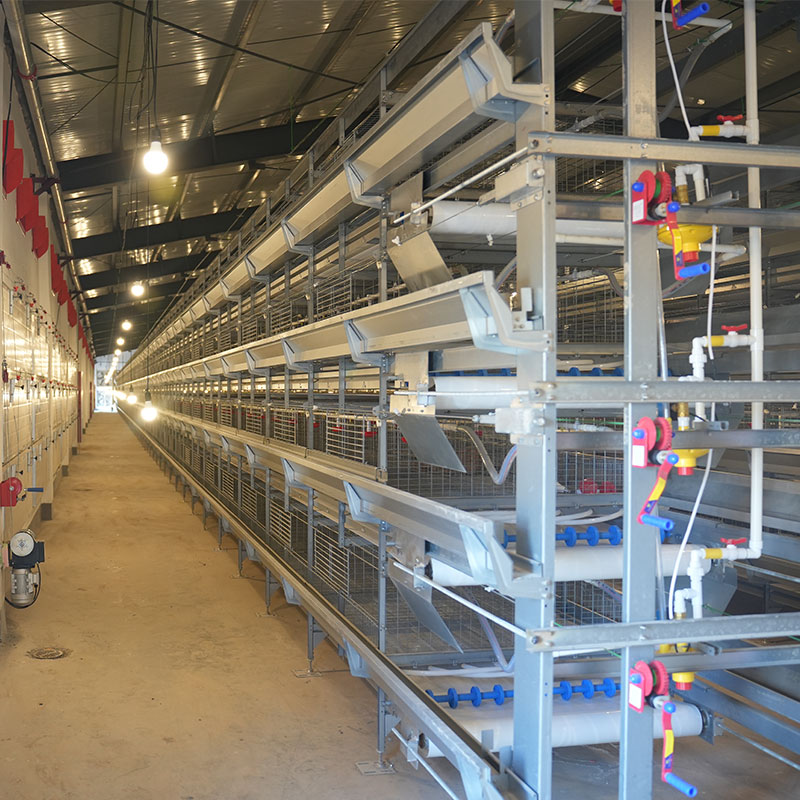
Vertical Tiering: Cages are stacked in 3 to 8 tiers (levels), dramatically increasing bird capacity per unit of floor space.
Automated Integration: The system is designed to seamlessly integrate with automated equipment for feeding (via chain or pan feeders), watering (nipple drinker lines), manure removal (conveyor belts beneath each tier), and egg collection (in breeder or layer applications).
Centralized Management: The Hlayout facilitates easy movement of personnel and equipment down the central corridor to service all cages.
This structure is distinct from traditional flatdeck cages or deeplitter systems and is engineered for highthroughput commercial operations.
A welldesigned Htype cage system comprises several integrated components:
1. Cage Structure & Frame: Made from hotdipped galvanized steel for durability and corrosion resistance. The mesh floor is designed for bird comfort and manure passage.
2. Feeding System: A fully automated chain or trolley system runs along each tier, delivering a consistent supply of feed. Adjustable troughs control feed distribution.
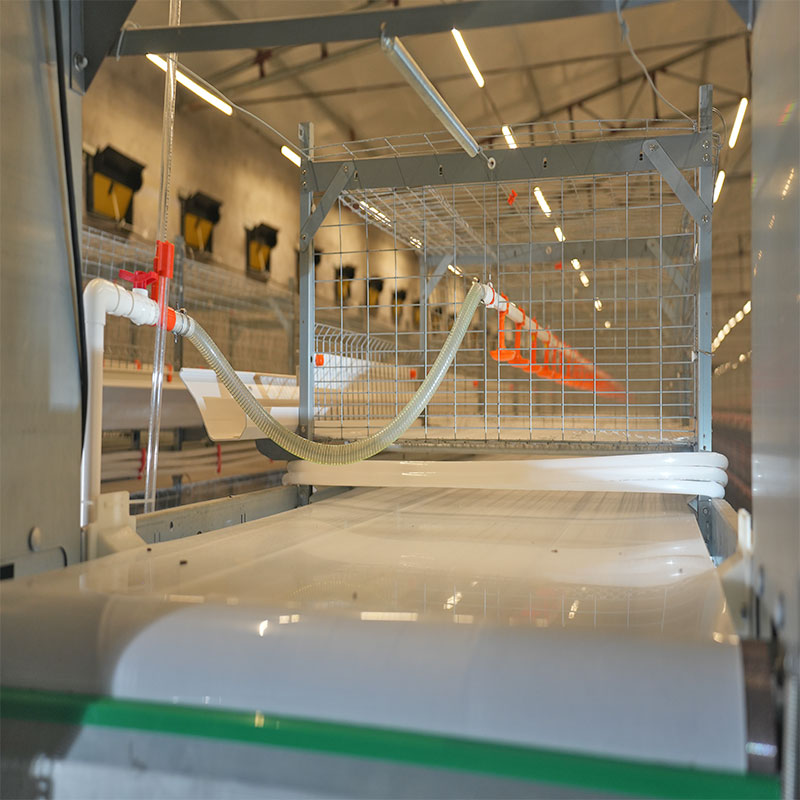
3. Watering System: Nipple drinker lines are installed on each cage level, providing clean water on demand and minimizing spillage.
4. Manure Removal System: Critical for hygiene. Conveyor belts or scrapers run beneath each tier at regular intervals to remove droppings into a central collection point or pit.
5. Ventilation & Environmental Control: The system relies on a sophisticated negativepressure ventilation system with inlet controls and exhaust fans to maintain optimal temperature, humidity, and air quality across all tiers.
6. Lighting System: Uniform LED lighting is strategically placed to ensure consistent light intensity for all birds, promoting uniform growth.
The adoption of Htype cages is driven by several compelling operational advantages:
Maximized Land & Space Utilization: By growing vertically, farm capacity can be increased by 200300% compared to singlelevel systems on the same footprint.
Improved Feed Conversion Ratio (FCR): Reduced bird activity (compared to floor systems) can lead to more efficient feedtomeat conversion. Minimal feed wastage is also a key factor.
Enhanced Biosecurity & Disease Control: Birds have limited contact with their manure due to automated removal systems. This reduces exposure to pathogens like E.coli and Coccidia, potentially lowering medication use.
Superior Labor Efficiency: Automation in feeding, watering, and manure cleaning drastically reduces manual labor requirements for daily chores.
Better Bird Monitoring & Management: Sick or underperforming birds are easier to spot in smaller groups within cages, allowing for timely intervention.
Consistent Product Quality: More uniform environmental conditions often result in more uniform bird growth and final product weight.
Despite the benefits,Htype cages present significant challenges that must be meticulously managed:
High Initial Capital Investment: The cost of cages, automation,and climatecontrol infrastructure is substantially higher than for simple deeplitter houses.
Stringent Management Requirements: Success depends entirely on flawless operation of automated systems.A power failure or mechanical breakdown can have immediate catastrophic consequences.Ventilation management is complex and requires expert knowledge.
Animal Welfare Concerns & Market Perceptions: This is the most debated aspect.The restricted movement per bird has led to criticism from welfare groups.In some regions(EU),broiler caging is banned or restricted.Consumer preference for "cagefree" meat can affect marketability.
Heat Stress Management in Upper Tiers: Hot air rises,making top tiers more susceptible to heat stress during high temperatures.Ventilation design must ensure perfect air mixing throughout all levels.
Footpad & Leg Health Issues: If mesh flooring design,tension,and maintenance are suboptimal,increased incidence of footpad dermatitisand leg problems can occur.

Optimal performance requires adherence to strict protocols:
1. Stocking Density: Never exceed recommended densities(typically around 3036 kg/m²).Overcrowding negates any welfare or performance benefit.
2. Daily System Checks: Implement rigorous twicedaily checks of all automated systems:feed flow,nipple function,mamure belt operation,and water pressure.
3. Ventilation Calibration: Work with an expert to calibrate inletand fan settingsfor each season.Monitor temperatureand humidity at every tier level regularly.
4. Lighting Programs:
Implement scientificallybacked lighting schedules(periods of darkness)to support skeletal developmentand metabolic health
5. Comprehensive Training:
Ensure all staffare thoroughly trainedin normal operations,troubleshooting,and emergency procedures(for power/equipment failure).
| Feature | HType Cage System | Deep Litter / Floor System |
| : | : | : |
| Space Efficiency | Very High (Vertical) | Low (Horizontal) |
| Capital Cost | Very High | Moderate |
| Labor Efficiency | High (PostInstallation) | Lower |
| Biosecurity Control | High | Moderate to Low |
| Disease Pressure | Generally Lower | Higher (Litterborne) |
| Feed Wastage | Minimal | Can be Significant |
| Bird Activity Level | Low | High |
| Welfare Perception(Public) | Often Negative | Generally More Positive |
| Stocking Density Control Precise Challenging |
The futureof intensive broiler productionis being shaped by welfare regulationsand consumer demand.The industryis respondingwith innovationsin cage design:
Enriched Cage Concepts:
Some manufacturersare developingHtypesystemswith perchespecking substratesand designated nesting areasfor breeder birds
Alternative Systems Gaining Share:
Combisystemsthat use partcagepartfloor accessduring growth cyclesare being researched
Completely cagefree aviarystyle barnswith vertical tiersare becoming standardin many markets
The decisionto useHtypecagesmust now includea longterm analysisof regulatory trendsand target market expectations
Htype broiler cages representa pinnacleof engineeringefficiencyin poultry farmingoffering unmatched productivitybiosecurityand operational controlon a persquaremeter basisHoweverthey are not a universal solutionTheir viability hinges on substantial capitalexpert managementand an honest assessmentof evolving animal welfare standardsFor largescale integratorsin regionswhere they are permittedwho can master their complexitythey remaina powerful toolFor othersinvesting in advancedcagefreebarn technologymay align betterwith futureproofbusiness strategiesUltimatelythe choiceof housing systemmust balanceeconomic realitieswith responsible stewardshipof the birdsand responsivenesseto the market
Q1: What does "Htype" mean in broiler cages?
A1: "Htype" refers to the physical layout where rows of multitiered cages are arranged with a central service aisle,causing the overhead viewto resemblethe letter"H."This design maximizes spaceand allows efficient accessfrom one central corridor.
Q2: Are broilers raised in Htype cages considered "cagefree"?
A2: No.Birds raisedin any cage systemincludingHtypecagesare not considered"cagefree."Cagefreelabeling typically requiresbirds have unfettered accessto floor spacefor their entire growout cycle.
Q3: What is the typical stocking densityfor broilersin anHtypecage?
A3:Densityis usually measuredby weightper area.A common maximum densityis around3036 kilogramsper squaremeterof cage floor spacebut this must be adjustedbasedon final target bird weightand local regulationswhich may be stricter.
Q4: How does manure handling workin anHtypesystem?
A4:Beneath each tiera continuous conveyor beltor scraper systemoperates periodically(e.g.,onceor twice daily)to remove droppingsThe manureis transportedto one endofthe houseinto acentral pitormoving cartfor disposalThis keepsbirds largely separatedfrom their waste.
Q5: What arethe biggest welfare concernsassociatedwith these cages?
A5:The primary concernsare restricted movement(inabilityto perform natural behaviorslike wingflappingdustbathingrunning)and potentialfor leg/foot health issuesif flooringis not optimalThere's also riskof heat stressif ventilationis poor especiallyin top tiers.
Q6: Can you useHtypecagesfor broiler breeders(parent stock)?
A6:YesmodifiedHtypesystemsare commonly usedfor broiler breedersThey often include featureslike nesting boxesrollaway eggs perchesandspecial feeding systemsfor maleseparationto manage body weightand fertility.
Q7: How criticalis ventilationinanHtypecage house?
A7 Itis absolutely criticalDue tothedensevertical stackingprecise negativepressure ventilationwith properly tuned inletsis essentialto deliver freshuniformair toevery tierespeciallythe middleand upper levelsFailure leadsrapidlyto ammonia buildupheat stressand poor performance
Q8:What happens duringa power failure?
A8 Power failureisa major emergencyMost modern farmshave backup generators that start automaticallywithin secondsto run criticalsystemslike ventilationfansminimal lightingand water pumpsEmergency protocolsare mandatorytoprevent suffocationor heat stroke
Q9:Arethere countrieswherebroilercagesare banned?
A9 YesSeveral countriesparticularly inthe European Union(EU)have bannedthe useof conventionalcagesfor broilersunder animal welfare legislationThe trendtowardscagefree productionis growinggloballydrivenby corporatepoliciesandincreasing regulation
Q10:What'sthe lifespanoftanHtypecage system?
A10 With proper maintenanceagalvanizedsteelHtypesystemcan last15 yearsor moreKey componentslike feedersdrinkersmanure beltsandsensorswill require periodic replacementor servicingover that timeframe
1. Drinking system include the water pipes, water pressure adjuster, drinking nipples, Waterline front-end device, dosing system etc, choose them according to customer's needs.
2. High-quality water drinking pipes, pressure regulating valves and water drinking nipples can effectively prevent the water leakage. Drinking system adopt the closed piping system, which can minimize the water pollution.
3. 360-degree drinking nipples provide adequate drinking water for poultry at all stages.
4. The automatic drinking water system mainly adopts the steel ball drinking nipple. lt uses imported high-grad stainless steel, POM resin, and APS engineering material, which is wearing resistant, and the durability can be used for long time.



1. Automatic feeding machine can be chosen between gantry and ladder feeding machine. Gantry type feeding machine is a relatively economical and practical machine with simple operation, remote control walking character, easy to manage.
2. Mechanical transmission device running smoothly, low noise, long service life.
3. With the use of automatic control, the feeding system can adjust the amount of material.
4. Feeding with arched structure, high carrying capacity, not easily deformed.
5. Saving man power, saving feed, greatly improving the efficiency of Large-scale farming.
6. The walking speed of gantry feeding machine is 9--12 m/min.




1. Manure removing system included scraper type and conveyor belt type, Which can reduce the labor intensity and labor cost, keep the chicken shed dry and clean.
2. A type chicken cage can use scraper type or conveyor belt type.


3. The scraper type is suitable for A type cages, which can clean two or three rows. For the starters, this type is a good choice. lt can not only save some labor cost, but also save some investment in the whole project. The cleaning speed is 6-10 meters per minute.
4. Conveyor belt type is more suitable for large scale farming. The manure removing belt we use is high quality PP material (polypropylene). The walking speed is 2-4 meters per minute.



High Quality Pellets Made by Mobile Pellet Machine
1. It has professional designed angle of the blade. After the dynamic balance test one by one, the blade can operate smoothly.
2. The air volume is consistent in the whole life of the fan. Bearings has advantage of high strength, low noise, durable and so on.
1. The cooling pads uses high-quality wet curtain paper and adopts space cross-linking technology, which has the advantages of high water absorption, high water resistance, anti-toxicity and long service life.
2. The cooling efficiency is over 80%, without surfactant, natural water absorption, fast diffusion speed and long-lasting effect.
3. The product does not contain phenol and other chemical substances that are easy to cause skin allergies. It is non-toxic and harmless to the human body and chicken when installed and used. It is green, safe, energy-saving, environmentally friendly, economical, and easy to install.
4. The frame aluminum alloy has high strength, good corrosion resistance, durability and beautiful appearance.
5. Use a special filter for the cooling pad at the upper water to ensure clean water quality and support efficient water circulation components.
6. Combined with a negative pressure fan, it can effectively lower the indoor temperature.
The window is made of special selected high-quality engineering plastic, with high strength and long service life, together with superior anti-aging and anti-UV performance.
Function: Ventilation of the chicken house, usually used in the winter.
This system can adjust the wind speed and direction, thus the cold air will not reach chicken directly , which can effectively prevent the phenomenon of cold stress in chicken.
Environmental control system equipment is suitable for large-scale and intensive farming. According to customer requirements, we can provide various types of smart poultry equipment.
1. Our poultry management system is a modular system that manages all aspects of the chicken house, such as climate, temperature, humidity, ammonia, feeding, feed weighing, lighting and ventilation systems, and can monitor the situation of the chicken house in real time through a computer and mobile phone.
2. The management computer is the heart of the poultry farm, allowing you to easily monitor the entire poultry farm.

 WeChat:+8617838608255