HType Broiler Chicken Cages: The Ultimate Guide for Modern Poultry Farmers
In the quest for efficiency, bird welfare, and profitability, poultry farming has evolved dramatically. Among the most significant advancements is the adoption of specialized cage systems. For broiler chicken producers, the Htype broiler chicken cage has emerged as a leading solution for largescale, highdensity operations. This comprehensive guide delves into the design, benefits, operational considerations, and economic impact of Htype cages. Whether you're planning a new facility or upgrading an existing one, understanding this technology is crucial for making informed decisions that align with both productivity goals and modern animal husbandry standards.
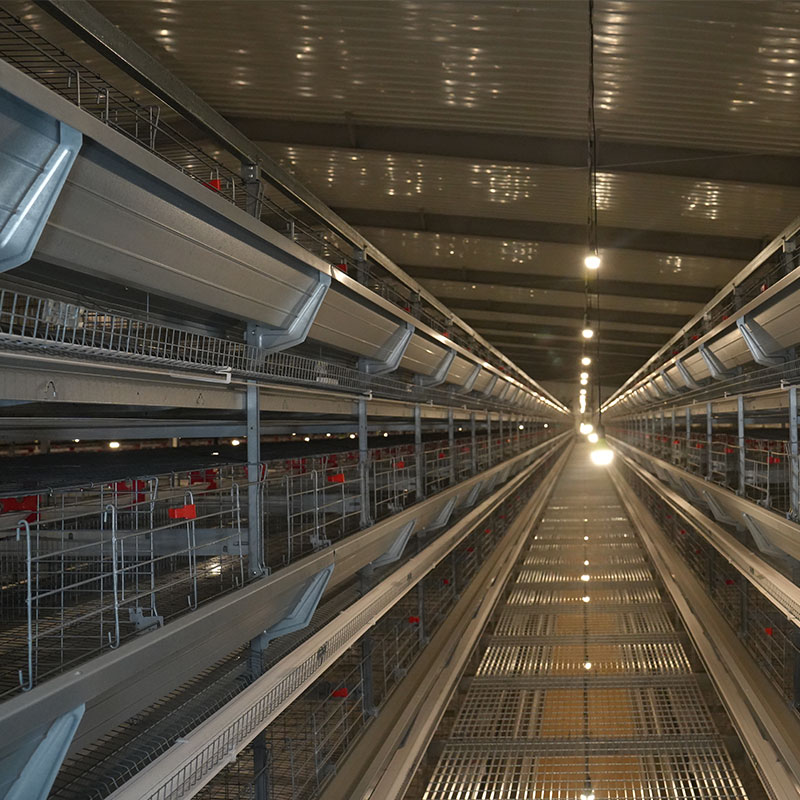
An Htype cage system is a multitiered, modular housing structure designed specifically for rearing broiler chickens. Its name derives from the sideprofile resemblance to the letter "H," where central service aisles and manure removal systems form the vertical line, and the rows of cages extending on both sides form the horizontal tops.
Unlike traditional floor rearing or simple battery cages, the Htype system is engineered for vertical integration of all essential processes: feeding, watering, ventilation, egg collection (in breeder operations), and manure drying and removal. Typically constructed from galvanized steel wire for durability and hygiene, these cages can range from 3 to 8 tiers high, maximizing space utilization within a poultry house.
A welldesigned Htype cage is more than just a stack of enclosures. It's an integrated ecosystem.
Tiers: Multiple levels (38) allow for high stocking density without increasing the farm's footprint.
Partitions & Group Size: Cages are divided into manageable sections, typically housing 2040 birds per compartment to reduce stress and allow for better monitoring.
Flooring: Sloped wire mesh flooring allows manure to fall through while providing secure footing for the birds. The mesh gauge is designed to prevent foot injuries.
A central feed bin supplies a chain or auger system that runs along each tier.
Feed troughs are accessible from each cage, ensuring all birds have equal access to fresh feed.
The system can be programmed for timed deliveries, reducing waste and labor.
Nipple drinkers are installed at strategic points within each cage section.
They provide a constant supply of clean water directly to the birds, minimizing spillage and keeping litter dry.
Closed systems reduce the risk of waterborne disease transmission.
This is a critical feature. Manure belts or scrapers run beneath each tier.
In advanced systems, manure is removed regularly to a central collection point or undergoes inhouse drying on deep manure belts (the "Deep Pit" system), significantly reducing ammonia emissions and fly problems.
The open design facilitates air movement around each tier.
It must be integrated with the house's overall negative or tunnel ventilation system to ensure uniform temperature, humidity, and gas (ammonia) control across all levels.
In broiler breeder operations using cages, sloped floors allow eggs to roll gently onto a central collection belt, which transports them to the packing station automatically.
The shift towards Htype systems is driven by tangible benefits across several key areas:
| Advantage Category | Specific Benefits |
| : | : |
| Space & Land Efficiency | Dramatically increases bird capacity per square meter of building footprint. Ideal where land is expensive or limited. |
| Improved Biosecurity | Birds are separated from their manure, reducing contact with pathogens like E.coli and Salmonella. Easier to control disease outbreaks within compartments. |
| Enhanced Bird Health | Better air quality around birds due to manure removal. Reduced incidence of breast blisters, hock burns,and parasitic infections common in wet litter systems.All birds have equal access to feed and water. |
| Operational Efficiency | Highly automated feeding watering,and manure handling reduces daily labor requirements by up to 50%. Streamlines daily checks and bird handling (e.g., vaccination,culling). |
| Feed & Water Conservation | Minimal feed spillage and contamination.Reduced water wastage compared to open troughs or bell drinkers.Lowers FCR (Feed Conversion Ratio). |
|Manure Management| Produces drier,easiertohandle manure that has higher value as fertilizer.Can be sold as an additional revenue stream.Reduces environmental pollution risks.|
| Data Collection & Monitoring | Facilitates easier tracking of feed consumption,mortality,and growth performance per tier or section.Enables precision management.|
While advantageous,Htype cages require careful planning:
1.High Capital Investment: The initial cost for cages automation,and housing modification is substantial.A detailed ROI analysis over 510 years is essential.
2.Technical Expertise: Operating such a system requires training in mechanics(e.g.,belt maintenance),electronics(control panels),and poultry behavior in caged environments.
3.Dependency on Utilities: A reliable power supply is nonnegotiable.Power backups(generators)are critical to prevent catastrophic losses from ventilation failure.
4.Bird Welfare Scrutiny: Be aware of market trends and regulations.Regions like the EU prohibit conventional cages for layers,but broilers are often exempt if space allowances are met.The system must provide adequate space height,and enrichment per local laws(e.g.,NCC Animal Welfare Guidelines).
5.Breed Suitability: Not all broiler breeds perform equally well in cages.Select strains known for calm temperamentand good leg strength in confined spaces.Consult your hatchery.
Success hinges on daily management adapted to this intensive system:
The decisionto adoptan Htype broiler chicken cagingsystemis transformative.It representsa commitmentto hightechprecision poultry farming.The benefitsin biosecuritylabor efficiencyfeed conversionand environmental controlare compellingparticularlyfor largescaleoperations aimingfor consistentyearround production.
Howeverit demands significant capitaltechnical readinessand meticulous management.Itis not merelya purchasebutan adoptionof anew farming philosophy.For farmers readyto scaleup optimize inputsand produce under highly controlled conditionsthe investmentcan yield superior returnsin both productivityand flock health.Ultimatelythe choice shouldalignwith your longterm business goalsavailable resourcesand commitmentto masteringthe technologythat will housethe futureof your flock
Q1: What does "Htype" mean in broiler cages?
A1: The term "Htype" describes the sideview shape of the cage bank structure.The central service corridorand vertical manure removal systemformthe upright partof the "H,"whilethe rows of cages extendingon both sidesformthe horizontaltops creatingan Hlike profile.It signifiesa fully integratedmultitieredsystem.
Q2: Are Htype cages considered better than Atype cages?
A2: Yesfor largescalebroiler production.Htypes offer superior space efficiencyas both sidesof the aisleare used.They also centralize services(feedwatermanure)making automationmore efficient.Atypes(singlesided)are simplerand cheaperbut offer lower densityper building areaandslightly less efficientautomation routing.
Q3: What is the typical stocking density per bird in an Htype cage?
A3: Recommended densityvariesby local regulationsand bird sizebut generally falls between0.6to0.75square feetper bird(approx550to700sq cm).Always prioritizeanimal welfare standardsand consult breedspecificguidelinesover merelymaximizingcapacity
Q4: Can I use any broiler breed in an Htype cage system?
A4: Not all breeds perform equallywell.It's crucialto selectbroiler strainsspecifically recommendedfor caged rearingby your hatchery.Thesestrains typicallyhave calmer temperamentsstronger leg bonesandleaner body conformationsto avoid issueslike breast blistersin confined spaces
Q5: How does manure handling work in these systems?
A5: Most modernHtypes usea continuousmanure beltbeneath each tier.Belts run periodically(e.g.,onceor twice daily)transportingdroppingsto acentral crossconveyoror intoa deep pitfor drying.This keepsbirds separatedfrom their waste dramaticallyreducingammonia levelsandinfectious pressure
Q6: What happens during a power failure?
A6: Power failureis acritical risk.Ventilation stops firstwhich can leadto rapid heatstressandasphyxiation.An automaticstandby generatoris absolutely mandatory.The systemshould kickin within seconds.Permanent backup poweris notan option—it'sa requirementfor operatingany automatedintensive housing system
Q7: Are there animal welfare concerns with caging broilers?
A7: Thisis atopicof ongoing debateandscientific review.Wellmanagedcage systemsprovide excellentbiosecurityfeed/water accessand separationfrom manure—key welfare benefits.Criticisms focuson behavioral restrictions(lackof dustbathingperching).The industryresponse involves providingenrichmentmeetingstrict space allowancesandoften followingcertified welfare programslike NCCWelfare Guidelines.Compliancewith local lawsis essential
Q8:Whatisthe maintenancerequiredfor thesecages?
A8:Dailymaintenanceincludes checkingdrinkersfeedflowbeltsoperationandelectronics.Scheduledweeklymaintenanceinvolves lubricatingchainscheckingtensiononbeltsandinspectingwire integrity.Monthlytasksinclude deep cleaningemptyingmanuresystemsandaligningall automatedcomponents.Preventative maintenanceismore criticalthan reactive repairsin such complexsystems
1. Drinking system include the water pipes, water pressure adjuster, drinking nipples, Waterline front-end device, dosing system etc, choose them according to customer's needs.
2. High-quality water drinking pipes, pressure regulating valves and water drinking nipples can effectively prevent the water leakage. Drinking system adopt the closed piping system, which can minimize the water pollution.
3. 360-degree drinking nipples provide adequate drinking water for poultry at all stages.
4. The automatic drinking water system mainly adopts the steel ball drinking nipple. lt uses imported high-grad stainless steel, POM resin, and APS engineering material, which is wearing resistant, and the durability can be used for long time.



1. Automatic feeding machine can be chosen between gantry and ladder feeding machine. Gantry type feeding machine is a relatively economical and practical machine with simple operation, remote control walking character, easy to manage.
2. Mechanical transmission device running smoothly, low noise, long service life.
3. With the use of automatic control, the feeding system can adjust the amount of material.
4. Feeding with arched structure, high carrying capacity, not easily deformed.
5. Saving man power, saving feed, greatly improving the efficiency of Large-scale farming.
6. The walking speed of gantry feeding machine is 9--12 m/min.




1. Manure removing system included scraper type and conveyor belt type, Which can reduce the labor intensity and labor cost, keep the chicken shed dry and clean.
2. A type chicken cage can use scraper type or conveyor belt type.


3. The scraper type is suitable for A type cages, which can clean two or three rows. For the starters, this type is a good choice. lt can not only save some labor cost, but also save some investment in the whole project. The cleaning speed is 6-10 meters per minute.
4. Conveyor belt type is more suitable for large scale farming. The manure removing belt we use is high quality PP material (polypropylene). The walking speed is 2-4 meters per minute.



High Quality Pellets Made by Mobile Pellet Machine
1. It has professional designed angle of the blade. After the dynamic balance test one by one, the blade can operate smoothly.
2. The air volume is consistent in the whole life of the fan. Bearings has advantage of high strength, low noise, durable and so on.
1. The cooling pads uses high-quality wet curtain paper and adopts space cross-linking technology, which has the advantages of high water absorption, high water resistance, anti-toxicity and long service life.
2. The cooling efficiency is over 80%, without surfactant, natural water absorption, fast diffusion speed and long-lasting effect.
3. The product does not contain phenol and other chemical substances that are easy to cause skin allergies. It is non-toxic and harmless to the human body and chicken when installed and used. It is green, safe, energy-saving, environmentally friendly, economical, and easy to install.
4. The frame aluminum alloy has high strength, good corrosion resistance, durability and beautiful appearance.
5. Use a special filter for the cooling pad at the upper water to ensure clean water quality and support efficient water circulation components.
6. Combined with a negative pressure fan, it can effectively lower the indoor temperature.
The window is made of special selected high-quality engineering plastic, with high strength and long service life, together with superior anti-aging and anti-UV performance.
Function: Ventilation of the chicken house, usually used in the winter.
This system can adjust the wind speed and direction, thus the cold air will not reach chicken directly , which can effectively prevent the phenomenon of cold stress in chicken.
Environmental control system equipment is suitable for large-scale and intensive farming. According to customer requirements, we can provide various types of smart poultry equipment.
1. Our poultry management system is a modular system that manages all aspects of the chicken house, such as climate, temperature, humidity, ammonia, feeding, feed weighing, lighting and ventilation systems, and can monitor the situation of the chicken house in real time through a computer and mobile phone.
2. The management computer is the heart of the poultry farm, allowing you to easily monitor the entire poultry farm.

 WeChat:+8617838608255