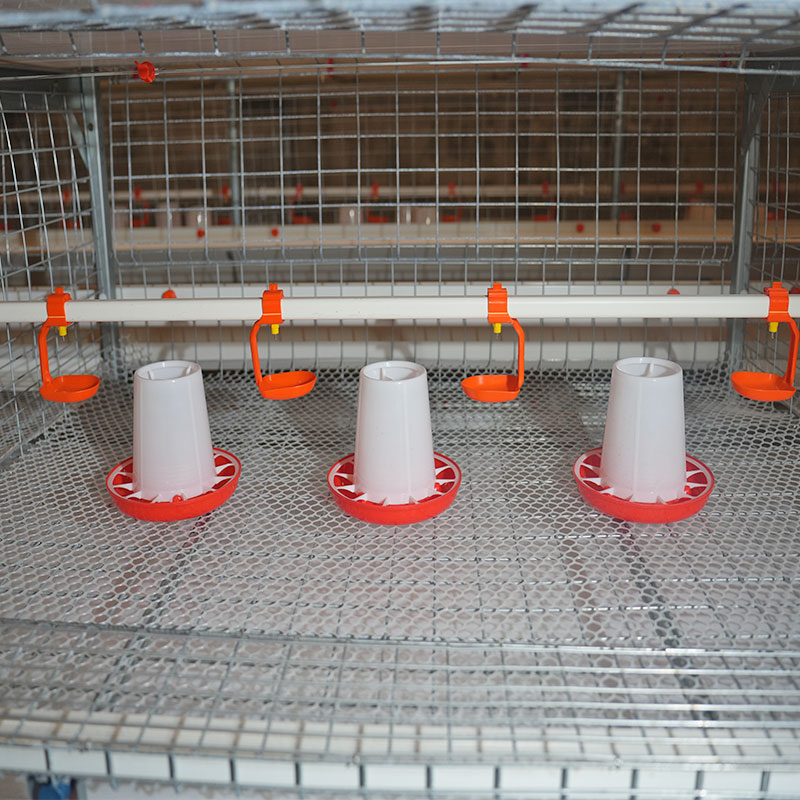
HType Brooding Cage: The Ultimate Guide for Modern Poultry Farmers
In the dynamic world of commercial poultry farming, efficiency, animal welfare, and productivity are nonnegotiable. At the heart of a successful brooding operation lies a critical piece of equipment: the Htype brooding cage. More than just a housing unit, this sophisticated system represents a paradigm shift in how farmers manage chicks during their most vulnerable early weeks. This comprehensive guide delves deep into the design, benefits, operational protocols, and economic implications of Htype brooding cages. Whether you're a seasoned farmer looking to upgrade or a newcomer planning your first venture, understanding this technology is essential for building a profitable, sustainable, and humane poultry business.
An Htype brooding cage, often called a multitier or battery brooder, is a vertically stacked cage system specifically engineered for the brooding phase (typically from dayold to 34 weeks). Its name derives from the sideview silhouette resembling the letter "H," formed by the vertical support columns and the staggered tiers of cages.
Unlike traditional floor brooding, this system utilizes vertical space efficiently. Each tier is a selfcontained unit equipped with its own feeding troughs, nipple drinkers, heating elements (often centralized or zonecontrolled), and waste removal belts. Chicks are housed in controlled groups per compartment, allowing for precise environmental management and health monitoring.
Vertical Tier Structure: Typically 35 tiers high to maximize space without compromising accessibility.
Integrated Climate Control: Features dedicated heating plates or central heating ducts running along each tier, paired with overall room ventilation.
Automated Systems: Includes automatic feeding lines, nipple drinking systems, and conveyor belts for manure removal.
Durable Materials: Constructed from hotdip galvanized steel for corrosion resistance and longevity.
Adjustable Elements: Dividers, feeders, and drinkers can often be adjusted as chicks grow.
Adopting an Htype system offers transformative benefits over conventional methods.
By growing vertically, these cages dramatically increase bird capacity per square meter of floor space. This is a gamechanger for farms with limited land area, allowing for higher production volumes without expanding the farm's footprint.
This is perhaps the most significant advantage. Each tier provides a uniform microenvironment.
Temperature Precision: Eliminates cold/hot spots common in floor brooding. Every chick has equal access to the ideal thermal zone.
Improved Air Quality: Manure drops through the cage floor onto removal belts below chicks on lower tiers. This strict separation drastically reduces ammonia levels and humidity, leading to better respiratory health.
Reduced Stress & Injury: Chicks are separated from their waste, minimizing contact with pathogens and preventing pasting vents. The design also prevents piling and smothering.
The controlled environment acts as a barrier against disease.
Easier Disease Monitoring: Sick chicks are more visible against the uniform backdrop of the cage.
Targeted Treatment: Sick birds can be isolated and treated more effectively.
Reduced Pathogen Load: Automated manure removal prevents fecaloral transmission cycles.
Automation is integral to the Htype design.
Feeding & Watering: One worker can service thousands of chicks in minutes via central feed lines and closed water systems.
Manure Management: Daily manual cleaning is replaced by automated belt removal, saving countless labor hours and improving working conditions.
Catching & Vaccination: Birds are easier to catch for vaccination or transfer with less handling stress.
While the initial investment is higher than openfloor systems, the Return on Investment (ROI) is compelling:
Higher Stocking Density: More birds per facility.
Improved Feed Conversion Ratio (FCR): Consistent environment promotes even growth and efficient feed use.
Lower Mortality Rates: Directly translates to more saleable birds.
Reduced Medication Costs: Healthier flocks require fewer interventions.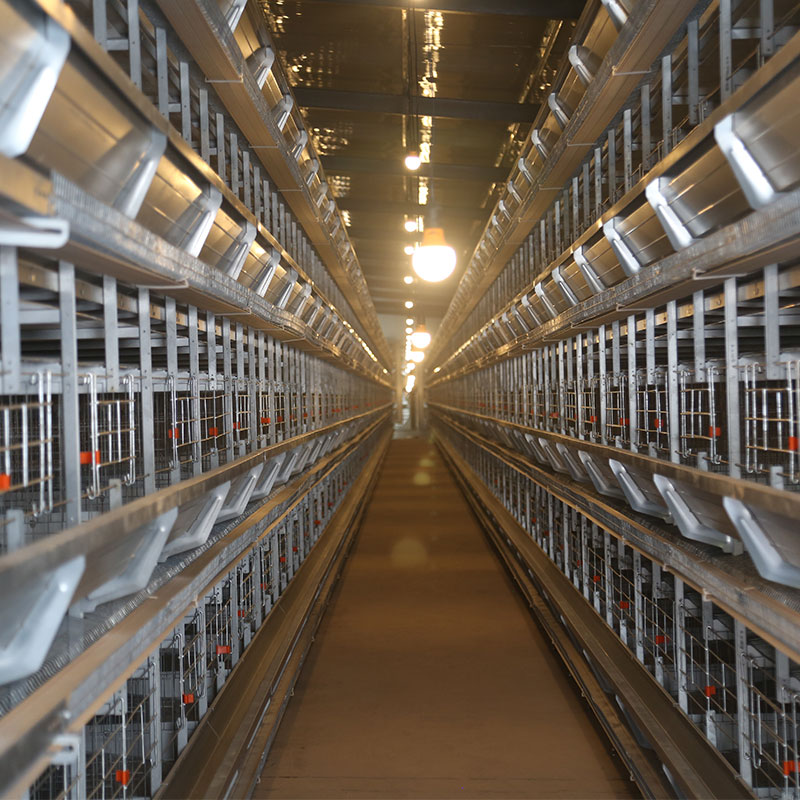
Transitioning to an Htype system requires careful planning.
| Consideration | Details & Questions |
| : | : |
| Initial Capital Cost | High upfront investment for cages, automation (feeders, drinkers), climate control systems (heating/ventilation), and manure handling infrastructure. |
| Technical Expertise | Requires skilled staff for operation, maintenance, and troubleshooting of mechanical systems. Training is essential. |
| Energy Dependency | Reliant on consistent power for ventilation fans, heaters (in early brooding), feeders,and manure belts.Backup generators are critical. |
| Bird Management | Requires different stockmanship skills focused on system monitoring rather than direct bird interaction on litter.Flock observation techniques must adapt |
Breed Suitability: While excellent for most commercial broilers and pullets , ensure your chosen breed thrives in this environment.Some slowergrowing or specialty breeds may have different requirements.
Success hinges on impeccable management from day one.
1. System Sanitation: Conduct a thorough "cleanout,washdown,drydown" process between flocks.Disinfect all surfaces,cups,and lines .
2. System Check & Test Run:
Run feeding lines to ensure even distribution .
Test every nipple drinker for flow rate .
Operate manure belts .
Calibrate temperature sensors . Heat up house at least 24 hours before chick arrival .
Week 1: Survival & Adaptation
Provide paper over feeder trays with starter feed . Ensure immediate access .
Water pressure must be minimal so chicks can easily trigger nipples . Use supplementary water cups if needed .
Achieve perfect temperature at chick level : ~3235°C . Monitor chick behavior—they should be evenly spread .
Week 23: Growth & System Transition
Gradually remove paper from feeders . Begin raising feeders/drinkers to bird back height . Start adjusting temperature downward by ~0 .5°C per day .
Week 4: Preparation for Transfer
By end of week , temperature should be near target growout temp (~2124°C) . Birds should be fully accustomed to automated systems .
The decision to implement an Htype brooding cage system represents a strategic move toward modern,poultry farming.It transcends mere equipment purchase;it's an investment in precision livestock farming that enhances animal welfare,biosecurity,and farm profitability.The substantial initial cost must be weighed against longterm gains in feed efficiency,labor savings,mortality reduction,and overall flock uniformity.For forwardthinking farmers committed to scale,sustainability,and producing healthy birds,the evidence strongly supports transitioning to this advanced housing technology.As with any major change,a phased approach,pilot testing,and thorough staff training will pave way wayfor smooth integrationand maximum returnon your investmentin poultry farming's future .
Q1: What is an Htype brooder?
An Htype brooder is multitiered cage system designed specificallyfor rearing young chicks.It stacks cages verticallyto maximize space utilizationand incorporates integrated heatingfeedingand waste managementfor precise environmental control duringthe criticalbrooding phase .
Q2: How does anHtypebroodercageimprovechickhealth?
It improves healthby providinguniformtemperatureand air qualityseparatingchicksfromtheirwasteto reduce pathogen exposurepreventingpilingand smotheringand enablingeasier monitoringfor early disease detection .
Q3:Whatare themain disadvantagesofHtypecages?
The primary disadvantagesare highinitialcapital costdependencyon reliable electricityrequirementfor technical skillsto operate/maintainsystemsandan adaptationperiodfor managementpracticescomparedto floorbrooding .
Q4:CanyouuseHtypecagesforlayersorbreeders?
Theyare designed specificallyforthebroodingphase(dayoldto~4weeks).Afterthischicksare typicallytransferredto pulletgrowoutsystemsor differenthousingfor layers/breeders.Theyare notusedforthe entireproductioncycleof layinghens .
Q5:WhatistheidealstockingdensityinanHtypebroodercage?
Densityvariesby breedchick sizeand local regulationsbuta general guidelineis~5060cm²per chickinitiallyAlwaysrefertoyour equipmentmanufacturer'srecommendationsandyourveterinarian'sadviceforspecificconditions .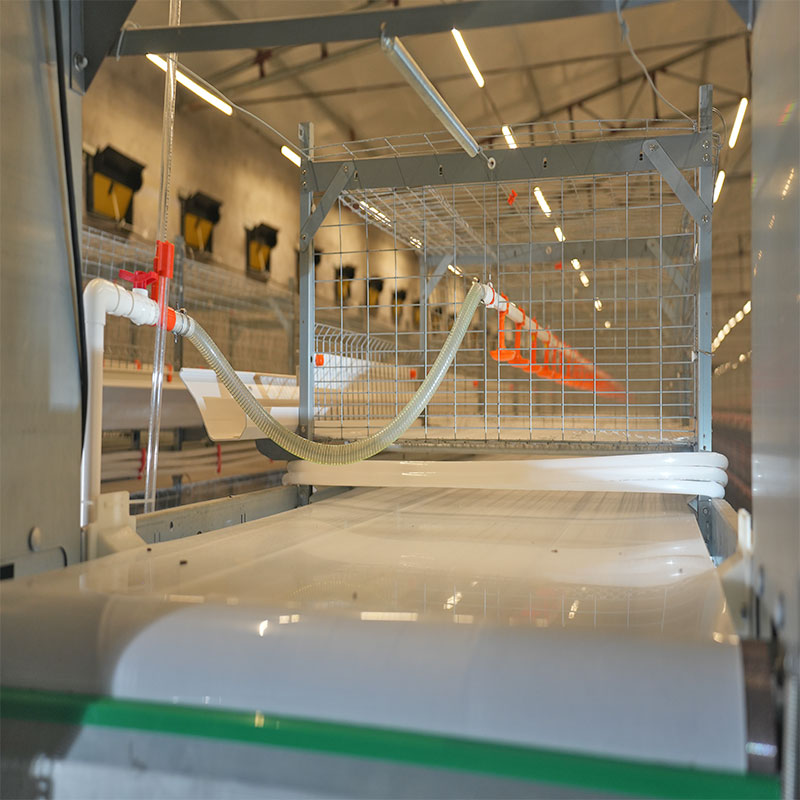
Q6:Howdo youheatancage?
Heatingcanbe providedvia centralizedhotairductsrunningalongeachtierradiantheatplatesaboveorwithineachcompartmentorby preciselycontrollingtheentireroom'stemperatureOftenacombinationofroomheatingandlocalizedsupplementalheatisusedinthefirstweek .
Q7:Isthemanurehandleddifferently?
YesautomaticallyBeneatheachtieraconveyorbeltcollectsdroppingswhichare thenremovedfromthe housedailyorseveraltimesa weekThiskeptsthechicks'environmentdryandreducesammoniaproductiondramatically .
Q8:Arethereanimalwelfareconcernswithcagebrooding?
ProperlymanagedHtypebroodersaddressmanywelfareconcernsby providingconsistentaccesstofoodwateridealclimateandcleanlinessThekeyisadherencetobestmanagementpracticesensuringsufficientspaceperbirdandproperstafftrainingModerndesignsoftenexceedthe welfareoutcomesoftraditionalcrowdedfloorbroodin ginsome metricslikeairqualityanddiseaseprevention .
Q9:Whatisthelifespanofanqualitysystem?
A wellmaintainedhotdipgalvanizedsystemcanlast15yearsormoreRegularmaintenanceofmovingparts(feedermechanismsbeltsdrinkers)iscrucialto achievethislongevity .
Q10:Doyouneedaspecialbuildingforcages?
Whiletheycanbe retrofittedinto existingpoultryhousesoptimalresults comefrombuildingsdesignedorspeciallymodifiedforthemThisincludesadequateceilingheightforsafetierstackingstrongfloorloadingformachinerypowerinfrastructureforautomationandinlet/ventilationdesignsthatworkwiththecagelayoutConsultwithyour supplierduringplanningstages
1. Drinking system include the water pipes, water pressure adjuster, drinking nipples, Waterline front-end device, dosing system etc, choose them according to customer's needs.
2. High-quality water drinking pipes, pressure regulating valves and water drinking nipples can effectively prevent the water leakage. Drinking system adopt the closed piping system, which can minimize the water pollution.
3. 360-degree drinking nipples provide adequate drinking water for poultry at all stages.
4. The automatic drinking water system mainly adopts the steel ball drinking nipple. lt uses imported high-grad stainless steel, POM resin, and APS engineering material, which is wearing resistant, and the durability can be used for long time.



1. Automatic feeding machine can be chosen between gantry and ladder feeding machine. Gantry type feeding machine is a relatively economical and practical machine with simple operation, remote control walking character, easy to manage.
2. Mechanical transmission device running smoothly, low noise, long service life.
3. With the use of automatic control, the feeding system can adjust the amount of material.
4. Feeding with arched structure, high carrying capacity, not easily deformed.
5. Saving man power, saving feed, greatly improving the efficiency of Large-scale farming.
6. The walking speed of gantry feeding machine is 9--12 m/min.




1. Manure removing system included scraper type and conveyor belt type, Which can reduce the labor intensity and labor cost, keep the chicken shed dry and clean.
2. A type chicken cage can use scraper type or conveyor belt type.


3. The scraper type is suitable for A type cages, which can clean two or three rows. For the starters, this type is a good choice. lt can not only save some labor cost, but also save some investment in the whole project. The cleaning speed is 6-10 meters per minute.
4. Conveyor belt type is more suitable for large scale farming. The manure removing belt we use is high quality PP material (polypropylene). The walking speed is 2-4 meters per minute.



High Quality Pellets Made by Mobile Pellet Machine
1. It has professional designed angle of the blade. After the dynamic balance test one by one, the blade can operate smoothly.
2. The air volume is consistent in the whole life of the fan. Bearings has advantage of high strength, low noise, durable and so on.
1. The cooling pads uses high-quality wet curtain paper and adopts space cross-linking technology, which has the advantages of high water absorption, high water resistance, anti-toxicity and long service life.
2. The cooling efficiency is over 80%, without surfactant, natural water absorption, fast diffusion speed and long-lasting effect.
3. The product does not contain phenol and other chemical substances that are easy to cause skin allergies. It is non-toxic and harmless to the human body and chicken when installed and used. It is green, safe, energy-saving, environmentally friendly, economical, and easy to install.
4. The frame aluminum alloy has high strength, good corrosion resistance, durability and beautiful appearance.
5. Use a special filter for the cooling pad at the upper water to ensure clean water quality and support efficient water circulation components.
6. Combined with a negative pressure fan, it can effectively lower the indoor temperature.
The window is made of special selected high-quality engineering plastic, with high strength and long service life, together with superior anti-aging and anti-UV performance.
Function: Ventilation of the chicken house, usually used in the winter.
This system can adjust the wind speed and direction, thus the cold air will not reach chicken directly , which can effectively prevent the phenomenon of cold stress in chicken.
Environmental control system equipment is suitable for large-scale and intensive farming. According to customer requirements, we can provide various types of smart poultry equipment.
1. Our poultry management system is a modular system that manages all aspects of the chicken house, such as climate, temperature, humidity, ammonia, feeding, feed weighing, lighting and ventilation systems, and can monitor the situation of the chicken house in real time through a computer and mobile phone.
2. The management computer is the heart of the poultry farm, allowing you to easily monitor the entire poultry farm.

 WeChat:+8617838608255