The Ultimate Guide to HType Cages: Design, Applications, and Selection
In the intricate world of industrial and mechanical design, few components are as critical yet understated as the Htype cage. This robust structural element serves as the backbone for countless applications, from guiding precision bearings to forming protective enclosures in heavy machinery. Whether you're a design engineer specifying components for a new project or a maintenance professional seeking replacement parts, understanding the nuances of Htype cages is essential for ensuring system reliability, efficiency, and longevity. This comprehensive guide delves deep into the design principles, material science, and practical applications of Htype cages, providing you with the expert knowledge needed to make informed decisions.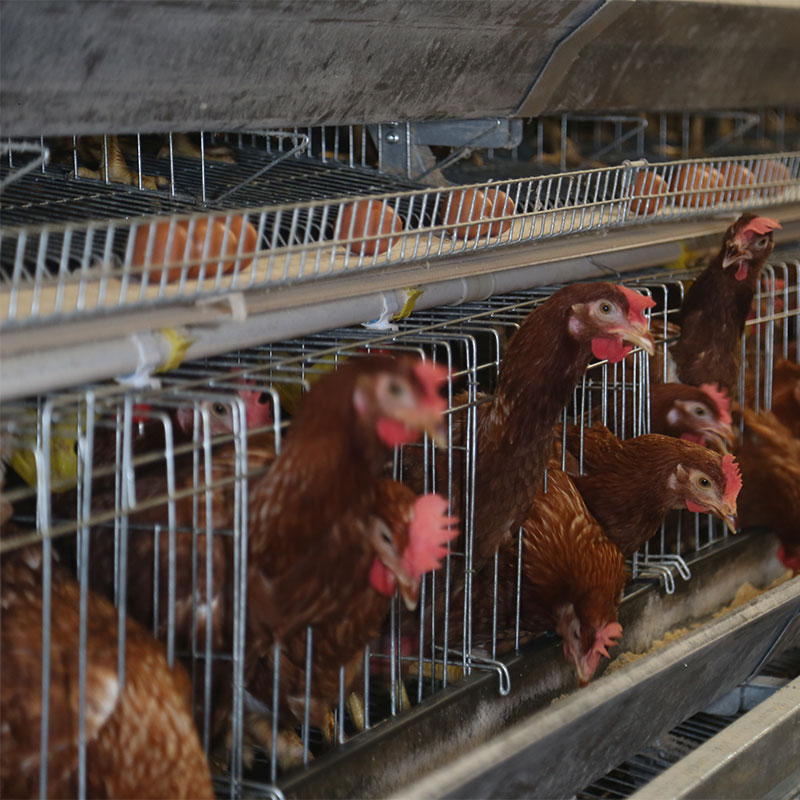
An Htype cage, often referred to as an "Hsection retainer" in bearing contexts, is a structural component characterized by its distinctive "H" shaped crosssection. This design isn't arbitrary; it's a feat of engineering optimization.
Primary Function: Its core purpose is to act as a separator and retainer for rolling elements (like balls or rollers) within a bearing assembly. It maintains equal spacing between these elements, ensuring smooth load distribution and preventing frictioncausing contact.
The "H" Advantage: The horizontal bar of the "H" forms the separator itself, while the two vertical flanges provide stability and secure guidance within the bearing's inner and outer rings. This creates a rigid yet lightweight structure.
Beyond Bearings: The fundamental Hshaped profile is also employed in largerscale fabrications, such as protective guards, ventilation grilles, and structural frames in machinery, where its inherent strengthtoweight ratio is highly valued.
Understanding the specifications of an Htype cage is crucial for proper selection. Here are the defining features:
The choice of material directly impacts performance, temperature tolerance, and speed capability.
| Material | Typical Applications | Advantages | Limitations |
| : | : | : | : |
| Steel (Pressed or Machined) | Automotive transmissions, industrial gearboxes, heavyduty machinery. | High strength, excellent durability, good heat resistance. | Heavier weight; may require lubrication. |
| Brass | Precision electric motors, machine tool spindles. | Good corrosion resistance, low friction properties,machinability. | Lower strength than steel; costlier than polymer. |
| Polyamide (Nylon) & Other Polymers | Appliances, agricultural equipment,fans,pumps. | Lightweight,inherently lubricated,costeffective,dampens vibration & noise. | Limited temperature range; can be affected by certain chemicals/moisture. |
| Phenolic Resin | Older designs or specific highspeed applications. | Lightweight,runs smoothly at high speeds. | Brittle; less common in modern designs. |
Stamping: Used for thingauge steel cages.Highvolume,costeffective process.
Machining: From solid brass or steel stock.For highprecision applications or complex geometries.
Molding: The standard for polymer cages (injection molding).Allows for intricate designs with pockets for rolling elements.
When selecting an Htype cage,beyond inner/outer diameter,the following are vital:
Pocket geometry and clearance for rolling elements.
Flange height and thickness.
Radial runout tolerance to ensure smooth operation.
Surface finish to minimize friction wear.
The Htype cage's versatility makes it indispensable in multiple sectors:
In CNC machines,milling spindles,and conveyor systems,Htype bearing cages provide precise guidance under significant radial loads,vibration,and high rotational speeds.Their stability is key to maintaining machining accuracy.
From wheel hubs and transmissions to alternators,Htype cages manage loads in bearings that experience constant stress,variable speeds,and wide temperature ranges.Polymer cages here help reduce NVH (Noise,Vibration,Harshness).
In this demanding field,machined brass or specialty alloy steel Hcages are used in actuators,turbine engines,and control systems where failure is not an option.Materials must withstand extreme temperatures and stresses.
Wind turbine pitch/yaw bearings,mine conveyor idlers,and pump systems rely on ruggedized steel Hcages.They are engineered to endure shock loads,surface contaminants,and prolonged operation with minimal maintenance.
Choosing incorrectly can lead to premature bearing failure.Select based on these factors:
1. Operational Parameters:
Speed (RPM): Highspeed applications favor lightweight materials like polymers or machined brass to reduce centrifugal force.
Load Type & Magnitude: Heavy radial loads demand highstrength steel cages.Shock loads require tough,malleable materials.
Temperature Range: Ensure cage material can withstand operational minimums and maximums without degrading.
2. Lubrication Regime:
Will lubrication be oil,mist grease? Some polymers are incompatible with certain lubricants.
Is the application prone to lubricant starvation? Selflubricating polymer cages can offer a safety margin.
3. Environmental Conditions:
Exposure to moisture chemicals corrosives? Stainless steel brass or specially coated steels may be necessary.
Presence of abrasive dust debris? A robust cage design that prevents particle ingress is critical.
4.Cost vs.Performance Tradeoff:
While stamped steel is economical,a polymer cage might reduce longterm energy costs through lower friction weight.A full lifecycle cost analysis is recommended for critical applications.
Even the bestdesigned cage can fail if improperly maintained.
Common Signs of Cage Failure:
Unusual noise (clicking scraping) from the bearing assembly.
Increased vibration thermal runaway.
Visible metallic debris (from a failing steel/brass cage) or discolored brittle polymer fragments in lubricant.
Preventive Measures:
1.Use proper installation tools techniques avoid denting deforming during pressfitting.
2.Follow manufacturerrecommended lubrication schedules using compatible products.
3.Monitor operating conditions implement vibration analysis where feasible.
The humble Htype cage is far more than just a simple component; it's a precisionengineered element that dictates performance boundaries within mechanical assemblies.From its material composition manufacturing tolerances its interaction with rolling elements every detail matters.As technology advances we see continued innovation in composite materials surface treatments leading quieter more efficient longerlasting designs.Whether your priority maximizing load capacity achieving ultrahigh speeds minimizing maintenance downtime understanding principles outlined this guide will empower you specify optimal Htype cage your specific application ensuring reliability efficiency your systems years come.
Q1: What does "Htype" refer to in an Htype cage?
A1: It refers specifically crosssectional shape component resembles letter "H".This design features central web separates rolling elements two flanges sides provide rigidity secure guidance within bearing rings.
Q2: Are Htype cages only used ball bearings?
A2: No they commonly used variety rolling bearings including deep groove ball bearings cylindrical roller bearings spherical roller bearings where positive separation guidance required.
Q3:What main advantage using polymer nylon over metal type cage?
A3 Polymer offer significant advantages lightweight nature reduces centrifugal forces high speeds inherent lubricity reduces friction startup under poor lubrication dampens vibration noise leading quieter operation.
Q4 Can replace metal with polymer existing application?
A4 Not without careful consideration must evaluate operational speed load temperature lubrication compatibility Swapping materials can alter internal clearances thermal expansion characteristics potentially leading failure Consult bearing manufacturer engineer before making change
Q5 How temperature affect selection ?
A5 Temperature critically important Steel handle very temperatures while standard polyamide typically limited ~250°F continuous operation Hightemperature polymers PEEK available but costly For cryogenic applications specialized materials required
Q6 Why would choose machined over stamped ?
A6 Machined typically offer higher precision tighter tolerances better surface finish They necessary complex geometries lowvolume production runs where tooling cost stamping prohibitive They also stronger direction across grain material
Q7 common cause premature failure ?
A7 Premature often caused improper installation damage during handling misalignment excessive vibration lubricant starvation using incompatible chemical aggressive environment exceeding design limits speed load
Q8 How identify correct replacement part ?
A8 Essential have original part number manufacturer If unavailable need meticulously measure dimensions bore diameter outside diameter width pocket count size shape Material original also important clue Consult comprehensive bearing catalog distributor technical support
Q9 designed handle thrust loads ?
A9 primary function separate guide rolling elements under radial loads While contribute overall assembly stability not designed primarily carry axial thrust loads Thrust capacity determined overall bearing design including raceway geometry type element used
Q10 there industry standards governing manufacture ?
A11 Yes organizations like ISO International Organization Standardization ABMA American Bearing Manufacturers Association publish standards covering dimensions tolerances materials testing methods ensure interchangeability reliability across manufacturers Standards such ISO 15 define boundary dimensions tolerances radial bearings
1. Drinking system include the water pipes, water pressure adjuster, drinking nipples, Waterline front-end device, dosing system etc, choose them according to customer's needs.
2. High-quality water drinking pipes, pressure regulating valves and water drinking nipples can effectively prevent the water leakage. Drinking system adopt the closed piping system, which can minimize the water pollution.
3. 360-degree drinking nipples provide adequate drinking water for poultry at all stages.
4. The automatic drinking water system mainly adopts the steel ball drinking nipple. lt uses imported high-grad stainless steel, POM resin, and APS engineering material, which is wearing resistant, and the durability can be used for long time.



1. Automatic feeding machine can be chosen between gantry and ladder feeding machine. Gantry type feeding machine is a relatively economical and practical machine with simple operation, remote control walking character, easy to manage.
2. Mechanical transmission device running smoothly, low noise, long service life.
3. With the use of automatic control, the feeding system can adjust the amount of material.
4. Feeding with arched structure, high carrying capacity, not easily deformed.
5. Saving man power, saving feed, greatly improving the efficiency of Large-scale farming.
6. The walking speed of gantry feeding machine is 9--12 m/min.




1. Manure removing system included scraper type and conveyor belt type, Which can reduce the labor intensity and labor cost, keep the chicken shed dry and clean.
2. A type chicken cage can use scraper type or conveyor belt type.


3. The scraper type is suitable for A type cages, which can clean two or three rows. For the starters, this type is a good choice. lt can not only save some labor cost, but also save some investment in the whole project. The cleaning speed is 6-10 meters per minute.
4. Conveyor belt type is more suitable for large scale farming. The manure removing belt we use is high quality PP material (polypropylene). The walking speed is 2-4 meters per minute.



High Quality Pellets Made by Mobile Pellet Machine
1. It has professional designed angle of the blade. After the dynamic balance test one by one, the blade can operate smoothly.
2. The air volume is consistent in the whole life of the fan. Bearings has advantage of high strength, low noise, durable and so on.
1. The cooling pads uses high-quality wet curtain paper and adopts space cross-linking technology, which has the advantages of high water absorption, high water resistance, anti-toxicity and long service life.
2. The cooling efficiency is over 80%, without surfactant, natural water absorption, fast diffusion speed and long-lasting effect.
3. The product does not contain phenol and other chemical substances that are easy to cause skin allergies. It is non-toxic and harmless to the human body and chicken when installed and used. It is green, safe, energy-saving, environmentally friendly, economical, and easy to install.
4. The frame aluminum alloy has high strength, good corrosion resistance, durability and beautiful appearance.
5. Use a special filter for the cooling pad at the upper water to ensure clean water quality and support efficient water circulation components.
6. Combined with a negative pressure fan, it can effectively lower the indoor temperature.
The window is made of special selected high-quality engineering plastic, with high strength and long service life, together with superior anti-aging and anti-UV performance.
Function: Ventilation of the chicken house, usually used in the winter.
This system can adjust the wind speed and direction, thus the cold air will not reach chicken directly , which can effectively prevent the phenomenon of cold stress in chicken.
Environmental control system equipment is suitable for large-scale and intensive farming. According to customer requirements, we can provide various types of smart poultry equipment.
1. Our poultry management system is a modular system that manages all aspects of the chicken house, such as climate, temperature, humidity, ammonia, feeding, feed weighing, lighting and ventilation systems, and can monitor the situation of the chicken house in real time through a computer and mobile phone.
2. The management computer is the heart of the poultry farm, allowing you to easily monitor the entire poultry farm.

 WeChat:+8617838608255