HType Layer Cage: The Ultimate Guide for Modern Poultry Farmers
In the dynamic world of commercial egg production, efficiency, animal welfare, and operational profitability are paramount. At the heart of a modern, highcapacity layer farm lies a critical piece of equipment: the Htype layer cage system. More than just housing, this sophisticated structure represents a fusion of engineering, poultry science, and farm management designed to optimize every aspect of egg production. For farmers looking to scale operations, improve bird health metrics, and enhance overall productivity, understanding the intricacies of the Htype cage is nonnegotiable. This comprehensive guide delves deep into the design, benefits, operational considerations, and best practices for implementing and managing Htype layer cages, providing you with the expert knowledge needed to make informed decisions for your poultry business.
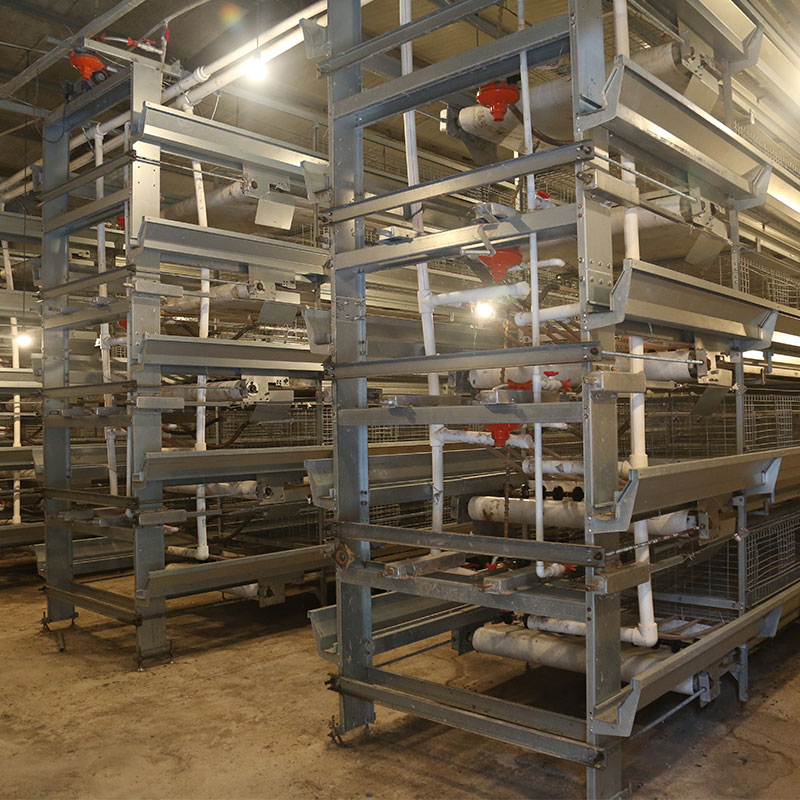
An Htype layer cage is a multitiered battery cage system where the tiers are arranged in a vertical stack, typically 3 to 8 levels high, connected by a central manure belt system. When viewed from the end, the central manure collection belt forms the "vertical line" of the H, with the rows of cages extending horizontally on either side, creating an "H" silhouette. This design is a significant evolution from traditional Aframe or stairstep cages.
Vertical Tier Structure: Cages are stacked directly on top of one another.
Central Manure Belt: A continuously running belt located beneath each tier collects and removes droppings.
Integrated Systems: Includes automated feeding (chain or pan), nipple drinking lines per tier, and egg collection belts.
HighDensity Housing: Designed for large flocks (often tens of thousands to hundreds of thousands of birds per house).
This system is engineered to address the core challenges of largescale egg production.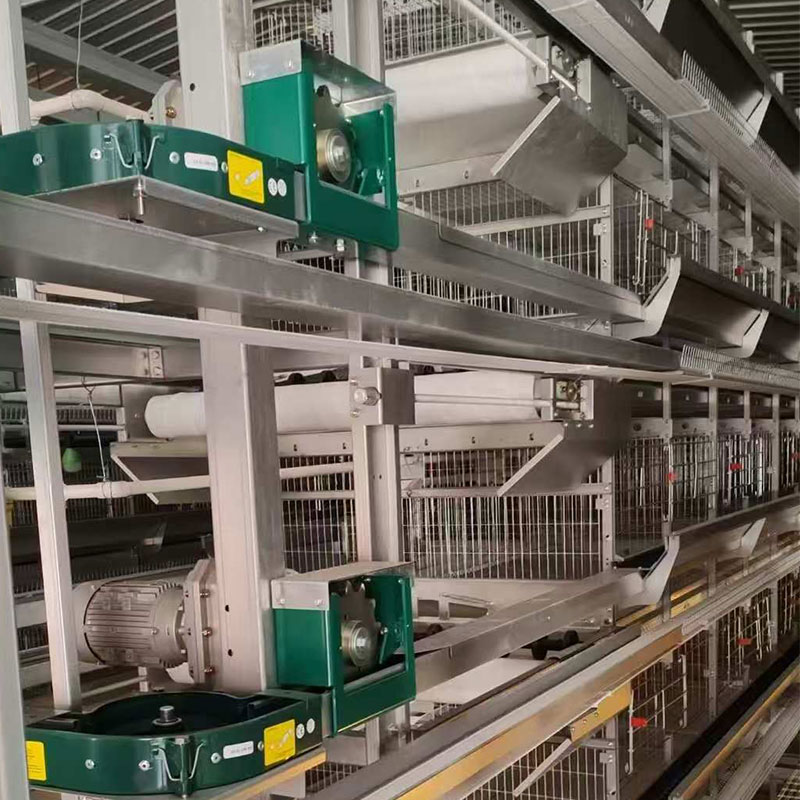
By building vertically rather than horizontally, Htype cages dramatically increase bird capacity per square meter of floor space. This allows farmers to maximize output from limited land resources.
The dedicated manure belt under each tier removes waste promptly from the poultry house environment.
Reduced Ammonia Levels: Dryer manure and rapid removal minimize harmful ammonia gas.
Improved Bird Health: Lower pathogen load and better air quality.
Manure Value: Collected dry manure is easier to handle and can be sold as fertilizer.
Htype systems are designed for full automation:
Feeding & Watering: Precise delivery reduces waste.
Egg Collection: Gentle belts transport eggs directly to the packing room.
Climate Control: Uniform environment across all tiers is easier to maintain with proper ventilation design.
With birds housed in smaller groups per cage unit within the larger system, it’s easier for managers to spot health issues, monitor feed intake, and track laying rates for specific sections.
While powerful, Htype systems require careful planning and management.
The cost is significantly higher than conventional systems. Budget must include:
Cage structure and automation equipment.
Reinforced housing (strong foundations, high ceilings).
Advanced ventilation (tunnel ventilation with crossflow capability).
Manure drying or treatment system.
Operating this technology demands skilled labor and sophisticated management. Staff must understand automated systems maintenance (belt alignment drives), climate computer operation data analysis.
Regulations vary globally. Ensure the system design meets or exceeds local animal welfare standards regarding:
Space allowance per bird (e.g., cm²/bird).
Enrichment provisions (scratching areas nesting boxes may be required in some regions).
Beak trimming practices related to cage density.
Success hinges on daily attention detail proactive maintenance.
1. Ventilation is King:
A multitiered structure creates microenvironments. Use a combination of tunnel vertical ventilation ensure uniform temperature air quality from top bottom tiers especially in hot weather prevent heat stress upper levels.
2. Precision Feeding Management:
Monitor feed particle size distribution ensure consistent flow through automated lines all tiers Adjust feed formulas based on flock age production phase precise delivery minimizes segregation waste
3. Light Program Uniformity:
Install light fixtures with reflectors aisles between cage banks ensure even light intensity across all tiers including bottom rows crucial for consistent stimulation lay cycles
4. Proactive Maintenance Schedule:
| Component | Maintenance Frequency | Key Action |
| : | : | : |
| Manure Belts | Daily/Weekly | Check alignment tension scrapers |
| Egg Collection Belts | Daily | Inspect for damage clean rollers |
| Nipple Drinkers | Daily | Check pressure function flush lines |
| Feeding System | Weekly | Inspect links troughs hoppers |
| Ventilation Fans | Monthly | Clean blades shutters check belts |
5. DataDriven Flock Monitoring:
Track key performance indicators (KPIs) like henday production rate feed conversion ratio (FCR) mortality rate water consumption Use this data identify issues specific tiers banks early intervention
The Htype layer cage system represents pinnacle engineering commercial egg production offering unparalleled efficiency density control potential high returns investment However not magic bullet Its success depends entirely on thorough planning substantial capital commitment most importantly exceptional daily management technical expertise For right operation—one committed technological integration skilled labor—it provides sustainable profitable framework meet growing global demand eggs As industry continues evolve balancing productivity animal welfare will remain central consideration making informed choices about housing systems like critical ever before future success poultry farming
Q1: What is the typical lifespan of an Htype layer cage system?
With proper maintenance regular replacement wearable parts like belts plastic components galvanized steel structure last 15 20 years Quality installation initial build crucial achieving longevity
Q2: How many birds can be housed in a single Htype cage unit?
Cage unit sizes vary but typical compartment might house 5 10 birds depending regulated space allowance Total house capacity depends number tiers rows modern houses can hold over 100000 birds
Q3: Are Htype cages suitable for freerange or organic production?
No by definition these are intensive indoor housing systems They do not comply standards require outdoor access If considering enriched colony systems different designs may apply check specific certification requirements
Q4: What are biggest challenges managing ventilation in these tall structures?
Temperature stratification heat buildup upper levels main challenge Requires powerful welldesigned tunnel ventilation system often combined with ceiling inlets evaporative cooling pads ensure minimal temperature differential top bottom maybe exceed 3°C)
Q5: How does manure handling work in an Htype system?
Each tier has its own slowmoving conveyor belt Droppings fall onto belt which transports them out poultry house end typically into storage shed drying tunnel where processed sold fertilizer resource)
Q6: Is beak trimming necessary for hens in Htype cages?
Due higher density potential feather pecking cannibalism beak trimming often recommended standard practice many largescale operations regardless cage type Always follow latest veterinary welfare guidelines region)
Q7: What happens during power failure?
Backup generator absolutely critical Automated feeding watering ventilation stop immediately Without power birds upper tiers risk heat exhaustion within minutes due lack air movement Emergency power must activate within seconds)
Q8: Can you use different bird strains in an Htype system?
Yes but choose strains known adaptability higher density environments calm temperament good bone strength Consult breeding company recommendations specific caged housing systems best performance results)
Q9: How often are eggs collected automatically?
Egg collection belts run multiple times day typically every hour two This frequent collection minimizes floor eggs egg breakage keeps eggs cleaner reduces bacterial contamination risks)
Q10: What training needed for staff manage this system?
Staff need comprehensive training automated equipment operation basic troubleshooting climate computer management bird behavior observation welfare assessment Ongoing training essential handle technological updates)
Q11: How do you ensure all tiers have equal access feed water?
Precision adjustment feeding lines critical Pan feeders chains must calibrated deliver same amount feed each tier Nipple line water pressure regulated ensure consistent flow top bottom Regular checks mandatory)
Q12: Are there animal welfare concerns associated with these systems?
This debated topic Proponents cite improved biosecurity lower parasite incidence better control diet environment Critics argue restrict natural behaviors like nesting dustbathing evolving regulations some regions driving towards enriched colony furnished cages provide more space amenities)
1. Drinking system include the water pipes, water pressure adjuster, drinking nipples, Waterline front-end device, dosing system etc, choose them according to customer's needs.
2. High-quality water drinking pipes, pressure regulating valves and water drinking nipples can effectively prevent the water leakage. Drinking system adopt the closed piping system, which can minimize the water pollution.
3. 360-degree drinking nipples provide adequate drinking water for poultry at all stages.
4. The automatic drinking water system mainly adopts the steel ball drinking nipple. lt uses imported high-grad stainless steel, POM resin, and APS engineering material, which is wearing resistant, and the durability can be used for long time.



1. Automatic feeding machine can be chosen between gantry and ladder feeding machine. Gantry type feeding machine is a relatively economical and practical machine with simple operation, remote control walking character, easy to manage.
2. Mechanical transmission device running smoothly, low noise, long service life.
3. With the use of automatic control, the feeding system can adjust the amount of material.
4. Feeding with arched structure, high carrying capacity, not easily deformed.
5. Saving man power, saving feed, greatly improving the efficiency of Large-scale farming.
6. The walking speed of gantry feeding machine is 9--12 m/min.




1. Manure removing system included scraper type and conveyor belt type, Which can reduce the labor intensity and labor cost, keep the chicken shed dry and clean.
2. A type chicken cage can use scraper type or conveyor belt type.


3. The scraper type is suitable for A type cages, which can clean two or three rows. For the starters, this type is a good choice. lt can not only save some labor cost, but also save some investment in the whole project. The cleaning speed is 6-10 meters per minute.
4. Conveyor belt type is more suitable for large scale farming. The manure removing belt we use is high quality PP material (polypropylene). The walking speed is 2-4 meters per minute.



High Quality Pellets Made by Mobile Pellet Machine
1. It has professional designed angle of the blade. After the dynamic balance test one by one, the blade can operate smoothly.
2. The air volume is consistent in the whole life of the fan. Bearings has advantage of high strength, low noise, durable and so on.
1. The cooling pads uses high-quality wet curtain paper and adopts space cross-linking technology, which has the advantages of high water absorption, high water resistance, anti-toxicity and long service life.
2. The cooling efficiency is over 80%, without surfactant, natural water absorption, fast diffusion speed and long-lasting effect.
3. The product does not contain phenol and other chemical substances that are easy to cause skin allergies. It is non-toxic and harmless to the human body and chicken when installed and used. It is green, safe, energy-saving, environmentally friendly, economical, and easy to install.
4. The frame aluminum alloy has high strength, good corrosion resistance, durability and beautiful appearance.
5. Use a special filter for the cooling pad at the upper water to ensure clean water quality and support efficient water circulation components.
6. Combined with a negative pressure fan, it can effectively lower the indoor temperature.
The window is made of special selected high-quality engineering plastic, with high strength and long service life, together with superior anti-aging and anti-UV performance.
Function: Ventilation of the chicken house, usually used in the winter.
This system can adjust the wind speed and direction, thus the cold air will not reach chicken directly , which can effectively prevent the phenomenon of cold stress in chicken.
Environmental control system equipment is suitable for large-scale and intensive farming. According to customer requirements, we can provide various types of smart poultry equipment.
1. Our poultry management system is a modular system that manages all aspects of the chicken house, such as climate, temperature, humidity, ammonia, feeding, feed weighing, lighting and ventilation systems, and can monitor the situation of the chicken house in real time through a computer and mobile phone.
2. The management computer is the heart of the poultry farm, allowing you to easily monitor the entire poultry farm.

 WeChat:+8617838608255