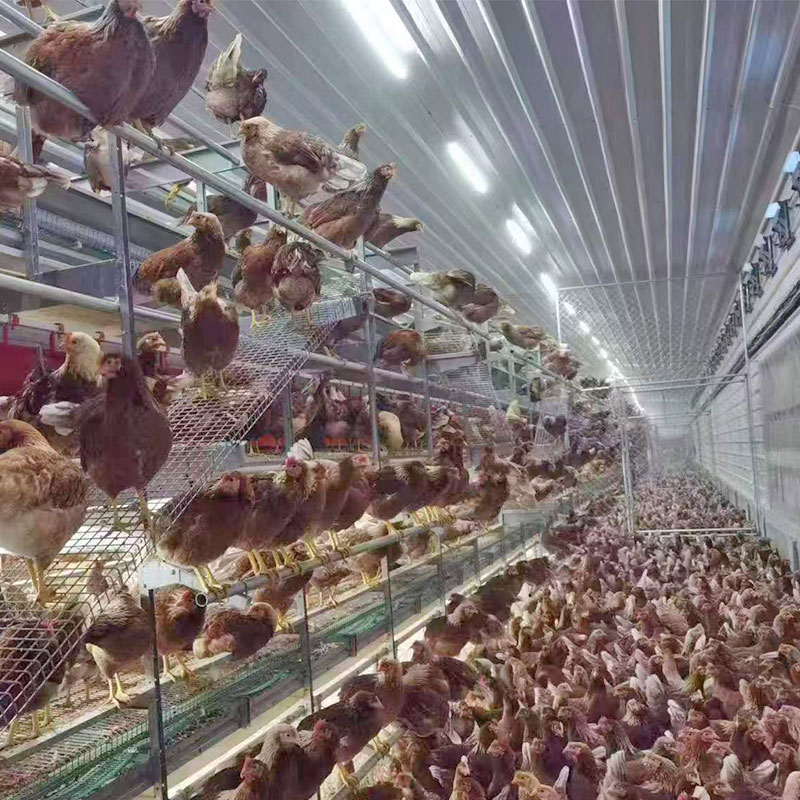
The morning feed run tells the story long before the egg counters do. When birds scramble for position at the trough, their feathers matted and wings clipped by the confines of their environment, you’re not just seeing a feeding frenzy; you’re watching profit margins erode. For decades, the A-frame cage was the undisputed workhorse of the layer house. Its simple, inverted-V design got the job done, but it came with a long list of compromises on bird welfare, labor efficiency, and ultimately, the bottom line. A shift in design philosophy has been steadily gaining ground, moving from the traditional A-frame to the more vertical, space-efficient H Type layer cage.
The fundamental difference between these systems isn’t just shape; it’s a complete reimagining of airflow, access, and animal density. An A-frame cage stacks rows diagonally, like shingles on a roof. This creates a complex, turbulent air pattern where dust, moisture, and ammonia from the lower tiers get pushed through the cages above. You’ve seen the result: the top-row birds often look the best, while the bottom-row birds bear the brunt of the house’s poor environment, showing more stress and lower production.
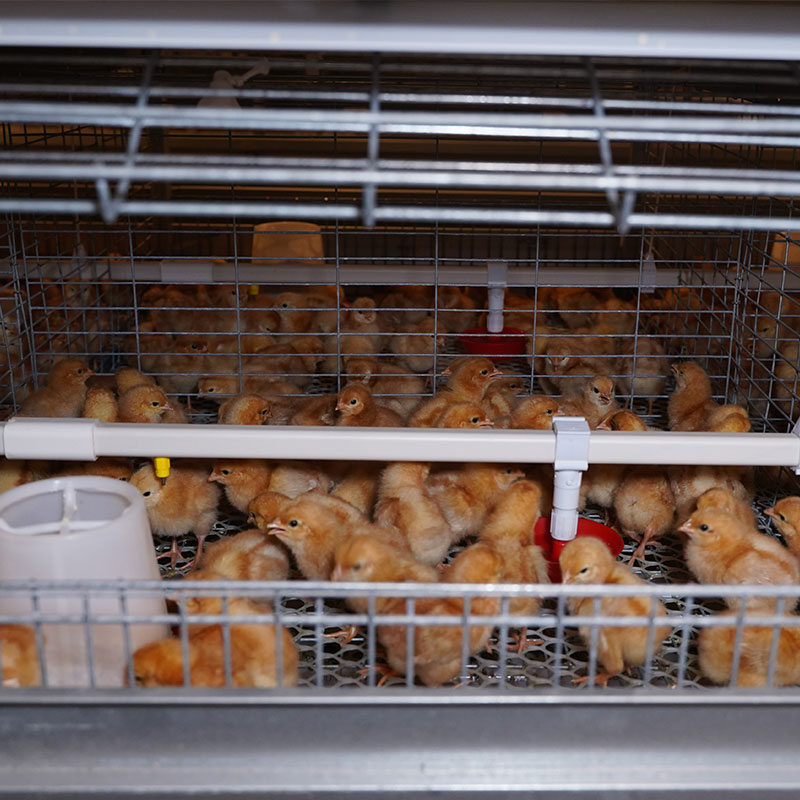
The H Type cage, named for its vertical support structure that resembles the letter ‘H’, stacks tiers directly on top of one another. Each level is a self-contained plane. This simple reorientation changes everything. Air from the inlets can travel in a clean, horizontal sheet across each row of birds simultaneously, without picking up waste from the tier below. It’s the difference between a stuffy, multi-level apartment with a single blocked window and a series of single-story homes, each with its own open doors and windows. The air quality improvement is immediately noticeable. You’ll spend less time and money on ventilation because the building’s natural airflow is no longer fighting the cage design.
This superior environment is the first pillar of the H Type’s advantage. Birds breathe cleaner air, which directly reduces respiratory challenges. Less moisture in the litter under the cages means drier manure and a significant reduction in ammonia production. This isn’t just a bird health issue; it’s a worker health issue. Walking into a house with H Type cages feels different. The air is sharper, less heavy. This improved welfare translates directly into performance. Hens under less environmental stress lay more consistently, maintain better feather cover, and have lower mortality rates. You see it in the egg quality, too—cleaner shells and fewer seconds.
The second pillar is density and space utilization. A-frame systems waste a tremendous amount of space. The diagonal stacking creates unusable voids between the backs of lower cages and the fronts of upper ones. In a poultry house, every square foot of floor space that isn’t producing eggs is a cost. H Type cages eliminate this dead space. By stacking vertically, they maximize bird capacity per square foot of floor space. For a farmer looking to expand output without acquiring more land or building another house, retrofitting an existing building with H Type cages can increase bird numbers by 20% or more using the same footprint. It’s a capital-efficient strategy for growth.
This increased density often raises questions about bird space allowance, but the comparison can be misleading. While more birds are housed per square foot of building, the actual per-bird space within the cage is often equivalent to or better than that offered in a well-managed A-frame. The key is the three-dimensional use of space. You’re building upwards, not outwards. Modern H Type designs frequently incorporate enriched features like scratch pads and perching areas within this vertical space, addressing natural behaviors more effectively than a cramped A-frame ever could.
Perhaps the most transformative benefit for daily operations is the third pillar: mechanization and labor savings. The A-frame design, with its slanted walls and deep, hard-to-reach corners, is notoriously difficult to automate fully. Manual tasks like bird catching, vaccination, and daily inspections are slow, awkward, and physically demanding on workers.
H Type cages are designed from the ground up for automation. Their vertical, flat-back design allows for the seamless integration of equipment. The most significant labor-saving feature is the central manure belt. In an A-frame, manure typically falls onto a belt below each tier or onto a deep pit, where it accumulates and begins to break down, releasing gases. In an H Type system, a thin, continuous belt runs directly beneath each tier of cages. These belts are timed to run multiple times a day, removing fresh manure from the house immediately.

This changes the entire manure management paradigm. Instead of dealing with a seasonal, monumental clean-out of compacted, fermented waste, you are removing a steady stream of dry, stackable litter. This material is more valuable as a fertilizer and easier to handle. The constant removal is the single biggest factor in the ammonia reduction mentioned earlier.
Egg collection is another area of radical efficiency. Egg belts in an H Type system are short and direct. Eggs roll from the cage onto a belt that travels a straight, horizontal path to the central collection point. In an A-frame, eggs often roll down a slanted cage floor, make a sharp turn, and travel a longer, more convoluted path, increasing the chances of hairline cracks and micro-fractures that downgrade quality. The straight-line travel in an H Type system results in a higher percentage of Grade A eggs straight off the belt.
Bird management is also streamlined. The flat, vertical cage fronts provide uniform and easy access to every bird from the central service aisle. For a crew vaccinating or sorting, every bird is at arm’s length. There’s no contorting to reach into the deep, slanted recesses of an A-frame. This reduces bird stress during handling, improves the accuracy of health checks, and drastically cuts the time required for these essential tasks. When it’s time for depopulation, automated bird removal systems can gently convey hens from each tier directly to the loading point, turning a days-long, labor-intensive ordeal into a matter of hours.
Durability and construction are also defining characteristics. The H-frame support structure is inherently robust. Made from heavy-gauge, hot-dipped galvanized steel, it is engineered to support the immense weight of multiple tiers, feeding systems, and manure belts without sagging or warping. The galvanization process is critical; it’s not a simple paint or coating but a molecular bonding of zinc to the steel, creating a barrier that withstands decades of corrosion from ammonia and moisture. A well-constructed H Type system is a 15-to-20-year asset, not a piece of equipment that will need constant welding repairs or replacement in a few years.
The feeding system is typically a chain-and-trough design that runs along the front of each tier. Its precision is a major contributor to feed savings. The trough is designed to minimize spillage, and the system’s operation can be finely tuned to ensure the last bird in the line gets the same ration as the first. This consistency prevents the dominant birds from overconsuming and ensures shy birds receive their necessary nutrient intake, leading to a more uniform flock. This flock uniformity is a hidden driver of profitability; a uniform flock peaks together and declines together, making management decisions far more predictable than in a flock with a wide variation in body condition and production.
While the advantages are compelling, a transition to an H Type system requires careful planning. The initial capital outlay is higher than for an A-frame system. This is a investment in long-term efficiency, not just equipment. The return comes from labor savings, feed savings, improved bird performance, and higher manure value. The building itself must be evaluated. The vertical height must accommodate the tiered system, and the structure must be able to support the significant weight, especially when considering the mass of the equipment, birds, feed, and stored manure on the belts. Electrical systems need to be robust and reliable to power the numerous motors running the belts and feeders. A backup power generator moves from a luxury to an absolute necessity.
Successful management of an H Type system also demands a shift in mindset. It is a precision piece of agricultural machinery. Preventative maintenance is non-negotiable. A daily checklist of belt alignment, motor function, and chain tension is essential. A single seized roller on a manure belt can cause a tear that shuts down an entire row until repaired. However, this maintenance is a trade-off. You are exchanging hours of physically brutal labor for minutes of systematic checking and minor adjustments. The skill set required moves from brute force to mechanical aptitude and systematic observation.
The decision ultimately hinges on a forward-looking view of poultry farming. It is an investment in a system that prioritizes animal welfare not as a separate concern, but as the foundation of productivity. It is a commitment to leveraging technology to make the farm a more sustainable and efficient business, and a less physically taxing workplace. The evidence is in the house environment, the health of the birds, the quality of the eggs, and the time sheet. For the modern poultry farmer, the H Type cage isn’t just a different shape of cage; it’s the architecture of a more profitable and sustainable future.
1. Drinking system include the water pipes, water pressure adjuster, drinking nipples, Waterline front-end device, dosing system etc, choose them according to customer's needs.
2. High-quality water drinking pipes, pressure regulating valves and water drinking nipples can effectively prevent the water leakage. Drinking system adopt the closed piping system, which can minimize the water pollution.
3. 360-degree drinking nipples provide adequate drinking water for poultry at all stages.
4. The automatic drinking water system mainly adopts the steel ball drinking nipple. lt uses imported high-grad stainless steel, POM resin, and APS engineering material, which is wearing resistant, and the durability can be used for long time.



1. Automatic feeding machine can be chosen between gantry and ladder feeding machine. Gantry type feeding machine is a relatively economical and practical machine with simple operation, remote control walking character, easy to manage.
2. Mechanical transmission device running smoothly, low noise, long service life.
3. With the use of automatic control, the feeding system can adjust the amount of material.
4. Feeding with arched structure, high carrying capacity, not easily deformed.
5. Saving man power, saving feed, greatly improving the efficiency of Large-scale farming.
6. The walking speed of gantry feeding machine is 9--12 m/min.




1. Manure removing system included scraper type and conveyor belt type, Which can reduce the labor intensity and labor cost, keep the chicken shed dry and clean.
2. A type chicken cage can use scraper type or conveyor belt type.


3. The scraper type is suitable for A type cages, which can clean two or three rows. For the starters, this type is a good choice. lt can not only save some labor cost, but also save some investment in the whole project. The cleaning speed is 6-10 meters per minute.
4. Conveyor belt type is more suitable for large scale farming. The manure removing belt we use is high quality PP material (polypropylene). The walking speed is 2-4 meters per minute.



High Quality Pellets Made by Mobile Pellet Machine
1. It has professional designed angle of the blade. After the dynamic balance test one by one, the blade can operate smoothly.
2. The air volume is consistent in the whole life of the fan. Bearings has advantage of high strength, low noise, durable and so on.
1. The cooling pads uses high-quality wet curtain paper and adopts space cross-linking technology, which has the advantages of high water absorption, high water resistance, anti-toxicity and long service life.
2. The cooling efficiency is over 80%, without surfactant, natural water absorption, fast diffusion speed and long-lasting effect.
3. The product does not contain phenol and other chemical substances that are easy to cause skin allergies. It is non-toxic and harmless to the human body and chicken when installed and used. It is green, safe, energy-saving, environmentally friendly, economical, and easy to install.
4. The frame aluminum alloy has high strength, good corrosion resistance, durability and beautiful appearance.
5. Use a special filter for the cooling pad at the upper water to ensure clean water quality and support efficient water circulation components.
6. Combined with a negative pressure fan, it can effectively lower the indoor temperature.
The window is made of special selected high-quality engineering plastic, with high strength and long service life, together with superior anti-aging and anti-UV performance.
Function: Ventilation of the chicken house, usually used in the winter.
This system can adjust the wind speed and direction, thus the cold air will not reach chicken directly , which can effectively prevent the phenomenon of cold stress in chicken.
Environmental control system equipment is suitable for large-scale and intensive farming. According to customer requirements, we can provide various types of smart poultry equipment.
1. Our poultry management system is a modular system that manages all aspects of the chicken house, such as climate, temperature, humidity, ammonia, feeding, feed weighing, lighting and ventilation systems, and can monitor the situation of the chicken house in real time through a computer and mobile phone.
2. The management computer is the heart of the poultry farm, allowing you to easily monitor the entire poultry farm.

 WeChat:+8617838608255