
HType Pullet Cage: The Ultimate Guide for Modern Poultry Farmers
For poultry farmers navigating the critical growth phase between chicks and laying hens, housing decisions can significantly impact flock health, productivity, and longterm profitability. The Htype pullet cage system has emerged as a sophisticated solution designed specifically for rearing young pullets. More than just a containment unit, this tiered cage system represents a fusion of animal welfare science, operational efficiency, and precision management. This comprehensive guide delves deep into the world of Htype pullet cages, exploring their design, benefits, optimal management practices, and how they compare to alternative rearing systems. Whether you're planning a new facility or upgrading an existing one, understanding this technology is essential for building a resilient and productive layer operation from the ground up.
An Htype pullet cage, often called a stepped or stairstep cage, is a multitiered housing system specifically engineered for rearing pullets from approximately 45 weeks of age until they are transferred to the laying house at around 1618 weeks.
The defining characteristic is its "H" or stepped profile when viewed from the end. Unlike traditional stacked cages where tiers are directly on top of each other, the tiers in an Htype system are offset. Each level is set back from the one below it, creating a manure removal gap without the need for manure belts directly under each cage row. This open design allows manure to drop freely to a deep pit or conveyor belt below, promoting superior hygiene and air quality within the bird environment.
Offset Tier Arrangement: Promotes better ventilation and manure drying.
Integrated Systems: Often includes automated feeding lines (chain or pan), nipple drinking lines, and sometimes integrated egg collection systems for early layers.
Durable Construction: Made from galvanized steel wire for longevity and ease of sanitation.
Precise Stocking Density: Designed to comply with animal welfare guidelines (e.g., per UEP or other standards) with adequate space per bird.
Adopting an Htype system offers multifaceted benefits that address the primary challenges of pullet rearing.
The opentier design drastically improves air quality by reducing ammonia concentration from accumulated manure. Better ventilation lowers the incidence of respiratory diseases. The structured environment also minimizes feather pecking and cannibalism compared to some floor systems by providing defined space and reducing stress.
Manure falls away from the birds and cages, keeping the immediate living area cleaner and drier. This simplifies daily management and creates a more hygienic environment that hinders pathogen cycles. The clear separation of birds from their waste is a cornerstone of modern biosecurity.
Automated feeding and drinking systems ensure all birds have equal access to fresh feed and water 24/7. This promotes uniform growth across the flock—a critical factor for achieving a sharp peak in lay later on. Waste from feed spillage is also minimized.
Farmers can easily observe bird behavior, health status, and uniformity by walking along the aisles. Sick or underperforming birds are more readily identified for intervention in a caged environment compared to large floor flocks.
Tasks like feeding, watering, and manure removal are largely automated. Labor is redirected towards highervalue activities like health checks, vaccination monitoring, and data recording.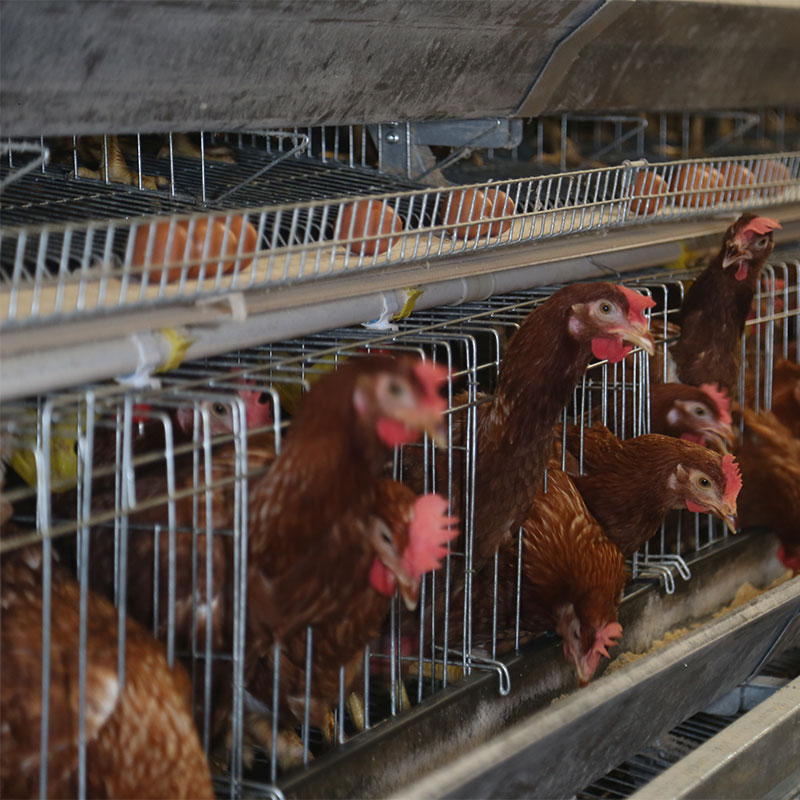
The vertical design allows for rearing a large number of pullets in a smaller building footprint compared to floor systems, making it a landefficient solution.
Technology alone does not guarantee success; it must be paired with expert management.
Thoroughly clean and disinfect the entire system—cages, feeders, drinkers, ventilation ducts—during downtime. Check that all automation (feed lines, water pressure) is calibrated and functioning perfectly before bird arrival.
Adhere strictly to manufacturer and welfare guideline recommendations for space per bird (often measured in square inches per pullet). Overcrowding negates all welfare and uniformity benefits.
Consult with your integrator or veterinarian on best practices regarding beak treatment if required for your operation’s laying system.
Implement phasespecific diets (starter/grower/finisher) through automated feeders.
Ensure feed particle size is appropriate to encourage proper gizzard development.
Monitor feeder line speed to ensure all birds can eat without competition.
Ventilation is paramount.
Goal: Provide fresh air uniformly at bird level without creating drafts.
Use minimum ventilation rates in colder weather to remove moisture and ammonia.
Monitor temperature closely; pullets have different thermoneutral zones than chicks or layers.
Follow scientificallybacked lighting schedules to control sexual maturity.
Typically involves decreasing light hours initially followed by stimulatory increases timed perfectly with transfer to the lay house.
Establish a routine healthcheck protocol.
Easily administer vaccinations via water lines in this controlled environment.
Pay close attention to signs of coccidiosis (even in caged systems), respiratory issues, or parasites.
| Feature | HType Pullet Cage | Traditional Stacked Cages | Aviary / Floor Rearing |
| : | : | : | : |
| Manure Management | Excellent (freefall pit) | Good (belts under each tier) | Challenging (litter management) |
| Air Quality | Superior due to open design | Can be poor if not ventilated well | Variable; depends on litter condition |
| Bird Uniformity| Very High | High | Often Lower due to competition |
| Labor Efficiency| High (automation friendly) | Moderate | Lower (more manual tasks) |
| Observation Ease| Excellent (birds visible at eye level) | Poor (lower tiers hard to see) | Difficult in large flocks |
| Transition Stress| Low (transfer from cagetocage) | Low | High (floortocage transfer required) |
| Initial Investment| High | ModerateHigh | Moderate |
When investing:
1. Choose Reputable Manufacturers: Look for companies with proven durability, good aftersales service,and availability of spare parts.
2. Plan for Full Automation: Integrate feeding,niping drinking,and manure belt/pit scraper systems from the start.
3.Consider FutureProofing: Ensure designs can adaptto potential future welfare standard changes(e.g.,enrichment provisions).
4.Maintenance Schedule: Conduct regular inspectionsof welds,cable tensions,nipple drinkers,and moving parts.Lubricate drives as per manual.A rigorous maintenance program prevents catastrophic failures.
The decision torear pulletsin anHtype pullet cagesystemis an investmentin thereliabilityand productivityof your entire laying cycle.This advanced housing solution masterfully balances essential priorities: safeguardingpullet health through superior hygieneand air quality ,enablingprecision managementfor optimalflock uniformity ,and driving operationalefficiencythrough automation .Whilethe initial capital outlayis significant,the longterm returns—measuredin healthierbirds,a smoother transitionto lay ,higher peak production ,and reduced medication costs—are compelling.For forwardthinking poultry producers committedto sustainable ,welfareconscious ,and profitable egg production ,theHtypepullet cagestands asthe modern standardfor excellencein young henrearing .
Q1: What is the main difference between an Htype cage anda traditional battery cageforpullets?
A:The core difference lies inthe tier arrangement.Htypecages have offsetor stepped tiers allowingmanureto fall freelyto adeeppit or centralbelt ,dramatically improvingventilation .Traditionalstacked cages place tiersdirectlyaboveeach other ,oftenrelyingonmanurebeltsateach level whichcancompromiseair qualityif not managed perfectly .
Q2: AreHtypepullet cages considered betterfor animal welfare?
A:Withinthe contextof cagedrearing,Htypedesignsgenerallypromotehigherwelfare outcomesprimarily dueto vastly improvedair quality( lowerammonia)and drierbird environments .They alsotypicallyprovide moreheadroomand aredesignedtomeet orexceed recognizedspace allowance guidelines .Welfareis multifaceted ,however,and alsoheavily dependentonstocking density ,management ,and geneticselection .
Q3: Whatisthe recommendedstocking densityforpulletsinanHtypecage?
A:Densityvariesbycountryregulationand certificationprogram(e.g.,United Egg Producers).As ageneralguideline,many modernsystemsallowbetween60to80squareinchesperpulletin therearfacility .Alwaysconsultyour local regulations,welfare codes,and equipmentmanufacturerforspecificrecommendationsforyour flock sizeand breed .
Q4: Canbeak trimmingbe avoidedwhenusingHtypecages?
A:Itispossiblebut requiresa holisticapproach.The controlledenvironmentof acagecanreduce triggersfor feather pecking .Successdepends ongenetics(stocks bredfor gentlerbehavior ),appropriatelighting(avoidbrightintensity ),optimalnutrition( nofibredeficiencies ),and meticulousstocking densitymanagement .Many farmsstill optfor precisionbeak treatmentas apreventative measurebasedontheirdestinationlaying housingsystem .
Q5: Howdo youmanagevaccinations inpulletinHtypecages?
A:Htypecagesarehighlyconducivetoefficientvaccination.Mostvaccinesaredeliveredvia theautomateddrinkingwaterlines .The keyis ensuringproperline preparation(flushing ,correctvaccine stabilizer )and managingwater shutofftimessoallbirdsreceiveadose .Sprayvaccinationscanalsobe administeredeffectivelybywalkingthe aisles .
Q6:Whatisthe biggestchallengein managinganHtypepulletcage system?
A:The primarychallengeismaintainingperfectenvironmentalcontrol ,especiallyventilation .Becauseoftheopenmanurepit ,managingminimumventilationratesin coldweathertoremove moisturewithout chillingthebirdsis critical.Poorventilationcanquicklyleadtoammoniabuilduporrespiratoryissues .
Q7:Howlong dopulletstypicallystay intheHtypercages?
A:Pulletsareusuallytransferredfrombroodersto therearcagesaround4–5weeksof age.Theyremainintherear(Htype)cagefacilityuntiltheyreachpointoflayatapproximately16–18weeksold,beforebeingmovedtotheirlayinghenhousing .
Q8:Isthe transitionstressfulforhensmovingfromanHtypereartocagelayinghouses?
A:The transitionismuchless stressfulcomparedtomovingbirdsfromafloorsystemto cages.Becausethebirdsarealreadyacclimatedtocageliving,nipple drinkers,and automatedfeeders,theystressexperienceduringtransferismainlyphysicalmovement.Thekeyistoensurethelayinghouselightingscheduleissynchronizedwiththerearhouse .
Q9:Whatkindofmaintenancedothese systemrequire?
A:Regularmaintenanceincludescheckingandreplacingwornnippledrinkerseals,lubricatingfeedline drivesandinspectingsprockets,tighteningcabletensionsonpartitiondoors,andensuringmanueremovalsystems(scrapersorbelts )arefunctioningsmoothly.Anannualdeepcleanandinspectionduringdowntimeis crucial .
Q10:CanyouuseanHtypesystemforegglayinghensaswell?
A:The fundamentaldesignofan"Htype"isoftenusedinenrichedcolonyoraviarylayingsystemsformaturehens .However,thedesignspecificationsforspaceperbird,cagemodifications(e.g.,nestingareas,soring areas ),ande quipmentaredifferent.Atrue"Htypepulletecage"isspecificallyengineeredforthesizeandenvironmentalneedsof growingpullets .
Disclaimer:This articleisfort informational purposesonly.Local regulations,welfare standards,and best practicesvary.Consultwith poultryextension specialists,veterinarians,and equipment suppliersformodelspecificadviceforyouroperation.
1. Drinking system include the water pipes, water pressure adjuster, drinking nipples, Waterline front-end device, dosing system etc, choose them according to customer's needs.
2. High-quality water drinking pipes, pressure regulating valves and water drinking nipples can effectively prevent the water leakage. Drinking system adopt the closed piping system, which can minimize the water pollution.
3. 360-degree drinking nipples provide adequate drinking water for poultry at all stages.
4. The automatic drinking water system mainly adopts the steel ball drinking nipple. lt uses imported high-grad stainless steel, POM resin, and APS engineering material, which is wearing resistant, and the durability can be used for long time.



1. Automatic feeding machine can be chosen between gantry and ladder feeding machine. Gantry type feeding machine is a relatively economical and practical machine with simple operation, remote control walking character, easy to manage.
2. Mechanical transmission device running smoothly, low noise, long service life.
3. With the use of automatic control, the feeding system can adjust the amount of material.
4. Feeding with arched structure, high carrying capacity, not easily deformed.
5. Saving man power, saving feed, greatly improving the efficiency of Large-scale farming.
6. The walking speed of gantry feeding machine is 9--12 m/min.




1. Manure removing system included scraper type and conveyor belt type, Which can reduce the labor intensity and labor cost, keep the chicken shed dry and clean.
2. A type chicken cage can use scraper type or conveyor belt type.


3. The scraper type is suitable for A type cages, which can clean two or three rows. For the starters, this type is a good choice. lt can not only save some labor cost, but also save some investment in the whole project. The cleaning speed is 6-10 meters per minute.
4. Conveyor belt type is more suitable for large scale farming. The manure removing belt we use is high quality PP material (polypropylene). The walking speed is 2-4 meters per minute.



High Quality Pellets Made by Mobile Pellet Machine
1. It has professional designed angle of the blade. After the dynamic balance test one by one, the blade can operate smoothly.
2. The air volume is consistent in the whole life of the fan. Bearings has advantage of high strength, low noise, durable and so on.
1. The cooling pads uses high-quality wet curtain paper and adopts space cross-linking technology, which has the advantages of high water absorption, high water resistance, anti-toxicity and long service life.
2. The cooling efficiency is over 80%, without surfactant, natural water absorption, fast diffusion speed and long-lasting effect.
3. The product does not contain phenol and other chemical substances that are easy to cause skin allergies. It is non-toxic and harmless to the human body and chicken when installed and used. It is green, safe, energy-saving, environmentally friendly, economical, and easy to install.
4. The frame aluminum alloy has high strength, good corrosion resistance, durability and beautiful appearance.
5. Use a special filter for the cooling pad at the upper water to ensure clean water quality and support efficient water circulation components.
6. Combined with a negative pressure fan, it can effectively lower the indoor temperature.
The window is made of special selected high-quality engineering plastic, with high strength and long service life, together with superior anti-aging and anti-UV performance.
Function: Ventilation of the chicken house, usually used in the winter.
This system can adjust the wind speed and direction, thus the cold air will not reach chicken directly , which can effectively prevent the phenomenon of cold stress in chicken.
Environmental control system equipment is suitable for large-scale and intensive farming. According to customer requirements, we can provide various types of smart poultry equipment.
1. Our poultry management system is a modular system that manages all aspects of the chicken house, such as climate, temperature, humidity, ammonia, feeding, feed weighing, lighting and ventilation systems, and can monitor the situation of the chicken house in real time through a computer and mobile phone.
2. The management computer is the heart of the poultry farm, allowing you to easily monitor the entire poultry farm.

 WeChat:+8617838608255