The Modern Poultry Operation: Integrating Intelligence into Large-Scale Chicken Production
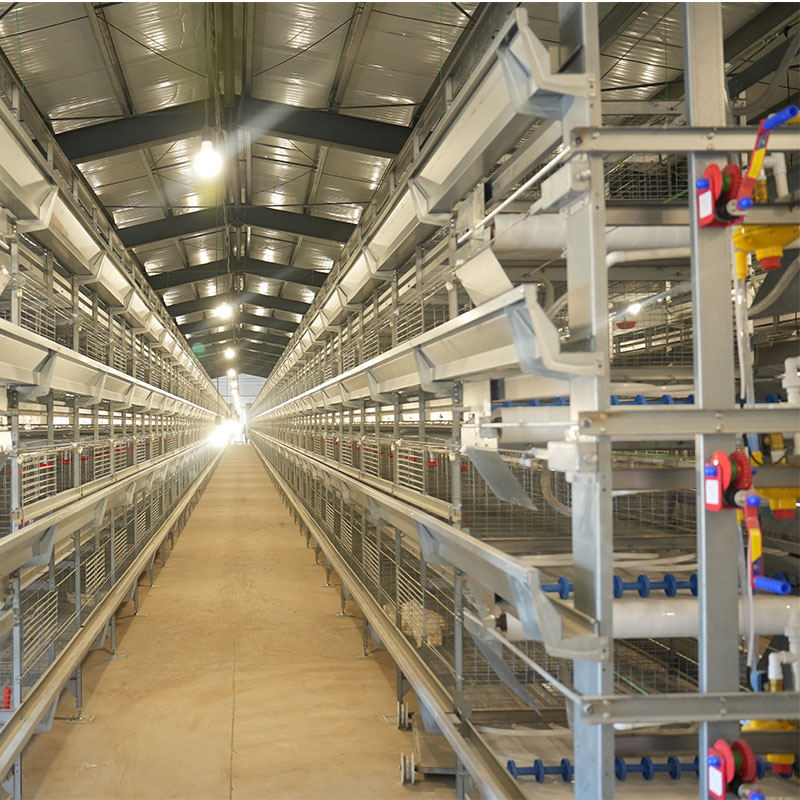
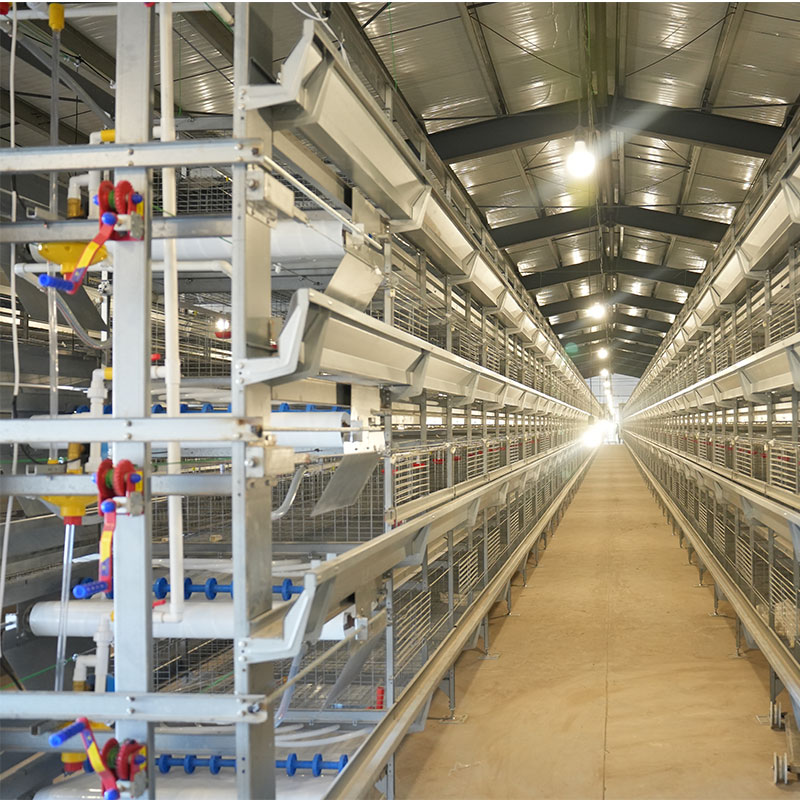
The landscape of poultry farming is undergoing a fundamental shift. The traditional image of a farmer manually scattering feed and checking on flocks is being replaced by centralized control rooms and the quiet hum of automated systems. For the commercial poultry farmer operating at scale, this evolution is not merely about convenience; it is a strategic imperative for sustainability, profitability, and animal welfare. The centerpiece of this transformation is the high-quality, intelligent automatic chicken cage system. This is not just a piece of equipment; it is an integrated production environment designed to bring unprecedented levels of control and efficiency to the broiler or layer house.
Moving beyond basic automation, these advanced systems represent a holistic approach to breeding. They combine robust physical infrastructure with sophisticated data collection and analysis, creating a responsive environment where the well-being of the bird is directly linked to the operational success of the farm. For a farmer managing tens of thousands of birds, the ability to monitor and adjust conditions not just for the entire house, but for specific zones or even tiers of cages, marks a leap forward in precision agriculture.
The Foundation: Engineering for Health and Efficiency
The physical structure of an automatic cage system is its backbone. Unlike rudimentary cages, high-quality systems are engineered with specific outcomes in mind: maximizing space utilization, promoting bird health, and facilitating seamless automation.
Consider the cage flooring. A farmer might notice that in older systems, birds occasionally develop foot lesions. A modern system addresses this proactively with welded wire flooring designed with a specific slope and gauge. This slight incline is not arbitrary; it guides eggs gently toward the collection belt the moment they are laid, minimizing contact time and reducing the risk of shell contamination or breakage. The precise welding and smooth finish of the wire prevent injury and provide a stable surface that supports foot health, which is critical for bird mobility and overall condition.
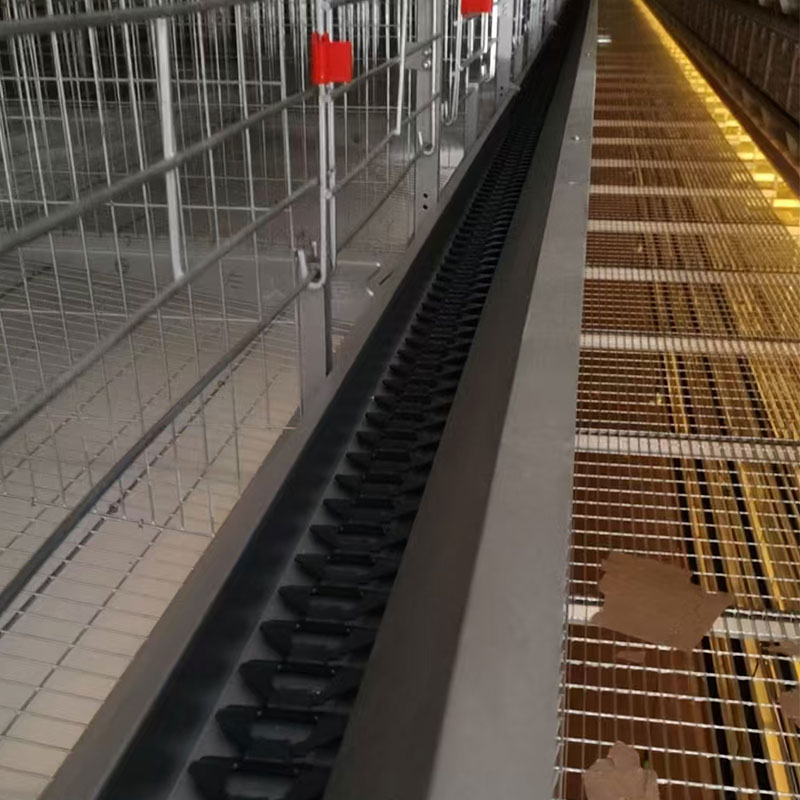
The design of the manure removal system is another critical engineering feat. In a large-scale operation, manure accumulation is more than a cleanliness issue; it is a primary source of ammonia gas, which can damage birds’ respiratory systems and suppress immune function. A traditional approach might involve manual scraping or periodic cleaning, creating peaks of ammonia release and labor demand. An intelligent system employs a continuous belt scraper that runs beneath each tier of cages. This belt removes manure multiple times a day, transporting it directly out of the house to a designated collection point. A farmer no longer has to schedule disruptive clean-outs; the environment remains consistently cleaner, leading to better air quality, lower veterinary costs, and a healthier flock.
Watering systems have also evolved from simple nipple lines. Modern systems feature precision-drinked nipples that release water only when activated by the bird’s beak. This not only conserves water but, more importantly, keeps the water in the cup fresh and prevents spillage. A farmer walking through the house will notice dry litter around the cages, a stark contrast to the dampness common with older waterers. This dryness directly curtails the growth of pathogens like Salmonella and E. coli, creating a more hygienic environment from the ground up.
The Nervous System: Intelligent Automation in Action
Automation is the muscle of the system, but intelligence is its nervous system. The true value of a modern cage system lies in its ability to perform tasks consistently while gathering data to inform decisions.
The automatic feeding system exemplifies this. A central hopper holds the feed, which is transported via a chain or spiral auger system to every cage. Sensors ensure the feed line is filled to a precise level, guaranteeing every bird has equal access. But the intelligence goes deeper. A farmer can program the system to run at specific intervals. Instead of one large morning feeding, the system can deliver smaller, more frequent meals. This mimics natural feeding behavior, reduces competition at the feeder, and can lead to more uniform bird growth. For layers, consistent nutrient intake is directly correlated with consistent egg production and shell quality. The system doesn’t just deliver feed; it manages a key input for production targets.
Egg collection is another area where automation delivers profound benefits. In a house with 50,000 layers, manual collection is a massive, labor-intensive task that risks egg damage and disturbs the birds. An intelligent egg collection system uses gentle belts that carry eggs from each cage to a central collection point. Along the way, they may pass through a soft-bristle cleaner that removes minor debris. The eggs are then conveyed to a grading and packing station, often without a single human hand touching them. This minimizes labor costs and drastically reduces the percentage of seconds or cracked eggs, directly protecting revenue. A farmer can review a daily report showing the number of eggs collected and the rate of grade-outs, providing immediate feedback on flock performance.
Perhaps the most significant advancement is the integration of environmental controllers. These units are the brain of the operation. A farmer no longer needs to manually adjust thermostat dials or wonder if the ventilation is adequate. They can set target parameters for temperature, humidity, and ventilation rates on a central touchscreen. The controller then continuously monitors the house using a network of sensors. If the temperature begins to creep above the set point on a hot afternoon, the controller will first increase fan speed. If that is insufficient, it will gradually open side curtains or evaporative cooling pads. This happens automatically, maintaining a stable thermal environment that prevents heat stress—a major cause of mortality in poultry. This constant stability means birds use their feed energy for growth or egg production, not for regulating their body temperature.
The Strategic Advantage: Data-Driven Decision Making
The culmination of these integrated systems is the generation of actionable data. This transforms poultry farming from a reactive practice to a proactive, strategic enterprise.
Modern intelligent systems collect a constant stream of information: water consumption per line, feed consumption per run, environmental conditions, and even bird mortality. This data is presented on easy-to-read dashboards. A farmer might log in remotely and notice that water consumption in the south end of the house has dropped by 15% compared to the north end. Instead of waiting to see a problem manifest in bird health, this data serves as an early warning system. It prompts an immediate physical check of that section’s water line, perhaps revealing a partially clogged filter or a malfunctioning pressure regulator. The issue is resolved before the birds become dehydrated or their feed intake declines.
This data also allows for precise benchmarking. A farmer can compare the feed conversion ratio (FCR)—the amount of feed needed to produce a kilogram of meat or a dozen eggs—of the current flock to the previous five flocks. If the FCR is trending upward, it prompts an investigation. Was there a subtle change in feed formulation? Were there unnoticed fluctuations in the house temperature? This level of analysis was previously impossible without painstaking manual record-keeping. Now, it is built into the daily operation, enabling continuous improvement.
For layer operations, data on egg production by time of day and by specific cage rows can reveal patterns. A persistent drop in production from one tier might indicate a lighting issue or a localized draft. This granularity allows for targeted interventions rather than blanket solutions, saving time and resources.
Considering the Investment: Beyond the Initial Price Tag
Adopting an intelligent cage system is a significant capital investment. The decision, therefore, must be viewed through a long-term financial lens, considering total cost of ownership rather than just upfront price.
The most immediate return on investment comes from labor savings. Automating feeding, watering, egg collection, and manure management can reduce the required labor force by 70% or more. This not only cuts wage bills but also mitigates the challenge of finding reliable agricultural labor. It allows the existing skilled workforce to focus on higher-value tasks like monitoring bird health, maintaining equipment, and analyzing data.
Improved feed efficiency is another major financial driver. By reducing feed waste through precise delivery systems and optimizing bird health for better conversion, even a small improvement in FCR translates into substantial savings over the life of a flock. For a farm producing a million broilers annually, a 0.05 improvement in FCR can save tens of thousands of dollars in feed costs each year.
Enhanced bird welfare, driven by a stable environment and reduced stress, leads to tangible production benefits. Lower mortality rates mean more saleable birds or eggs. Healthier birds require fewer medications, reducing veterinary costs and addressing consumer demand for reduced antibiotic use in poultry production. The consistency of the environment also promotes flock uniformity. In a broiler operation, uniform bird size simplifies processing and meets the exacting specifications of modern buyers. In a layer operation, it means a more consistent egg size and quality throughout the laying cycle.
Finally, the data generated by the system is itself an asset. It provides irrefutable records for quality assurance programs, traceability protocols, and certifications that can open doors to premium markets. It empowers the farmer with knowledge, turning daily operations into a strategic advantage.
The transition to a high-quality, intelligent automatic cage system is a defining step for the modern poultry farmer. It is an investment in a infrastructure that prioritizes animal welfare, operational efficiency, and data-driven management. By integrating robust engineering with smart technology, these systems are not just housing chickens; they are optimizing an entire biological production process, setting a new standard for what is possible in sustainable and profitable poultry farming.
1. Drinking system include the water pipes, water pressure adjuster, drinking nipples, Waterline front-end device, dosing system etc, choose them according to customer's needs.
2. High-quality water drinking pipes, pressure regulating valves and water drinking nipples can effectively prevent the water leakage. Drinking system adopt the closed piping system, which can minimize the water pollution.
3. 360-degree drinking nipples provide adequate drinking water for poultry at all stages.
4. The automatic drinking water system mainly adopts the steel ball drinking nipple. lt uses imported high-grad stainless steel, POM resin, and APS engineering material, which is wearing resistant, and the durability can be used for long time.



1. Automatic feeding machine can be chosen between gantry and ladder feeding machine. Gantry type feeding machine is a relatively economical and practical machine with simple operation, remote control walking character, easy to manage.
2. Mechanical transmission device running smoothly, low noise, long service life.
3. With the use of automatic control, the feeding system can adjust the amount of material.
4. Feeding with arched structure, high carrying capacity, not easily deformed.
5. Saving man power, saving feed, greatly improving the efficiency of Large-scale farming.
6. The walking speed of gantry feeding machine is 9--12 m/min.




1. Manure removing system included scraper type and conveyor belt type, Which can reduce the labor intensity and labor cost, keep the chicken shed dry and clean.
2. A type chicken cage can use scraper type or conveyor belt type.


3. The scraper type is suitable for A type cages, which can clean two or three rows. For the starters, this type is a good choice. lt can not only save some labor cost, but also save some investment in the whole project. The cleaning speed is 6-10 meters per minute.
4. Conveyor belt type is more suitable for large scale farming. The manure removing belt we use is high quality PP material (polypropylene). The walking speed is 2-4 meters per minute.



High Quality Pellets Made by Mobile Pellet Machine
1. It has professional designed angle of the blade. After the dynamic balance test one by one, the blade can operate smoothly.
2. The air volume is consistent in the whole life of the fan. Bearings has advantage of high strength, low noise, durable and so on.
1. The cooling pads uses high-quality wet curtain paper and adopts space cross-linking technology, which has the advantages of high water absorption, high water resistance, anti-toxicity and long service life.
2. The cooling efficiency is over 80%, without surfactant, natural water absorption, fast diffusion speed and long-lasting effect.
3. The product does not contain phenol and other chemical substances that are easy to cause skin allergies. It is non-toxic and harmless to the human body and chicken when installed and used. It is green, safe, energy-saving, environmentally friendly, economical, and easy to install.
4. The frame aluminum alloy has high strength, good corrosion resistance, durability and beautiful appearance.
5. Use a special filter for the cooling pad at the upper water to ensure clean water quality and support efficient water circulation components.
6. Combined with a negative pressure fan, it can effectively lower the indoor temperature.
The window is made of special selected high-quality engineering plastic, with high strength and long service life, together with superior anti-aging and anti-UV performance.
Function: Ventilation of the chicken house, usually used in the winter.
This system can adjust the wind speed and direction, thus the cold air will not reach chicken directly , which can effectively prevent the phenomenon of cold stress in chicken.
Environmental control system equipment is suitable for large-scale and intensive farming. According to customer requirements, we can provide various types of smart poultry equipment.
1. Our poultry management system is a modular system that manages all aspects of the chicken house, such as climate, temperature, humidity, ammonia, feeding, feed weighing, lighting and ventilation systems, and can monitor the situation of the chicken house in real time through a computer and mobile phone.
2. The management computer is the heart of the poultry farm, allowing you to easily monitor the entire poultry farm.

 WeChat:+8617838608255