
The morning feed run takes on a different rhythm when you’re working with an H-Type layer cage system. Instead of moving from one conventional coop to another, you’re operating a centralized production line. A single switch engages the feed trolley, which traverses the length of the galvanized steel trough, distributing a perfectly blended ration to several thousand birds simultaneously. The sound isn’t the scattered scratching of litter, but the consistent, gentle clatter of beaks against metal. For the commercial poultry farmer focused on egg production efficiency, this shift from floor-based or simpler cage systems to a multi-tiered H-Type structure represents a fundamental re-engineering of the daily workflow and the economics of the operation.
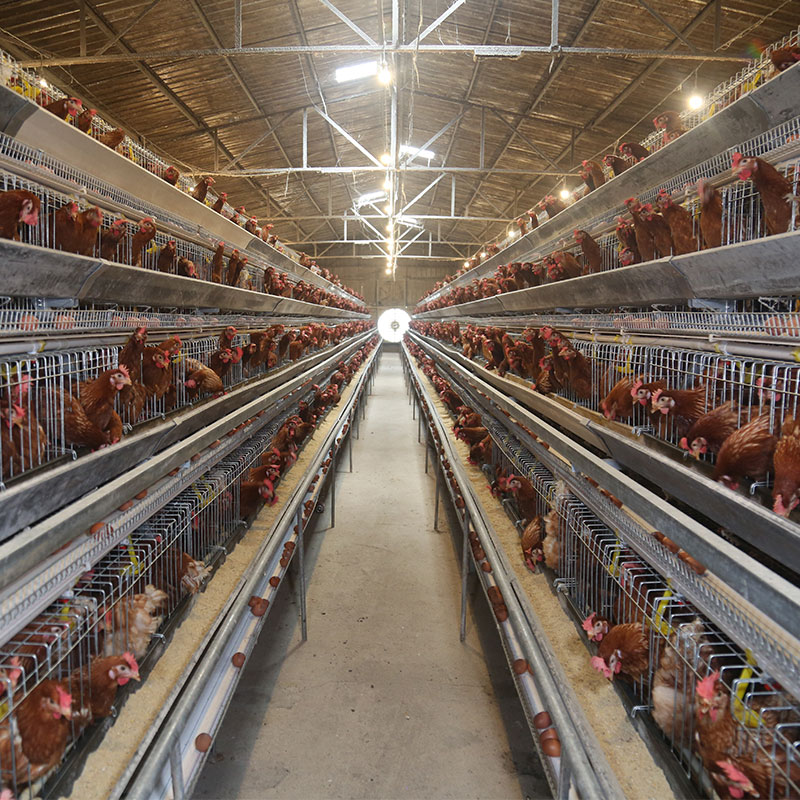
The defining visual characteristic of the H-Type system is its vertical integration. The cages are stacked in multiple tiers, typically two to four levels high, with a central manure removal belt running beneath each level. The "H" frame provides the robust skeletal structure that supports these tiers, creating a tall, narrow footprint that maximizes bird capacity per square meter of floor space. This is not merely about stacking cages on top of one another; it is an integrated mechanism where feeding, watering, egg collection, and manure handling are all automated and synchronized.
Structural Integrity and Bird Density
The core of any successful cage system is its frame. A flimsy structure will sag under the weight of birds, feed, and equipment, leading to misaligned egg collection belts and unreliable manure belt operation. The H-frame is engineered for load-bearing capacity. High-tensile steel, often with a hot-dip galvanized coating, is the standard. This coating is not just paint; it is a metallurgical bond that prevents rust from forming when exposed to the humid, ammonia-rich environment of a poultry house. A farmer who has spent years repainting corroded angle-iron frames will immediately recognize the value of a galvanized finish that remains intact for the lifespan of the system.
Bird density is a carefully calculated metric, not an arbitrary number. In a well-designed H-Type cage, each hen is allocated a specific amount of floor space—often dictated by animal welfare certification standards, such as 750 square centimeters per bird. This isn't just an empty square; it includes access to feed, water, and a sloped floor. The cage floor is made of welded wire mesh, designed with a specific gauge and slope. The slope, typically around 8-10 degrees, is critical. It must be steep enough for a laid egg to roll cleanly onto the egg collection belt without cracking, but not so steep that it causes discomfort or foot problems for the hens. A cage with an insufficient slope will result in hens laying eggs that remain inside the cage, leading to floor eggs that are dirty, cracked, and require manual collection, defeating a primary purpose of automation.
The Automated Nervous System: Feeding, Watering, and Egg Collection
The efficiency gains of an H-Type system are realized through its automated subsystems.
The feeding system operates like a scheduled train service. A central hopper holds the feed, which is transported via an auger or chain to a distribution trolley that runs along the top of the cage rows. This trolley, on a timer, releases a precise amount of feed into the trough that services an entire row of cages. This ensures every bird has access to fresh, uncontaminated feed at the same time. For a farmer mixing their own ration, this system eliminates the tremendous feed waste common in floor systems, where feed is scattered, mixed with litter, and spoiled. The consistency of delivery also promotes flock uniformity, as no bird is out-competed for the morning meal.
Watering is provided through nipple drinker systems. These are not open troughs that can become contaminated with feed and droppings, but sealed pipes with stainless steel nipples. Hens learn to activate the nipple with their beaks, receiving a fresh drop of water with each peck. This "closed" system drastically reduces water spillage, which in turn controls humidity levels inside the house. Lower humidity means drier manure and a lower risk of respiratory ailments in the flock. A farmer noticing wet manure cakes on the belts can often trace the issue back to water pressure that is too high at the nipple lines, causing leakage and waste.
The most delicate operation is egg collection. The gently sloped cage floor allows each egg to roll onto a soft, plastic-coated egg belt the moment it is laid. These belts run at slow, intermittent speeds, gently transporting the eggs to the end of the row where they converge onto a central cross-collection belt. This belt then carries all the eggs from the house to the egg collection room. The quality of the egg belt material is paramount. A rough or poorly jointed belt will cause hairline cracks in the shells, drastically reducing the egg's grade and market value. The entire journey from cage to packing station is designed to be a single, hands-off process, minimizing breakage and bacterial contamination from human handling.
Manure Management: The Belt Drying System
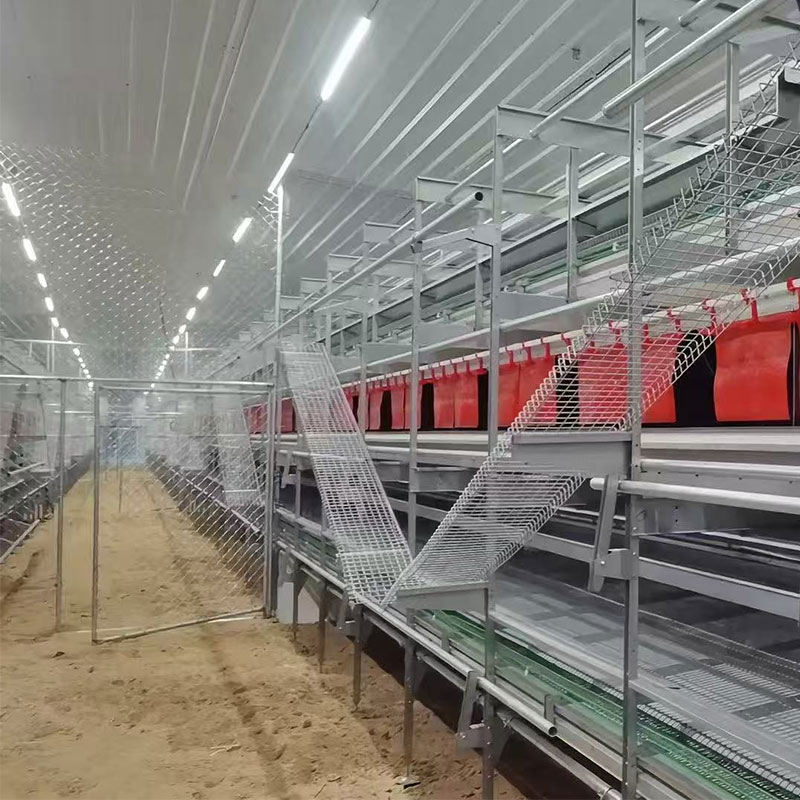
Perhaps the most significant advancement in modern H-Type cages is the incorporation of manure belt systems with drying functionality. Beneath each tier of cages runs a continuous PVC or polyester belt. This belt catches the droppings from the birds in the cage above. In a basic system, this belt would simply move once a day to dump the manure into a pit or onto a spreader.
The advanced approach integrates a drying phase. After the manure is deposited on the belt, the system does not immediately remove it. Instead, the belt remains stationary for a period, often 2-4 days, while air is circulated over it. In some systems, warm air from the house environment is sufficient; in others, dedicated air ducts blow across the manure surface. This process reduces the moisture content of the manure from around 75-80% to 50-60%.
The difference this makes is transformative. Wet, fresh manure is a heavy, foul-smelling slurry that is difficult to handle, attracts flies, and releases large amounts of ammonia. Ammonia is not just a smell; at high concentrations, it damages the birds' respiratory tracts, leading to conjunctivitis and increased susceptibility to diseases like Newcastle disease and Infectious Bronchitis. For the farm workers, high ammonia levels create an unsafe working environment.
Dry manure, by contrast, is a lightweight, friable material. When the belt finally engages to transport it out of the house, it is more like a crumbly peat than a slurry. It is easier to handle, can be stored or bagged for sale as fertilizer, and its weight is significantly less, reducing transportation costs. Most importantly, the ammonia emissions are drastically curtailed, leading to better bird health, improved worker conditions, and a reduced environmental footprint. A farmer who switches from a daily scrape-out system to a belt-drying system will notice the improvement in air quality within the first week.
Economic Considerations and Flock Health
The capital investment for a fully automated H-Type layer cage system is substantial. It is not merely the cost of the cages themselves, but the accompanying infrastructure: reinforced concrete floors to support the weight, high-capacity electrical systems for the motors, and sophisticated ventilation systems to manage the air quality in a densely stocked house. This investment must be justified by a return over the system's lifespan, which can be 15-20 years.
The return is realized through labor savings. A single worker can manage a flock of 50,000 hens in an automated system, a task that would require a team of workers in a less automated setup. Their role shifts from manual, physically demanding labor to monitoring, maintenance, and data analysis. They check the control panels for error codes, inspect the belts for wear, and monitor egg counters and feed consumption software.
Flock health management also changes. The system prevents contact between hens and their manure, breaking the lifecycle of intestinal parasites like worms and reducing the incidence of bacterial diseases such as Avian Influenza and Salmonella, which can spread through contaminated litter. However, this closed environment demands a higher standard of biosecurity. Introduction of a pathogen can spread rapidly through the automated systems. Vaccination protocols become non-negotiable, and strict measures to control visitor and vehicle access to the farm are critical.
The cages also allow for precise flock management. Because birds are housed in small groups within a larger cage, a farmer can easily observe the condition of the birds, identify sick or injured individuals for removal, and accurately track metrics like feed conversion ratio (FCR) and hen-housed egg production. This data is essential for making informed decisions about nutrition, lighting programs, and the optimal time for molting or flock depletion.
Operational Workflow and Management
Implementing an H-Type system requires a disciplined operational routine. The day begins with a system check. The farmer walks the length of the house, listening for unusual sounds from the motors, checking that all nipple drinkers are dripping correctly, and ensuring the egg belts are aligned and tensioned. The control panel is consulted; it displays run times for the feeding trolley, the status of the manure belts, and the egg counter totals from the previous day.
Water line sanitation is a weekly task. A liquid acidifier or sanitizer is injected into the water lines to control biofilm—a slimy buildup of bacteria that can harbor pathogens and block nipples. The feed system is periodically purged to prevent stale feed from accumulating in the corners of the augers and hoppers.
The manure belt removal cycle is scheduled based on the drying capacity of the system and external weather conditions. On a humid day, the belts might run more frequently to prevent moisture buildup. The dried manure is typically moved to an enclosed storage shed or directly loaded into trailers for removal.
Egg collection is a continuous, quiet process in the background. The focus in the egg room is on quality control: inspecting samples for cracks, staining, and shell quality, and ensuring the grading and packing machinery is calibrated correctly.
The transition to an H-Type cage system is a strategic decision that moves a poultry operation from an agricultural practice to a form of precision livestock farming. It leverages engineering and automation to create a controlled environment where the genetic potential of high-producing layer hybrids can be fully expressed. The success of the system hinges on the interplay between its mechanical reliability, the biological needs of the bird, and the management acumen of the farmer. It is a tool that, when mastered, delivers consistency, efficiency, and a scale of production that simpler systems cannot match.
1. Drinking system include the water pipes, water pressure adjuster, drinking nipples, Waterline front-end device, dosing system etc, choose them according to customer's needs.
2. High-quality water drinking pipes, pressure regulating valves and water drinking nipples can effectively prevent the water leakage. Drinking system adopt the closed piping system, which can minimize the water pollution.
3. 360-degree drinking nipples provide adequate drinking water for poultry at all stages.
4. The automatic drinking water system mainly adopts the steel ball drinking nipple. lt uses imported high-grad stainless steel, POM resin, and APS engineering material, which is wearing resistant, and the durability can be used for long time.



1. Automatic feeding machine can be chosen between gantry and ladder feeding machine. Gantry type feeding machine is a relatively economical and practical machine with simple operation, remote control walking character, easy to manage.
2. Mechanical transmission device running smoothly, low noise, long service life.
3. With the use of automatic control, the feeding system can adjust the amount of material.
4. Feeding with arched structure, high carrying capacity, not easily deformed.
5. Saving man power, saving feed, greatly improving the efficiency of Large-scale farming.
6. The walking speed of gantry feeding machine is 9--12 m/min.




1. Manure removing system included scraper type and conveyor belt type, Which can reduce the labor intensity and labor cost, keep the chicken shed dry and clean.
2. A type chicken cage can use scraper type or conveyor belt type.


3. The scraper type is suitable for A type cages, which can clean two or three rows. For the starters, this type is a good choice. lt can not only save some labor cost, but also save some investment in the whole project. The cleaning speed is 6-10 meters per minute.
4. Conveyor belt type is more suitable for large scale farming. The manure removing belt we use is high quality PP material (polypropylene). The walking speed is 2-4 meters per minute.



High Quality Pellets Made by Mobile Pellet Machine
1. It has professional designed angle of the blade. After the dynamic balance test one by one, the blade can operate smoothly.
2. The air volume is consistent in the whole life of the fan. Bearings has advantage of high strength, low noise, durable and so on.
1. The cooling pads uses high-quality wet curtain paper and adopts space cross-linking technology, which has the advantages of high water absorption, high water resistance, anti-toxicity and long service life.
2. The cooling efficiency is over 80%, without surfactant, natural water absorption, fast diffusion speed and long-lasting effect.
3. The product does not contain phenol and other chemical substances that are easy to cause skin allergies. It is non-toxic and harmless to the human body and chicken when installed and used. It is green, safe, energy-saving, environmentally friendly, economical, and easy to install.
4. The frame aluminum alloy has high strength, good corrosion resistance, durability and beautiful appearance.
5. Use a special filter for the cooling pad at the upper water to ensure clean water quality and support efficient water circulation components.
6. Combined with a negative pressure fan, it can effectively lower the indoor temperature.
The window is made of special selected high-quality engineering plastic, with high strength and long service life, together with superior anti-aging and anti-UV performance.
Function: Ventilation of the chicken house, usually used in the winter.
This system can adjust the wind speed and direction, thus the cold air will not reach chicken directly , which can effectively prevent the phenomenon of cold stress in chicken.
Environmental control system equipment is suitable for large-scale and intensive farming. According to customer requirements, we can provide various types of smart poultry equipment.
1. Our poultry management system is a modular system that manages all aspects of the chicken house, such as climate, temperature, humidity, ammonia, feeding, feed weighing, lighting and ventilation systems, and can monitor the situation of the chicken house in real time through a computer and mobile phone.
2. The management computer is the heart of the poultry farm, allowing you to easily monitor the entire poultry farm.

 WeChat:+8617838608255