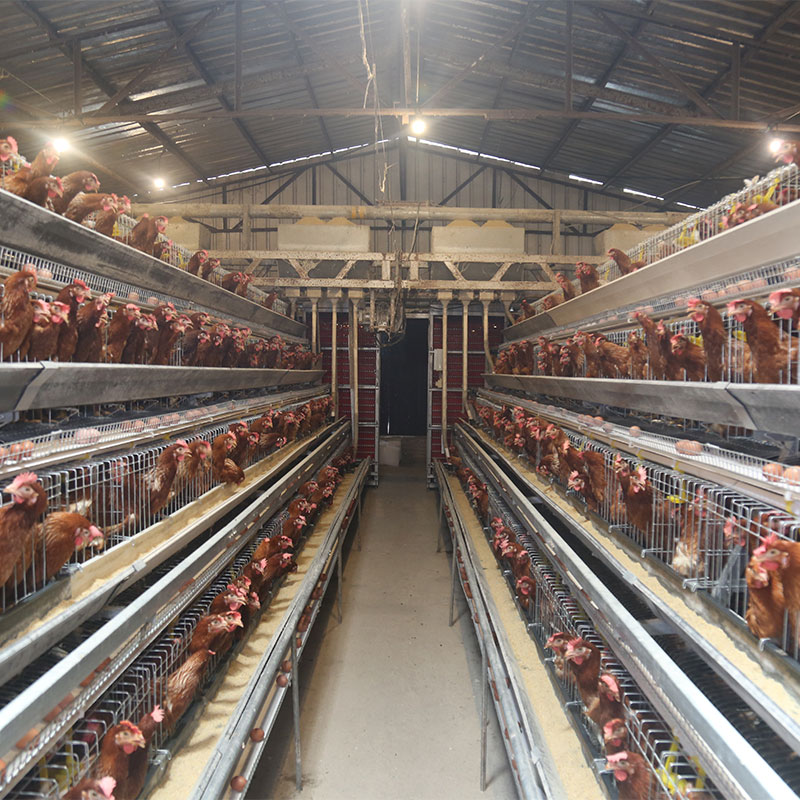
The rhythmic clucking of contented hens echoes through the shed, a sound synonymous with productivity for the modern poultry farmer. For operations looking to scale, improve efficiency, and maintain bird health, the transition from traditional floor systems to structured housing is a significant decision. The layer cage system, specifically the multi-tiered battery cage design, represents a major investment in the future of a farm. Understanding its components, operational benefits, and management requirements is crucial for maximizing return on investment.
Structural Integrity and Design

At its core, a modern layer cage is an engineered structure designed for durability and animal containment. The framework is typically constructed from heavy-galvanized steel wire, chosen for its resistance to the corrosive ammonia produced from manure. Unlike a simple fence, this wire is drawn to a specific tensile strength, meaning it can withstand the constant pressure of birds moving against it without bending or breaking over time.
The system is organized in rows of tiers, often ranging from three to five levels high. This A-type or H-type vertical arrangement is what farmers refer to when they talk about "battery cages." It’s not a single cage but a unified system where multiple cages are linked together, sharing support structures and systems. Each individual cage unit is sized to house a specific number of hens, with common commercial designs allowing for three to eight birds per compartment. The floor of each cage is not solid; it is a sloped wire mesh. When a hen lays an egg, it rolls gently away from the bird onto a dedicated egg collection tray. This slope is precise—too steep and the egg might crack upon rolling, too shallow and it won't move, remaining in the cage where it can be soiled or broken.
Beneath each tier of cages runs a continuous manure belt or, in some systems, a manure pit. The belt system is a slow-moving conveyor that operates on a set schedule, perhaps once every two or three days, to remove droppings from the house. This is a critical distinction from older systems where manure would build up for the entire production cycle. By regularly removing waste, the farmer drastically reduces the ammonia levels in the air. A bird breathing lower levels of ammonia is like a worker in a well-ventilated factory versus one in a dusty, fume-filled room; respiratory health improves, feed conversion is more efficient, and overall vitality increases.
Operational Efficiencies in Daily Management
The primary advantage driving the adoption of these cage systems is the profound improvement in operational efficiency. Every task, from feeding to egg collection, is centralized and automated.
Consider the feeding system. A long trough runs the length of each cage row, connected to a central feed line. At scheduled intervals, a motorized chain or auger system delivers a fresh, measured amount of feed to every trough simultaneously. This eliminates the labor of manually distributing feed and ensures every hen has equal access at the same time. In a floor system, dominant birds can monopolize feed, leading to uneven flock development. Here, the feed conversion ratio—the amount of feed needed to produce a dozen eggs—becomes more consistent and often improves, as feed waste from scratching and spilling is virtually eliminated.
Watering is equally automated. Nipple drinkers are positioned at strategic points in each cage. A hen must peck at the pin to release a drop of water, satisfying her thirst without spilling. This keeps the litter, the birds, and the eggs remarkably dry compared to open trough systems. A dry environment is a less hospitable environment for bacteria and mold, directly impacting flock health.
The most visually striking efficiency is in egg collection. As eggs roll out of the cages, they settle on the collection tray. In advanced setups, these trays are part of a centralized conveyor system that gently transports the eggs directly to the grading and packing room. This means farm workers no longer spend hours walking through the flock, bending down to collect eggs from nests. The eggs are handled less, which reduces the incidence of hairline cracks and checks, and they are removed from the production environment quickly, minimizing exposure to contaminants. The time saved on daily collection is substantial, allowing labor to be redirected to monitoring bird health and maintaining equipment.
Flock Health and Biosecurity Management
While the topic of animal welfare in cage systems is complex and subject to regional regulations, there are specific health and biosecurity benefits that farmers observe.
Disease control is a paramount concern in any dense animal population. The cage system creates a physical barrier between the bird and its manure. In a floor system, a hen is in constant contact with her own droppings and those of thousands of other birds. This is a direct transmission route for internal parasites like worms and for bacterial diseases such as coccidiosis. By separating the bird from the manure, either by the wire floor or the manure belt, the lifecycle of these parasites is broken. A farmer will notice a dramatic reduction in the need for deworming medications and treatments for enteric diseases.
Biosecurity is also enhanced. The controlled environment makes it easier to manage who and what comes into contact with the flock. The aisles between cage rows are clean and clear, unlike floor litter which can harbor pathogens. When a veterinarian or service technician needs to inspect the flock, they can do so without stepping into the birds' living space, reducing the risk of introducing outside contaminants. Furthermore, managing bird mortality is more straightforward. A deceased bird can be removed from its cage without disturbing the others, allowing for prompt disposal and preventing the spread of any potential illness within the compartment.
The controlled environment extends to monitoring. It is far easier for a farmer to walk the aisles and visually assess the condition of every bird. Signs of illness, feather pecking, or distress can be spotted early. Feed and water consumption can be monitored at the system level, and a sudden drop can serve as an early warning sign of a health issue affecting the entire house.
Economic Considerations and Long-Term Viability
The decision to invest in a layer cage system is fundamentally an economic one. The initial capital outlay is significant, encompassing not just the cages but the accompanying ventilation, feeding, and egg collection systems. However, this cost is amortized over the system's lifespan, which can exceed ten years with proper maintenance.
The return is realized through several channels. The most direct is labor savings. A farm that required five workers for a floor system might operate the same bird capacity with two or three workers using a fully automated cage system. This labor can be reallocated to more skilled tasks, improving overall farm management.

Improved feed efficiency directly translates to lower input costs. If a farm can reduce the feed needed per dozen eggs by just a few percentage points, the savings over a year for a flock of 50,000 hens are substantial. Similarly, the higher percentage of Grade A eggs collected—due to the automated, gentle handling—means a greater proportion of the farm's output can be sold at the top market price. Fewer cracked and dirty eggs mean less product downgraded or discarded.
Stocking density is another factor. The vertical design allows a farmer to house more birds within the same building footprint. For a farm with limited land or expensive building costs, maximizing the use of existing infrastructure is a powerful economic driver. It is a more intensive use of capital assets.
Management Nuances and Best Practices
Success with a cage system is not automatic; it requires a shift in management mindset. Ventilation becomes the most critical environmental control. With thousands of birds stacked vertically, heat and moisture can stratify. A hot bird at the top of the tier will pant, reducing her ability to lay eggs. A damp, cold bird at the bottom may be more susceptible to respiratory issues. A well-designed ventilation system uses a combination of inlet and exhaust fans to create a uniform environment throughout the house, removing excess heat and humidity and bringing in fresh air.
Lighting must be equally uniform. The farmer must ensure that the light intensity is sufficient for birds at the bottom tier, as the upper tiers can cast shadows. Inconsistent lighting can lead to uneven egg production across the flock.
The system itself requires a disciplined maintenance schedule. Moving parts—the feed chain, the manure belts, the egg collection conveyors—need regular inspection and lubrication. A single seized roller on a manure belt can cause the belt to tear, creating a major sanitation issue. A proactive farmer will keep a log of maintenance and have spare parts like motors, belts, and nipple drinker pins on hand to minimize downtime.
Training the birds during the pullet phase is also important. When young hens, or pullets, are first placed in the cages, they must learn to drink from the nipple systems. This often involves manually training a few birds by holding them up to the nipples to trigger the water flow. Once a few birds learn, the others quickly imitate. Ensuring a smooth transition from the pullet farm to the layer house is essential for avoiding a setback in the onset of lay.
The choice to implement a hot sale layer cage system is a strategic move toward a more controlled, efficient, and data-driven poultry operation. It transforms the daily work from one of physical labor to one of system monitoring and management. The focus shifts from individual bird care to flock-level health and performance metrics. For the farmer who masters this environment, the result is a more predictable, scalable, and ultimately more profitable enterprise, where the clucking of the hens is backed by the quiet hum of precision automation.
1. Drinking system include the water pipes, water pressure adjuster, drinking nipples, Waterline front-end device, dosing system etc, choose them according to customer's needs.
2. High-quality water drinking pipes, pressure regulating valves and water drinking nipples can effectively prevent the water leakage. Drinking system adopt the closed piping system, which can minimize the water pollution.
3. 360-degree drinking nipples provide adequate drinking water for poultry at all stages.
4. The automatic drinking water system mainly adopts the steel ball drinking nipple. lt uses imported high-grad stainless steel, POM resin, and APS engineering material, which is wearing resistant, and the durability can be used for long time.



1. Automatic feeding machine can be chosen between gantry and ladder feeding machine. Gantry type feeding machine is a relatively economical and practical machine with simple operation, remote control walking character, easy to manage.
2. Mechanical transmission device running smoothly, low noise, long service life.
3. With the use of automatic control, the feeding system can adjust the amount of material.
4. Feeding with arched structure, high carrying capacity, not easily deformed.
5. Saving man power, saving feed, greatly improving the efficiency of Large-scale farming.
6. The walking speed of gantry feeding machine is 9--12 m/min.




1. Manure removing system included scraper type and conveyor belt type, Which can reduce the labor intensity and labor cost, keep the chicken shed dry and clean.
2. A type chicken cage can use scraper type or conveyor belt type.


3. The scraper type is suitable for A type cages, which can clean two or three rows. For the starters, this type is a good choice. lt can not only save some labor cost, but also save some investment in the whole project. The cleaning speed is 6-10 meters per minute.
4. Conveyor belt type is more suitable for large scale farming. The manure removing belt we use is high quality PP material (polypropylene). The walking speed is 2-4 meters per minute.



High Quality Pellets Made by Mobile Pellet Machine
1. It has professional designed angle of the blade. After the dynamic balance test one by one, the blade can operate smoothly.
2. The air volume is consistent in the whole life of the fan. Bearings has advantage of high strength, low noise, durable and so on.
1. The cooling pads uses high-quality wet curtain paper and adopts space cross-linking technology, which has the advantages of high water absorption, high water resistance, anti-toxicity and long service life.
2. The cooling efficiency is over 80%, without surfactant, natural water absorption, fast diffusion speed and long-lasting effect.
3. The product does not contain phenol and other chemical substances that are easy to cause skin allergies. It is non-toxic and harmless to the human body and chicken when installed and used. It is green, safe, energy-saving, environmentally friendly, economical, and easy to install.
4. The frame aluminum alloy has high strength, good corrosion resistance, durability and beautiful appearance.
5. Use a special filter for the cooling pad at the upper water to ensure clean water quality and support efficient water circulation components.
6. Combined with a negative pressure fan, it can effectively lower the indoor temperature.
The window is made of special selected high-quality engineering plastic, with high strength and long service life, together with superior anti-aging and anti-UV performance.
Function: Ventilation of the chicken house, usually used in the winter.
This system can adjust the wind speed and direction, thus the cold air will not reach chicken directly , which can effectively prevent the phenomenon of cold stress in chicken.
Environmental control system equipment is suitable for large-scale and intensive farming. According to customer requirements, we can provide various types of smart poultry equipment.
1. Our poultry management system is a modular system that manages all aspects of the chicken house, such as climate, temperature, humidity, ammonia, feeding, feed weighing, lighting and ventilation systems, and can monitor the situation of the chicken house in real time through a computer and mobile phone.
2. The management computer is the heart of the poultry farm, allowing you to easily monitor the entire poultry farm.

 WeChat:+8617838608255