For poultry farmers, the decision of where and how to house their flock is one of the most significant investments they will make. The structure is not merely a roof and walls; it is the controlled environment that dictates bird health, operational efficiency, and ultimately, profitability. While traditional wood-frame or simple metal buildings have been used for decades, a shift is occurring towards engineered industrial steel structure buildings. These are not generic sheds but purpose-built systems designed from the ground up for the unique demands of modern agriculture, from expansive layer operations and broiler houses to specialized breeding farms.
The core of these buildings lies in their custom truss design. Imagine the skeleton of the building—the framework that must support not just the roof, but often feeding systems, ventilation ducting, and lighting. A custom truss is engineered for a specific span and load. For a farmer with a 60-foot wide chicken coop, an off-the-shelf truss might work, but it could be over-engineered (wasting money) or under-engineered (posing a risk). A custom truss, however, is calculated to bear the exact weight of the roof, anticipated snow loads, and the hanging weight of equipment with optimal efficiency. This means using the precise amount of steel needed for the job, resulting in a stronger structure without unnecessary cost. The clear-span interiors they create—uninterrupted by support columns—are transformative. Equipment can be laid out in continuous, straight lines, and machinery like feed carts or cleaning equipment can move freely, eliminating wasted space and streamlining daily chores.
The advantages of a steel structure begin long before the first bird arrives. Compared to the labor-intensive process of constructing with wood or concrete, pre-engineered steel components are fabricated off-site and arrive ready for assembly. This is like receiving a complex kit where every beam and bracket is precut, drilled, and labeled. The on-site work becomes one of assembly rather than creation, significantly reducing construction time. A building that might take months to build with traditional methods can often be enclosed in a matter of weeks. This speed directly translates to cost savings on labor and allows the farmer to get their operation up and running, and generating income, much faster.
For a poultry farmer, time is money, but a controlled environment is the currency of animal health. The inherent properties of steel and modern insulation systems are critical here. Steel is inorganic, meaning it does not provide a food source for pests like rodents or insects, and it is impervious to rot, mold, and decay that can plague wooden structures. This creates a healthier starting point for the flock. When combined with advanced insulation panels, these buildings become highly efficient thermal barriers.
Consider a broiler house in a climate with hot days and cool nights. A poorly insulated building would heat up rapidly during the day, stressing the birds and increasing mortality. At night, the temperature would plummet, forcing heating systems to work overtime. A well-insulated steel building acts like a thermos, slowing the transfer of heat. It keeps the interior cooler during the day and retains warmth at night. This thermal stability drastically reduces the energy required for ventilation and heating, leading to substantial long-term savings on utility bills. More importantly, it prevents the thermal stress that suppresses immune systems and hampers growth rates, ensuring birds can consistently achieve their genetic potential.
Ventilation is the lungs of any poultry house, and a steel structure is designed to be its chassis. The strength of the custom truss system allows for the secure and precise installation of complex ventilation equipment. This includes ridge vents, side-wall curtains, and large tunnel fans. Because the structure is so rigid, these components can be sealed perfectly. A warped or shifting wooden frame can create gaps and cracks that disrupt the carefully engineered air pressure within the house, creating dead spots where ammonia and moisture accumulate. In a steel building, the ventilation system works as designed, creating a uniform environment from one end of the house to the other. This consistent air quality is non-negotiable for respiratory health and for managing litter moisture, which in turn controls ammonia levels—a constant challenge in poultry production.
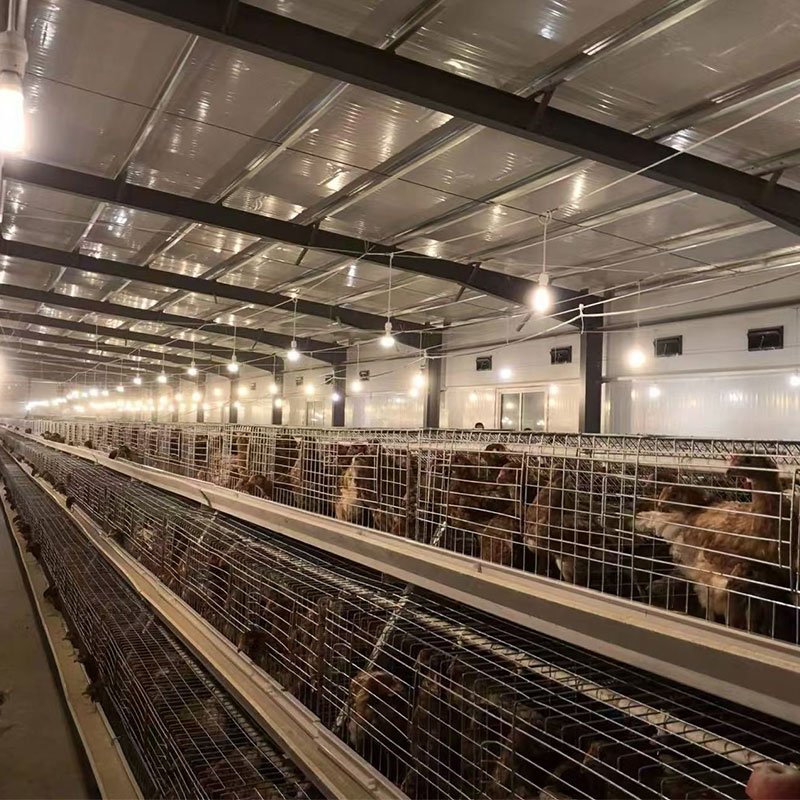
The concept of customization extends far beyond the trusses to the entire layout and functionality of the interior, particularly with the integration of modern cage and aviary systems. The steel framework provides unparalleled attachment points for these complex structures. Whether a farmer uses a traditional cage system, an enriched colony system, or a multi-tiered aviary for layers, the steel building can be engineered to support it. The vertical strength of the primary columns and the horizontal strength of the roof trusses allow for multi-level systems that maximize bird density per square foot of floor space without compromising structural integrity.

For example, a farmer installing a three-tier aviary system needs absolute confidence that the structure can hold the weight of thousands of birds, the tiers themselves, and the manure belts that run beneath each level. The dynamic load—the shifting weight as birds move—is a constant force. A steel structure is engineered to handle these loads with a significant safety margin. The framework can also be designed with specific points for attaching automated feeding and watering lines, egg collection belts, and manure removal systems. This integration turns the building from a simple shelter into a single, highly efficient production machine.
Durability is another cornerstone of the steel building’s value proposition. A poultry environment is one of the most corrosive there is, due to the constant presence of moisture and ammonia from manure. These elements quickly degrade wood, causing it to rot and weaken, and can corrode inferior metals. Industrial-grade steel buildings use galvanized steel or are coated with specialized paint systems designed to resist this specific type of corrosion. A farmer walking through a ten-year-old wooden coop might be replacing rotten wall studs or dealing with pest infestations in the compromised wood. A farmer in a decade-old steel building is more likely to be looking at a structure that is as sound as the day it was erected, with minimal maintenance required beyond routine cleaning. This long-term resilience protects the farmer’s capital investment and avoids the disruptive and costly repairs that can plague older building types.
The flexibility of these structures also accounts for future growth and change. Agriculture is dynamic, and a successful operation must be able to adapt. The modular nature of steel buildings makes them inherently easier to expand. If a farmer wants to add another 100 feet to a broiler house, the process is far simpler than with traditional construction. The existing end-wall can be removed, and new structural frames can be bolted onto the existing ones, extending the clear-span space seamlessly. This scalability allows a farm to grow incrementally alongside its success, without the need for a completely new construction project.
While the term "pasture coop" might evoke images of small, movable wooden huts, modern pasture-based poultry operations at a commercial scale have very different requirements. Here, the strength and portability of a steel-framed structure come to the fore. These coops, often on skids, need to be robust enough to be moved regularly by tractor across rough pasture terrain without shaking themselves apart. A wooden coop will eventually loosen at the joints and require constant reinforcement. A welded or bolted steel frame can withstand the repeated stress of being towed. Furthermore, these mobile units still benefit from the same principles of ventilation and equipment integration. They can be outfitted with robust, yet lightweight, steel-framed catching panels, predator-proof doors, and secure points for attaching shade cloths or rain covers, creating a safe and controlled mobile environment for the birds.
The process of acquiring such a building is collaborative. It begins not with a catalog, but with a conversation between the farmer and the building supplier. The farmer provides the parameters: the dimensions of the building, the type of poultry being raised, the specific equipment systems to be installed, the local wind and snow load requirements, and the desired layout. Engineers then use this information to design the custom trusses, select the appropriate column sizes, and specify the correct wall and roof panels. This ensures the final product is not a generic solution but a tool perfectly fitted to the unique operation it will serve.
The initial investment in an industrial steel structure building is often higher than that of a basic pole barn. However, the true cost must be calculated over the lifespan of the building. When factoring in the reduced construction time, the lower long-term maintenance costs, the energy savings from superior insulation, the improved bird performance from a superior environment, and the extended lifespan of the structure itself, the return on investment becomes clear. It is the difference between buying a piece of equipment built for a specific, demanding job and making do with a generic tool. For the modern poultry farmer focused on sustainability, animal welfare, and bottom-line profitability, the industrial steel structure building is not just an option; it is the foundational component of a forward-thinking operation.
1. Drinking system include the water pipes, water pressure adjuster, drinking nipples, Waterline front-end device, dosing system etc, choose them according to customer's needs.
2. High-quality water drinking pipes, pressure regulating valves and water drinking nipples can effectively prevent the water leakage. Drinking system adopt the closed piping system, which can minimize the water pollution.
3. 360-degree drinking nipples provide adequate drinking water for poultry at all stages.
4. The automatic drinking water system mainly adopts the steel ball drinking nipple. lt uses imported high-grad stainless steel, POM resin, and APS engineering material, which is wearing resistant, and the durability can be used for long time.



1. Automatic feeding machine can be chosen between gantry and ladder feeding machine. Gantry type feeding machine is a relatively economical and practical machine with simple operation, remote control walking character, easy to manage.
2. Mechanical transmission device running smoothly, low noise, long service life.
3. With the use of automatic control, the feeding system can adjust the amount of material.
4. Feeding with arched structure, high carrying capacity, not easily deformed.
5. Saving man power, saving feed, greatly improving the efficiency of Large-scale farming.
6. The walking speed of gantry feeding machine is 9--12 m/min.




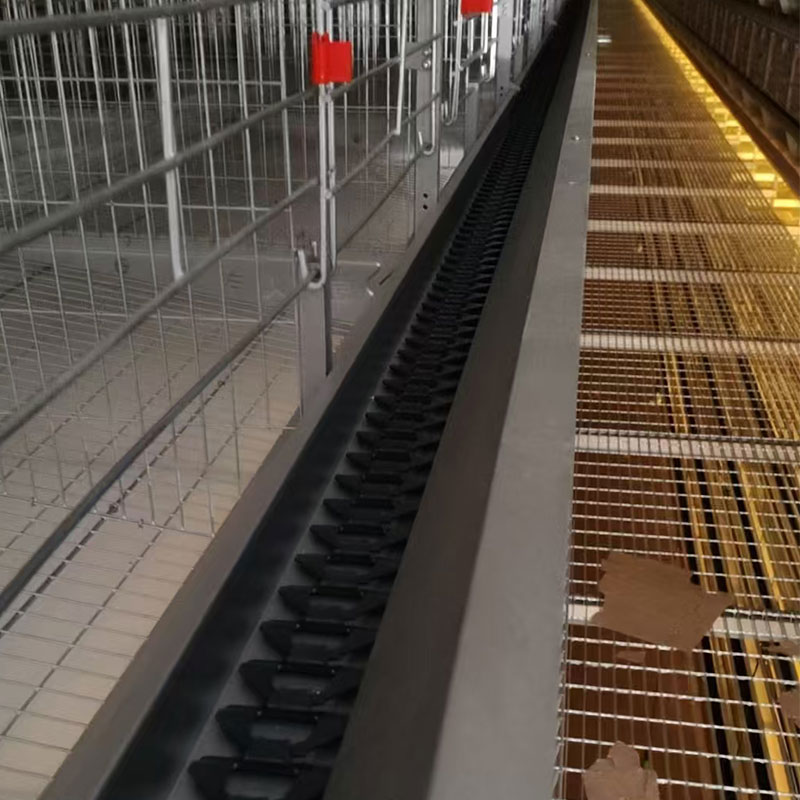
1. Manure removing system included scraper type and conveyor belt type, Which can reduce the labor intensity and labor cost, keep the chicken shed dry and clean.
2. A type chicken cage can use scraper type or conveyor belt type.


3. The scraper type is suitable for A type cages, which can clean two or three rows. For the starters, this type is a good choice. lt can not only save some labor cost, but also save some investment in the whole project. The cleaning speed is 6-10 meters per minute.
4. Conveyor belt type is more suitable for large scale farming. The manure removing belt we use is high quality PP material (polypropylene). The walking speed is 2-4 meters per minute.



High Quality Pellets Made by Mobile Pellet Machine
1. It has professional designed angle of the blade. After the dynamic balance test one by one, the blade can operate smoothly.
2. The air volume is consistent in the whole life of the fan. Bearings has advantage of high strength, low noise, durable and so on.
1. The cooling pads uses high-quality wet curtain paper and adopts space cross-linking technology, which has the advantages of high water absorption, high water resistance, anti-toxicity and long service life.
2. The cooling efficiency is over 80%, without surfactant, natural water absorption, fast diffusion speed and long-lasting effect.
3. The product does not contain phenol and other chemical substances that are easy to cause skin allergies. It is non-toxic and harmless to the human body and chicken when installed and used. It is green, safe, energy-saving, environmentally friendly, economical, and easy to install.
4. The frame aluminum alloy has high strength, good corrosion resistance, durability and beautiful appearance.
5. Use a special filter for the cooling pad at the upper water to ensure clean water quality and support efficient water circulation components.
6. Combined with a negative pressure fan, it can effectively lower the indoor temperature.
The window is made of special selected high-quality engineering plastic, with high strength and long service life, together with superior anti-aging and anti-UV performance.
Function: Ventilation of the chicken house, usually used in the winter.
This system can adjust the wind speed and direction, thus the cold air will not reach chicken directly , which can effectively prevent the phenomenon of cold stress in chicken.
Environmental control system equipment is suitable for large-scale and intensive farming. According to customer requirements, we can provide various types of smart poultry equipment.
1. Our poultry management system is a modular system that manages all aspects of the chicken house, such as climate, temperature, humidity, ammonia, feeding, feed weighing, lighting and ventilation systems, and can monitor the situation of the chicken house in real time through a computer and mobile phone.
2. The management computer is the heart of the poultry farm, allowing you to easily monitor the entire poultry farm.

 WeChat:+8617838608255