For poultry farmers considering the transition to cage systems or expanding existing operations, the 8x3x2 meter galvanized steel broiler cage represents a significant infrastructure investment that demands careful evaluation. This comprehensive housing solution offers distinct advantages in bird management, operational efficiency, and disease control when properly implemented, though it requires corresponding adjustments to management practices.
Structural Integrity and Material Considerations
The galvanized steel construction of these cages provides more than just corrosion resistance. When ammonia concentrations rise in poultry housing, ordinary metals begin to deteriorate rapidly. Galvanized steel maintains structural integrity even when moisture combines with droppings to create corrosive conditions. Farmers who have switched from painted systems report these cages maintain their condition through multiple flock cycles without the flaking or rust spots that compromise animal safety and require frequent repainting.
The 8-meter length, 3-meter width, and 2-meter height dimensions create a structure substantial enough to house a significant number of birds while remaining manageable for workers. Unlike smaller, movable coops that might suit free-range operations, this fixed system prioritizes density and efficiency. The height allows most workers to stand comfortably inside during cleaning and maintenance, reducing back strain during equipment adjustments or thorough sanitization between flocks.
The roof's reinforced design handles more than just weather protection. When farmers need to access ventilation systems or perform overhead maintenance, the structure supports worker weight safely. This proves particularly valuable during emergency situations like fan motor replacements or light system repairs where immediate access prevents environmental control failures.
Space Allocation and Bird Density Calculations
Determining appropriate bird numbers for this cage requires understanding both legal requirements and production goals. The 24 square meter footprint doesn't translate directly to simple division by recommended space allowances. Farmers must account for feeder and drinker space, movement patterns, and behavioral needs.
A broiler operation targeting 2.5kg finishing weights might stock approximately 400-450 birds in this system, while a layer operation would maintain fewer birds to accommodate nesting behaviors and longer production cycles. The difference stems from how broilers versus layers utilize vertical space – broilers remain predominantly ground-based while layers benefit from elevated perches and nesting areas.
Farmers observing birds consistently clustering in certain areas despite available space elsewhere have learned this indicates environmental imbalances. One operation discovered their perceived overcrowding issue actually traced to temperature variations across the cage, with birds naturally congregating in the optimal thermal zone. Redirecting airflow resolved what initially appeared to be a density problem.
Environmental Control Integration
The cage's open steel construction facilitates air movement but requires strategic management. During summer months, the structure itself provides minimal insulation, meaning ventilation systems must work in concert with the building's overall environmental controls. Farmers who successfully use these cages often install circulating fans at the 1.5-meter height level, creating air movement across the birds without creating direct drafts on younger stock.
In colder climates, some operations install removable insulation panels along the sides during winter months. These panels prevent heat loss while maintaining the ventilation advantages of the steel mesh flooring. The key lies in balancing moisture removal with temperature maintenance – too little ventilation leads to humidity buildup and respiratory issues, while excessive air exchange drives up heating costs.
Lighting systems mounted beneath the roof require careful planning. The 2-meter height allows sufficient clearance for standard poultry bulbs while keeping them safely out of reach during normal bird activity. Farmers using these systems typically employ a combination of central bright lights for worker visibility during inspections and dimmer, evenly distributed lights for the birds' daily cycles.
Manure Management Systems

The raised design with wire flooring enables manure to fall through to collection areas below. This separation of birds from their waste represents one of the primary advantages for disease control, particularly in coccidiosis prevention. However, this benefit only materializes with proper manure handling protocols.
The gap between the floor and manure collection surface must be sufficient to prevent birds from contacting accumulated droppings while allowing equipment access for regular removal. Farmers using automated scrapers install them at precise angles to ensure complete clearance, while operations using manual removal schedule cleanouts based on visual indicators like ammonia detection or crust formation.
Some innovative operations have incorporated composting systems directly beneath these cages, turning what would be a waste management issue into a value-added product. The key to success lies in maintaining the proper carbon-to-nitrogen ratio by adding bedding materials and ensuring regular turning without disrupting the birds overhead.
Feeding and Watering System Configurations
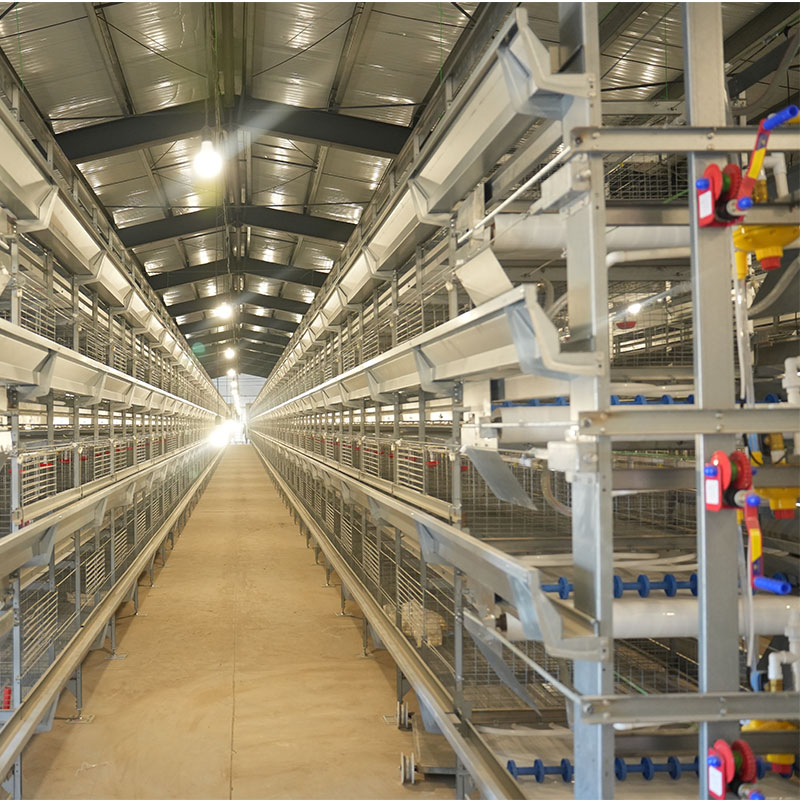
The cage's dimensions accommodate both manual and automated feeding systems. For operations using manual feeding, the 3-meter width allows workers to reach the center from either side without excessive stretching. The length supports multiple feed stations, reducing competition and ensuring subordinate birds maintain access.
Automated feeding systems require careful alignment with the cage structure. The trolleys must traverse the entire 8-meter length without binding, which demands precise installation on level tracks. Farmers report that spending extra time during initial setup to ensure perfect alignment prevents daily operational headaches and reduces wear on feeding system components.
Nipple watering systems mounted at appropriate heights for different bird ages prevent water waste and keep litter drier. The vertical supports of the cage provide ideal mounting points at multiple heights, allowing farmers to adjust as birds grow without modifying the fundamental structure. Operations that meticulously adjust nipple height weekly find their birds maintain better hydration with less water spillage.
Bird Movement and Behavioral Considerations
The transition from floor-based systems to caged environments requires attention to bird behavior. Farmers notice that birds initially explore the three-dimensional space more actively when first introduced, testing perches and investigating different levels. Within several days, movement patterns establish based on resource locations.
The arrangement of resources significantly influences bird movement and social dynamics. When feeders and waterers cluster too closely, dominant birds may control access to multiple resources simultaneously. Successful operations distribute resources to create natural traffic patterns that minimize conflict and ensure all birds can eat and drink without excessive competition.
Perch placement deserves particular attention. Birds naturally seek elevated roosting spots, and properly spaced perches prevent overcrowding during rest periods. Farmers observing birds preferring certain perch locations despite identical designs often discover subtle differences in lighting or airflow that make some positions more comfortable.
Health Monitoring Advantages
The controlled environment and consistent bird locations enable more accurate health assessment. When birds remain in predictable locations, caretakers quickly identify individuals showing abnormal behavior. A bird that consistently remains separate from the flock or demonstrates reduced activity signals potential health issues long before weight loss becomes evident.
The separation from manure significantly reduces parasite loads and bacterial exposure. Farmers transitioning from deep litter systems typically report reduced medication costs and improved bird consistency. One operation documented a 40% reduction in antibiotic use after switching to caged systems while maintaining identical production targets.
The wire flooring provides unexpected health monitoring benefits. Droppings that fall through remain visible for inspection, allowing experienced farmers to detect digestive issues through changes in consistency or color across different cage sections. This early warning system often identifies problems before clinical symptoms appear in the birds themselves.
Operational Workflow Integration
The cage design either complements or complicates daily routines depending on planning. Farmers who measure equipment before installation avoid the frustration of discovering their feed carts cannot maneuver through access points. The time spent mapping movement patterns for workers, birds, and equipment pays dividends in daily efficiency.
Egg collection in layer operations benefits from the structured environment. When nests position correctly along walkways, workers collect more quickly with reduced breakage. The cage height allows most collection to occur without bending, reducing worker fatigue during this repetitive task.
Bird handling during vaccination or transport proceeds more smoothly in caged systems. The controlled environment means birds require less chasing and experience lower stress levels during necessary procedures. Workers can systematically move through sections without missing birds or unnecessary duplication of effort.
Economic Considerations Beyond Initial Cost
The galvanized steel construction represents a long-term investment rather than an expense. Where wooden structures might require replacement after several years, properly maintained steel cages continue functioning for decades. The higher initial investment spreads across more production cycles, ultimately reducing annual housing costs.
The density advantage of cage systems translates to better facility utilization. Farmers calculating cost per bird housed find that despite higher initial investment, the improved space efficiency makes better economic use of their entire operation. This becomes particularly important where building costs represent a significant portion of operational expenses.
Labor efficiency shows marked improvement in well-designed cage systems. Tasks that might require hours in floor-based systems often complete in minutes when the infrastructure supports worker movement and bird control. These time savings compound across multiple flock cycles, significantly impacting overall profitability.
Adaptation for Alternative Uses
The structural strength and dimensions make these cages suitable for other farm animals when properly modified. Dogs housed in agricultural settings require different flooring than poultry – replacing wire mesh with solid surfaces prevents paw damage while maintaining the ventilation benefits.
For temporary medical isolation, the cages provide secure containment while allowing visual monitoring. Sick or injured animals remain separated from the group while receiving treatment, with the open design enabling observation without direct handling.
Some operations successfully adapt these cages for younger stock by adding partitions or modifying interior configurations. The flexibility of the basic design supports multiple applications beyond the primary poultry purpose, increasing the return on investment through versatile usage.
The successful implementation of these cage systems hinges on understanding both the technical specifications and the practical management adjustments required. Farmers who approach the transition as a complete system change rather than simply swapping housing infrastructure achieve the best results, leveraging the structural advantages while adapting their management to maximize animal welfare and operational efficiency.
1. Drinking system include the water pipes, water pressure adjuster, drinking nipples, Waterline front-end device, dosing system etc, choose them according to customer's needs.
2. High-quality water drinking pipes, pressure regulating valves and water drinking nipples can effectively prevent the water leakage. Drinking system adopt the closed piping system, which can minimize the water pollution.
3. 360-degree drinking nipples provide adequate drinking water for poultry at all stages.
4. The automatic drinking water system mainly adopts the steel ball drinking nipple. lt uses imported high-grad stainless steel, POM resin, and APS engineering material, which is wearing resistant, and the durability can be used for long time.



1. Automatic feeding machine can be chosen between gantry and ladder feeding machine. Gantry type feeding machine is a relatively economical and practical machine with simple operation, remote control walking character, easy to manage.
2. Mechanical transmission device running smoothly, low noise, long service life.
3. With the use of automatic control, the feeding system can adjust the amount of material.
4. Feeding with arched structure, high carrying capacity, not easily deformed.
5. Saving man power, saving feed, greatly improving the efficiency of Large-scale farming.
6. The walking speed of gantry feeding machine is 9--12 m/min.




1. Manure removing system included scraper type and conveyor belt type, Which can reduce the labor intensity and labor cost, keep the chicken shed dry and clean.
2. A type chicken cage can use scraper type or conveyor belt type.


3. The scraper type is suitable for A type cages, which can clean two or three rows. For the starters, this type is a good choice. lt can not only save some labor cost, but also save some investment in the whole project. The cleaning speed is 6-10 meters per minute.
4. Conveyor belt type is more suitable for large scale farming. The manure removing belt we use is high quality PP material (polypropylene). The walking speed is 2-4 meters per minute.



High Quality Pellets Made by Mobile Pellet Machine
1. It has professional designed angle of the blade. After the dynamic balance test one by one, the blade can operate smoothly.
2. The air volume is consistent in the whole life of the fan. Bearings has advantage of high strength, low noise, durable and so on.
1. The cooling pads uses high-quality wet curtain paper and adopts space cross-linking technology, which has the advantages of high water absorption, high water resistance, anti-toxicity and long service life.
2. The cooling efficiency is over 80%, without surfactant, natural water absorption, fast diffusion speed and long-lasting effect.
3. The product does not contain phenol and other chemical substances that are easy to cause skin allergies. It is non-toxic and harmless to the human body and chicken when installed and used. It is green, safe, energy-saving, environmentally friendly, economical, and easy to install.
4. The frame aluminum alloy has high strength, good corrosion resistance, durability and beautiful appearance.
5. Use a special filter for the cooling pad at the upper water to ensure clean water quality and support efficient water circulation components.
6. Combined with a negative pressure fan, it can effectively lower the indoor temperature.
The window is made of special selected high-quality engineering plastic, with high strength and long service life, together with superior anti-aging and anti-UV performance.
Function: Ventilation of the chicken house, usually used in the winter.
This system can adjust the wind speed and direction, thus the cold air will not reach chicken directly , which can effectively prevent the phenomenon of cold stress in chicken.
Environmental control system equipment is suitable for large-scale and intensive farming. According to customer requirements, we can provide various types of smart poultry equipment.
1. Our poultry management system is a modular system that manages all aspects of the chicken house, such as climate, temperature, humidity, ammonia, feeding, feed weighing, lighting and ventilation systems, and can monitor the situation of the chicken house in real time through a computer and mobile phone.
2. The management computer is the heart of the poultry farm, allowing you to easily monitor the entire poultry farm.

 WeChat:+8617838608255