The Ultimate Guide to Large Chick Brooders: Setup, Sizing, and Best Practices
Raising a sizable flock of chicks from dayold to pullets is an incredibly rewarding endeavor, whether for a thriving backyard homestead, a small farm startup, or replenishing a commercial laying operation. However, success hinges on one critical piece of equipment you’ll need long before the coop: the large chick brooder. Unlike smallscale setups, managing 50, 100, or even 200+ chicks introduces unique challenges in temperature regulation, space management, and health maintenance. A poorly planned brooder can lead to stunted growth, disease outbreaks, and high mortality rates.
This comprehensive guide is designed for the serious poultry keeper. We’ll move beyond basic tips and delve into the engineering, environmental control, and management principles required to build and maintain an optimal largescale brooding environment. By focusing on the science of avian thermoregulation and behavior, you can ensure your chicks not only survive but thrive during their most vulnerable weeks.
Before designing your space, it's crucial to understand why brooding is essential. Chicks are hatched with immature thermoregulatory systems. They cannot maintain their own body heat effectively until they develop mature feathers around 56 weeks of age. The brooder artificially replicates the warmth and protection of a mother hen.
For large groups, heat distribution becomes paramount. A single heat source in a corner will create dangerous gradients—overcrowding in warm spots leading to smothering and dehydration, or chilling in cold zones leading to pasty butt and illness. Your large chick brooder must provide a consistent, adjustable thermal environment accessible to every chick.
The container itself sets the stage. Common choices for large numbers include:
Repurposed Stock Tanks (Galvanized or Plastic): Durable and easy to clean.
Wooden AFrames or Boxes: Can be custombuilt to specific dimensions.
Brooder Plates on Open Floor Space: Using cardboard or plywood rings (brooder guards) for the first week before giving access to a larger penned area.
Dedicated Brooder Room: The gold standard for very large operations (500+ chicks).
Sizing is Critical: Overcrowding is the root of most brooder problems.
Week 1: Provide at least 0.25 sq ft per chick.
By Week 6: They will need 11.5 sq ft per chick.
Formula for a 100chick flock: Start with at least 25 sq ft (e.g., 5' x 5'). Plan to expand their space or move them by week 34.
The scale dictates your best option.
| Heat Source | Best For Flock Size | Pros | Cons |
| : | : | : | : |
| Brood Plates (Infrared) | Small to Very Large | Energyefficient, mimics hen, allows natural temp gradient, safe from fire/dehydration risk. | Higher upfront cost. |
| Radiant Heat Lamps | Small to Medium | Inexpensive initial cost, widely available. | Fire hazard if knocked down; can cause dehydration; creates harsh light; bulbs burn out. |
| Suspended Ceramic Heat Emitters | Medium to Large | No light emission (good for sleep cycles), longer bulb life than heat lamps. | Still get very hot; require secure hanging; no light for initial attraction. |
| ForcedAir Brooders (Hovers) | Very Large (100+) | Excellent for widearea heating; thermostatically controlled; efficient fuel use (propane/nat gas). | Expensive; requires ventilation/fume management; used in commercial settings. |
For most homesteaders with 50200 chicks, using multiple adjustableheight brood plates is often the safest and most effective strategy.
Bedding absorbs moisture from droppings and provides insulation from the floor.
Pine Shavings (NOT cedar): The gold standard. Highly absorbent, affordable, and allows chicks to exhibit natural scratching behavior.
Straw or Hay: Can be used but tends to mold if damp and is less absorbent.
Paper Towel/Newspaper: Use only for the first 12 days for tiny chicks to prevent slipping leg issues. Then switch immediately to shavings.
Avoid slippery surfaces like newspaper alone after day 2.
A sealed box is a death trap.Ammonia from droppings builds up quickly and damages chicks' respiratory systems.You need fresh air inflow without creating drafts directly on the chicks.Screen openings near the top of the brooder sides allow ammonia(which is lighter than air)to escape while maintaining warmth below.
Use multiple points of access.One long feeder or waterer isn't enough.
Provide one 1gallon waterer per 50 chicks initially,and increase as they grow.Use bases with narrow openings or add clean pebbles/marbles to the base for the first few days to prevent drowning.
Provide enough linear feeder space so that all chicks can eat at once.Start with chick feeders,and transition to larger troughs.Use feeders designed to minimize scratching waste.
1.Assemble & Clean:Set up your chosen enclosure in a draftfree,dry,predatorproof location(garage,barn,dedicated room).Thoroughly clean and disinfect all surfaces before adding any bedding.
2.Install Heat Source:Suspend your heat lamp(s)or set up brood plate(s)accordingly.For lamps,hanging chains with secure carabiners are safer than clips.Set initial height so the temperature at "chick level"is correct(see below).
3.Create Temperature Zones:Your brooder should have a clear gradient:
A warm zone directly under/atthe heat source(95°F/35°C at chick level in week1).
A comfortable middle zone where they can rest off direct heat.
A cooler zone farthest from heat where they can eat/drink.This allows themselfregulate.
4.Add Bedding:Spread24inchesof pine shavings across entire floor area.Place paper towels on topfor first24hoursif desired.
5.Place Feed & Water:Position feedersand waterersin coolerzone,but not directly underthe heatsource(to avoid rapid spoilage).Fillwith freshwaterand starter crumbles.
6.Preheat:Turnonheat sourceat least24hoursbeforechicksarriveto stabilize temperatureand checkfor hotspotsor coldspotsusingan infrared thermometer.
7.Introduce Chicks:Gentlyplaceeachchicknearwater source.Dip theirbeakslightlyto teachthemto drink.Monitorcloselyforthefirstfew hoursfor signs of chillingor lethargy.
Monitor chick behavior—they are your best thermometer.Huddled underheat=too cold.Spread out farfromheat,panting=too hot.Evenly distributed,busily eating/drinking/sleeping=just right.
| Chick Age | Target Temp at Chick Level (°F/°C) | Action |
||||
| Week1|95°F /35°C|Heat source~1822inchesabove bedding(lamp)or adjustedheight(brood plate).|
| Week2|90°F /32°C|Raiseheatlamp~3inchesor adjustbrood plateupward.Reduceby ~5°Fperweekthereafter|
| Week3|85°F /29°C||
| Week4|80°F /27°C||
| Week5|75°F /24°C||
| Week6+|70°F /21°Cor ambient.|Heatcan usuallyberemovedif ambienttempsare>65°Fandchicksarefullyfeathered|
Use Brooder Guards: For openfloor setups,a18inchhighcircularcorral madefromcardboardorhardwareclothkeepschicksconfinednearheat,food,andwaterforthefirstweekbeforeallowingaccessto fullpenspace.This prevents themfromwanderingoffandgettinglostorchilled.
Implement Strict Biosecurity: Have dedicated footwear/clothingforthebrooderarea.Disinfectwaterersdaily.Scale=higherriskof pathogen spread.
Watchfor Behavioral Issues: Inlargegroups,bullyingorpastingcanbecome prevalent.Guaranteeenoughspaceandfeedingstations.If usingbrightheatlamps24/7,socialstressincreases.Considerredbulbsordarkperiodsforrest.
PlanYour Exit Strategy:A successful largechickbroodermeansyou'llhave alotofbiggerbirdsquickly.Haveyour growoutcooporintegrationplanreadybyweek56tominimizestressduringtransition。
Investing timeandresourcesinto designinga properlargechickbrooderyields exponentialreturns.Itisthemostcriticalphaseinyourbirds'lives.Settingthemupwithconsistentwarmth,cleanair,ample space,anduncontaminatedfoodandwaterbuildsrobustimmune systemsandpromotessteadygrowth.Don'tviewitasmerelya"boxwithalamp."Viewitasthenurserywhereyourflock'sfuturehealth,productivity,andvitalityare forged。Byfollowingtheprinciplesoutlinedhere—prioritizingsafetyovercost,observingbehavioroverthermostats,andeliminatingovercrowding—youwillmastertheartandscienceoflargescalebrooding。
Q1: How big does my brooder need to be for 50 chickens?
A: Start with at least1215squarefeet(e.g.,3'x4'or4'x4')forthefirstweek.Remembertheygrowrapidly!Youwillneedtoexpandtheirspaceto50+squarefeetbyweeks56.Planningalargerinitialspaceorsettingupanexpansionplaniscrucial。
Q2:Whatisthesafestheatsourceforalargebroodertoleftunattended?
A:Broadlyspeaking,properlysecuredbroodplatesarethesafestoption.Theyposeno fireriskifcontactedbybeddingorchicks,usedirectradiantheatwithoutopenfilaments,andgreatlyreducedehydrationrisk.Ceramicheatemittersaresaferthanincandescentlampsbutstillgetextremelyhot。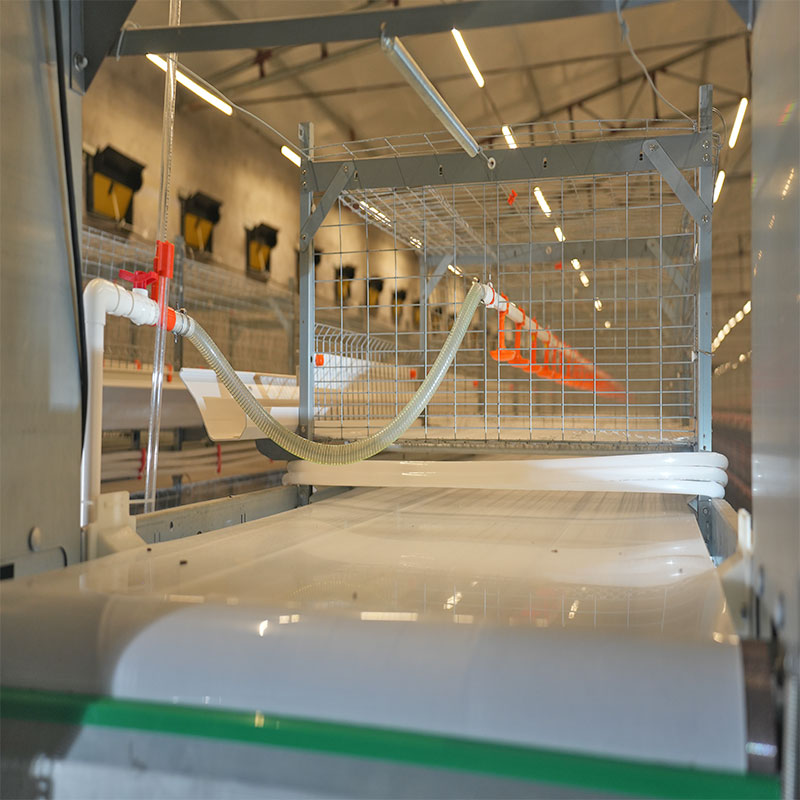
Q3:Canyouuseadeep littermethodinalargechickbrooder?
A:Yes,anditcanbe beneficial!Startwith4inchesofpine shavings.Asdroppingsaccumulate,stirthebeddingregularlytoincorporatewasteandaddfreshshavingstotop.Thiscreatesmicrobialactionthatgeneratesgentlebottomheatandbreaksdownammonia。Ensurebeddingremainsfluffyanddry;donotletitbecomecompactedordamp。
Q4:Howoftenshouldyoucleanalargechickbrooder?
A:Spotclean daily.Remove wetclumpsofbeddingaroundwaterersandreplenishwithfreshshavings。Performacompletebeddingchangeonceperweekforsmalltomediumflocks,ormorefrequentlyifammoniaodorispresentor beddingissaturated。Waterersshouldbescrubbedandrefilleddaily。
Q5:Atwhatagecanchicksleavethebroodertogotoacoop?
A:Chicksaretypicallyreadytoleavetheheatedbrooderonce theyarefullyfeathered—usuallyaround56weeksofage。Thetransitionalsokeyonoutdoortemperatures;ensurenightsaren'tconsistentlybelow6065°F(1518℃)。Providealowwattageheatsourceinthecoopforthefirstfewnightsifweatherismarginal。
Q6:Howdoyoupreventpastybuttinabiggroupofchicks?
A:Pastybutt(fecescloggingthevent)isoftencausedbystressor chilling。Maintainingcorrect,consistenttemperatureisthemostimportantprevention 。Inlargegroups ,alsoensureeveryonehasaccesstofeedwithoutcompetition(multiplefeedstations),asdigestiveupsetsfromnot eatingcan contribute 。Checkallchicksdailyforthefirstweek ,especially ,andgentlycleananyblockageswithawarm ,dampcloth 。
Q7:Whatisthebestwaytoprovidewaterto100+chickswithoutmakingamess?
A:Use multipleautomaticnipplewatering systemsdesignedfor brooders 。Nipplewatersattachtoagallonjugorbucketandscrewintothebroodersideatchickheight 。Theyvirtuallyeliminatespillage ,keepwaterclean ,andreducelabor 。Alternatively ,use severalstandardgal lonwatersonelevatedwireplatformsto catchspills 。
Q8 :CanIbrooddifferent agesorchickenbreedsinthesamelargebrooder?
A :Itisnotrecommended 。Differentageshaverequiredtemperatures ,andrunningachillriskonyoungerbirdsorstressingolderbirdswith excessiveheat 。Differentbreeds(e.g.,fastgrowingmeatbirds vs .layers )alsohavedifferentgrowthratesandsocialdynamics ,whichcanleadtobullying 。Alwayspractice“allin ,allout”brooding 。
Q9 :Howmuchdoesitcosttorunalargeheatlampfor6weeks?
A :Costvariesbyenergyratesandalamp'swattage 。Atypical250wattheatlamprun24/7consumes18kWhperday(250Wx24hrs=6000Wh ,or6kWh)。Over42days(6weeks),that's~252kWh 。At$0 .15/kWh ,that'sabout$38inelectricityperlamp —plusbulbreplacements .Thisishowmultiplebroadplatesoftenprove moreeconomicallongterm 。
Q10 :Dochicksneedlightatnightintheirbrooders?
A :No ,infact ,theybenefitfromdarkness 。Providing8hoursofdarknessperdayhelpsregulatetheircircadianrhythms ,reducesstress ,andinhibitsabnormalpeckingbehavior .Ifyouneedlightformonitoring ,useadimredorinfraredbulbwhichdoesn'tdisrupt theirsleepcyclelikebrightwhiteoryellowlightdoes 。
Disclaimer :Thisguideisforeducationalpurposes .Alwaysconsultwithexperiencedpoultryprofessionalsoranavianveterinarianforspecifichealthconcernsregardingyourflock .
1. Drinking system include the water pipes, water pressure adjuster, drinking nipples, Waterline front-end device, dosing system etc, choose them according to customer's needs.
2. High-quality water drinking pipes, pressure regulating valves and water drinking nipples can effectively prevent the water leakage. Drinking system adopt the closed piping system, which can minimize the water pollution.
3. 360-degree drinking nipples provide adequate drinking water for poultry at all stages.
4. The automatic drinking water system mainly adopts the steel ball drinking nipple. lt uses imported high-grad stainless steel, POM resin, and APS engineering material, which is wearing resistant, and the durability can be used for long time.



1. Automatic feeding machine can be chosen between gantry and ladder feeding machine. Gantry type feeding machine is a relatively economical and practical machine with simple operation, remote control walking character, easy to manage.
2. Mechanical transmission device running smoothly, low noise, long service life.
3. With the use of automatic control, the feeding system can adjust the amount of material.
4. Feeding with arched structure, high carrying capacity, not easily deformed.
5. Saving man power, saving feed, greatly improving the efficiency of Large-scale farming.
6. The walking speed of gantry feeding machine is 9--12 m/min.




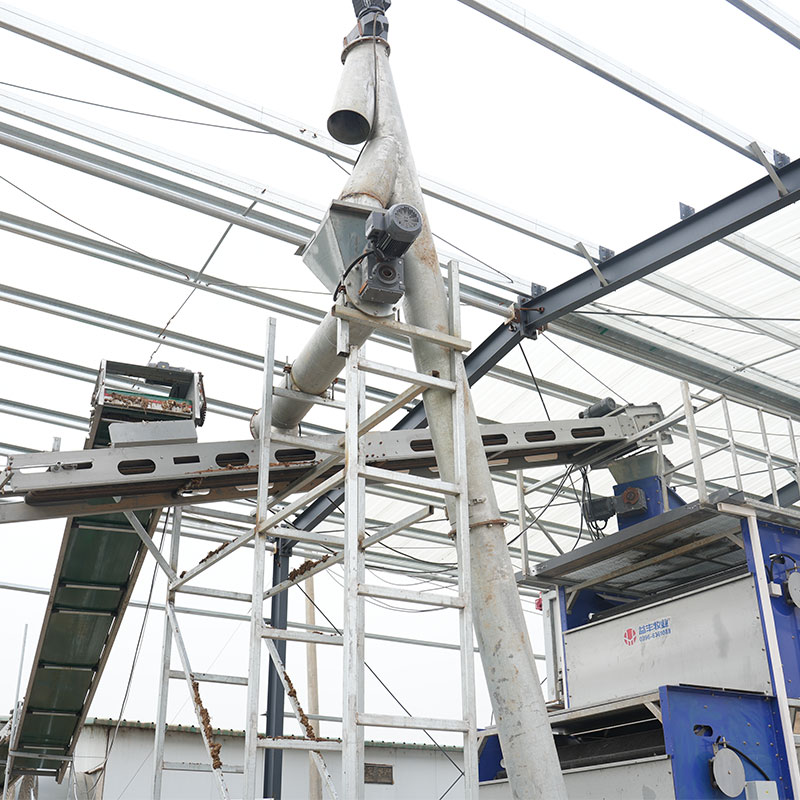
1. Manure removing system included scraper type and conveyor belt type, Which can reduce the labor intensity and labor cost, keep the chicken shed dry and clean.
2. A type chicken cage can use scraper type or conveyor belt type.


3. The scraper type is suitable for A type cages, which can clean two or three rows. For the starters, this type is a good choice. lt can not only save some labor cost, but also save some investment in the whole project. The cleaning speed is 6-10 meters per minute.
4. Conveyor belt type is more suitable for large scale farming. The manure removing belt we use is high quality PP material (polypropylene). The walking speed is 2-4 meters per minute.



High Quality Pellets Made by Mobile Pellet Machine
1. It has professional designed angle of the blade. After the dynamic balance test one by one, the blade can operate smoothly.
2. The air volume is consistent in the whole life of the fan. Bearings has advantage of high strength, low noise, durable and so on.
1. The cooling pads uses high-quality wet curtain paper and adopts space cross-linking technology, which has the advantages of high water absorption, high water resistance, anti-toxicity and long service life.
2. The cooling efficiency is over 80%, without surfactant, natural water absorption, fast diffusion speed and long-lasting effect.
3. The product does not contain phenol and other chemical substances that are easy to cause skin allergies. It is non-toxic and harmless to the human body and chicken when installed and used. It is green, safe, energy-saving, environmentally friendly, economical, and easy to install.
4. The frame aluminum alloy has high strength, good corrosion resistance, durability and beautiful appearance.
5. Use a special filter for the cooling pad at the upper water to ensure clean water quality and support efficient water circulation components.
6. Combined with a negative pressure fan, it can effectively lower the indoor temperature.
The window is made of special selected high-quality engineering plastic, with high strength and long service life, together with superior anti-aging and anti-UV performance.
Function: Ventilation of the chicken house, usually used in the winter.
This system can adjust the wind speed and direction, thus the cold air will not reach chicken directly , which can effectively prevent the phenomenon of cold stress in chicken.
Environmental control system equipment is suitable for large-scale and intensive farming. According to customer requirements, we can provide various types of smart poultry equipment.
1. Our poultry management system is a modular system that manages all aspects of the chicken house, such as climate, temperature, humidity, ammonia, feeding, feed weighing, lighting and ventilation systems, and can monitor the situation of the chicken house in real time through a computer and mobile phone.
2. The management computer is the heart of the poultry farm, allowing you to easily monitor the entire poultry farm.

 WeChat:+8617838608255