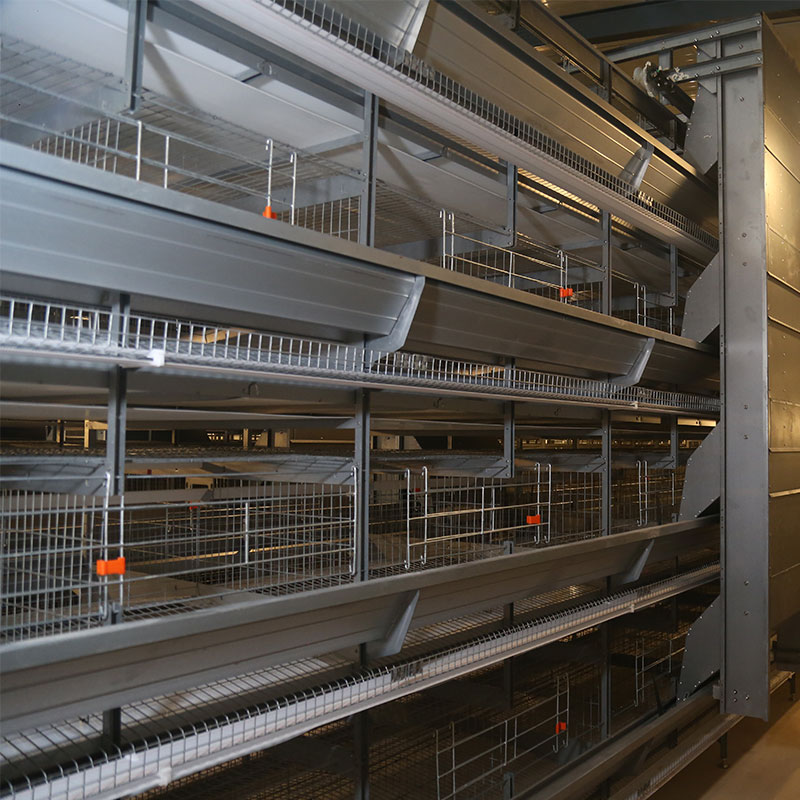
For poultry farmers who have spent years wrestling with wooden coop rot or watching wire mesh sag under the weight of birds and weather, the shift to a fully iron-based cage system represents a fundamental change in daily operations. This isn’t merely a different material; it’s a re-evaluation of what a chicken coop can be. A large chicken coop constructed from durable iron and other metals is engineered to address the chronic failures of traditional housing, transforming persistent maintenance headaches into a stable, long-term asset.
The core of this system lies in its material composition. Unlike thin, galvanized wire that can be pecked apart or wooden frames that absorb moisture, the primary components are fabricated from iron and steel. Imagine a support beam that doesn’t bow over a ten-meter span, or a cage floor that remains perfectly flat season after season, even with heavy-breed hens constantly moving across it. This is the promise of a properly engineered metal frame. The strength-to-weight ratio of these metals means the entire structure can be both incredibly robust and manageable to assemble. Farmers no longer need to design around the inherent weakness of their building materials; the framework itself becomes a reliable given.
Durability in a poultry environment is tested by three constant adversaries: moisture, waste, and the birds themselves. A wooden post set in a concrete floor may seem solid, but over time, moisture wicks up from the concrete, softening the wood and creating a perfect environment for bacterial growth and structural decay. In contrast, a powder-coated iron stanchion presents no such organic material for moisture to attack. The coating acts as a seamless shield, and the metal beneath is impervious to rot. Similarly, chicken waste is highly corrosive. A farmer who has seen the bottom of a wire mesh cage rust through in a few years will appreciate a cage floor made from a heavier-gauge, hot-dip galvanized steel. The galvanization process creates a metallurgical bond, essentially turning the surface of the steel into a layer of zinc that sacrifices itself slowly over many years to protect the core metal from the acids in the droppings.
The design of these cages directly impacts bird health and flock management efficiency. Consider ventilation and air quality. In a cramped or poorly designed coop, ammonia from droppings builds up, leading to respiratory issues that can decimate a flock. A large, metal cage system is often designed with an integrated manure management system. The cage floors are sloped and made of a welded wire grid that allows droppings to fall through cleanly, away from the birds. This isn't just about cleanliness; it's a critical health intervention. By separating the birds from their waste, the primary source of ammonia and pathogens is removed from their immediate living space. The open, rigid nature of the metal construction allows for unimpeded air movement along the entire length of the coop, preventing the stagnant, humid pockets of air that disease thrives in.

Feeding and watering systems integrated into these cages eliminate significant labor and waste. In a traditional setup, feed can be scattered, pecked out of troughs, or contaminated. In a metal cage system, the feed trough is typically a continuous metal channel running the length of the cage, positioned just outside the wire mesh. Birds peck through the mesh to eat, which dramatically reduces feed spillage. A farmer can calculate feed conversion ratios with greater accuracy because the amount of feed consumed directly correlates to what is in the trough, not what is lost on the floor. The same principle applies to nipple watering systems. These are small stainless-steel valves the birds activate with their beaks, delivering a drop of water at a time. Because the water is enclosed in a pipe until the moment the bird drinks, it remains free of bedding, droppings, and algae. This reduces waterborne illness and keeps the litter—or in this case, the manure pit below—remarkably dry.
The structural integrity of a large iron coop also dictates the stocking density and overall welfare protocols a farmer can implement. The term "stocking density" moves from an abstract concept to a physical reality when you see fifty birds in a well-ventilated, multi-tiered metal cage system versus fifty birds on a litter floor. The cage system provides defined space per bird, reducing competition and feather pecking. The tiers, or levels, are only possible because of the strength of the metal frames. Each level is fully supported without sagging, creating a vertical footprint that multiplies the usable space within the same building footprint. For a farmer looking to scale up production without expanding their building, this vertical efficiency is a game-changer. The cages provide a controlled environment where every bird has equal access to feed and water, leading to a more uniform flock growth rate.
From a management perspective, the daily routine is streamlined. Egg collection is a prime example. In a floor system, eggs can be laid anywhere—in nests, on the floor, in dark corners—leading to high rates of dirty, cracked, or lost eggs. In a cage system designed for layers, a sloped wire floor gently rolls the egg forward onto a collection belt the moment it is laid. This keeps the egg clean, minimizes handling damage, and centralizes collection to a single point. The farmer spends time collecting eggs efficiently, not searching for them. This principle of centralized access applies to the birds themselves. Many cage designs feature large, hinged doors or entire panels that swing open, allowing for easy catching and inspection of birds without having to climb into a pen or chase them around a shed.
The long-term economic calculation for a farmer shifts from recurring replacement costs to a single, depreciating asset. A wooden coop has a finite lifespan. It will need repairs, and eventually, full replacement. The cost of lumber, treated posts, and labor is a recurring expense. A durable iron cage system, while requiring a higher initial investment, amortizes that cost over a much longer period. A farmer isn't just buying a coop; they are buying 15 or 20 years of not having to think about coop replacement. The maintenance shifts from structural repairs—replacing a rotten board, reinforcing a sagging beam—to simpler tasks like cleaning the automatic water lines or checking the tension on the egg collection belt. This reallocates labor from unskilled, repetitive repair work to more skilled management and observation of the flock itself.
Installation and site preparation for a large metal coop require careful planning. The foundation must be level and solid, typically a concrete slab, to provide a stable base for the entire structure. The assembly process is akin to building with a large, complex erector set. Each component—the vertical supports, horizontal braces, cage panels, and flooring—is precision-manufactured to fit together with bolts and clips. This modularity offers advantages. A section damaged by accident can be unbolted and replaced without dismantling the entire system. Furthermore, the design can often be adapted or expanded in the future as the farm grows, providing flexibility that a static wooden building does not.
The choice of specific metals and finishes is not merely a technical specification; it has direct, practical consequences. "Hot-dip galvanizing" versus "electro-galvanizing" is a critical distinction. Electro-galvanizing applies a thin layer of zinc through an electrical process, suitable for low-corrosion environments. For a chicken coop, where the environment is constantly corrosive, hot-dip galvanizing is the standard. This involves dipping the fabricated steel components into a bath of molten zinc, resulting in a thick, durable coating that can withstand decades of exposure to ammonia and moisture. The powder coating applied to the structural frames is not just for aesthetics; it is a tough, polymer resin finish that is applied electrostatically and then cured under heat. This creates a skin that is highly resistant to chipping, scratching, and UV fading, protecting the underlying iron from the initial onset of rust.
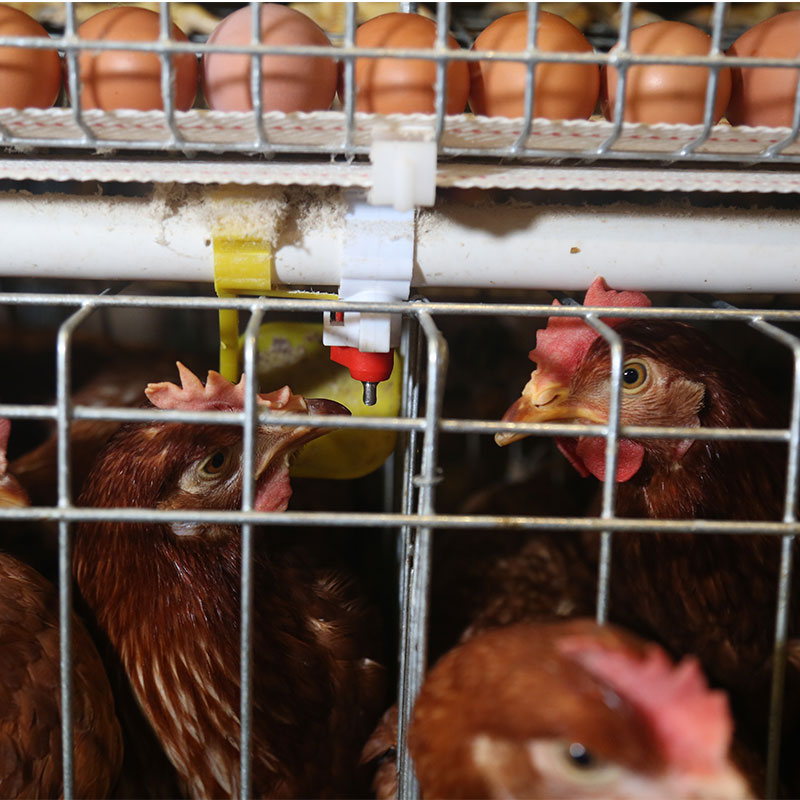
In operational terms, the transition to such a system changes the farmer's relationship with their infrastructure. The anxiety of a storm threatening a weaker structure diminishes. The annual budget for coop maintenance shrinks dramatically. The time spent on mending fences, replacing roosts, or treating moldy walls is reclaimed. This allows the farmer to focus on the core of their business: the health and productivity of their flock. They can observe bird behavior more closely, fine-tune their feeding programs, and manage biosecurity with greater confidence, knowing that the housing itself is a solid, dependable, and hygienic foundation for their operation. The large, durable iron chicken cage ceases to be just a piece of equipment and becomes the stable core around which a modern, efficient, and sustainable poultry farming enterprise is built.
1. Drinking system include the water pipes, water pressure adjuster, drinking nipples, Waterline front-end device, dosing system etc, choose them according to customer's needs.
2. High-quality water drinking pipes, pressure regulating valves and water drinking nipples can effectively prevent the water leakage. Drinking system adopt the closed piping system, which can minimize the water pollution.
3. 360-degree drinking nipples provide adequate drinking water for poultry at all stages.
4. The automatic drinking water system mainly adopts the steel ball drinking nipple. lt uses imported high-grad stainless steel, POM resin, and APS engineering material, which is wearing resistant, and the durability can be used for long time.



1. Automatic feeding machine can be chosen between gantry and ladder feeding machine. Gantry type feeding machine is a relatively economical and practical machine with simple operation, remote control walking character, easy to manage.
2. Mechanical transmission device running smoothly, low noise, long service life.
3. With the use of automatic control, the feeding system can adjust the amount of material.
4. Feeding with arched structure, high carrying capacity, not easily deformed.
5. Saving man power, saving feed, greatly improving the efficiency of Large-scale farming.
6. The walking speed of gantry feeding machine is 9--12 m/min.




1. Manure removing system included scraper type and conveyor belt type, Which can reduce the labor intensity and labor cost, keep the chicken shed dry and clean.
2. A type chicken cage can use scraper type or conveyor belt type.


3. The scraper type is suitable for A type cages, which can clean two or three rows. For the starters, this type is a good choice. lt can not only save some labor cost, but also save some investment in the whole project. The cleaning speed is 6-10 meters per minute.
4. Conveyor belt type is more suitable for large scale farming. The manure removing belt we use is high quality PP material (polypropylene). The walking speed is 2-4 meters per minute.



High Quality Pellets Made by Mobile Pellet Machine
1. It has professional designed angle of the blade. After the dynamic balance test one by one, the blade can operate smoothly.
2. The air volume is consistent in the whole life of the fan. Bearings has advantage of high strength, low noise, durable and so on.
1. The cooling pads uses high-quality wet curtain paper and adopts space cross-linking technology, which has the advantages of high water absorption, high water resistance, anti-toxicity and long service life.
2. The cooling efficiency is over 80%, without surfactant, natural water absorption, fast diffusion speed and long-lasting effect.
3. The product does not contain phenol and other chemical substances that are easy to cause skin allergies. It is non-toxic and harmless to the human body and chicken when installed and used. It is green, safe, energy-saving, environmentally friendly, economical, and easy to install.
4. The frame aluminum alloy has high strength, good corrosion resistance, durability and beautiful appearance.
5. Use a special filter for the cooling pad at the upper water to ensure clean water quality and support efficient water circulation components.
6. Combined with a negative pressure fan, it can effectively lower the indoor temperature.
The window is made of special selected high-quality engineering plastic, with high strength and long service life, together with superior anti-aging and anti-UV performance.
Function: Ventilation of the chicken house, usually used in the winter.
This system can adjust the wind speed and direction, thus the cold air will not reach chicken directly , which can effectively prevent the phenomenon of cold stress in chicken.
Environmental control system equipment is suitable for large-scale and intensive farming. According to customer requirements, we can provide various types of smart poultry equipment.
1. Our poultry management system is a modular system that manages all aspects of the chicken house, such as climate, temperature, humidity, ammonia, feeding, feed weighing, lighting and ventilation systems, and can monitor the situation of the chicken house in real time through a computer and mobile phone.
2. The management computer is the heart of the poultry farm, allowing you to easily monitor the entire poultry farm.

 WeChat:+8617838608255