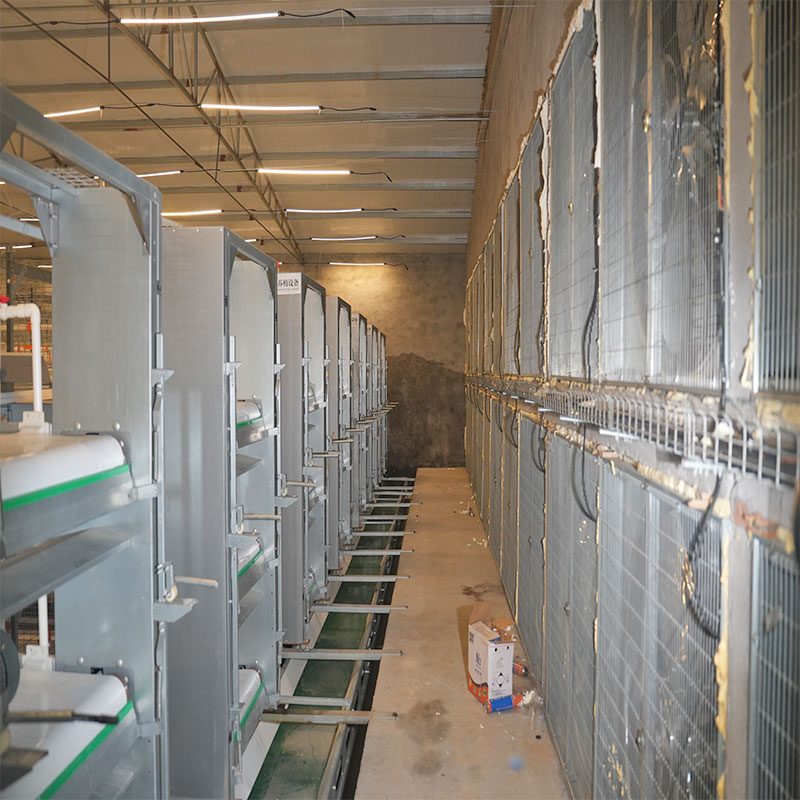
For poultry farmers, the daily movement of birds—whether shifting pullets to laying facilities, transporting broilers to processing, or rotating breeding stock—represents one of the most labor-intensive and high-risk operations. The choice of equipment for this task directly impacts bird welfare, labor efficiency, and ultimately, the bottom line. The large rectangular plastic transfer box represents a significant evolution from traditional methods like flimsy cardboard, makeshift crates, or even metal cages. This is not merely a container; it is an integrated handling system designed for the rigors of modern poultry production.
Design and Structural Integrity: Built for the Long Haul
The core of this system’s value lies in its construction. The term "thickened" is not a marketing buzzword but a critical specification. In practice, this means the plastic walls and base can withstand the impact of being stacked four or five high in a transport truck without bowing or cracking. A farmer loading birds at dawn doesn’t have to worry about a compromised box on the bottom of the stack failing under the weight. The structural ribs, often visible on the exterior, function like the steel beams in a building, distributing load evenly. This robustness stands in stark contrast to single-use cardboard, which can disintegrate in humid conditions, or thin plastic that becomes brittle and shatters in cold weather.

The rectangular shape is a deliberate choice for spatial efficiency. Unlike rounded containers, the rectangular footprint allows boxes to be placed flush against one another on a truck bed or in a storage area, eliminating wasted space. When a farmer is loading a vehicle for a trip to the market, every square inch counts. This efficient use of space translates directly into fewer trips and lower fuel costs. Furthermore, the design often includes interlocking features on the top and bottom. When stacked, these features act like a child’s building blocks, locking the boxes together and preventing dangerous shifts during transit. This stability is crucial for both bird safety and the safety of the personnel handling the load.
Ventilation: The Science of Airflow Management
Proper ventilation in a transport container is not about creating a wind tunnel; it is about facilitating a continuous, gentle exchange of air to remove heat, moisture, and ammonia. The ventilation slots in these boxes are strategically placed. You will typically find a series of long, narrow openings along the sides, and sometimes on the doors. Their placement is calculated to create a cross-flow of air. As the vehicle moves, air is forced in through the front-facing slots and exits through the rear, passively ventilating the entire container without the need for power.
The size of these slots is a critical engineering balance. They are designed to be wide enough to allow ample airflow but narrow enough to prevent smaller birds, like pigeons or young chicks, from sticking their heads out and getting injured. A farmer moving day-old pullets needs confidence that the birds will remain secure inside the box. The slots also serve to dissipate the "heat plume" generated by the birds' bodies. In a poorly ventilated crate, this heat builds up rapidly, leading to stress, panting, and dehydration. The mesh-like pattern of ventilation ensures that even birds in the center of the stacked group benefit from the air movement.
The Access System: Doors, Latches, and Practical Handling
The door mechanism is where the farmer interacts with the system most directly. A poorly designed door can turn a simple task into a frustrating and time-consuming ordeal. High-quality transfer boxes feature large, top-opening doors that provide unimpeded access to the interior. This is a significant advantage over small side doors where a farmer might have to struggle to reach a bird cowered in the back corner.
The latches are typically robust, simple toggle mechanisms that can be operated with one hand, even while wearing gloves. A latch that requires two hands or fine motor skills is impractical when you’re holding a bird in the other. Furthermore, these latches are designed to be both bird-proof and accident-proof. They won’t spring open from the jostling of transport, yet they are intuitive and quick to release when needed. This speeds up both loading and unloading, reducing the time birds spend in confinement and the man-hours required for the job. Some designs incorporate dual latches, providing a failsafe and an even more secure closure for more active species like pigeons.
Hygiene and Sanitation: Breaking the Cycle of Disease
Perhaps the most underappreciated advantage of a plastic transfer system is its contribution to flock health. Cardboard boxes are porous; they absorb moisture, droppings, and pathogens. Using the same cardboard box for multiple groups of birds is akin to using the same syringe for multiple animals—it is a direct vector for disease transmission. Plastic, particularly high-density polyethylene, presents a non-porous surface. Moisture and organic matter sit on the surface, they do not soak in.
This characteristic makes cleaning and disinfection not just possible, but highly effective. After use, these boxes can be power-washed, removing all visible debris. Following this, they can be sprayed with or dipped in a disinfectant solution. The sanitizer makes direct contact with the plastic surface, eliminating bacteria, viruses, and fungal spores. A farmer managing a multi-age site can use these boxes to move birds from a younger flock to an older one without fear of carrying pathogens from one group to the other. The ability to achieve a truly clean surface breaks a critical link in the chain of infection, supporting robust biosecurity protocols.
Versatility in Application: From Broilers to Breeders
The utility of these boxes extends across various poultry enterprises.
Broiler Production: For the broiler farmer, transport to the processing plant is a high-stakes event. These boxes provide a secure, ventilated environment that minimizes stress and bruising, which directly impacts meat quality and grading. Darker-colored boxes can help keep birds calmer during loading and transport.
Layer Operations: When a farmer needs to move point-of-lay pullets from the pullet house into the layer barn, it is a delicate process. The boxes protect the young birds from injury and drafts. They are also indispensable for the regular task of catching and removing spent hens at the end of the lay cycle.
Breeder and Pigeon Management: For breeders, handling birds for vaccination, insemination, or data collection is a routine task. A stack of clean plastic boxes in the barn provides a temporary holding system that is far superior to crowding birds in a corner. The boxes can be used to isolate individual birds or small groups. For pigeon fanciers, the boxes are ideal for transporting birds to races or shows. The secure construction prevents escapes, and the ventilation ensures the birds arrive in peak condition.
Operational Workflow and Economic Justification
Integrating these boxes into a farm's workflow streamlines operations. A typical process might involve: setting up a cleaning station where boxes are washed and disinfected after each use; storing the clean, dry boxes in a designated area; using them to gently gather and transport birds; and then returning them to the cleaning station to begin the cycle again.
While the initial investment per plastic box is higher than a cardboard one, the economic calculation is one of total cost of ownership. A single plastic box can be used hundreds, even thousands, of times over a lifespan of several years. The cost of constantly purchasing disposable cardboard boxes is eliminated. The labor savings from faster, easier loading and unloading accumulate significantly over time. Reduced bird mortality and injury rates during transport preserve the value of the flock. The contribution to biosecurity can prevent disease outbreaks whose costs would dwarf the entire investment in a plastic box system. When viewed through this lens, the system transitions from an expense to a durable asset that generates a return through improved efficiency and risk mitigation.
The large rectangular plastic transfer box is a tool that aligns the practical needs of the farmer with the physiological needs of the bird. Its value is proven not in a brochure, but in the pre-dawn quiet of the barn, when the equipment performs reliably under pressure, ensuring that the birds—the core of the operation—are handled with the care and efficiency they require.
1. Drinking system include the water pipes, water pressure adjuster, drinking nipples, Waterline front-end device, dosing system etc, choose them according to customer's needs.
2. High-quality water drinking pipes, pressure regulating valves and water drinking nipples can effectively prevent the water leakage. Drinking system adopt the closed piping system, which can minimize the water pollution.
3. 360-degree drinking nipples provide adequate drinking water for poultry at all stages.
4. The automatic drinking water system mainly adopts the steel ball drinking nipple. lt uses imported high-grad stainless steel, POM resin, and APS engineering material, which is wearing resistant, and the durability can be used for long time.



1. Automatic feeding machine can be chosen between gantry and ladder feeding machine. Gantry type feeding machine is a relatively economical and practical machine with simple operation, remote control walking character, easy to manage.
2. Mechanical transmission device running smoothly, low noise, long service life.
3. With the use of automatic control, the feeding system can adjust the amount of material.
4. Feeding with arched structure, high carrying capacity, not easily deformed.
5. Saving man power, saving feed, greatly improving the efficiency of Large-scale farming.
6. The walking speed of gantry feeding machine is 9--12 m/min.




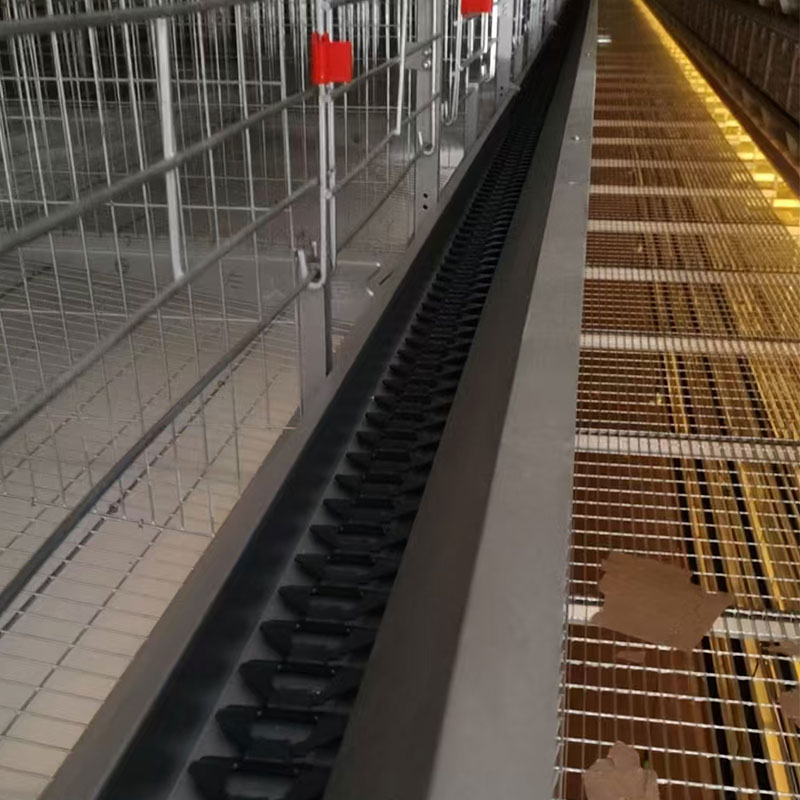
1. Manure removing system included scraper type and conveyor belt type, Which can reduce the labor intensity and labor cost, keep the chicken shed dry and clean.
2. A type chicken cage can use scraper type or conveyor belt type.


3. The scraper type is suitable for A type cages, which can clean two or three rows. For the starters, this type is a good choice. lt can not only save some labor cost, but also save some investment in the whole project. The cleaning speed is 6-10 meters per minute.
4. Conveyor belt type is more suitable for large scale farming. The manure removing belt we use is high quality PP material (polypropylene). The walking speed is 2-4 meters per minute.



High Quality Pellets Made by Mobile Pellet Machine
1. It has professional designed angle of the blade. After the dynamic balance test one by one, the blade can operate smoothly.
2. The air volume is consistent in the whole life of the fan. Bearings has advantage of high strength, low noise, durable and so on.
1. The cooling pads uses high-quality wet curtain paper and adopts space cross-linking technology, which has the advantages of high water absorption, high water resistance, anti-toxicity and long service life.
2. The cooling efficiency is over 80%, without surfactant, natural water absorption, fast diffusion speed and long-lasting effect.
3. The product does not contain phenol and other chemical substances that are easy to cause skin allergies. It is non-toxic and harmless to the human body and chicken when installed and used. It is green, safe, energy-saving, environmentally friendly, economical, and easy to install.
4. The frame aluminum alloy has high strength, good corrosion resistance, durability and beautiful appearance.
5. Use a special filter for the cooling pad at the upper water to ensure clean water quality and support efficient water circulation components.
6. Combined with a negative pressure fan, it can effectively lower the indoor temperature.
The window is made of special selected high-quality engineering plastic, with high strength and long service life, together with superior anti-aging and anti-UV performance.
Function: Ventilation of the chicken house, usually used in the winter.
This system can adjust the wind speed and direction, thus the cold air will not reach chicken directly , which can effectively prevent the phenomenon of cold stress in chicken.
Environmental control system equipment is suitable for large-scale and intensive farming. According to customer requirements, we can provide various types of smart poultry equipment.
1. Our poultry management system is a modular system that manages all aspects of the chicken house, such as climate, temperature, humidity, ammonia, feeding, feed weighing, lighting and ventilation systems, and can monitor the situation of the chicken house in real time through a computer and mobile phone.
2. The management computer is the heart of the poultry farm, allowing you to easily monitor the entire poultry farm.

 WeChat:+8617838608255