
Layer Cage Company: Your Complete Guide to Modern Poultry Farming Systems
In the world of modern, highdensity poultry farming, efficiency, animal welfare, and profitability are inextricably linked. At the heart of this system lies a critical piece of equipment: the layer cage. Choosing the right layer cage company is not merely a purchasing decision; it's a strategic investment that will impact your operation's productivity, bird health, and bottom line for years to come. This comprehensive guide is designed for poultry farmers, agricultural investors, and operations managers seeking to understand the nuances of layer cage systems. We'll delve into the technology, key selection criteria, and what truly distinguishes a toptier supplier from the rest, ensuring you make an informed decision aligned with both ethical husbandry and commercial success.
Layer cages are specialized housing systems designed for egglaying hens in commercial settings. Modern systems have evolved far beyond simple wire enclosures into integrated environments that control feeding, watering, lighting, and manure management.
A stateoftheart system comprises several integrated parts:
Cage Structure: Typically made from galvanized steel wire for durability and hygiene. Designs include Atype (stairstep) and Htype (vertical stack) configurations.
Feeding System: An automated chain or trough system that delivers precise nutrition.
Watering System: Nipple drinkers that provide fresh, clean water on demand while minimizing spillage.
Egg Collection System: Gentle rolling belts or central collection conveyors that transport eggs to a central packing area without manual handling.
Manure Removal System: Scrapers or belts underneath tiers that regularly remove waste, crucial for air quality and disease control.
Environmental Controls: Integration points for ventilation, heating, and lighting systems.
When designed and managed correctly, these systems offer significant benefits:
Optimized Space Utilization: Allows for higher bird density in a controlled footprint.
Enhanced Biosecurity: Separates birds from their manure, reducing parasite load and disease transmission.
Improved Feed Efficiency: Reduced feed wastage and precise rationing.
Labor Efficiency: Automation of feeding, watering, and egg collection drastically reduces manual labor costs.
Higher Egg Quality & Safety: Eggs roll away immediately, keeping them cleaner with less risk of cracking or soiling.
Selecting your supplier is a decision that warrants careful due diligence. Here are the essential factors to evaluate.
The longevity of your investment hinges on build quality.
Steel Gauge & Galvanization: Look for hightensile steel with hotdip galvanization (e.g., Z275 standard) for superior rust resistance. Thicker wire gauge (lower number) indicates greater strength.
Welding & Construction: Precision welding ensures structural integrity. Smooth finishes prevent bird injury.
Component Quality: Assess the durability of plastic parts (like manure belts), nipple drinkers, and egg collection rollers.
Design must balance efficiency with hen wellbeing to meet both ethical standards and consumer expectations.
Space Allowance: Ensure designs meet or exceed legal requirements in your region (e.g., EU Directive 1999/74/EC for enriched cages).
Enrichment Provisions: For enriched cage systems, features like perches, scratch pads, and secluded nesting areas are nonnegotiable.
Bird Comfort: Floor slope should be gentle to prevent foot problems. Wire mesh design should support claws comfortably.
The best companies offer scalable automation.
Level of Automation: Can they provide fully integrated climate control, data monitoring (egg count per row), and centralized management software?
Compatibility: Does their system integrate seamlessly with existing barn infrastructure or other brands' equipment?
FutureProofing: Is the system modular? Can you easily add capacity or upgrade components later?
The relationship begins after installation.
Installation Supervision: Do they provide onsite engineers to oversee setup?
Training Programs: Comprehensive training for your staff on operation and maintenance is crucial.
Parts Availability & Warranty: A clear warranty policy and a readily available local parts inventory prevent costly downtime.
Experience matters deeply in agricultural engineering.
Case Studies & References: Ask for examples of similarscale projects they've completed successfully.
Global Presence vs. Local Expertise: Multinational companies may offer advanced R&D; local specialists may offer more responsive service. The ideal partner often blends both.
Compliance Knowledge: They must be experts in the animal welfare regulations relevant to your market.
| Feature | Conventional Battery Cage | Enriched / Furnished Colony Cage | Combi System (CageAviary) |
| : | : | : | : |
| Primary Design | Multitier rows; basic amenities. | Larger colony units with perches,nests,litter area. | Hybrid; cages open to a communal litter area periodically. |
| Hen Welfare Focus | Meets basic needs; facing increasing regulatory phaseouts. | Designed specifically to address behavioral needs (perching,laying in nest). | Allows for more natural behaviors like dustbathing and foraging. |
| Space per Hen | Lowest space allowance as per older standards. | Significantly higher than conventional (e.g., 750 cm²+). | Varies; includes shared aviary space access. |
|Egg Collection| Fully automated.| Fully automated.| Can be more complex due to aviary area eggs ("floor eggs").|
|Ideal For| Regions where still permitted; costfocused operations.| Markets with strict welfare laws (EU/UK); brands marketing higher welfare.| Operations targeting niche markets (e.g., cagefree not required but enhanced welfare desired).|
|Management Complexity| Lower.| Moderate.| Higher; requires skilled stockmanship.
When evaluating quotes from a layer cage company look beyond the initial price per bird place.
1. Capital Expenditure (CapEx): The upfront cost of equipment purchase and installation.
2. Operational Expenditure (OpEx):
Labor Savings from automation.
Feed Conversion Ratio improvements.
Water usage efficiency.
Manure handling costs.
Energy consumption of systems.
3. Durability & Maintenance Costs: A cheaper system may use thinner galvanization leading to premature rust replacement costs in 57 years versus a 15+ year lifespan."
4. Productivity Gains: Improved bird health better environment leads directly higher peak lay persistence lower mortality more saleable eggs.
A reputable company will help you model this ROI not just sell you hardware.
Partnering with the right layer cage company is foundational building resilient profitable poultry enterprise The ideal partner acts as consultant not just vendor bringing deep expertise engineering animal welfare farm management They provide robust technologically advanced system but also peace mind through reliable support longterm partnership As industry continues evolve towards greater sustainability transparency choosing supplier prioritizes innovation welfare alongside efficiency will position your business success future Remember most expensive system one fails meet birds' needs or your business goals due poor design inadequate support Invest wisely knowledge this guide make choice ensures both your hens your business thrive
Q1: What is an enriched or furnished colony cage?
An enriched cage provides laying hens significantly more space than conventional cages includes mandatory furnishings perching area clawshortening device private nesting area litter area allowing scratching pecking These designed meet higher animal welfare standards such those European Union
Q2: How many hens typically go in one layer cage unit?
Capacity varies greatly by system type region Conventional battery cages might house 510 birds Enriched colony cages designed groups 4080 hens larger communal unit fostering more natural social structures Always check local regulations specify maximum stocking densities
Q3: Are layer cages being phased out globally?
Regulations vary significantly European Union has banned conventional ("barren") battery cages since 2012 permitting only enriched systems Several U.S states passed laws moving towards cagefree production by certain dates However many regions worldwide still utilize modern cage systems crucial research understand current future legislation specific target market
Q4: What's average lifespan quality layer cage system?
Highquality hotdip galvanized steel system proper maintenance can last 1520 years Critical components like plastic belts nipple drinkers may require scheduled replacement sooner lifespan heavily influenced by environmental conditions maintenance routines
Q5: How important ventilation planning when installing new cage system?
Extremely important Ventilation arguably single most critical factor success any poultry house Cages affect air flow patterns Your chosen company should work closely ventilation experts ensure their layout promotes excellent air quality temperature humidity control every tier preventing hotspots ammonia buildup
Q6: Can automate egg collection completely?
Yes modern tiered layer houses feature fully automated egg collection Eggs roll onto gentle conveyor belt transported central packing room without being touched human hand This improves hygiene reduces labor minimizes cracks breaks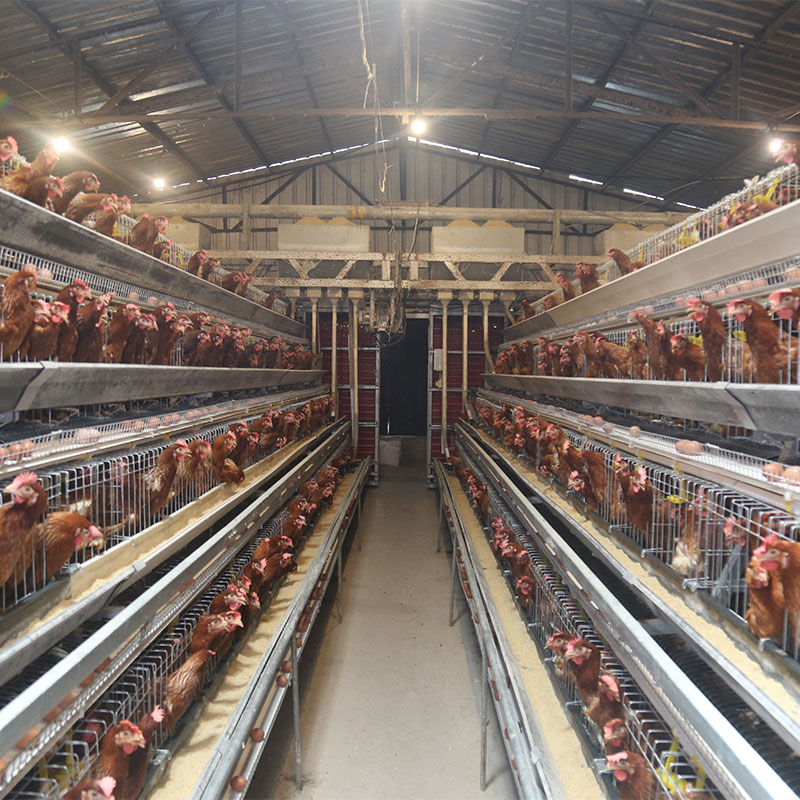
Q7: What key maintenance tasks required keep system running smoothly?
Daily weekly checks nipple drinkers function feed chain tension Monthly inspections wire integrity lubrication moving parts Regular cleaning manure removal system belt scrapers Annual deep inspection structural elements electrical components Preventive maintenance schedule provided by your supplier essential
Q8: How calculate right size system my farm?
Calculation based desired flock size legal space allowances per hen type housing chosen building dimensions A reputable company will conduct detailed site assessment provide layout plans optimize bird flow labor efficiency building utilization always plan some expansion capacity future
Q9: What questions should ask potential supplier before purchasing?
Ask about their compliance knowledge your region request visit existing installation speak customer inquire about availability spare parts locally ask detailed warranty what covers doesn't request clear documentation installation manuals maintenance schedules evaluate their responsiveness presales inquiries indicator postsales service
Q10: Do different breeds hens require different cage designs?
While most commercial white brown layers adapt well standard designs some considerations exist Larger breed birds may require slightly different feeder space perch strength Certain premium niche breeds might benefit customized layouts Discuss your specific breed choice with supplier ensure optimal fit
1. Drinking system include the water pipes, water pressure adjuster, drinking nipples, Waterline front-end device, dosing system etc, choose them according to customer's needs.
2. High-quality water drinking pipes, pressure regulating valves and water drinking nipples can effectively prevent the water leakage. Drinking system adopt the closed piping system, which can minimize the water pollution.
3. 360-degree drinking nipples provide adequate drinking water for poultry at all stages.
4. The automatic drinking water system mainly adopts the steel ball drinking nipple. lt uses imported high-grad stainless steel, POM resin, and APS engineering material, which is wearing resistant, and the durability can be used for long time.



1. Automatic feeding machine can be chosen between gantry and ladder feeding machine. Gantry type feeding machine is a relatively economical and practical machine with simple operation, remote control walking character, easy to manage.
2. Mechanical transmission device running smoothly, low noise, long service life.
3. With the use of automatic control, the feeding system can adjust the amount of material.
4. Feeding with arched structure, high carrying capacity, not easily deformed.
5. Saving man power, saving feed, greatly improving the efficiency of Large-scale farming.
6. The walking speed of gantry feeding machine is 9--12 m/min.




1. Manure removing system included scraper type and conveyor belt type, Which can reduce the labor intensity and labor cost, keep the chicken shed dry and clean.
2. A type chicken cage can use scraper type or conveyor belt type.


3. The scraper type is suitable for A type cages, which can clean two or three rows. For the starters, this type is a good choice. lt can not only save some labor cost, but also save some investment in the whole project. The cleaning speed is 6-10 meters per minute.
4. Conveyor belt type is more suitable for large scale farming. The manure removing belt we use is high quality PP material (polypropylene). The walking speed is 2-4 meters per minute.



High Quality Pellets Made by Mobile Pellet Machine
1. It has professional designed angle of the blade. After the dynamic balance test one by one, the blade can operate smoothly.
2. The air volume is consistent in the whole life of the fan. Bearings has advantage of high strength, low noise, durable and so on.
1. The cooling pads uses high-quality wet curtain paper and adopts space cross-linking technology, which has the advantages of high water absorption, high water resistance, anti-toxicity and long service life.
2. The cooling efficiency is over 80%, without surfactant, natural water absorption, fast diffusion speed and long-lasting effect.
3. The product does not contain phenol and other chemical substances that are easy to cause skin allergies. It is non-toxic and harmless to the human body and chicken when installed and used. It is green, safe, energy-saving, environmentally friendly, economical, and easy to install.
4. The frame aluminum alloy has high strength, good corrosion resistance, durability and beautiful appearance.
5. Use a special filter for the cooling pad at the upper water to ensure clean water quality and support efficient water circulation components.
6. Combined with a negative pressure fan, it can effectively lower the indoor temperature.
The window is made of special selected high-quality engineering plastic, with high strength and long service life, together with superior anti-aging and anti-UV performance.
Function: Ventilation of the chicken house, usually used in the winter.
This system can adjust the wind speed and direction, thus the cold air will not reach chicken directly , which can effectively prevent the phenomenon of cold stress in chicken.
Environmental control system equipment is suitable for large-scale and intensive farming. According to customer requirements, we can provide various types of smart poultry equipment.
1. Our poultry management system is a modular system that manages all aspects of the chicken house, such as climate, temperature, humidity, ammonia, feeding, feed weighing, lighting and ventilation systems, and can monitor the situation of the chicken house in real time through a computer and mobile phone.
2. The management computer is the heart of the poultry farm, allowing you to easily monitor the entire poultry farm.

 WeChat:+8617838608255