Layer Cage for Chicken: The Ultimate Guide to Modern Poultry Farming
For poultry farmers navigating the transition from traditional to modern farming or scaling their operations, the choice of housing system is a critical decision that impacts productivity, bird welfare, and profitability. Among the most efficient and widely adopted systems globally is the layer cage, a specialized housing structure designed for egglaying hens. This comprehensive guide delves deep into the world of layer cages, exploring their design, benefits, ethical considerations, and best management practices. Whether you're a seasoned farmer or planning a new venture, understanding this technology is essential for running a successful, sustainable, and humane egg production business.
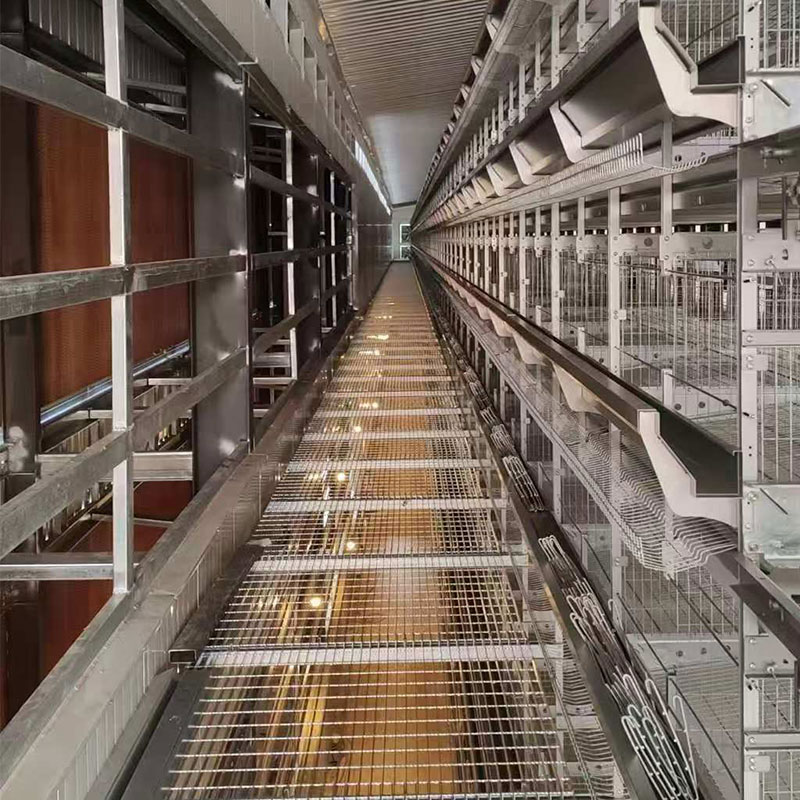
A layer cage system is a housing arrangement where egglaying hens (layers) are kept in compartmentalized cages arranged in vertical tiers (usually 36 tiers) inside a controlledenvironment poultry house. Unlike freerange or barn systems, cages confine small groups of birds to a defined space equipped with feed troughs, water lines, and sloped floors for automatic egg collection.
The primary purpose is to maximize egg production efficiency per unit of space while providing a controlled environment that minimizes disease exposure and simplifies management tasks like feeding, watering, and manure removal.
Cage Frame & Mesh: Made from galvanized steel wire for durability and hygiene.
Feed Trough: Runs along the front of each cage row with an automated chain or auger delivery system.
Nipple Drinking System: Provides clean water on demand directly to each cage.
Sloped Floor: Allows laid eggs to gently roll onto an egg collection belt, keeping them clean and reducing breakage.
Manure Removal System: Includes manure belts under each tier or deep pits for periodic cleaning.
Environmental Controls: Integrated with the poultry house’s ventilation, heating, and lighting systems.
Choosing the right type depends on your flock size, budget, labor availability, and animal welfare goals.
The traditional design offering high stock density. Due to significant animal welfare concerns—providing minimal space per bird and restricting natural behaviors—these are being phased out or banned in many regions (e.g., the European Union).
These represent an evolution designed to address welfare criticisms. They provide more space per hen and are legally mandated in some areas. Key features include:
Perches: For roosting.
Nesting Area: A secluded spot for laying eggs.
Scratching Pad/Dust Bath Area: Allows foraging behavior.
More Vertical Space.
Comparison Table: Cage Types at a Glance
| Feature | Conventional Cage | Enriched/Furnished Cage | Aviary System (NonCage) |
| : | : | : | : |
| Space per Hen | Very Limited (e.g., < 550 cm²) | Increased (e.g., 750+ cm²) | Ample; full barn access |
| Natural Behaviors | Severely restricted | Partially accommodated (nesting, perching) | Fully enabled (flying, dust bathing) |
| Egg Collection | Fully Automated | Fully Automated | Mix of automated & manual |
| Disease Control | Easier due to separation | Moderately easier | More challenging |
| Initial Investment | Lower per bird housed | Higher than conventional | Highest |
| Labor Requirements | Lower for daily tasks | Lower for daily tasks | Higher for management |
A larger version of furnished cages housing larger groups of birds (tens to hundreds), aiming to offer more behavioral freedom while retaining some automation benefits.
When managed correctly with bird welfare as a priority, modern cage systems offer distinct operational advantages:
Increased Production Efficiency: Higher stocking density leads to more eggs per square meter of barn space. Automated systems reduce feed waste and labor costs.
Superior Egg Quality & Hygiene: Eggs roll away immediately, reducing contamination from litter or manure. Cracked and dirty egg rates are typically lower.
Enhanced Bird Health Monitoring: Sick or nonproductive birds are easier to identify quickly in smaller groups.
Effective Disease & Parasite Control: Separation from manure reduces contact with pathogens and parasites like worms and coccidia.
Simplified Management: Automation in feeding, watering, egg collection, and manure handling streamlines operations for large flocks.
The ethical debate around cage systems is central to modern poultry farming. Adhering to best practices is nonnegotiable for responsible farmers.
1. Restriction of Natural Behaviors: This is the core issue. Enriched cages are a step forward. The future lies in systems that balance welfare with sustainability.
2. Bone Strength: Lack of movement can lead to weaker bones. Providing balanced nutrition with adequate calcium/phosphorus and using genetic strains selected for bone strength is crucial.
3. Feather Pecking & Cannibalism: While less common in caged settings due to separation stress can still trigger it). Proper beak treatment (where legally permitted), optimal light intensity (<20 lux),and providing pecking substrates are key controls.
Stocking Density: Never exceed the legal limits or breed guidelines. More space is always better for welfare.
Environmental Enrichment: In furnished cages ensure all enrichments (nests scratch pads perches) are functional used by hens
Air Quality & Ventilation: Maintain excellent air quality low ammonia levels (<25 ppm) through robust ventilation management
Lighting Program: Implement a gradual dawn/dusk lighting program using dimmers simulate natural rhythms reduce stress
Handling & Training: Ensure all staff trained gentle bird handling during placement vaccination transfer
1. Research Regulations: First understand local national laws regarding cage dimensions stocking density enrichments beak trimming etc
2. Define Your Scale & Budget: Determine flock size initial investment capacity including house construction cage purchase automation systems
3. Choose Reputable Equipment Supplier: Select supplier known quality durable materials good aftersales service spare parts availability
4. Design The Poultry House: Work engineer design optimal layout orientation insulation ventilation cooling heating systems
5. Implement Biosecurity From Start: Design with biosecurity mind: fencing foot baths rodent control entry protocols allinallout flock management
The layer cage system remains powerful tool modern egg production offering undeniable efficiencies disease control management ease However its future inextricably linked progressive animal welfare standards The responsible farmer today must look beyond mere productivity metrics embrace enriched designs stringent stockmanship superior management practices that prioritize hen wellbeing Ultimately success lies finding sustainable balance—a system safeguards health allows expression natural behaviors while ensuring economic viability farm By investing right equipment knowledge continuous improvement you can build operation not only productive also resilient ethically sound ready meet evolving expectations consumers regulators alike
Q1: What is the difference between a broiler cage and a layer cage?
A1 Broiler cages designed meat chickens (broilers) feature flat floors solid partitions prevent leg injuries encourage feeding Layer cages have sloped wire floors allow eggs roll out separate nests often included They serve completely different production purposes require different designs
Q2 Are layer cages illegal?
A2 Legality varies globally Conventional battery cages banned EU UK several US states Enriched furnished cages often still permitted many jurisdictions Always check your specific country state provincial regulations before investing any system
Q3 How many chickens go in one layer cage?
A3 Number depends cage size local laws In enriched colony system group sizes range ~40 up several hundred birds Key metric space per hen which regulated For example EU requires least 750 cm² usable area per hen enriched cages plus nest scratching area perch
Q4 Do chickens suffer in layer cages?
A4 This subject intense debate Conventional cages severely restrict natural behaviors causing welfare concerns Enriched cages aim mitigate issues providing space amenities like nests perches Highest welfare standards achieved through excellent stockmanship regardless housing type—including optimal nutrition health monitoring air quality lowstress handling
Q5 What are alternatives to cage systems?
A5 Main alternatives include:
Barn/Floor Systems: Hens move freely indoor litter area with perches nest boxes
Aviaries: Multitiered indoor systems platforms ramps allow flying movement between levels
FreeRange: Hens have access outdoor pastures during day
Organic: Combines freerange access organic feed specific husbandry standards Each has different cost disease pressure management challenges
Q6 How do you collect eggs from layer cages?
A6 Modern systems use fully automated collection Eggs roll onto conveyor belt running front each tier transported central collection room sorted packed manually automatically This minimizes labor egg damage contamination
Q7 How often should manure be removed from under layer cages?
A7 With belt removal systems belts run daily weekly depending design removing manure continuously Deep pit systems may cleaned out between flocks (~every months) Good frequent removal critical maintaining air quality controlling flies ammonia levels
Q8 Can layers be raised in cages from chick stage?
A8 No Pullets chicks growers raised separate pulletrearing facilities usually floor barns aviaries develop strong skeletons muscles They transferred laying house placed laying cages around weeks age just before they start lay pointoflay pullets)
Q9 What feeding system used layer cages?
A9 Almost exclusively automated Chain feeders auger systems common Feed trough runs length cage row delivering nutritionally complete layer ration consistently all birds multiple times day ensuring equal access nutrients vital consistent egg production shell quality
1. Drinking system include the water pipes, water pressure adjuster, drinking nipples, Waterline front-end device, dosing system etc, choose them according to customer's needs.
2. High-quality water drinking pipes, pressure regulating valves and water drinking nipples can effectively prevent the water leakage. Drinking system adopt the closed piping system, which can minimize the water pollution.
3. 360-degree drinking nipples provide adequate drinking water for poultry at all stages.
4. The automatic drinking water system mainly adopts the steel ball drinking nipple. lt uses imported high-grad stainless steel, POM resin, and APS engineering material, which is wearing resistant, and the durability can be used for long time.



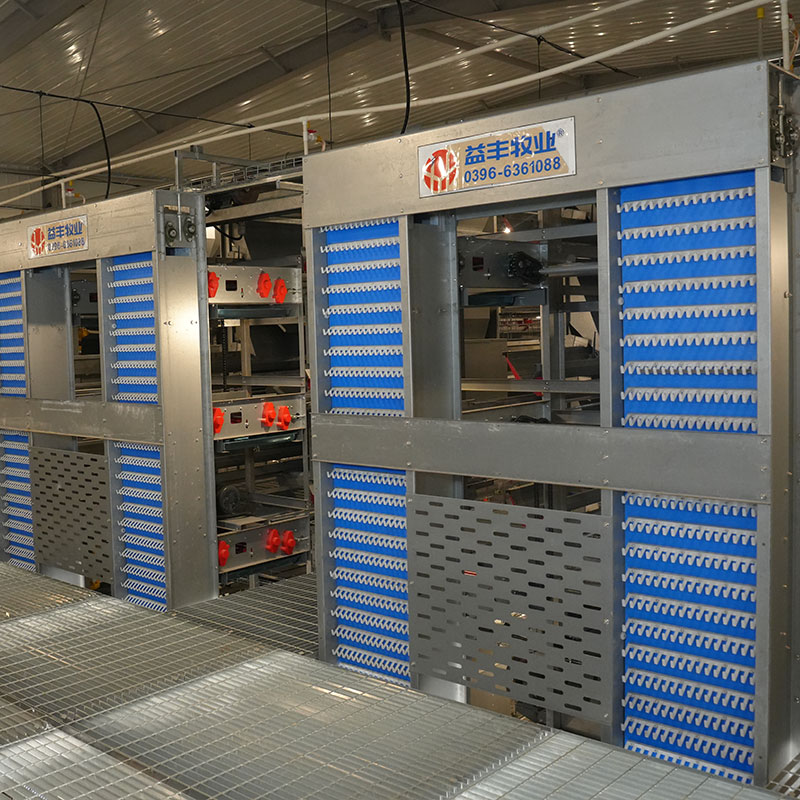
1. Automatic feeding machine can be chosen between gantry and ladder feeding machine. Gantry type feeding machine is a relatively economical and practical machine with simple operation, remote control walking character, easy to manage.
2. Mechanical transmission device running smoothly, low noise, long service life.
3. With the use of automatic control, the feeding system can adjust the amount of material.
4. Feeding with arched structure, high carrying capacity, not easily deformed.
5. Saving man power, saving feed, greatly improving the efficiency of Large-scale farming.
6. The walking speed of gantry feeding machine is 9--12 m/min.




1. Manure removing system included scraper type and conveyor belt type, Which can reduce the labor intensity and labor cost, keep the chicken shed dry and clean.
2. A type chicken cage can use scraper type or conveyor belt type.


3. The scraper type is suitable for A type cages, which can clean two or three rows. For the starters, this type is a good choice. lt can not only save some labor cost, but also save some investment in the whole project. The cleaning speed is 6-10 meters per minute.
4. Conveyor belt type is more suitable for large scale farming. The manure removing belt we use is high quality PP material (polypropylene). The walking speed is 2-4 meters per minute.



High Quality Pellets Made by Mobile Pellet Machine
1. It has professional designed angle of the blade. After the dynamic balance test one by one, the blade can operate smoothly.
2. The air volume is consistent in the whole life of the fan. Bearings has advantage of high strength, low noise, durable and so on.
1. The cooling pads uses high-quality wet curtain paper and adopts space cross-linking technology, which has the advantages of high water absorption, high water resistance, anti-toxicity and long service life.
2. The cooling efficiency is over 80%, without surfactant, natural water absorption, fast diffusion speed and long-lasting effect.
3. The product does not contain phenol and other chemical substances that are easy to cause skin allergies. It is non-toxic and harmless to the human body and chicken when installed and used. It is green, safe, energy-saving, environmentally friendly, economical, and easy to install.
4. The frame aluminum alloy has high strength, good corrosion resistance, durability and beautiful appearance.
5. Use a special filter for the cooling pad at the upper water to ensure clean water quality and support efficient water circulation components.
6. Combined with a negative pressure fan, it can effectively lower the indoor temperature.
The window is made of special selected high-quality engineering plastic, with high strength and long service life, together with superior anti-aging and anti-UV performance.
Function: Ventilation of the chicken house, usually used in the winter.
This system can adjust the wind speed and direction, thus the cold air will not reach chicken directly , which can effectively prevent the phenomenon of cold stress in chicken.
Environmental control system equipment is suitable for large-scale and intensive farming. According to customer requirements, we can provide various types of smart poultry equipment.
1. Our poultry management system is a modular system that manages all aspects of the chicken house, such as climate, temperature, humidity, ammonia, feeding, feed weighing, lighting and ventilation systems, and can monitor the situation of the chicken house in real time through a computer and mobile phone.
2. The management computer is the heart of the poultry farm, allowing you to easily monitor the entire poultry farm.

 WeChat:+8617838608255