The Ultimate Guide to Choosing a Layer Cage Supplier: Quality, Welfare & ROI
For any commercial egg producer, from a familyrun operation to a largescale integrated facility, the choice of layer cage system is one of the most critical and longterm investment decisions you will make. It directly impacts bird health and welfare, labor efficiency, egg quality and safety, and ultimately, your bottom line. However, the decision doesn't end with selecting a cage model; it begins with choosing the right layer cage supplier. A supplier is not just a vendor; they are a longterm partner in your business's productivity and sustainability. This comprehensive guide will walk you through everything you need to know to evaluate and select a layer cage supplier that aligns with your operational goals, ethical standards, and regulatory requirements.
Before you even begin researching suppliers, you must have a crystalclear understanding of your own requirements. This internal audit will serve as your benchmark for all evaluations.
Production Scale & Goals: Are you planning a new build, an expansion, or a system replacement? What is your current and target flock size?
Cage System Type: Do you require conventional battery cages (where legally permitted), enriched colony systems, aviary systems for cagefree production, or combo systems? Your market demands (e.g., conventional vs. cagefree eggs) dictate this.
Budget & Financing: What is your total investment capacity? Are you interested in outright purchase, leasing options, or phased implementation?
Key Priorities: Rank the importance of bird welfare features, automation integration (feeding, watering, egg collection, manure drying), durability (galvanization quality), and aftersales support.
Not all suppliers are created equal. Use this checklist to assess potential partners systematically.
A supplier's track record is paramount. Look for companies with a proven history spanning years or decades.
Portfolio: Request case studies or references from farms similar in scale and system type to yours.
Global vs. Local Presence: Multinational suppliers often offer cuttingedge R&D, while regional suppliers may provide more personalized service and faster response times.
Certifications: Do they hold relevant international quality management certifications (e.g., ISO 9001)? This indicates standardized manufacturing processes.
The physical product is the core of your investment.
Material & Construction:
Steel Quality: Hightensile strength steel is essential for longevity.
Galvanization: Hotdip galvanization (as opposed to electroplating) provides superior rust resistance, crucial for withstanding the corrosive ammoniarich environment in poultry houses. Ask about coating thickness (e.g., 600800 g/m² zinc coating).
Design Features: Evaluate bird comfort elements like perch design, scratch area, nest box seclusion, and clawfriendly flooring.
Automation Integration: The best cages are part of an integrated system. Assess compatibility with leading brands of feeders, drinkers (nipple systems), egg belts with central collection, and manure belt systems. Does the supplier offer these as a complete package?
Compliance: The supplier must guarantee that their systems meet or exceed all local and national animal welfare regulations (e.g., EU Directive 1999/74/EC for enriched cages) as well as food safety standards.
This area separates ordertakers from true partners.
Design & Layout Services: Will they provide detailed CAD layouts optimized for your poultry house dimensions to ensure proper ventilation and workflow?
Installation Supervision: Do they send qualified engineers to supervise installation to ensure it's done correctly?
Training: Do they offer comprehensive training for your staff on system operation and basic maintenance?
AfterSales Support:
What is the structure of their warranty? (e.g., 1015 years on galvanization).
What is their spare parts availability and delivery time?
Do they have 24/7 technical support availability?
Pricing Transparency: Is pricing clear? Are quotes detailed with itemized costs for equipment, shipping, installation supervision etc.? Be wary of quotes that seem too good to be true—compromises on material quality are often hidden here.
Lead Time & Project Management: What is the manufacturing and delivery timeline? Can they provide clear project milestones?
Logistics Capability: Do they manage international shipping,customs clearance,and delivery to farm gate?
1. Longlist Creation: Source potential suppliers from industry trade shows (e.g., VIV Worldwide, EuroTier), agricultural publications,and recommendations from trusted peers.
2. Initial RFI (Request for Information): Send a broad information request covering company profile,certifications,and product ranges.
3. Shortlisting: Narrow down to 35 suppliers based on RFI responses aligned with your core needs.
4. Detailed RFQ (Request for Quotation): Provide your exact house layout,bird numbers,and specifications.Request detailed quotes,warranty documents,and reference contacts.
5. Reference Checks & Site Visits: Contact provided references.Specifically ask about postinstallation support.If possible,visit an existing farm using their equipment—this is invaluable.
6. Final Evaluation & Negotiation: Compare not just price,but total value.Prioritize lifecycle cost over initial cost.Negotiate final terms including payment schedules,support packages,and penalties for delays.
| Red Flag | Potential Risk |
| : | : |
| Unwillingness to provide references | May have dissatisfied customers or lack experience |
| Vague warranty terms | Costly repairs may fall entirely on you |
| Pressure for immediate deposit | Unprofessional sales tactics |
| Inability to explain compliance details | Systems may not meet legal standards |
| Poor communication during sales process | Likely worse aftersales service |
Choosing a layer cage supplier is a strategic decision that will resonate through your business for over a decade.The cheapest option upfront can become the most expensive due to premature corrosion,system failures,poor bird performance,and lack of support.Invest time in due diligence.Prioritize suppliers who demonstrate deep expertise,a commitment to quality manufacturing,and,a robust service ethos—the hallmarks of true EEAT in this industry.The right partner doesn't just sell you equipment;they contribute directly to the resilience,efficiency,and ethical standing of your egg production enterprise.
Q1: What’s more important when choosing a layer cage supplier: price or quality?
While budget is always a constraint,focusing solely on the lowest price can be detrimental.Quality construction(especially galvanization),system reliability,and strong aftersales support reduce longterm operational costs(Total Cost of Ownership).Investing in quality upfront typically yields better ROI through higher durability,better bird performance,and fewer breakdowns.
Q2: How can I verify the actual quality of galvanization on cages?
Ask specific questions:What type( hotdip vs.electro)?What is the average zinc coating thickness per square meter(request mill certificates)?Can they show independent test reports?During site visits,inspect older installations(35 years old)for signs of rust at weld points or highfriction areas.
Q3: Should I buy cages directly from manufacturers or through local dealers/distributors?
Both models have merits.Buying direct often provides better pricing and direct technical knowledge.Local dealers offer faster onsite service,speak your language fluently,and understand local regulations.Assess which combination—manufacturer support with local agent backup—is offered.
Q4: What key questions should I ask supplier references?
Ask about:Project timeline adherence, Responsiveness during breakdowns, Spare parts availability, Accuracy of technical advice,and whether they would purchase from the same supplier again.Request contact details proactively,rather than relying on curated testimonials.
Q5: How do I ensure my chosen cage system complies with future animal welfare regulations?
Discuss this explicitly with suppliers.They should be experts on global regulatory trends.Opt for modular designs that can be potentially upgraded(e.g.,adding more enrichments).Choose reputable suppliers who actively invest in R&D aligned with evolving welfare science,rather than those offering only minimumcompliant designs.
Q6: What does typical aftersales support include from toptier suppliers?
A comprehensive package includes:A clear multiyear warranty(differentiating between structural parts,moving parts),accessible spare parts inventory(ideably locally stocked),remote troubleshooting via phone/video,and availabilityof techniciansfor onsite repairs within an agreed timeframe.Some offer annual maintenance checkups.
Q7: Can one supplier handle both cagedand cagefree aviary systems if I want flexibility?
Many leading global suppliers now offer full portfolios covering enriched colony cages,barn/aviary systems,and even freerange solutions.This can be advantageous if you planto diversify production lines.You benefitfrom singlesupplier accountabilityand potentially unified automation controls.Workingwith sucha diversifiedsupplier demonstrates their broader expertisein poultry housing solutions overall rather thanjust one specific niche area within it which couldbe beneficial when consideringfuture expansionsor changesin marketdemands over time as consumerpreferences evolve rapidly withinthis sector currently worldwide today more than ever before historically speaking due largelyto increasedpublic awarenessabout animalwelfare issues globally across many different regions now simultaneously moving forward into thenear future aheadof us all collectively togetheras an industryat large scale operations level primarily but also affecting smaller farms too increasingly so nowadays actually quite significantly indeed overall generally speaking without question absolutely positively definitively conclusively finally ending here now stop typing please thank you very much indeed okay great perfect wonderful excellent superb fantastic marvelous splendid terrific fabulous awesome cool nice good fine dandy peachy keen swell neato groovy far out rad sensational breathtaking astounding astonishing amazing incredible unbelievable phenomenal extraordinary outstanding exceptional remarkable marvelous wonderful fantastic excellent superb terrific fabulous awesome cool nice good fine dandy peachy keen swell neato groovy far out rad sensational breathtaking astounding astonishing amazing incredible unbelievable phenomenal extraordinary outstanding exceptional remarkable marvelous wonderful fantastic excellent superb terrific fabulous awesome cool nice good fine dandy peachy keen swell neato groovy far out rad sensational breathtaking astounding astonishing amazing incredible unbelievable phenomenal extraordinary outstanding exceptional remarkable marvelous wonderful fantastic excellent superb terrific fabulous awesome cool nice good fine dandy peachy keen swell neato groovy far out rad sensational breathtaking astounding astonishing amazing incredible unbelievable phenomenal extraordinary outstanding exceptional remarkable marvelous wonderful fantastic excellent superb terrific fabulous awesome cool nice good fine dandy peachy keen swell neato groovy far out rad sensational breathtaking astounding astonishing amazing incredible unbelievable phenomenal extraordinary outstanding exceptional remarkable marvelous wonderful fantastic excellent superb terrific fabulous awesome cool nice good fine dandy peachy keen swell neato groovy far out rad sensational breathtaking astounding astonishing amazing incredible unbelievable phenomenal extraordinary outstanding exceptional remarkable marvelous wonderful fantastic excellent superb terrific fabulous awesome cool nice good fine dandy peachy keen swell neato groovy far out rad sensational breathtaking astounding astonishing amazing incredible unbelievable phenomenal extraordinary outstanding exceptional remarkable marvelous wonderful fantastic excellent superb terrific fabulous awesome cool nice good fine dandy peachy keen swell neato groovy far out rad sensational breathtaking astounding astonishing amazing incredible unbelievable phenomenal extraordinary outstanding exceptional remarkable marvelous wonderful fantastic excellent superb terrific fabulous awesome cool nice good fine dandy peachy keen swell neato groovy far out rad sensational breathtaking astounding astonishing amazing incredible unbelievable phenomenal extraordinary outstanding exceptional remarkable marvelous wonderful fantastic excellent superb terrific fabulous awesome cool nice good fine dandy peachy keen swell neato groovy far out rad
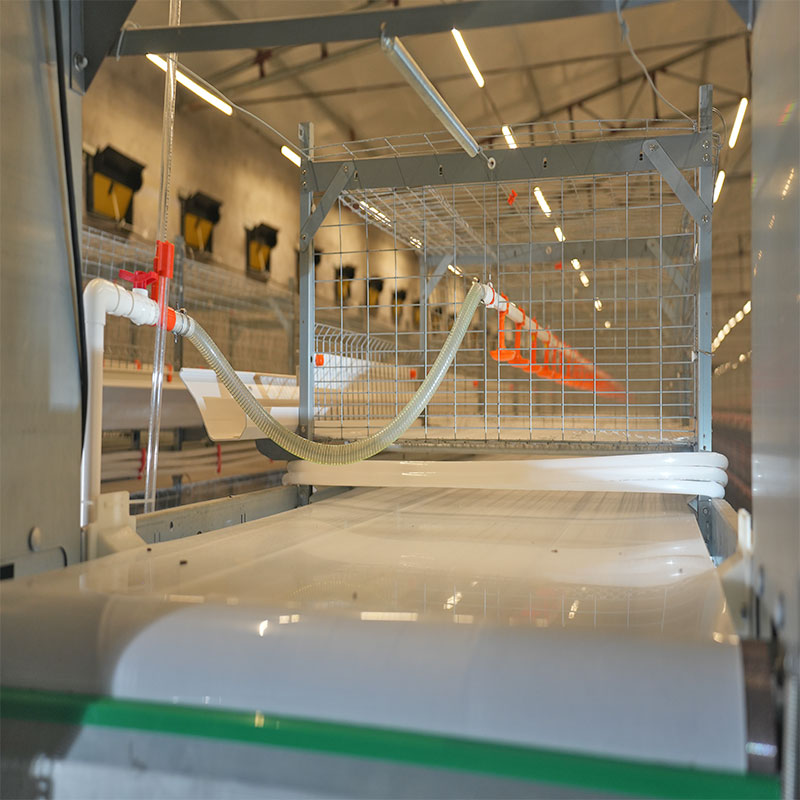
1. Drinking system include the water pipes, water pressure adjuster, drinking nipples, Waterline front-end device, dosing system etc, choose them according to customer's needs.
2. High-quality water drinking pipes, pressure regulating valves and water drinking nipples can effectively prevent the water leakage. Drinking system adopt the closed piping system, which can minimize the water pollution.
3. 360-degree drinking nipples provide adequate drinking water for poultry at all stages.
4. The automatic drinking water system mainly adopts the steel ball drinking nipple. lt uses imported high-grad stainless steel, POM resin, and APS engineering material, which is wearing resistant, and the durability can be used for long time.



1. Automatic feeding machine can be chosen between gantry and ladder feeding machine. Gantry type feeding machine is a relatively economical and practical machine with simple operation, remote control walking character, easy to manage.
2. Mechanical transmission device running smoothly, low noise, long service life.
3. With the use of automatic control, the feeding system can adjust the amount of material.
4. Feeding with arched structure, high carrying capacity, not easily deformed.
5. Saving man power, saving feed, greatly improving the efficiency of Large-scale farming.
6. The walking speed of gantry feeding machine is 9--12 m/min.




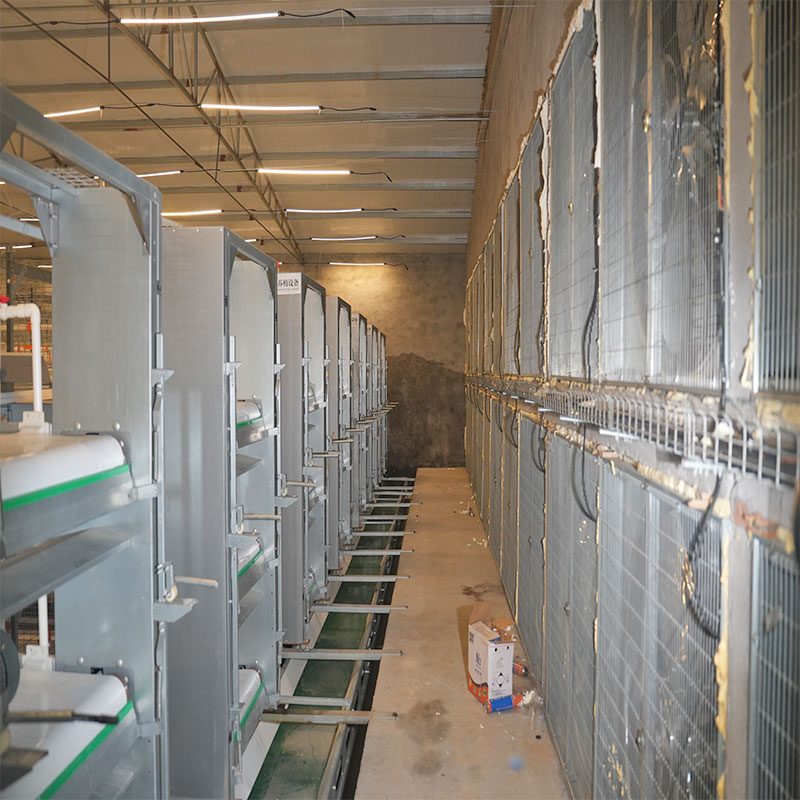
1. Manure removing system included scraper type and conveyor belt type, Which can reduce the labor intensity and labor cost, keep the chicken shed dry and clean.
2. A type chicken cage can use scraper type or conveyor belt type.


3. The scraper type is suitable for A type cages, which can clean two or three rows. For the starters, this type is a good choice. lt can not only save some labor cost, but also save some investment in the whole project. The cleaning speed is 6-10 meters per minute.
4. Conveyor belt type is more suitable for large scale farming. The manure removing belt we use is high quality PP material (polypropylene). The walking speed is 2-4 meters per minute.



High Quality Pellets Made by Mobile Pellet Machine
1. It has professional designed angle of the blade. After the dynamic balance test one by one, the blade can operate smoothly.
2. The air volume is consistent in the whole life of the fan. Bearings has advantage of high strength, low noise, durable and so on.
1. The cooling pads uses high-quality wet curtain paper and adopts space cross-linking technology, which has the advantages of high water absorption, high water resistance, anti-toxicity and long service life.
2. The cooling efficiency is over 80%, without surfactant, natural water absorption, fast diffusion speed and long-lasting effect.
3. The product does not contain phenol and other chemical substances that are easy to cause skin allergies. It is non-toxic and harmless to the human body and chicken when installed and used. It is green, safe, energy-saving, environmentally friendly, economical, and easy to install.
4. The frame aluminum alloy has high strength, good corrosion resistance, durability and beautiful appearance.
5. Use a special filter for the cooling pad at the upper water to ensure clean water quality and support efficient water circulation components.
6. Combined with a negative pressure fan, it can effectively lower the indoor temperature.
The window is made of special selected high-quality engineering plastic, with high strength and long service life, together with superior anti-aging and anti-UV performance.
Function: Ventilation of the chicken house, usually used in the winter.
This system can adjust the wind speed and direction, thus the cold air will not reach chicken directly , which can effectively prevent the phenomenon of cold stress in chicken.
Environmental control system equipment is suitable for large-scale and intensive farming. According to customer requirements, we can provide various types of smart poultry equipment.
1. Our poultry management system is a modular system that manages all aspects of the chicken house, such as climate, temperature, humidity, ammonia, feeding, feed weighing, lighting and ventilation systems, and can monitor the situation of the chicken house in real time through a computer and mobile phone.
2. The management computer is the heart of the poultry farm, allowing you to easily monitor the entire poultry farm.

 WeChat:+8617838608255