For poultry farmers considering the transition to cage systems, the A-type battery cage represents a significant evolution in layer management. Its distinctive pitched-roof design isn’t merely for aesthetics; it creates a multi-tiered structure that dramatically increases bird density within the same floor space compared to flat-deck or free-range systems. Imagine a shed that previously housed 5,000 birds on the floor now accommodating 15,000 or more, not by expanding the building’s footprint, but by building upwards. This vertical integration is the core of its economic appeal, but its true value is unlocked through the integrated systems that automate the most labor-intensive tasks of poultry farming.

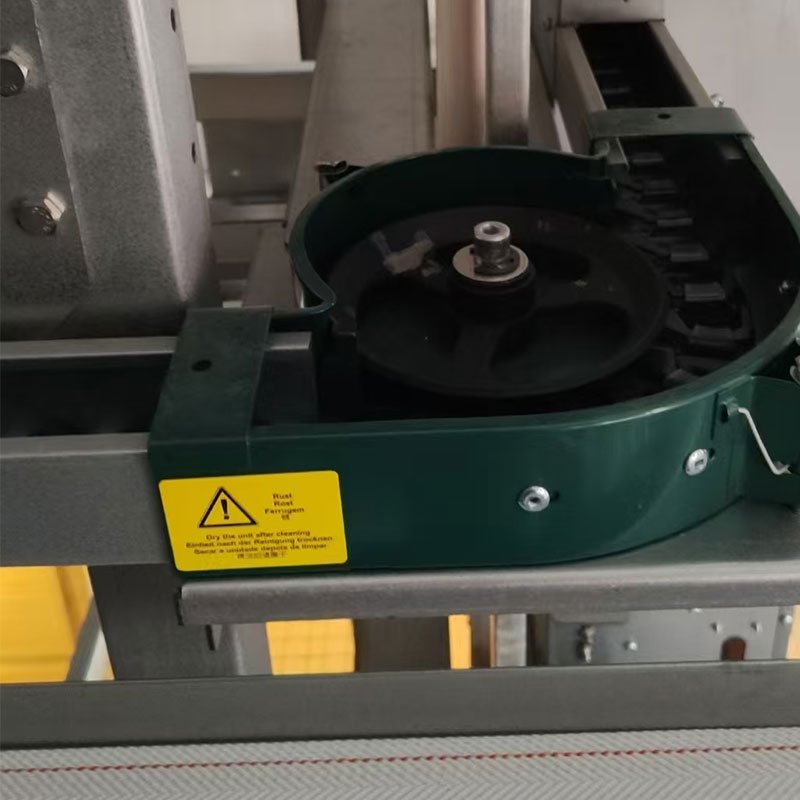
The daily chore of egg collection, which can take hours in a non-caged environment, is transformed. As a hen lays an egg, it rolls forward out of the cage onto a gentle, continuous conveyor belt. This belt runs the length of each row, carrying the eggs smoothly to the collection end of the shed. A farmer no longer needs to walk through the flock, disturbing birds and searching nests; instead, they can gather thousands of eggs from a single, clean point. This not only saves immense labor but also drastically improves egg quality. The eggs have minimal contact with the birds or manure, resulting in cleaner shells and a lower incidence of hairline cracks or checks that degrade their market value.
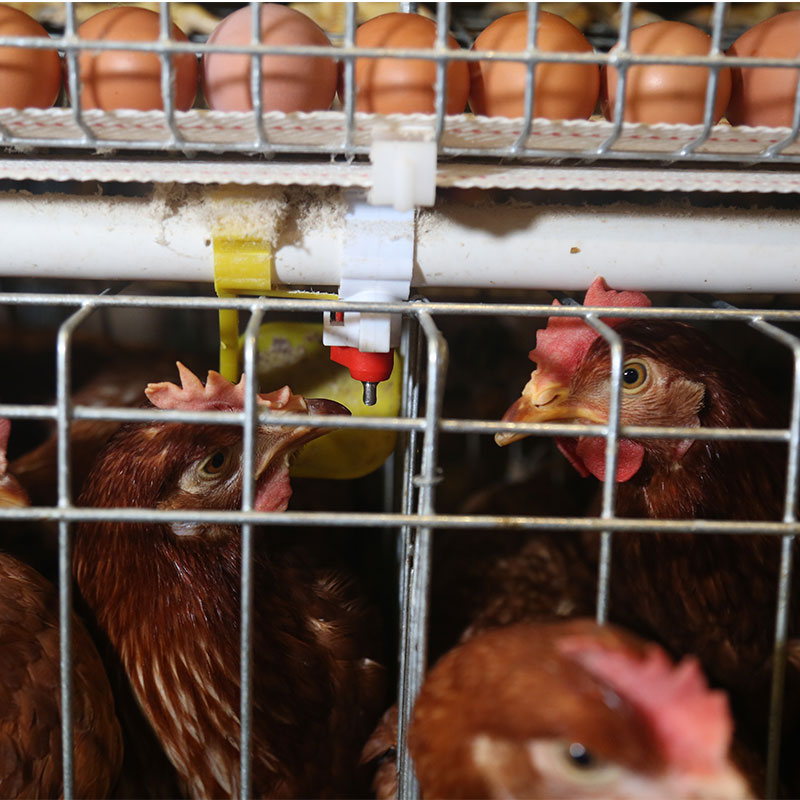
Water delivery is another critical system automated within the A-type cage. Nipple drinkers are positioned at the front of each cage tier. When a bird is thirsty, it simply pecks at the stainless steel nipple, releasing a drop of water directly into its beak. This is a far cry from open troughs, which can become contaminated with feed, feathers, and droppings, serving as a breeding ground for bacteria like E. coli. The closed system of nipple drinkers ensures that the water reaching the bird is as clean as when it left the central line, promoting flock health and reducing the water spillage that leads to wet manure and elevated ammonia levels.
Perhaps the most impactful automation is in manure handling. Beneath each tier of cages, manure falls onto droppings boards or directly onto a second set of conveyor belts. In advanced systems, these scrapers or belts run on a timer, removing the waste from the poultry house daily or multiple times a week. Contrast this with a deep-litter system, where manure accumulates over the entire flock cycle, creating a constant source of ammonia gas. High ammonia levels irritate the birds’ respiratory tracts, making them more susceptible to diseases like bronchitis and compromising their overall immune function. By keeping the manure dry and removing it frequently, the A-type cage system creates a healthier respiratory environment, which directly translates to more consistent egg production and lower mortality rates.
The design of the cage itself is tailored to the specific behavioral and physical needs of a laying hen. The floor is made of sloped wire mesh, which is crucial for both egg roll-out and bird comfort. The specific gauge and spacing of the wires are designed to provide a stable footing for the hens’ feet, helping to prevent conditions like bumblefoot, while being open enough to allow manure to pass through. The slope, typically around 7-10 degrees, is gentle enough not to cause stress but sufficient to ensure the egg rolls away immediately. Feed troughs run along the front, accessible to all birds in the cage, and an egg-saving lip prevents eggs from accidentally rolling into the cage below.
Determining the optimal stocking density—the number of birds per cage—is a balance between economics and animal welfare. A common configuration is a cage holding 4 to 6 hens. In a 5-hen cage, each bird has adequate space to stand upright, turn around, and access the feed and water lines without excessive competition. Overcrowding, such as putting 8 or 9 birds in the same space, creates problems that quickly erase any initial cost savings. The dominant birds will monopolize the feeder, leading to uneven feed intake. Smaller or weaker hens will fall behind in weight, resulting in a flock with highly variable production rates, poorer peak lay, and a higher likelihood of cannibalism or feather pecking due to stress. Consistent, manageable group sizes are key to a uniform and productive flock.
The transition to an A-type cage system requires careful planning beyond the initial capital investment. The substantial increase in bird density demands a corresponding upgrade in the house’s environmental control systems. Static ventilation through open side curtains is almost always insufficient. A powerful, negative-pressure tunnel ventilation system becomes essential. This system uses large exhaust fans at one end of the shed to create a vacuum, pulling air along the length of the building over the birds, and providing a wind-chill effect that helps them shed body heat. During hot weather, a layer of 5,000 birds generates a massive amount of metabolic heat; a layer of 15,000 birds triples that load. Without a ventilation system capable of moving a high volume of air, the entire flock is at risk of heat stress, which can cause a sharp drop in egg production and a spike in mortality.
Lighting is another environmental factor that must be precisely managed. In a multi-tiered system, the upper cages receive more direct light from overhead fixtures, while the lower tiers can be in shadow. This uneven light distribution can cause uneven sexual maturity in pullets and desynchronized laying cycles in the flock. The solution is to install light fixtures not just along the central ceiling, but also between the rows of cages, ensuring a uniform light intensity of at least 20 lux at the level of every tier. A consistent 16-hour photoperiod is critical for maintaining peak production, and any shadows or dark spots can disrupt this rhythm for the affected birds.
The daily management routine shifts from direct bird interaction to system monitoring and maintenance. The farmer’s focus moves to data points: monitoring daily water consumption as an early indicator of health issues (a drop in water intake often precedes a drop in feed intake and production), checking the feed system for blockages, listening for the regular hum of the manure belts, and inspecting the quality of eggs arriving at the collection table. Walking the house remains important, but the purpose changes. It’s less about distributing feed and more about observing bird behavior—looking for signs of distress, checking for pests like red mites in the cage structure, and ensuring all automated components are functioning as intended.
While the system automates many tasks, it introduces new maintenance responsibilities. The nipple drinker lines require regular flushing to prevent biofilm buildup. The egg belts need periodic adjustment to maintain proper tension and prevent misalignment. The feed system’s motors and augers need lubrication and inspection. A failure in any of these systems—a broken manure belt or a blocked water line—can have immediate and severe consequences for a large number of birds. Therefore, a proactive maintenance schedule is not a suggestion but a necessity for operational success.
The financial justification for an A-type battery cage is built on the pillars of improved feed conversion, reduced labor costs, and higher overall productivity. By controlling the birds’ movement, their metabolic energy is directed toward egg production rather than unnecessary activity. Feed wastage is minimized as the trough design prevents birds from scratching it out. The combined result is a better Feed Conversion Ratio (FCR)—the amount of feed required to produce a dozen eggs. In a well-managed cage system, an FCR of 2.0 to 2.2 kg of feed per kg of eggs is achievable, whereas floor systems often run higher. When multiplied by tens of thousands of birds over a 60-70 week laying cycle, this improvement in efficiency represents a substantial saving on the single largest operational cost: feed.
Furthermore, the improved hygiene inherent in the system leads to lower medication costs and lower mortality. Fewer disease challenges mean less money spent on vaccines and antibiotics. A mortality rate kept below 5% for the cycle, compared to 8-10% in some alternative systems, means more birds survive to their productive peak, directly increasing the number of saleable eggs. The labor efficiency is perhaps the most tangible benefit. What once required a team of workers can now be managed by one or two people focusing on oversight rather than manual labor, allowing the farm owner to manage a larger operation or reduce reliance on seasonal and often unreliable labor.
Ultimately, the successful implementation of an A-type battery cage system is a commitment to a different style of poultry farming. It is a capital-intensive, technology-driven model that rewards meticulous management and a proactive approach to maintenance. It is not a "set and forget" solution. The farmer becomes a systems manager, ensuring that the complex interplay between structure, automation, ventilation, and the birds themselves remains in a delicate and profitable balance. For the operation aiming for scale, efficiency, and a consistent, high-quality product, the A-type cage offers a proven pathway to achieving those goals, transforming the challenges of mass layer husbandry into a controlled, predictable, and sustainable enterprise.
1. Drinking system include the water pipes, water pressure adjuster, drinking nipples, Waterline front-end device, dosing system etc, choose them according to customer's needs.
2. High-quality water drinking pipes, pressure regulating valves and water drinking nipples can effectively prevent the water leakage. Drinking system adopt the closed piping system, which can minimize the water pollution.
3. 360-degree drinking nipples provide adequate drinking water for poultry at all stages.
4. The automatic drinking water system mainly adopts the steel ball drinking nipple. lt uses imported high-grad stainless steel, POM resin, and APS engineering material, which is wearing resistant, and the durability can be used for long time.



1. Automatic feeding machine can be chosen between gantry and ladder feeding machine. Gantry type feeding machine is a relatively economical and practical machine with simple operation, remote control walking character, easy to manage.
2. Mechanical transmission device running smoothly, low noise, long service life.
3. With the use of automatic control, the feeding system can adjust the amount of material.
4. Feeding with arched structure, high carrying capacity, not easily deformed.
5. Saving man power, saving feed, greatly improving the efficiency of Large-scale farming.
6. The walking speed of gantry feeding machine is 9--12 m/min.




1. Manure removing system included scraper type and conveyor belt type, Which can reduce the labor intensity and labor cost, keep the chicken shed dry and clean.
2. A type chicken cage can use scraper type or conveyor belt type.


3. The scraper type is suitable for A type cages, which can clean two or three rows. For the starters, this type is a good choice. lt can not only save some labor cost, but also save some investment in the whole project. The cleaning speed is 6-10 meters per minute.
4. Conveyor belt type is more suitable for large scale farming. The manure removing belt we use is high quality PP material (polypropylene). The walking speed is 2-4 meters per minute.



High Quality Pellets Made by Mobile Pellet Machine
1. It has professional designed angle of the blade. After the dynamic balance test one by one, the blade can operate smoothly.
2. The air volume is consistent in the whole life of the fan. Bearings has advantage of high strength, low noise, durable and so on.
1. The cooling pads uses high-quality wet curtain paper and adopts space cross-linking technology, which has the advantages of high water absorption, high water resistance, anti-toxicity and long service life.
2. The cooling efficiency is over 80%, without surfactant, natural water absorption, fast diffusion speed and long-lasting effect.
3. The product does not contain phenol and other chemical substances that are easy to cause skin allergies. It is non-toxic and harmless to the human body and chicken when installed and used. It is green, safe, energy-saving, environmentally friendly, economical, and easy to install.
4. The frame aluminum alloy has high strength, good corrosion resistance, durability and beautiful appearance.
5. Use a special filter for the cooling pad at the upper water to ensure clean water quality and support efficient water circulation components.
6. Combined with a negative pressure fan, it can effectively lower the indoor temperature.
The window is made of special selected high-quality engineering plastic, with high strength and long service life, together with superior anti-aging and anti-UV performance.
Function: Ventilation of the chicken house, usually used in the winter.
This system can adjust the wind speed and direction, thus the cold air will not reach chicken directly , which can effectively prevent the phenomenon of cold stress in chicken.
Environmental control system equipment is suitable for large-scale and intensive farming. According to customer requirements, we can provide various types of smart poultry equipment.
1. Our poultry management system is a modular system that manages all aspects of the chicken house, such as climate, temperature, humidity, ammonia, feeding, feed weighing, lighting and ventilation systems, and can monitor the situation of the chicken house in real time through a computer and mobile phone.
2. The management computer is the heart of the poultry farm, allowing you to easily monitor the entire poultry farm.

 WeChat:+8617838608255