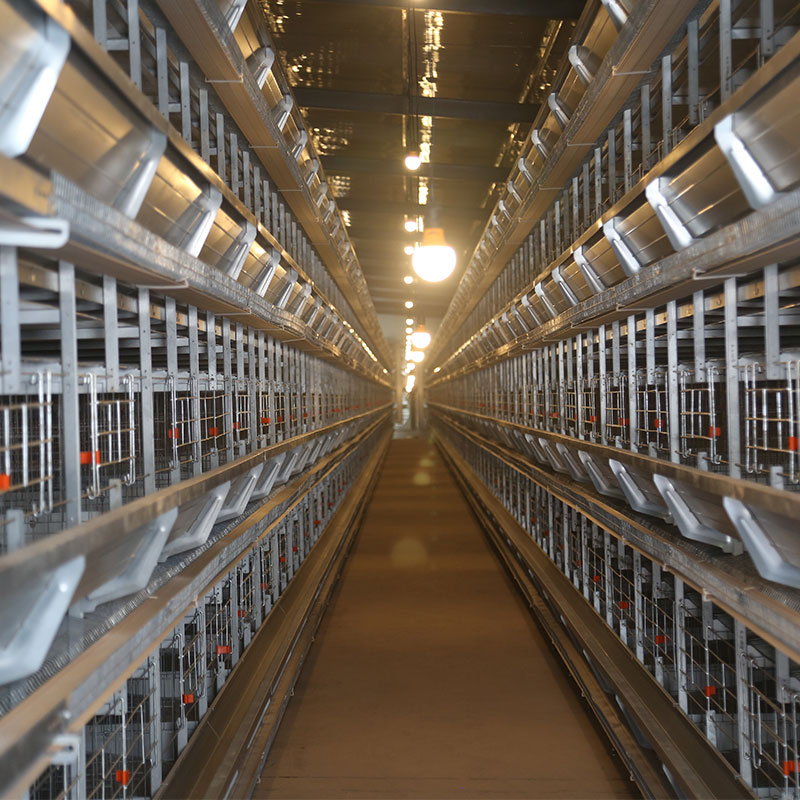
The Complete Guide to Laying Cages: Boosting Hen Health & Egg Production
For poultry farmers and backyard chicken enthusiasts alike, the quest for consistent, highquality egg production is paramount. While nutrition, breed, and health are critical, one piece of infrastructure often makes the most significant difference: the laying cage. Far more than just a container, a welldesigned laying cage system is the cornerstone of efficient egg farming, impacting everything from animal welfare to operational profitability. This comprehensive guide delves deep into the world of laying cages. We'll move beyond basic definitions to explore the science, best practices, and ethical considerations that define modern poultry housing. Whether you're scaling a commercial operation or optimizing a small homestead flock, understanding the nuances of laying cages is essential for success.
A laying cage, at its simplest, is a housed enclosure designed specifically for egglaying hens. Its primary functions are to provide a secure environment for hens to lay eggs, facilitate easy collection, protect birds from predators and weather, and allow for efficient management of feed and water.
The design of laying cages has evolved dramatically over the past century. The traditional battery cage system—characterized by small, wirefloored cages stacked in rows—dominated commercial production for decades due to its space and cost efficiency. However, driven by animal welfare concerns and changing regulations globally, the industry has shifted toward more humane alternatives.
Today's discussion revolves around three main systems:
1. Enriched or Furnished Cages: These provide more space per hen than conventional battery cages and include essential amenities like a nesting area, perches, and a scratching/dustbathing area.
2. CageFree Systems (Barn/Roofed): Hens are housed indoors in an open barn setting with litter on the floor, perches, and nest boxes.
3. FreeRange & PastureBased Systems: Hens have access to outdoor areas in addition to indoor housing.
For this guide, we focus on caged systems—specifically modern furnished cages—which remain a prevalent and highly managed option worldwide.
A highfunctioning laying cage isn't defined by a single element but by the integration of several critical components.
Space is the most critical welfare and productivity factor. Insufficient space leads to stress, feather pecking, and reduced egg quality.
Minimum Standards: While regulations vary (e.g., EU standards differ from US models), furnished cages typically require at least 750 cm² of cage area per hen plus 600 cm² of usable area (nesting box).
Industry Best Practice: Leading producers often exceed minimums, providing 800900 cm² or more per bird to improve welfare outcomes and bone strength.
Modern furnished cages incorporate specific zones:
Nesting Area: A secluded, darkened area with soft substrate (e.g., artificial turf) that encourages natural laying behavior and results in cleaner eggs.
Perches: Allow hens to roost off the floor at night, which is a strong natural instinct crucial for foot health and leg bone strength.
Scratching/DustBathing Area: Often equipped with abrasive matting or provision of litter (like peat), allowing for foraging behavior that reduces stress.
Sloped Wire Floor: Gently angled to allow eggs to roll immediately onto an egg collection belt or into a protected rollout tray. This minimizes breakage and soiling.
Precision is key for nutrition.
Feed Troughs: Positioned to be easily accessible without contamination from droppings. Automated chain feeders ensure consistent delivery.
Nipple Drinkers: The preferred water system as they keep water clean and reduce spillage compared to cup or trough drinkers. They must be at the correct height and pressure.
Effective waste removal is vital for air quality (ammonia control) and disease prevention.
Manure Belts/Pits: Most modern systems feature belts under tiers of cages that remove manure regularly to a central collection point or deep pits with extended storage times.
| Advantage | Disadvantage |
| : | : |
| Higher Hygiene & Disease Control: Separation from manure reduces contact with pathogens like Salmonella & E.coli. | Behavioral Restrictions: Limits natural behaviors like fullwing flapping, extensive foraging,and full dustbathing. |
| Improved Feed Efficiency: Less feed waste; precise rationing per bird is possible. | Higher Initial Capital Investment: Modern furnished cage systems are expensive to install. |
| Easier Management & Monitoring: Sick birds are easier to spot; egg collection is automated; mortality counts are simple. |Perceived Welfare Issues: Despite improvements,caged systems face public perception challenges. |
|Lower Labor Requirements: Automation in feeding , watering ,egg & manure collection reduces costs. |Risk of Osteoporosis: Lack of sustained weightbearing exercise can leadto weaker bones if not managed with nutrition& perch access. |
|Protection from Predators & Weather: Complete environmental control. |System Complexity: Requires technical knowledgefor maintenanceof automated components. |
|Consistently Cleaner Eggs: Eggs roll away immediately , reducing contamination. |
Choosing a system depends on your goals , scale , budget ,and market demands .
1 . Assess local& target market regulations(e .g.,are conventional battery cages banned?).
2 . Calculate ROI on furnished cage systems vs.barn systems.Consider longterm labor savings .
3 . Prioritize features:robust automation ,backup powerfor ventilation ,and easyaccess designfor bird handling .
1 . Consider mobile"chicken tractor"styles that offer protection while allowing pasture rotation .
2 . Look for sturdy ,predatorproof stationary coops with integrated nest boxes .
3 . Key features:adequate ventilation(screen windows),easytoclean surfaces,& external egg access .
Technology alone doesn't guarantee success .Management makes the difference .
Lighting Program: Provide1416 hours of light per day using timers.Stimulates consistent laying.Reduce intensity during rest periods .
Stockmanship(Stockpersonship): Train staffto perform daily bird checks.Lookfor signs of illness,injury ,or distress.Handle birds calmly during transfers .
Beak Treatment Consideration: In some highdensity systems ,precision beak trimming(infrared)may be consideredto prevent cannibalism,but alternative strategies(enrichment,increased space)should be prioritized .
Record Keeping Meticulously track : Henday production %,feed conversion ratio(FCR),mortality rates,& egg grades(datadriven decisions are key).
The trajectoryis clear toward systemsthat balance efficiencywith demonstrable animal welfare .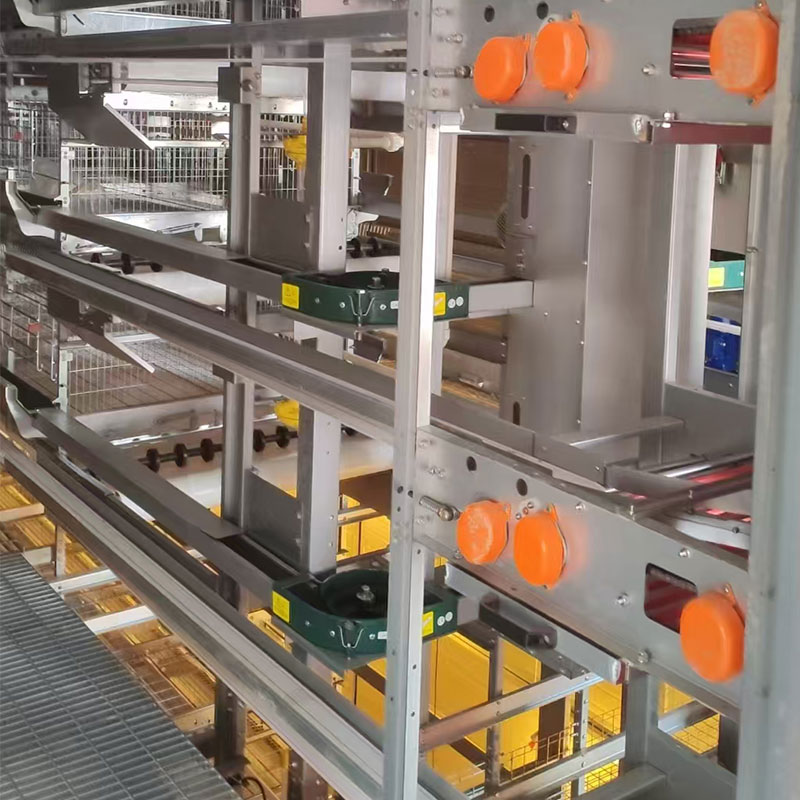
1 . Sensor Technology& IoT : Cages equippedwith sensors monitor temperature ,humidity ,ammonia levels,& even individual hen activity/weight changesin real time .
2 . Robotics : Autonomous robotsfor egg collection& barn monitoringare being tested .
3 . Genetic Selection : Breeding hens better suitedfor colony systemswith calmer temperaments .
4 . Regulatory Shifts : Continued movementtoward enriched cagestandardsor cagefree mandatesin various regions .
The modern laying cage representsa sophisticated pieceof agricultural technology.Its optimal use requiresa blendof engineering ,animal science,and ethical husbandry.Whether you optfor a stateoftheart furnished colony systemor a welldesigned backyard coop,the principles remainthe same:prioritize space ,hygiene ,behavioral needs,and meticulous management.The goalis not merely containment,but creatingan environment where hens can express their natural behaviorsas fully as possiblewhile producing safe,sustainable food.Informed choicesin caging design directly translateinto healthier flocks,higher quality eggs,and amore resilient operation.As consumer expectationsand scientific understanding evolve,the industry's commitmentto innovationin this foundational area will continueto shape the futureof egg production.
Q1: What is the difference between battery cagesand furnished/enriched laying cages?
A:Battery cagesare bare wire enclosuresproviding minimal spacewith no amenities.Furnished orenriched cagesprovide significantly more spaceper hen(usually by at least50%)and must includea nesting area,a perch,and a scratching/dustbathing area,much better supportingthe hen's behavioral needs .
Q2: Are laying cages illegal?
A:Laws varyby countryand region.For example,the European Union banned conventional battery cagesin2012(allowing only enriched ones).Several U.S.stateshave passed laws phasing outall caged systemsby certain dates.It's crucialto check your localagricultural regulations .
Q3: Do chickens sufferin laying cages?
A:Thisis complex.Conventional battery cagesseverely restrict natural behaviors,causing welfare deficits.Modern furnished cagessignificantly improve conditionsby allowing perching,laying ina nest,and scratching.Poor managementcan causesufferingin any system;good managementfocused on health& behavioris essentialin all housing types .
Q4:What size shoulda laying cagebe fora backyard chicken?
A:Asof general coopspace,a minimumof34 square feetper bird insidea secure coopis recommended.For an integrated nest box(nota separatecage),each box shouldbe about12"x12"x12"and shared among45 hens.More spaceis always better .
Q5:How do I keep laying cagessanitary?
A:Implementa strict schedule.Regularly remove manure(daily if manual,automated if belts)。Wash drinker linesperiodically。Clean& replace nesting material。Perform full,deep cleansbetween flock cyclesusing disinfectantsapprovedfor poultry use。Good ventilationis nonnegotiableto reduce moisture& ammonia 。
Q6:Why do eggsfrom some caged systemshave weaker shells?
A:This isoften linkedtonutritionor hen age,notcaging directly。However,if hens cannot exercise adequately,it can impact calcium metabolism。Ensuring dietsare richin calcium& Vitamin D3,and providing perchesto promote bone strength,are critical corrective measures 。
Q7:Can you mix different breedsina singlelaying cage?
A:It's generally not recommended,especiallyin confined spaces.Different breeds have different temperaments& sizes(e.g.,Leghorns vs.Buff Orpingtons)。Mixing can leadto bullying,stress,& inconsistent feed intake.If necessary,do so onlywith plentyof space& careful monitoring 。
Q8:How many hens can goina singlefurnished colony cageunit?
A:Commercial enriched colony unitsvary but often housebetween2080hensina large shared enclosure.The keyisthey must provideall required amenities(nest,perch,scratch)atthe correct ratiosper bird as definedby law 。Smaller group sizeswithin coloniesare associatedwith better welfare outcomes 。
Q9:What'sthe best flooring fora DIYlaying cage?
A:For easeof cleaning& manure fallthrough,14gauge welded wire flooringwitha slight slope(~8degrees)is standard.Plasticcoated wire can be easieron hens' feet.A solid droppings boardunderneaththat pullsis another optionforsmall setups 。
Q10:Do caged hens need grit?
A:Yes.All hens need grit(insoluble graniteor flint)if they are fed any whole grainsor need help grinding their feedinthe gizzard.Even ona fully commercial mash diet,providing accessto gritis consideredgood practiceaid digestion 。
1. Drinking system include the water pipes, water pressure adjuster, drinking nipples, Waterline front-end device, dosing system etc, choose them according to customer's needs.
2. High-quality water drinking pipes, pressure regulating valves and water drinking nipples can effectively prevent the water leakage. Drinking system adopt the closed piping system, which can minimize the water pollution.
3. 360-degree drinking nipples provide adequate drinking water for poultry at all stages.
4. The automatic drinking water system mainly adopts the steel ball drinking nipple. lt uses imported high-grad stainless steel, POM resin, and APS engineering material, which is wearing resistant, and the durability can be used for long time.



1. Automatic feeding machine can be chosen between gantry and ladder feeding machine. Gantry type feeding machine is a relatively economical and practical machine with simple operation, remote control walking character, easy to manage.
2. Mechanical transmission device running smoothly, low noise, long service life.
3. With the use of automatic control, the feeding system can adjust the amount of material.
4. Feeding with arched structure, high carrying capacity, not easily deformed.
5. Saving man power, saving feed, greatly improving the efficiency of Large-scale farming.
6. The walking speed of gantry feeding machine is 9--12 m/min.




1. Manure removing system included scraper type and conveyor belt type, Which can reduce the labor intensity and labor cost, keep the chicken shed dry and clean.
2. A type chicken cage can use scraper type or conveyor belt type.


3. The scraper type is suitable for A type cages, which can clean two or three rows. For the starters, this type is a good choice. lt can not only save some labor cost, but also save some investment in the whole project. The cleaning speed is 6-10 meters per minute.
4. Conveyor belt type is more suitable for large scale farming. The manure removing belt we use is high quality PP material (polypropylene). The walking speed is 2-4 meters per minute.



High Quality Pellets Made by Mobile Pellet Machine
1. It has professional designed angle of the blade. After the dynamic balance test one by one, the blade can operate smoothly.
2. The air volume is consistent in the whole life of the fan. Bearings has advantage of high strength, low noise, durable and so on.
1. The cooling pads uses high-quality wet curtain paper and adopts space cross-linking technology, which has the advantages of high water absorption, high water resistance, anti-toxicity and long service life.
2. The cooling efficiency is over 80%, without surfactant, natural water absorption, fast diffusion speed and long-lasting effect.
3. The product does not contain phenol and other chemical substances that are easy to cause skin allergies. It is non-toxic and harmless to the human body and chicken when installed and used. It is green, safe, energy-saving, environmentally friendly, economical, and easy to install.
4. The frame aluminum alloy has high strength, good corrosion resistance, durability and beautiful appearance.
5. Use a special filter for the cooling pad at the upper water to ensure clean water quality and support efficient water circulation components.
6. Combined with a negative pressure fan, it can effectively lower the indoor temperature.
The window is made of special selected high-quality engineering plastic, with high strength and long service life, together with superior anti-aging and anti-UV performance.
Function: Ventilation of the chicken house, usually used in the winter.
This system can adjust the wind speed and direction, thus the cold air will not reach chicken directly , which can effectively prevent the phenomenon of cold stress in chicken.
Environmental control system equipment is suitable for large-scale and intensive farming. According to customer requirements, we can provide various types of smart poultry equipment.
1. Our poultry management system is a modular system that manages all aspects of the chicken house, such as climate, temperature, humidity, ammonia, feeding, feed weighing, lighting and ventilation systems, and can monitor the situation of the chicken house in real time through a computer and mobile phone.
2. The management computer is the heart of the poultry farm, allowing you to easily monitor the entire poultry farm.

 WeChat:+8617838608255