
For generations, poultry farmers have understood a fundamental truth: a stressed bird is an unproductive bird. The search for a housing solution that balances animal welfare, operational efficiency, and environmental responsibility often leads to a frustrating compromise. Traditional wire cages, while efficient for space, can lead to foot problems and restrict natural behaviors. Wooden coops offer a natural feel but can succumb to rot, pests, and become a nightmare to sanitize over time. The Long-Lasting Eco-Friendly Pet House Natural Wood Chicken Coop Layer Cage emerges not as a mere product, but as a re-evaluation of these core principles, engineered to resolve these historical conflicts.
The foundation of this system’s durability lies in its material selection and treatment. It does not use standard, untreated pine or plywood that quickly absorbs moisture and becomes a breeding ground for mites and bacteria. Instead, the primary wood is a dense, sustainably harvested fir or cedar, known for its natural resistance to decay and its aromatic oils that subtly repel insects. This is not simply stained; it undergoes a non-toxic, penetrating wood stabilization process. Imagine a piece of dry wood soaking up water—this process is the opposite. The wood is placed in a vacuum chamber where all the air and existing moisture is pulled out from its very cells. Then, under pressure, it is infused with a plant-based, polymerizing oil. This is akin to the wood drinking a protective elixir that hardens within its cellular structure, not just sitting on the surface like a coat of paint.
The result is a piece of wood that is dimensionally stable. It will not warp, crack, or splinter with seasonal humidity changes. A farmer in the humid Southeast won’t find the doors jammed shut after a rainy week, and a producer in the arid Southwest won’t see gaps appear in the paneling. This treatment also creates a surface that is inherently hydrophobic. When you wash down the coop, water beads up and rolls off instead of soaking in. This single characteristic dramatically reduces the risk of moisture-related mold and rot, extending the structure's life for decades, not just a few seasons.
The design philosophy prioritizes the hen’s experience, recognizing that comfort directly impacts lay rate and egg quality. The flooring system is a critical example. Rather than the hard, unforgiving wire mesh of conventional cages, this system employs a specially designed plastic-coated welded wire floor. The coating is a thick, resilient layer of food-safe PVC, creating a smooth, firm but forgiving surface. A hen’s foot, with its delicate pads and toes, makes contact with a textured, slightly yielding plane that prevents bumblefoot—a painful infection caused by constant pressure and small cuts on hard, abrasive surfaces. The grid spacing is precisely calculated: wide enough to allow droppings to pass through cleanly, but narrow enough to provide secure and comfortable footing for the birds at all stages of life.
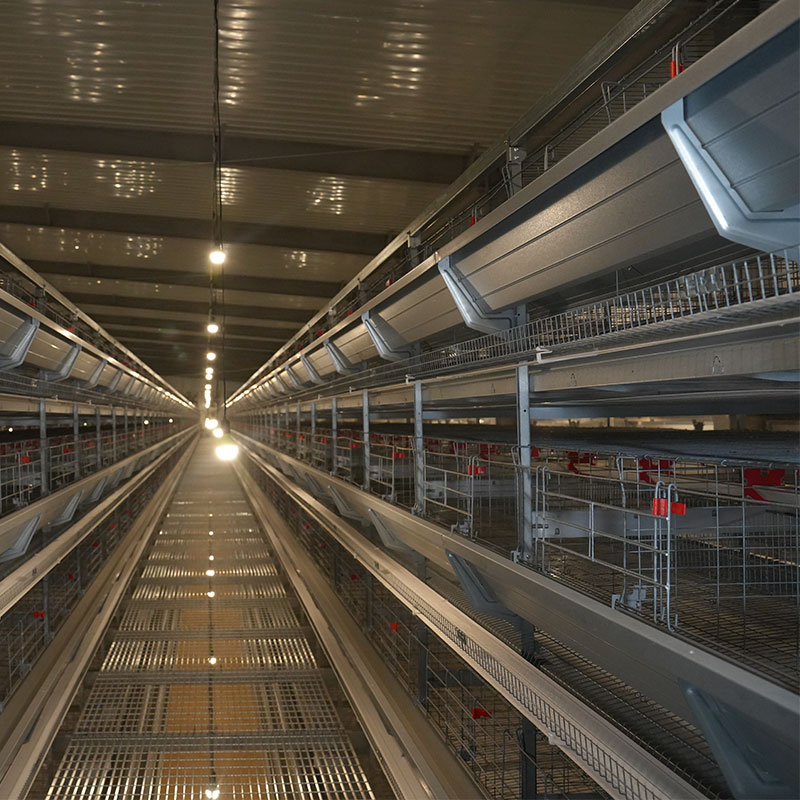
Beneath this floor lies the manure management system, a key component for hygiene and ammonia control. Many systems use a simple tray that requires daily scraping, a labor-intensive and unpleasant chore. This coop utilizes a downward-sloping slide panel positioned several inches below the wire floor. The natural fall of the droppings, combined with the gentle slope, directs the waste toward a central collection gutter. This design leverages gravity to do the work. A farmer can install a removable compost bin or a conveyor belt at the end of this gutter. In a small-scale setup, this might mean a weekly emptying of a compost bin, with the waste already on its way to becoming garden fertilizer. In a larger installation, a slow-moving conveyor belt can transport the manure to a central collection point outside the coop daily, with the flip of a switch. This drastically reduces labor and, more importantly, minimizes the birds' exposure to ammonia fumes, which can damage their respiratory systems and suppress their immune function.
Ventilation is engineered into the structure itself, moving beyond the concept of a few simple holes. It employs a passive stack ventilation principle. Along the lower sections of the walls, there are adjustable screened vents. Warm, moist, ammonia-laden air from the birds’ breathing and manure rises naturally. At the peak of the sloped roof, a continuous ridge vent acts as a chimney, allowing this stale air to escape. This creates a constant, gentle cross-flow of fresh air without creating a draft directly on the birds. You can observe its effectiveness on a cold morning; a faint plume of water vapor will be visible exiting the ridge vent, proof that the humid air is being actively removed. This system works silently and without electricity, maintaining air quality and preventing the condensation that leads to frostbite in winter and overheating in summer.
The nesting area is designed to trigger the hen’s instinct for a secure, dark place to lay. The nests are deep, private compartments with a flexible rubber curtain at the entrance. When a hen pushes through, the curtain closes behind her, providing the seclusion she seeks. The floor of the nest is not bare wood or wire; it is lined with a removable, textured rubber mat. A farmer can place a handful of clean pine shavings or astroturf on this mat. The texture prevents eggs from rolling and potentially cracking, and the removable nature means the nesting material can be easily shaken out and replaced, keeping the area clean and desirable. A clean, appealing nest box is the first defense against floor eggs—eggs laid in the open run, which are more likely to become dirty or be trampled.
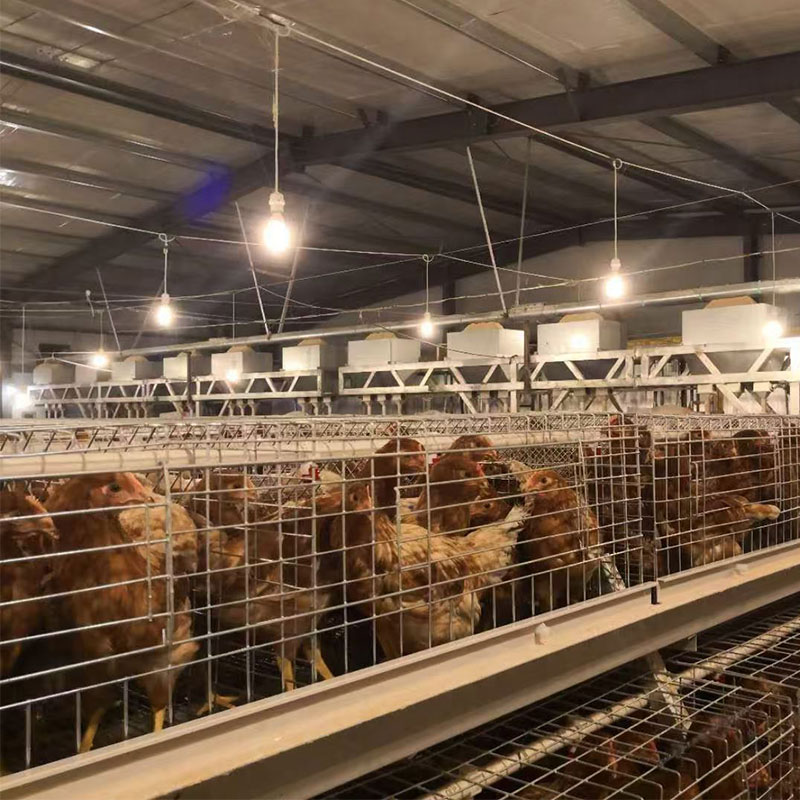
External features are equally considered. The roof is not an afterthought but a critical shield. It is constructed with an overhang of several inches on all sides, protecting the wooden walls from driving rain and the harsh sun, which can break down even treated wood over time. The roofing material is often a reflective, corrugated metal that sheds snow and rain efficiently and reflects solar radiation, helping to keep the interior cooler in hot weather. The raised legs of the coop are another simple but vital feature. By elevating the entire structure off the ground, it prevents ground moisture from wicking into the wood and creates a significant barrier against predators like rats, snakes, and even smaller weasels that cannot climb the smooth, metal legs.
Integration of feeding and watering systems minimizes waste and labor. The feeder is typically a long, narrow trough running along the outside of the cage, accessible to the birds through a wire gap. Its design features a hooded lid and a curved interior. The lid prevents birds from roosting on it and contaminating the feed with droppings, while the curved interior makes it difficult for them to flick and waste feed. A farmer fills the hopper from the outside; the feed trickles down as the birds eat. This might only need replenishing every few days instead of daily. The nipple watering system is the pinnacle of clean water delivery. Small, stainless-steel drinking nipples are positioned at strategic intervals. When a bird is thirsty, it pecks at the nipple, which releases a few drops of water into its beak. The water system is a closed loop; the water remains in the pipe until drunk, never exposed to air, dust, or fecal contamination. This drastically reduces the spread of waterborne diseases and eliminates the daily chore of scrubbing out and refilling dirty water fonts.
From a management perspective, the layout of these coops can be adapted to various scales. For a backyard enthusiast, a single, stationary unit housing a dozen birds might be ideal. For a small commercial producer, multiple units can be arranged in a row within a pole barn or aviary, with the manure collection gutters aligning to feed into a central compost system. The accessibility of all components—external feeders, nipple lines, and nesting boxes—from the walkways means that daily checks and maintenance can be performed without having to enter the bird space, reducing stress for both the farmer and the flock.
The long-term economic picture becomes clear when considering the lifecycle of the product. The initial investment is undoubtedly higher than that of a flimsy, untreated wooden coop or a basic wire cage system. However, this cost is amortized over a vastly extended lifespan. A standard coop may need replacement or significant repair in five to eight years. This stabilized wood system, with its robust hardware and corrosion-resistant fixtures, is built to last for twenty years or more with basic care. The reduction in veterinary bills from healthier feet and respiratory systems, the savings in feed from reduced waste, and the drastic cut in labor hours for cleaning and manure management all contribute to a lower cost of production per dozen eggs over the life of the flock.
Ultimately, this housing system represents a shift toward a more thoughtful and sustainable agricultural practice. It uses a renewable resource—wood—but enhances it with technology to overcome wood’s traditional weaknesses. It respects the biological needs of the chicken, providing comfort and security that manifest in better productivity and animal welfare. It gives the farmer their most valuable resource back: time. By designing out the problems of moisture, waste, and discomfort, the system creates a stable, manageable environment where both the birds and the business can thrive. It is a tool that aligns the well-being of the animal with the efficiency and sustainability of the farm.
1. Drinking system include the water pipes, water pressure adjuster, drinking nipples, Waterline front-end device, dosing system etc, choose them according to customer's needs.
2. High-quality water drinking pipes, pressure regulating valves and water drinking nipples can effectively prevent the water leakage. Drinking system adopt the closed piping system, which can minimize the water pollution.
3. 360-degree drinking nipples provide adequate drinking water for poultry at all stages.
4. The automatic drinking water system mainly adopts the steel ball drinking nipple. lt uses imported high-grad stainless steel, POM resin, and APS engineering material, which is wearing resistant, and the durability can be used for long time.



1. Automatic feeding machine can be chosen between gantry and ladder feeding machine. Gantry type feeding machine is a relatively economical and practical machine with simple operation, remote control walking character, easy to manage.
2. Mechanical transmission device running smoothly, low noise, long service life.
3. With the use of automatic control, the feeding system can adjust the amount of material.
4. Feeding with arched structure, high carrying capacity, not easily deformed.
5. Saving man power, saving feed, greatly improving the efficiency of Large-scale farming.
6. The walking speed of gantry feeding machine is 9--12 m/min.




1. Manure removing system included scraper type and conveyor belt type, Which can reduce the labor intensity and labor cost, keep the chicken shed dry and clean.
2. A type chicken cage can use scraper type or conveyor belt type.


3. The scraper type is suitable for A type cages, which can clean two or three rows. For the starters, this type is a good choice. lt can not only save some labor cost, but also save some investment in the whole project. The cleaning speed is 6-10 meters per minute.
4. Conveyor belt type is more suitable for large scale farming. The manure removing belt we use is high quality PP material (polypropylene). The walking speed is 2-4 meters per minute.



High Quality Pellets Made by Mobile Pellet Machine
1. It has professional designed angle of the blade. After the dynamic balance test one by one, the blade can operate smoothly.
2. The air volume is consistent in the whole life of the fan. Bearings has advantage of high strength, low noise, durable and so on.
1. The cooling pads uses high-quality wet curtain paper and adopts space cross-linking technology, which has the advantages of high water absorption, high water resistance, anti-toxicity and long service life.
2. The cooling efficiency is over 80%, without surfactant, natural water absorption, fast diffusion speed and long-lasting effect.
3. The product does not contain phenol and other chemical substances that are easy to cause skin allergies. It is non-toxic and harmless to the human body and chicken when installed and used. It is green, safe, energy-saving, environmentally friendly, economical, and easy to install.
4. The frame aluminum alloy has high strength, good corrosion resistance, durability and beautiful appearance.
5. Use a special filter for the cooling pad at the upper water to ensure clean water quality and support efficient water circulation components.
6. Combined with a negative pressure fan, it can effectively lower the indoor temperature.
The window is made of special selected high-quality engineering plastic, with high strength and long service life, together with superior anti-aging and anti-UV performance.
Function: Ventilation of the chicken house, usually used in the winter.
This system can adjust the wind speed and direction, thus the cold air will not reach chicken directly , which can effectively prevent the phenomenon of cold stress in chicken.
Environmental control system equipment is suitable for large-scale and intensive farming. According to customer requirements, we can provide various types of smart poultry equipment.
1. Our poultry management system is a modular system that manages all aspects of the chicken house, such as climate, temperature, humidity, ammonia, feeding, feed weighing, lighting and ventilation systems, and can monitor the situation of the chicken house in real time through a computer and mobile phone.
2. The management computer is the heart of the poultry farm, allowing you to easily monitor the entire poultry farm.

 WeChat:+8617838608255