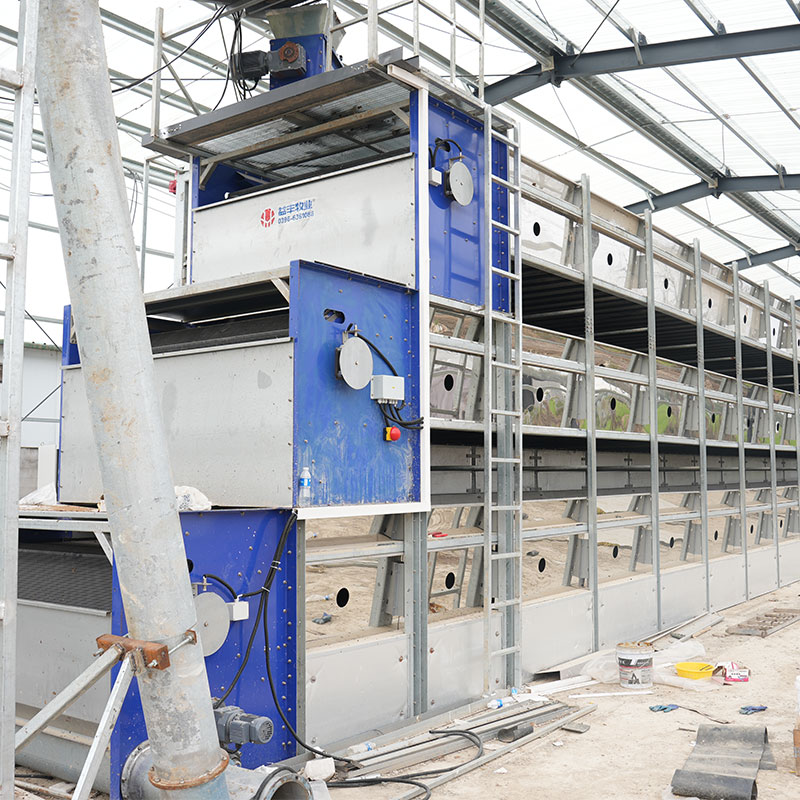
1. PAINPOINT DRIVEN OPENING
Are you managing a pullet rearing operation where inconsistent growth, laborintensive handling, and disease pressure are eroding your bottom line? Manual pullet cage systems, while a common starting point, often create significant operational bottlenecks. Consider these challenges:
Variable Bird Development: Inconsistent feed and water access in basic cages leads to uneven flock uniformity, compromising the future laying performance of your hens.
High Labor & Injury Rates: Daily manual feeding, watering, and health checks are physically demanding, increasing labor costs and the risk of both staff and bird injury.
Inefficient Space Utilization: Static cage designs fail to optimize barn square footage, limiting stock density and reducing revenue potential per facility.
Biosecurity Vulnerabilities: Frequent human contact and difficulttoclean surfaces elevate the risk of pathogen spread within and between flocks.
What if your rearing phase could deliver more uniform pullets with 30% less daily labor? What if you could improve space efficiency without compromising animal welfare? The solution lies in reengineering the traditional manual cage into a optimized system designed for modern commercial outcomes.
2. PRODUCT OVERVIEW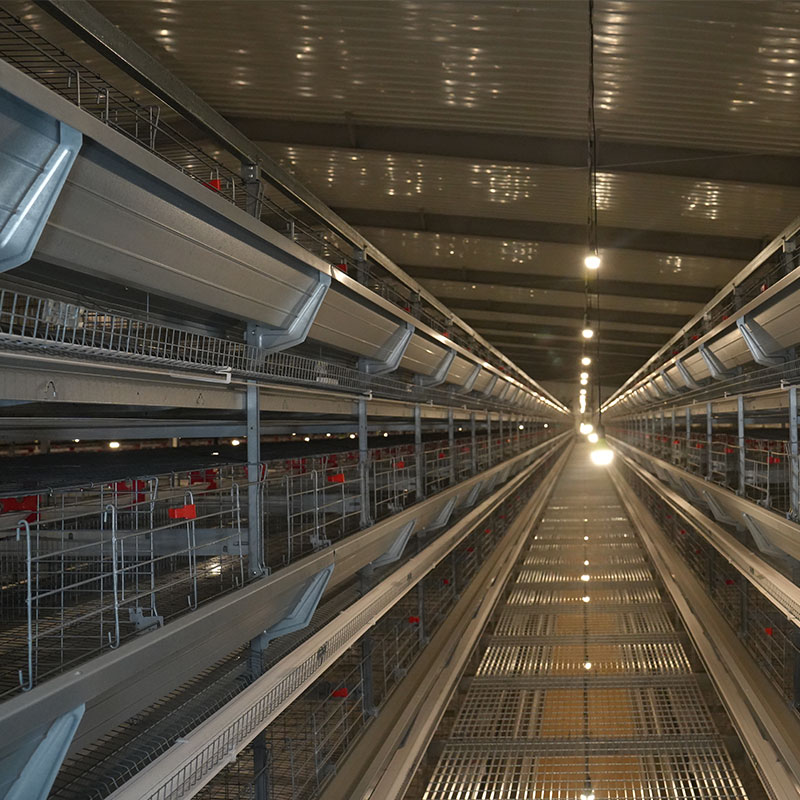
The Manual Layer Pullet Cage is a purposeengineered rearing system designed for the critical development phase from chick to pointoflay. It transitions birds from brooding through maturation in a controlled environment that prioritizes uniform growth, animal welfare, and operational efficiency. This system is optimized for operations seeking to upgrade from basic cages or floor rearing without committing to full automation.
Operational Workflow:
1. Starter Phase: Chicks are placed in the cage, utilizing adjustable nipple drinker lines and starter feeders accessible at bird height.
2. Growth Phase: As pullets develop, feeder heights and drinker lines are manually adjusted across the tiered rows to ensure continuous ergonomic access.
3. PreLay Phase: The system conditions birds for the layer house environment, with manure drying plates facilitating cleaner air quality and easier manual removal.
4. Catching & Transfer: The robust yet accessible cage design allows for efficient manual catching with minimal bird stress during transfer to the laying facility.
Application Scope & Limitations:
Scope: Ideal for dedicated pullet rearing farms or integrated layer operations with 5,000 to 50,000bird capacity per house. Suitable for regions with stable labor availability.
Limitations: Not a fully automated solution; requires daily manual oversight for feed level checks and adjustment of equipment. Maximum operational efficiency is dependent on disciplined standard operating procedures (SOPs) from staff.
3. CORE FEATURES
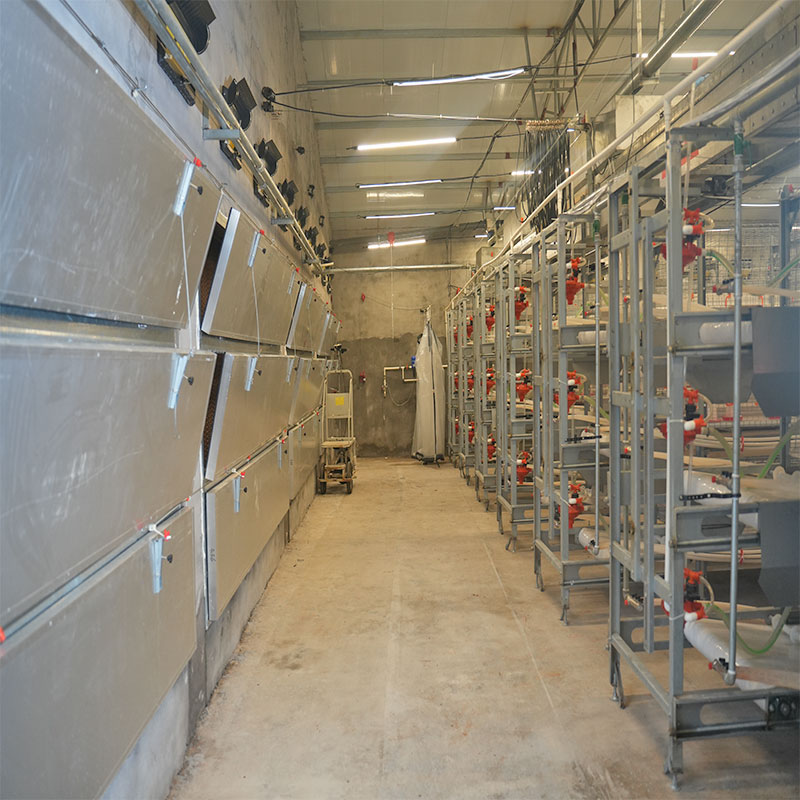
4. COMPETITIVE ADVANTAGES
| Performance Metric | Industry Standard (Basic Pullet Cage) | Manual Layer Pullet Cage Solution | Advantage (% improvement) |
| : | : | : | : |
| Flock Uniformity at Transfer | 7580% CV (Coefficient of Variation) | Targets 15 years with hotdip galvanized materials| >25% longer asset lifespan |
5. TECHNICAL SPECIFICATIONS
Capacity & Rating: Standard module supports 2030 birds per cage unit (sizedependent). Designed for full lifecycle rearing from dayold chick to ~16 weeks.
Power Requirements: No operational power required for core function. Optional addon ventilation fans may require external power.
Material Specifications: Cage mesh: Hightensile steel wire (φ2.5mm/φ3mm), hotdip galvanized (zinc coating ≥70μm). Frame structure: Q235 carbon steel rectangular pipe (40mm20mm1.5mm), galvanized.
Physical Dimensions: Typical singleunit dimensions (LWH): Customizable; common configuration is Tier length of either A type or H type cages
Environmental Operating Range: Designed for standard controlledenvironment poultry houses maintaining temperatures between +60°F (+15°C) +75°F (+24°C).
6 APPLICATION SCENARIOS
7 COMMERCIAL CONSIDERATIONS
Our Manual Layer Pullet Cage systems are offered in clear pricing tiers based on configuration density:
Tier A StandardDensity System
Tier B HighDensity Welfare System
Optional features include
Service packages range from basic spare parts supply
Financing options can be structured through our partner agricultural lenders
8 FAQ
Q What is the lead time for delivery?
A For standard configurations lead time is typically
Q Can this system be integrated with my existing automated feeding line?
A Yes The cages are designed with universal adaptability
Q How does this system impact mortality rates during rearing?
A Field data from installations shows a consistent reduction
Q What training do you provide for our stockmen?
A We include comprehensive onsite operational training covering bird management adjustment protocols
Q Are your materials compliant with EU/US food contact regulations?
A All galvanized materials use nontoxic coatings suitable
1. Drinking system include the water pipes, water pressure adjuster, drinking nipples, Waterline front-end device, dosing system etc, choose them according to customer's needs.
2. High-quality water drinking pipes, pressure regulating valves and water drinking nipples can effectively prevent the water leakage. Drinking system adopt the closed piping system, which can minimize the water pollution.
3. 360-degree drinking nipples provide adequate drinking water for poultry at all stages.
4. The automatic drinking water system mainly adopts the steel ball drinking nipple. lt uses imported high-grad stainless steel, POM resin, and APS engineering material, which is wearing resistant, and the durability can be used for long time.



1. Automatic feeding machine can be chosen between gantry and ladder feeding machine. Gantry type feeding machine is a relatively economical and practical machine with simple operation, remote control walking character, easy to manage.
2. Mechanical transmission device running smoothly, low noise, long service life.
3. With the use of automatic control, the feeding system can adjust the amount of material.
4. Feeding with arched structure, high carrying capacity, not easily deformed.
5. Saving man power, saving feed, greatly improving the efficiency of Large-scale farming.
6. The walking speed of gantry feeding machine is 9--12 m/min.




1. Manure removing system included scraper type and conveyor belt type, Which can reduce the labor intensity and labor cost, keep the chicken shed dry and clean.
2. A type chicken cage can use scraper type or conveyor belt type.


3. The scraper type is suitable for A type cages, which can clean two or three rows. For the starters, this type is a good choice. lt can not only save some labor cost, but also save some investment in the whole project. The cleaning speed is 6-10 meters per minute.
4. Conveyor belt type is more suitable for large scale farming. The manure removing belt we use is high quality PP material (polypropylene). The walking speed is 2-4 meters per minute.



High Quality Pellets Made by Mobile Pellet Machine
1. It has professional designed angle of the blade. After the dynamic balance test one by one, the blade can operate smoothly.
2. The air volume is consistent in the whole life of the fan. Bearings has advantage of high strength, low noise, durable and so on.
1. The cooling pads uses high-quality wet curtain paper and adopts space cross-linking technology, which has the advantages of high water absorption, high water resistance, anti-toxicity and long service life.
2. The cooling efficiency is over 80%, without surfactant, natural water absorption, fast diffusion speed and long-lasting effect.
3. The product does not contain phenol and other chemical substances that are easy to cause skin allergies. It is non-toxic and harmless to the human body and chicken when installed and used. It is green, safe, energy-saving, environmentally friendly, economical, and easy to install.
4. The frame aluminum alloy has high strength, good corrosion resistance, durability and beautiful appearance.
5. Use a special filter for the cooling pad at the upper water to ensure clean water quality and support efficient water circulation components.
6. Combined with a negative pressure fan, it can effectively lower the indoor temperature.
The window is made of special selected high-quality engineering plastic, with high strength and long service life, together with superior anti-aging and anti-UV performance.
Function: Ventilation of the chicken house, usually used in the winter.
This system can adjust the wind speed and direction, thus the cold air will not reach chicken directly , which can effectively prevent the phenomenon of cold stress in chicken.
Environmental control system equipment is suitable for large-scale and intensive farming. According to customer requirements, we can provide various types of smart poultry equipment.
1. Our poultry management system is a modular system that manages all aspects of the chicken house, such as climate, temperature, humidity, ammonia, feeding, feed weighing, lighting and ventilation systems, and can monitor the situation of the chicken house in real time through a computer and mobile phone.
2. The management computer is the heart of the poultry farm, allowing you to easily monitor the entire poultry farm.

 WeChat:+8617838608255