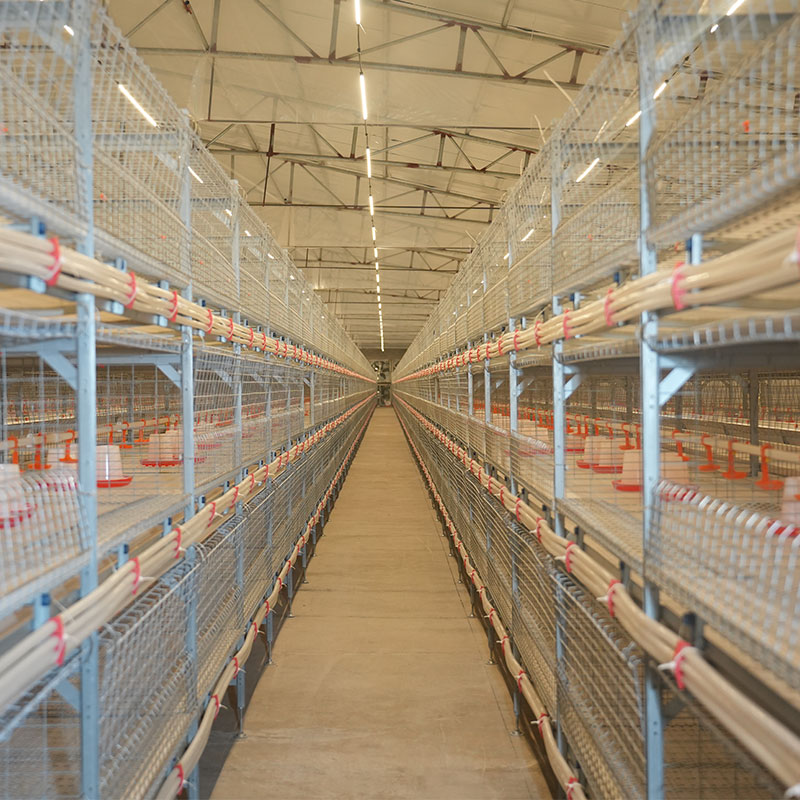
For poultry farmers moving birds between locations, the transport process often creates the highest stress levels in an animal’s life. The clamor of metal, the difficulty of cleaning porous surfaces, and the inefficient stacking of cages that waste valuable truck space are universal challenges. A shift in equipment design is addressing these issues directly. The introduction of the manufacturer big size HDPE 96057027mm stackable plastic transport cage represents a significant evolution in poultry logistics, offering a system built for durability, biosecurity, and operational efficiency for operations of all sizes.
The physical dimensions of this crate—960mm in length, 570mm in width, and 27mm in internal height—are not arbitrary numbers. They represent a carefully considered balance between animal welfare and practical handling. A crate of this size provides sufficient floor space for a small group of birds to sit comfortably without excessive crowding, which is critical for minimizing stress and preventing injury during transit. For reference, this footprint can comfortably accommodate several ducks or a larger number of meat chickens, while the 27cm internal height prevents larger birds like geese from having to excessively crouch, yet is low enough to allow for stable, multi-tier stacking on a transport vehicle.
The choice of High-Density Polyethylene (HDPE) as the primary material is a fundamental departure from traditional wire or wood. Unlike galvanized wire, which can rust over time and has sharp points that can scratch birds, HDPE is an inert, smooth plastic. In practical terms, this means a farmer pressure-washing a crate after a market run will watch dirt and manure slide off the non-porous surface. There are no hidden corners or rust patches for pathogens like Salmonella or E. coli to cling to. The material is also resistant to the corrosive effects of standard disinfectants and the organic acids found in poultry manure, ensuring the crate’s structural integrity isn’t compromised after hundreds of cleaning cycles. A farmer will notice that after years of use, the crate hasn’t become brittle or developed weak spots, a common failure point in lower-quality plastics.
Durability is further engineered into the design through its wall thickness and structural ribbing. The crate’s walls are not flat panels; they are reinforced with a grid-like pattern of ribs. This is similar to the structural I-beams used in construction, which use a specific shape to achieve great strength without excessive weight. When a stack of ten loaded crates is on a truck navigating a bumpy farm road, this ribbing prevents the sidewalls of the bottom crates from bulging or cracking under the immense pressure. The one-piece, rotationally molded construction is another key feature. Instead of being welded or screwed together from multiple pieces, the entire crate is formed as a single, seamless unit. This eliminates potential failure points; there are no seams to split open under load, a critical advantage when the crate is being handled by forklifts or dragged across concrete.
The stackability of these crates is where operational efficiency is most visibly realized. The design incorporates interlocking features on the top and bottom. When one crate is placed on top of another, these features engage, creating a unified, stable column. This prevents the crates from sliding off each other during sudden stops or sharp turns on the highway. This secure stacking allows a farmer to utilize the full vertical space in a transport vehicle. Where a pile of non-interlocking crates might only be safely stacked four high, these systems can be stacked eight or ten high, effectively doubling the payload capacity of a single truckload. For a farmer taking 200 crates of broilers to processing, this could mean needing one truck instead of two, with immediate savings on fuel and labor.
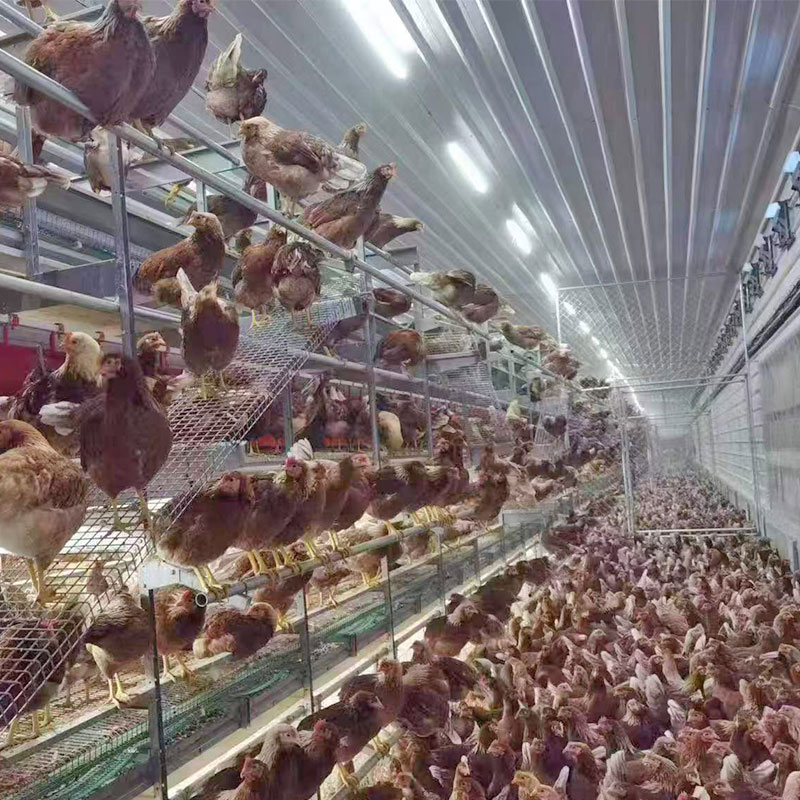
Ventilation is designed into the crate as an integral system, not as an afterthought. The patterned perforations on all sides and the door facilitate cross-ventilation. As the vehicle moves, air flows through these perforations, carrying away body heat and moisture exhaled by the birds. This is crucial for preventing heat stress, a major cause of mortality during transport, especially in hotter climates. The pattern of the holes is designed to be large enough for adequate airflow but small enough to prevent the head or limbs of smaller birds like quail or pigeons from getting caught, addressing both welfare and safety concerns simultaneously.
The full-width door mechanism is a significant improvement over smaller, hinged doors. It typically operates on a sliding or lift-off principle, providing unobstructed access to the entire interior of the crate. Catching birds during loading and unloading is one of the most labor-intensive and time-consuming parts of the process. With a large door, a worker can reach in and gather multiple birds at once without contorting their arm or causing a panic by chasing a single bird into a corner. This reduces both the time required to handle the birds and the stress imposed on them. A door that is simple to open and close with one hand, and that locks securely without complex latches, streamlines the workflow on a busy loading dock.
For farmers raising different species, the versatility of a single crate system simplifies inventory and management. The same HDPE crate used for transporting mature laying hens can be used for a batch of Pekin ducks. The following week, with a simple adjustment in the number of birds per crate to account for their size, it can be used for moving young turkeys. For smaller birds like quail or pigeons, the perforation size ensures containment while still providing excellent ventilation. This universality means a farmer does not need to invest in and store multiple, specialized transport systems for different poultry enterprises on the same farm.
From a financial perspective, the initial investment in a high-quality plastic crate system is higher than that of a wire alternative. However, the total cost of ownership must be evaluated over the product's lifespan. A wire crate may need to be replaced every few years due to rust, damage to the welds, or the need for constant re-galvanizing. An HDPE crate, resistant to corrosion and impact, can remain in service for a decade or more with proper care. The savings manifest in reduced replacement costs, lower water and chemical usage due to easier cleaning, and significant transportation savings from higher payloads. The reduction in bird injuries and mortality during transit also directly protects the farm's revenue, as a dead bird on arrival at the processing plant is a total loss.

The practical integration of these crates into daily farm routines demonstrates their value. On a typical morning when birds are scheduled for processing, the empty crates are stacked neatly in the storage area. Their uniform dimensions allow them to be compactly nested or stacked, taking up minimal space. When moved to the catching area, their smooth surfaces prevent injury to both birds and workers. During loading, the large doors and secure locking mechanisms speed up the process. Once loaded, the crates are moved via forklift, with the reinforced structure able to withstand the tines without damage. On the truck, their interlocking design creates a solid, safe load for the journey. At the destination, the cleaning process is swift and thorough, ensuring biosecurity protocols are met before the crates are returned to storage, ready for the next cycle.
The design of the 96057027mm HDPE transport cage addresses the core challenges of poultry transport through material science and intelligent engineering. Its durability, ease of maintenance, and stackable efficiency create a system that protects animal welfare, enhances biosecurity, and improves the operational and economic bottom line for the modern poultry farm.
1. Drinking system include the water pipes, water pressure adjuster, drinking nipples, Waterline front-end device, dosing system etc, choose them according to customer's needs.
2. High-quality water drinking pipes, pressure regulating valves and water drinking nipples can effectively prevent the water leakage. Drinking system adopt the closed piping system, which can minimize the water pollution.
3. 360-degree drinking nipples provide adequate drinking water for poultry at all stages.
4. The automatic drinking water system mainly adopts the steel ball drinking nipple. lt uses imported high-grad stainless steel, POM resin, and APS engineering material, which is wearing resistant, and the durability can be used for long time.



1. Automatic feeding machine can be chosen between gantry and ladder feeding machine. Gantry type feeding machine is a relatively economical and practical machine with simple operation, remote control walking character, easy to manage.
2. Mechanical transmission device running smoothly, low noise, long service life.
3. With the use of automatic control, the feeding system can adjust the amount of material.
4. Feeding with arched structure, high carrying capacity, not easily deformed.
5. Saving man power, saving feed, greatly improving the efficiency of Large-scale farming.
6. The walking speed of gantry feeding machine is 9--12 m/min.




1. Manure removing system included scraper type and conveyor belt type, Which can reduce the labor intensity and labor cost, keep the chicken shed dry and clean.
2. A type chicken cage can use scraper type or conveyor belt type.


3. The scraper type is suitable for A type cages, which can clean two or three rows. For the starters, this type is a good choice. lt can not only save some labor cost, but also save some investment in the whole project. The cleaning speed is 6-10 meters per minute.
4. Conveyor belt type is more suitable for large scale farming. The manure removing belt we use is high quality PP material (polypropylene). The walking speed is 2-4 meters per minute.



High Quality Pellets Made by Mobile Pellet Machine
1. It has professional designed angle of the blade. After the dynamic balance test one by one, the blade can operate smoothly.
2. The air volume is consistent in the whole life of the fan. Bearings has advantage of high strength, low noise, durable and so on.
1. The cooling pads uses high-quality wet curtain paper and adopts space cross-linking technology, which has the advantages of high water absorption, high water resistance, anti-toxicity and long service life.
2. The cooling efficiency is over 80%, without surfactant, natural water absorption, fast diffusion speed and long-lasting effect.
3. The product does not contain phenol and other chemical substances that are easy to cause skin allergies. It is non-toxic and harmless to the human body and chicken when installed and used. It is green, safe, energy-saving, environmentally friendly, economical, and easy to install.
4. The frame aluminum alloy has high strength, good corrosion resistance, durability and beautiful appearance.
5. Use a special filter for the cooling pad at the upper water to ensure clean water quality and support efficient water circulation components.
6. Combined with a negative pressure fan, it can effectively lower the indoor temperature.
The window is made of special selected high-quality engineering plastic, with high strength and long service life, together with superior anti-aging and anti-UV performance.
Function: Ventilation of the chicken house, usually used in the winter.
This system can adjust the wind speed and direction, thus the cold air will not reach chicken directly , which can effectively prevent the phenomenon of cold stress in chicken.
Environmental control system equipment is suitable for large-scale and intensive farming. According to customer requirements, we can provide various types of smart poultry equipment.
1. Our poultry management system is a modular system that manages all aspects of the chicken house, such as climate, temperature, humidity, ammonia, feeding, feed weighing, lighting and ventilation systems, and can monitor the situation of the chicken house in real time through a computer and mobile phone.
2. The management computer is the heart of the poultry farm, allowing you to easily monitor the entire poultry farm.

 WeChat:+8617838608255